

Fountain pens are all about the right materials. Whether you're after durability, a premium feel, or a lightweight design, the material blend you choose affects performance, comfort, and longevity. Here's a quick breakdown:
- Stainless Steel with Iridium Tips: Affordable, durable, and great for everyday use. Modern tips use tungsten-ruthenium instead of actual iridium.
- Gold-Alloy Nibs: Softer, flexible, and luxurious. Ideal for smooth writing with line variation.
- Brass Core with Lacquer Finish: Solid, balanced weight with a glossy, protective coating.
- Volcanic Rock Resin: Textured, durable, and eco-conscious. Unique basaltic lava blends create a personal patina over time.
- Acrylic Resin: Lightweight and colorful. Modern polymer blends improve scratch resistance and durability.
- Titanium Alloys: Strong, lightweight, and corrosion-resistant. Perfect for sleek, modern designs.
- Resin with Metal Inlays: Combines sturdy resin with decorative metals like gold or silver for artistic appeal.
Each material offers a distinct feel and performance level, so choose based on your writing habits and preferences. For beginners, stainless steel nibs are reliable and budget-friendly. Gold vs steel nibs offer different benefits; gold alloys and volcanic composites provide a premium experience, while titanium and acrylic blends cater to modern tastes.
Quick Comparison Table:
| Material Blend | Durability | Weight | Price Range | Best For |
|---|---|---|---|---|
| Stainless Steel with Iridium | High | Medium | $30–$150 | Everyday writing |
| Gold-Alloy Nibs | High | Medium | $200–$800+ | Smooth, flexible writing |
| Brass Core with Lacquer | High | Medium-Heavy | $50–$250 | Balanced, stylish designs |
| Volcanic Rock Resin | Very High | Medium | $400–$700 | Unique texture, durability |
| Acrylic Resin | High | Light-Medium | $40–$300 | Colorful, lightweight pens |
| Titanium Alloys | Very High | Medium | $150–$600 | Sleek, modern, durable designs |
| Resin with Metal Inlays | High | Light-Medium | $300–$1,500+ | Artistic, decorative collectors |
Start with what fits your budget and writing needs, and don't forget to pair your pen with quality paper for the best experience!
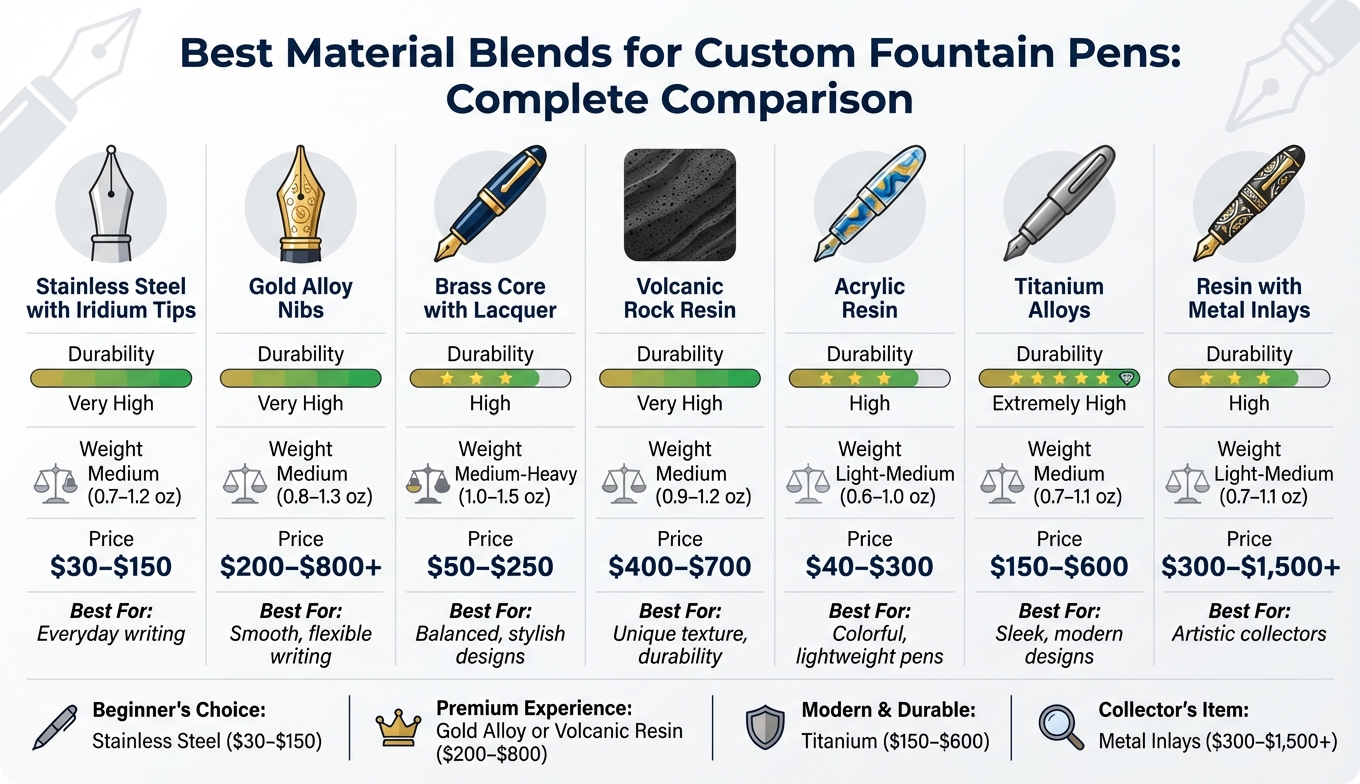
Fountain Pen Material Blends Comparison: Durability, Weight, and Price Guide
Making Custom Resin & Pens with Jonathon Brooks
sbb-itb-1dd4fe9
Stainless Steel with Iridium-Tipped Nibs
When it comes to dependable, everyday writing performance, stainless steel nibs with iridium-style tips have become a go-to choice in the fountain pen world.
Interestingly, while these nibs are called "iridium-tipped", they don’t actually contain iridium - a rare metal valued at around $4,500 per troy ounce. Instead, manufacturers use tungsten-ruthenium alloys, with ruthenium priced at about $465 per troy ounce. The term "iridium" remains as a nod to durability, a legacy from the mid-20th century when pure iridium was phased out. Even iconic brands like Parker, Sheaffer, and Montblanc moved away from using pure iridium, with Parker's 1952 Parker 51 being one of the last to include just 2.6% iridium in its nibs.
Why Stainless Steel with "Iridium" Tips Works
Stainless steel forms the sturdy base of the nib, offering strength and structural reliability. However, it needs a hardened material at the tip to withstand wear. Modern tipping alloys, like tungsten-ruthenium, excel in this role. These alloys are designed to resist high heat, maintain hardness, and stand up to acidic environments. They are carefully ground, slotted, and polished to create a smooth writing experience that holds up over time. This combination of materials ensures a balance of durability and cost-effectiveness.
Ideal Applications
This material blend is perfect for everyday writing and is a popular choice for beginner fountain pens under $50. The stainless steel base, paired with the wear-resistant tungsten-ruthenium tip, delivers reliable performance at an affordable price. This makes it a practical option for those seeking a durable and budget-friendly writing tool.
Gold Alloys and Stainless Steel Blends
Gold alloy nibs paired with stainless steel elements strike a balance between luxury and durability, offering a refined writing experience without an exorbitant price tag. This combination has its roots in 1834, when John Isaac Hawkins introduced the first iridium-pointed gold pen. Modern blends typically feature 14k or 18k gold, with 14k being especially suited for flex nibs due to its ideal balance of softness and strength. This timeless pairing continues to evolve, blending traditional craftsmanship with modern precision.
The Appeal of Gold Alloy Nibs
Gold nibs naturally flex, adding a subtle bounce that enhances line variation and provides a softer, more cushioned feel while writing. As Yanning Li and Justin Lowes, co-founders of Scriveiner London, describe:
"Gold-plated nibs deliver some aesthetic appeal whilst maintaining steel's structural reliability".
Gold also brings practical advantages. Its resistance to corrosion helps maintain nib quality over time, while its plating improves ink flow by enhancing wettability. Scriveiner pens, which incorporate these material blends, have received glowing feedback, earning a 4.8/5 rating from 236 verified customer reviews.
Durability and Maintenance
Gold provides a smooth and refined writing surface, but stainless steel ensures the structural strength needed for daily use. This combination allows for precise engineering, with many pens designed to meet strict weight tolerances of ±2 grams for optimal comfort.
To keep your nib in prime condition, flush it with lukewarm water every few weeks or whenever switching ink colors. Store pens horizontally or with the nib facing up, and aim for a storage environment with humidity levels between 45–55% to prevent material degradation. When cleaning gold-plated steel nibs, avoid abrasive tools or cleaners to protect the delicate gold layer and prevent exposing the underlying steel.
With proper care, these nibs can deliver dependable performance for years. Up next, we’ll take a closer look at another innovative material pairing: brass cores with lacquer finishes.
Brass Core with Lacquer Finishes
Brass-core fountain pens are a favorite among those who appreciate a writing instrument with both substance and style. Known for their solid feel and eye-catching finishes, these pens combine durability with elegance. The brass core ensures the pen has a sturdy build, while lacquer finishes enhance its appearance and protect the metal from wear and oxidation.
Let’s delve into why brass is such a sought-after material and how lacquer finishes elevate its functionality and appeal.
Why Brass is a Popular Core Material
Brass, an alloy of copper and zinc, is celebrated for its weight and balance. It offers a heft that many writers find stabilizing during extended writing sessions. To put it into perspective, brass pens generally weigh between 20–60 g, compared to the lighter 10–30 g range of resin or aluminum pens. This added weight shifts the balance toward the hand, reducing the strain on your grip and making writing smoother and more controlled.
The material’s machinability is another advantage. Brass allows for intricate designs and fine threading, both essential for high-quality fountain pens. Choosing the right fountain pen nib sizes is equally important for achieving the perfect writing experience. It also boasts excellent resistance to corrosion and holds up well against everyday scratches and dents. As EndlessPens puts it, brass pens are "weighty enough to give great balance to a fountain pen and durable to ensure they will last a lifetime"[[6]](https://endlesspens.com/blogs/endless-journal/best brass fountain pens). Additionally, the copper content in brass has a unique benefit - it significantly reduces microbial survival times, cutting them down from days to just hours.
The Role of Lacquer Finishes
While brass provides the structural backbone, lacquer finishes enhance both the look and longevity of the pen. These finishes not only add vibrant colors but also shield the metal from air, moisture, and skin oils. Modern waterborne acrylic-polyurethane lacquers are particularly effective, offering excellent resistance to abrasion and flexibility, all while maintaining VOC levels under 100 g/L. Unlike older nitrocellulose lacquers, which often yellowed within 6–12 months, these newer finishes can maintain their clarity and vibrancy for 3–5 years or more.
Viktor Petrov, an expert in metal finishes, highlights the importance of lacquering: "Lacquering brass isn't optional - it's essential for preserving appearance, preventing corrosion, and maintaining functional integrity". The lacquer not only locks in the brass’s polished shine but also prevents tarnishing and the development of a patina. For those who carry their pens daily, this protective layer is invaluable, as it also eliminates the metallic smell often associated with raw brass.
To keep your lacquered brass pen in top shape, stick to pH-neutral cleaners and avoid using harsh substances like vinegar, bleach, or abrasive pads, which can damage the finish. Regularly inspect the pen for tiny pinholes or areas where the lacquer might be lifting, as these can expose the brass to tarnishing. With proper care, a lacquered brass pen can remain a reliable and attractive companion for decades.
Volcanic Rock Resin Composites
Volcanic rock resin composites bring together functionality and a striking visual appeal. These materials combine natural basaltic lava with resin to create pens that are both durable and uniquely textured. A standout example is the Visconti Homo Sapiens series, crafted with a patented formula containing over 50% pure basaltic lava sourced from Mt. Etna in Sicily. Priced at around $695 for the oversized model, these pens offer qualities that go beyond what standard resin or metal pens provide. This blend of materials transforms premium pen design by emphasizing both style and strength.
Characteristics of Volcanic Resin Blends
These pens feature a matte, textured finish that provides a secure grip and a cool, stone-like feel. Unlike glossy acrylic resins, which can become slippery, volcanic composites are hygroscopic. This means they absorb minimal moisture from your hand, gradually developing a patina unique to each user. As Nancy Olson explains:
"The dark gray writing instrument absorbs very small amounts of moisture from the writer's hand, thereby giving it a patina over time and a beautiful warmth that is unique to the user."
This slow transformation makes the pen feel more personal with continued use.
In addition to their tactile appeal, these pens are incredibly durable. They resist everyday wear and staining, so ink spills can usually be cleaned with just a damp cloth. Even lighter-colored options, like "Ash White", can be kept clean with a wet paper towel. Thanks to their heat resistance and flameproof properties, these pens are built to last. However, some users note that solid lava barrels lack an ink window, which can make it harder to monitor ink levels. Beyond their practical benefits, volcanic resin pens also align with eco-conscious values.
Environmental Considerations
Volcanic rock resin composites present a more sustainable choice compared to petroleum-based plastics. With over 50% natural basaltic lava content, these pens reduce dependence on synthetic materials while offering exceptional durability. Their long lifespan reduces the need for frequent replacements, minimizing waste. The hygroscopic material also encourages long-term ownership by developing a personalized patina over time.
For an even greener approach, pair your volcanic resin pen with water-based or soy-based inks instead of petroleum-based ones. Choosing pens with internal filling systems, like power fillers or piston fill fountain pens, can also cut down on single-use plastic cartridges. While the resin component means these pens aren’t entirely natural, the combination of geological materials and modern design strikes a balance between performance, aesthetics, and environmental awareness.
Acrylic Resin and Proprietary Polymer Blends
Acrylic resin, often called the "queen of plastics", is a standout material thanks to its exceptional clarity - even better than glass - while being about half as heavy and offering 15 times the strength. With a specific gravity of 1.18, this lightweight thermoplastic is comfortable for extended writing sessions. Its tensile strength of 65 MPa (9,400 psi) and flexural strength of 90 MPa (13,000 psi) make it both sturdy and versatile.
Design Flexibility
Acrylic resin opens up creative possibilities that traditional materials like hard rubber like ebonite and acrylic blends simply can't match. For instance, the iconic Parker 51 fountain pen uses high-quality acrylic resin for its barrel, showcasing the material's elegance and functionality. Nakaya Fountain Pen takes it a step further, crafting finishes that mimic the depth and texture of glass. The YSTUDIO Resin Series offers another take, combining a smooth matte acrylic exterior with a brass inner tube to achieve a perfect balance between style and weight.
Acrylic comes in two main types: cast acrylic, known for its superior strength and thermal stability, and extruded acrylic, which is easier to machine and more affordable. Its adaptability allows for unique effects, such as "demonstrator" pens with clear barrels that reveal internal mechanisms. Designers can also experiment with various textures and finishes, from heavy textures to smooth matte surfaces. This creative freedom doesn’t compromise durability, as modern polymer advancements improve its performance in everyday use.
Durability and Everyday Use
Modern proprietary polymer blends address one of acrylic’s main drawbacks - its tendency to scratch - while preserving its key advantages. For example, Mitsubishi Gas Chemical Co., Inc.'s MX-Nylon series retains over 85% of its original gloss even after 5,000 hours of intense UV exposure, and Eastman Chemical Co.'s Trēva™ bioplastic maintains 90% gloss retention after 3,000 hours of accelerated weathering tests.
These advanced blends are particularly important for daily use. Studies show that 82% of users value flexibility to prevent cracking and peeling under changing conditions. While pure acrylic can be rigid and susceptible to thermal stress, modern polymer blends incorporate nano-additives like nano-silica to strengthen surfaces without sacrificing flexibility. These materials can endure heat deflection temperatures ranging from 163°F to 228°F. However, it’s best to avoid cleaning with organic solvents or corrosive chemicals to maintain their integrity.
Although premium flexible polymer blends cost 15% to 30% more than standard options, their added durability makes them a worthwhile investment. They combine the design potential of acrylic with enhanced resilience, ensuring pens that look great and stand up to daily wear and tear.
Titanium and Aerospace-Grade Metal Alloys
Titanium alloys, such as Ti-6Al-4V (Grade 5), have earned their place as a go-to material for custom fountain pens, blending strength and lightweight properties seamlessly. This aerospace-grade alloy boasts a tensile strength exceeding 950 MPa - nearly three times stronger than pure titanium's 350 MPa. It rivals steel in durability but is 45% lighter than 316L stainless steel, offering a density of 4.51 g/cm³. This balance makes it feel substantial yet comfortable, perfect for extended writing sessions.
Titanium alloys don't just deliver on performance - they also elevate the design and functionality of writing instruments, often paired with custom nibs vs. standard nibs to further personalize the experience.
Strength and Durability of Titanium Blends
One of titanium's standout qualities is its resilience under stress. Unlike aluminum, which lacks a fatigue limit and eventually succumbs to cracking, titanium can endure millions of stress cycles without failure. As Wayne highlights:
"Titanium matches the strength but slashes the weight by 45%. Furthermore, its oxide film self-heals instantly in saltwater, rendering it virtually impervious to the pitting corrosion that consumes steel."
This self-healing oxide layer makes titanium pens highly resistant to rust and corrosion, even in environments that challenge marine-grade 316 stainless steel.
True Talon emphasizes another key feature:
"Unlike steel which is brittle and tends to crack under extreme stress, titanium will generally bend and flex back to its original shape."
This flexibility allows titanium pens to absorb shocks that might damage materials like brass or steel. Additionally, titanium maintains its structural integrity under extreme temperatures, performing well above 1,112°F (600°C) and staying pliable in freezing conditions.
But titanium's appeal isn't just about its strength - it also offers a unique aesthetic that sets it apart.
Design Appeal of Metal Alloys
Titanium's aesthetic qualities are just as impressive as its technical strengths. It can be anodized to produce a spectrum of vivid colors and intricate patterns, making each pen a visual masterpiece. Its non-magnetic and biocompatible nature ensures comfort during long writing sessions.
While the Kroll process used to extract titanium is energy-intensive and raises costs, the results speak for themselves. Titanium's lightweight construction, resistance to corrosion, and striking appearance make it a favorite for those who want a pen that combines elegance with durability. For enthusiasts, it's a material that delivers both style and substance.
Resin with Precious Metal Inlays
Combining resin with precious metal inlays results in pens that are both practical tools and artistic treasures. This pairing takes advantage of the toughness of high-grade acrylic resin (PMMA) and the visual appeal of metals like sterling silver, gold, and platinum. Together, they create pens that are admired for their craftsmanship and collectible value.
High-grade resin is an excellent choice for pen construction due to its superior resistance to physical damage compared to materials like celluloid. The term "precious resin" refers to a premium-quality PMMA that surpasses traditional celluloid in durability. This robust material provides a strong foundation for intricate metal inlays without compromising the pen's structural integrity.
Artistic Value of Inlaid Designs
Precious metal inlays elevate fountain pens into works of art that often tell a story. For example, in June 2011, Montegrappa introduced the "Mount Rushmore" pen as part of its Cosmopolitan collection. This pen featured a sterling silver body accented with resin and showcased bas-relief carvings of four U.S. presidents.
The interplay between resin and precious metals creates visually captivating contrasts. Rose gold, a gold-copper alloy, is particularly striking. Graf von Faber-Castell describes its hue as:
"often associated with style, elegance and affluence".
Sterling silver, with its brilliant white sheen, is another popular choice. However, it requires regular polishing because:
"oxygen reacts with silver to form black silver oxide".
Gold, known as the most ductile metal, allows artisans to craft intricate and detailed decorative elements. This seamless blend of artistic expression and engineering expertise transforms these pens into luxurious yet functional objects.
Balancing Functionality with Appearance
While these pens are undeniably artistic, they remain highly functional. The resin body ensures a lightweight design, making the pen comfortable for extended writing sessions. At the same time, the precious metal inlays add a touch of luxury without significantly increasing the pen's weight. Precision manufacturing ensures these pens maintain their structural integrity over time.
The choice of metal also impacts both the pen's appearance and its maintenance needs. Rhodium, for instance, is a silvery-white metal that is:
"very hard (harder than gold, silver and platinum)",
making it an excellent option for scratch-resistant decorative elements. Platinum, known for its durability and silver-like shine, is often used to plate caps and clips. These carefully selected materials ensure that pens with precious metal inlays can endure daily use while retaining their refined look. This thoughtful combination of materials reflects the evolving craftsmanship behind today's custom fountain pens.
Comparison Table of Material Blends
Choosing the right material blend depends on factors like durability, weight, appearance, and cost. Each option brings its own strengths, catering to various writing preferences. Here’s a quick comparison to help you decide:
| Material Blend | Durability | Appearance | Weight | Price Range (USD) |
|---|---|---|---|---|
| Stainless Steel with Iridium Tipped Nibs | Very High | Professional, utilitarian | Medium (0.7–1.2 oz) | $30–$150 |
| Gold Alloys and Stainless Steel Blends | Very High | Luxurious, warm tones | Medium (0.8–1.3 oz) | $200–$800+ |
| Brass Core with Lacquer Finishes | High | Vibrant, glossy colors | Medium-Heavy (1.0–1.5 oz) | $50–$250 |
| Volcanic Rock Resin Composites | Very High | Unique, matte texture | Medium (0.9–1.2 oz) | $400–$700 |
| Acrylic Resin and Proprietary Polymer Blends | High | Endless color options | Light-Medium (0.6–1.0 oz) | $40–$300 |
| Titanium and Aerospace-Grade Metal Alloys | Extremely High | Modern, sleek finish | Medium (0.7–1.1 oz) | $150–$600 |
| Resin with Precious Metal Inlays | High | Artistic, ornate details | Light-Medium (0.7–1.1 oz) | $300–$1,500+ |
Stainless steel with iridium tips stands out for its durability and affordability, making it a go-to for daily use. If you're after a luxurious feel and a softer writing experience, gold alloys blended with stainless steel deliver, though they require extra care. brass cores with lacquer finishes add vibrant color and a satisfying weight, perfect for those who enjoy a more substantial pen.
Volcanic rock resin composites offer a unique matte texture and a secure grip, even during long sessions. For lightweight customization, acrylic resin blends provide endless color possibilities. Titanium alloys combine modern aesthetics with exceptional scratch resistance, appealing to those who value durability and sleek design. Finally, resin with precious metal inlays pairs intricate artistry with functionality, offering a high-end option for collectors and enthusiasts.
Conclusion and Final Recommendations
Choosing the right material combination for your fountain pen boils down to how you plan to use it and which features matter most to you. If you're new to fountain pens, start with models made from durable, low-maintenance materials. For instance, the Lamy Safari, crafted from high-quality ABS plastic, is praised for being "virtually indestructible". Affordable options like the $3 Pilot Varsity or the $18–$30 Pilot Metropolitan also provide a great introduction to fountain pens without breaking the bank.
For those looking to elevate their writing experience, pens with gold alloy nibs are worth considering. These nibs offer a softer feel and expressive line variation that many enthusiasts appreciate. As Bryant Del Toro from The Stationery Project notes, "The brass barrel gives it a pleasing heft and balance, while the lacquered finish gives it a high-end look". This blend of style and function is ideal for writers who value both performance and elegance.
If you're on a budget, stainless steel nibs are a smart choice. They’re affordable yet deliver a smooth writing experience when properly tuned. Olive Frog Designs highlights this practicality: "Steel is best to keep stock of. They are most economical and provide a great writing experience if well-tuned". This allows you to allocate more of your budget toward visually striking body materials like acrylic resin or brass with lacquer finishes, giving your pen a unique look without overspending.
Before diving into custom designs, try an entry-level pen to explore your preferences. Testing a lightweight resin pen or a heavier metal option can help you figure out what feels right in your hand. This step can save you from making costly mistakes when customizing a pen to suit your style.
Lastly, don’t overlook the importance of paper quality. Fountain pen-friendly options like Rhodia or Clairefontaine prevent issues like feathering and bleeding, ensuring your pen performs at its best. Pairing the right paper with your pen will help you get the most out of your writing experience.
FAQs
Which material blend feels best for long writing sessions?
Lightweight metals such as aluminum are perfect for extended writing sessions because they help minimize hand fatigue. Another great choice is titanium, which strikes a balance between strength and lightness, making it comfortable to use for long periods. These materials are favored by those who value both durability and ease of use.
Do “iridium-tipped” nibs actually contain iridium?
Iridium-tipped nibs typically do include iridium or an iridium alloy. This material is chosen because it enhances the nib's durability and wear resistance, allowing for smoother writing and a longer lifespan.
How do I choose a blend for daily carry without scratches?
When looking to reduce scratches during daily use, titanium stands out as an excellent choice. Especially when paired with a PVD finish, titanium offers a combination of lightweight durability and strong resistance to scratches.
While brass is another sturdy option, it tends to show surface scratches more easily. For added defense, consider items with trims or components made from titanium or coated with PVD. If scratch resistance is your main concern, steer clear of softer metals or plastics, as they are more susceptible to wear and tear.