

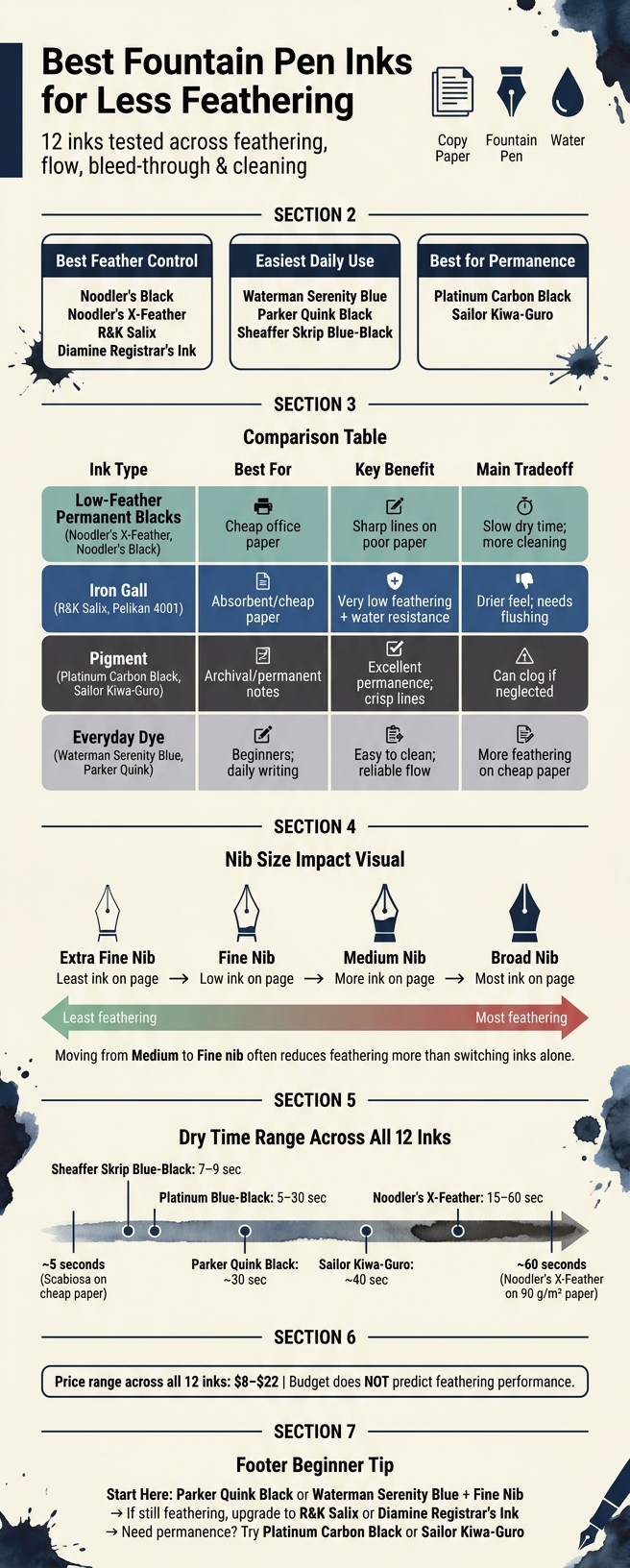
If your fountain pen looks messy on cheap paper, the fix is usually simple: use a drier ink and a Fine or Extra Fine nib.
I’d boil this guide down to three points:
- Best feather control: Noodler’s Black, Noodler’s X-Feather, Rohrer & Klingner Salix, and Diamine Registrar’s Ink
- Easiest daily use: Waterman Serenity Blue, Parker Quink Black, and Sheaffer Skrip Blue-Black
- Best if you want permanence: Platinum Carbon Black and Sailor Kiwa-Guro
The article compares 12 inks across 4 checks: feathering, flow, bleed-through, and cleaning. It focuses on the paper most people use every day: 20–24 lb copy paper, loose-leaf, and cheap notebooks.
A few takeaways stand out fast:
- Fine and Extra Fine nibs put down less ink, so they usually cut feathering more than a nib jump from Fine to Medium hurts it
- Iron gall inks often do better on bad paper than standard dye inks
- Pigment inks can keep lines tighter and add water resistance, but they need more cleaning
- Dry time can range from about 5 seconds to 60 seconds, depending on ink, nib, and paper
- Budget matters less than ink behavior. Some low-cost inks in the $8–$22 range do very well
Best Fountain Pen Inks for Less Feathering: Quick Comparison Guide
NOODLER’S Anti-feather Blue Bulletproof Fountain Pen Ink Test and Review
sbb-itb-1dd4fe9
Quick Comparison
| Ink | Main Strength | Main Tradeoff | Best Fit |
|---|---|---|---|
| Noodler’s Black | Very low feathering in a permanent black | More cleaning | Cheap office paper |
| Noodler’s X-Feather | Built for bad paper | Slow dry time | Copy paper, legal pads |
| R&K Salix | Crisp blue-black lines | Regular flushing | Daily writing on cheap paper |
| R&K Scabiosa | Tight lines in a muted purple-black | Dry feel in dry pens | Notebook use |
| Platinum Blue-Black | Low feathering with mild iron gall behavior | Can feel dry in some pens | Everyday office writing |
| Platinum Carbon Black | Dark, permanent black | Pigment maintenance | Notes you want to keep |
| Sailor Kiwa-Guro | Crisp permanent black, drier feel | Regular cleaning | Absorbent paper |
| Pelikan 4001 Blue-Black | Dry flow, low bleed-through | Can feel scratchy | Double-sided writing |
| Waterman Serenity Blue | Simple, low-fuss daily ink | Not built for bad paper | Beginners |
| Parker Quink Black | Low-cost daily black | Not waterproof | General office use |
| Sheaffer Skrip Blue-Black | Fast dry time, easy cleanup | Softer color | Fast daily notes |
| Diamine Registrar’s Ink | Tight lines plus water resistance | Iron gall upkeep | Cheap paper with permanence |
My short take: if you’re new, start with Parker Quink Black, Waterman Serenity Blue, or Sheaffer Skrip Blue-Black in a Fine nib. If that still feathers, move to Salix, Pelikan 4001 Blue-Black, or Registrar’s Ink. If you need a permanent black, try Platinum Carbon Black or Kiwa-Guro.
That’s the core of the article in plain English: paper matters, nib size matters, but ink choice often makes the biggest difference on cheap paper.
1. Noodler's Black
If feathering is your main problem, Noodler's Black is one of the safest black inks to try first.
It works well on cheap office paper because it holds back feathering better than many other black inks. The bulletproof formula helps lines stay sharp, even on absorbent paper. If you write on low-cost paper with standard nib sizes, this is a solid benchmark ink.
Feathering Control
This is where it shines most. It stays sharp on copy paper, notebook paper, and other absorbent stock.
Flow Dryness
Flow is medium to slightly dry. That gives you good control in fine and extra-fine nibs, while still working well in a medium nib.
Bleed-through and Ghosting
Bleed-through is low for a permanent black ink. That said, thinner paper can still show some ghosting, especially with broader nibs.
Cleaning Needs
Because it’s a permanent bulletproof ink, it needs regular flushing and shouldn’t sit unused for long. It can also stain demonstrator pens.
Best for writers who want maximum feathering control in a permanent black.
If you want similar feather resistance with a drier, more specialized formula, the next ink goes further.
2. Noodler's X-Feather
Noodler's X-Feather is made for cheap copy paper, legal pads, and composition notebooks. If you've ever watched a fountain pen line spread out on office paper, this ink is aimed right at that problem. Compared with Noodler's Black, it pushes feather control further, but the tradeoff is slower dry time.
Feathering Control
This ink keeps lines tighter than most dye inks. That said, it isn't magic. Very poor paper can still cause feathering, and wet or broad nibs can push it over the edge. Fine and medium nibs are usually the safest pick.
Flow Dryness
X-Feather has a wet flow, so it dries slowly. On copy paper, dry time can be about 15 seconds. On smoother 90 g/m² paper, it can take about 60 seconds.
That slow dry time is the big catch. It's not a great fit for quick notes or for left-handed underwriters.
Bleed-Through and Show-Through
Bleed-through is usually low on everyday office paper, which is a big part of this ink's appeal. On thinner notebook paper, though, some show-through can appear, especially with wetter nibs.
On premium coated papers like Rhodia or Tomoe River, the long dry time can lead to smearing if you handle the page too soon.
Maintenance Demand
Because it's a dye ink, it avoids the clogging issues often linked with pigment inks. Still, its thicker formula does better with regular flushing. Flush the pen every few weeks, and don't leave the ink sitting idle in the pen for long.
Best for writers who want maximum feather control on cheap office paper.
3. Rohrer & Klingner Salix
Rohrer & Klingner Salix is a blue-black modern iron-gall ink built for daily writing on plain office paper. If you want a blue-black that behaves better than many black inks on cheap paper, Salix is one of the neatest day-to-day picks.
Feathering Control
Salix does a very good job here. On standard copy paper and composition notebooks, the lines stay crisp and well defined. Fine and extra-fine nibs look the cleanest. Medium nibs can spread a little more, especially on the lowest-grade paper.
Flow Dryness
Dry time is fast on cheap copier paper, slower on coated paper, and a bit longer with medium nibs. On 80 gsm Rhodia, one test measured about 11 seconds with a fine nib. If you’re left-handed and tend to drag your hand across new writing, that’s worth watching on coated stock.
Bleed-Through and Show-Through
Bleed-through stays low on standard office paper. Show-through is usually moderate and becomes more noticeable with broader or wetter nibs.
Maintenance Demand
Flush the pen about once a month if you keep it inked, and clean it each time you switch inks. Don’t let it sit unused for weeks. So while it asks for a bit more care than a standard dye ink, the payoff is cleaner writing on everyday paper.
4. Rohrer & Klingner Scabiosa
Rohrer & Klingner Scabiosa is a muted purple-black modern iron-gall ink that keeps lines tight on everyday paper. It darkens as it dries, which gives the writing a bit more depth a few moments after it hits the page. If Salix is the cleaner blue-black, Scabiosa gives you much the same paper control in a warmer color.
Feathering Control
Scabiosa does a good job of keeping lines clean on ordinary paper. Fine and extra-fine nibs usually look the sharpest. Broader nibs can spread more on cheap paper, so the result depends a lot on the pen and page.
Flow Dryness
Scabiosa has a dry-to-moderate flow, and that helps keep feathering in check. Dry time runs from about 5 to 40 seconds, depending on the paper and nib. In an already dry pen, it can feel a little scratchy.
Bleed-Through and Show-Through
Bleed-through is low, and show-through is usually light, so both sides of the page stay usable. That said, broad nibs on thin paper can chip away at that edge.
Maintenance Demand
Like other iron-gall inks, Scabiosa needs regular care. Flush the pen every 2 to 4 weeks, and don’t leave it inked for long stretches. If you do, it can leave hard residue that’s tougher to clear than ordinary dye ink.
If you want similar control in a simpler daily ink, the next option is more straightforward.
5. Platinum Blue-Black
After Scabiosa, Platinum Blue-Black gives you a similar level of paper control in a blue-black that feels more familiar. It’s a mild iron-gall ink that handles bad paper well without the extra hassle that sometimes comes with specialty inks. It goes down as a bright blue, then darkens as it dries.
Feathering Control
This ink has a strong track record on cheap copy paper and everyday notebooks. On standard copy paper, lines stay clean and usually look better than wetter dye inks. Fine and extra-fine nibs tend to give the sharpest results. Broader nibs can still do well, but on absorbent paper they’re more likely to flirt with feathering.
Flow Dryness
Flow is medium-dry, and that’s a big part of why this ink keeps feathering in check. Reported dry times ranged from 5–10 seconds with a medium nib to more than 30 seconds in other pen-and-paper setups. If the ink feels a bit dry in your pen, a wetter writer can help smooth things out without giving up much of that paper control.
Bleed-Through and Show-Through
Bleed-through is usually limited on normal office paper, and show-through is light enough that both sides of the page are still usable in most cases. On very thin or highly absorbent sheets, you can still get some ghosting, so a fine nib and light hand are the safer bet.
Maintenance Demand
Platinum Blue-Black is low to moderate maintenance for an iron-gall ink. Regular flushing still matters, especially if you’re changing inks or letting a pen sit for a while, but this formula is often seen as one of the easier iron-gall options to live with. Reports of staining or hard cleanup are rare.
Platinum’s inverted bottle is a nice touch too. It makes filling less messy and helps cut down on wasted ink. At about $18–$22 for 60 ml, it gives you a lot for the price if you want a daily-use ink with this kind of paper control.
For a darker, more permanent line with similar paper control, the next ink moves into pigment-based black.
6. Platinum Carbon Black
If you want that same paper control in a permanent black, Platinum Carbon Black is the next step. It’s a carbon pigment ink, not a dye, which means more of the ink stays near the paper surface and tends to feather less. In plain English: it’s one of the cleaner-writing black inks for absorbent paper.
Feathering Control
Platinum Carbon Black has a strong reputation for crisp, controlled lines. Reviewers have reported clean results on Rhodia notebooks and standard copier paper. On cheaper 20 lb office paper, though, feathering and some bleed-through can show up, especially with wetter nibs. For everyday U.S. copy paper, a fine or extra-fine nib is the safest bet.
Flow and Dryness
This ink writes smoothly and is fairly wet for a pigment ink. That extra flow is nice, but it also means fine and extra-fine nibs usually keep the line tighter on cheap paper. Some users find medium and broad nibs a bit too wet. If that happens, test a sample diluted with distilled water.
Bleed-Through and Show-Through
On smooth paper, bleed-through is usually low and show-through stays manageable. Standard U.S. 20 lb copy paper is less forgiving. With medium nibs, you should expect visible ghosting and the occasional bleed-through dot. Move up to 24 lb copy paper and the performance improves, with show-through often dropping to a mild level.
Maintenance Demand
That permanence comes with a trade-off: better water resistance, but more cleaning. Dried pigment is harder to flush out if the pen sits unused. A good routine is to flush the pen with clean water every 2 to 4 weeks and gently swirl the bottle before filling so the pigment mixes back in.
Pens with Platinum's Slip & Seal system, like the Preppy, Procyon, or 3776, are especially good matches. If your top goal is crisp lines, this is a strong pick. If you want something you can ignore for weeks at a time, it may feel like more work than it’s worth.
7. Sailor Kiwa-Guro
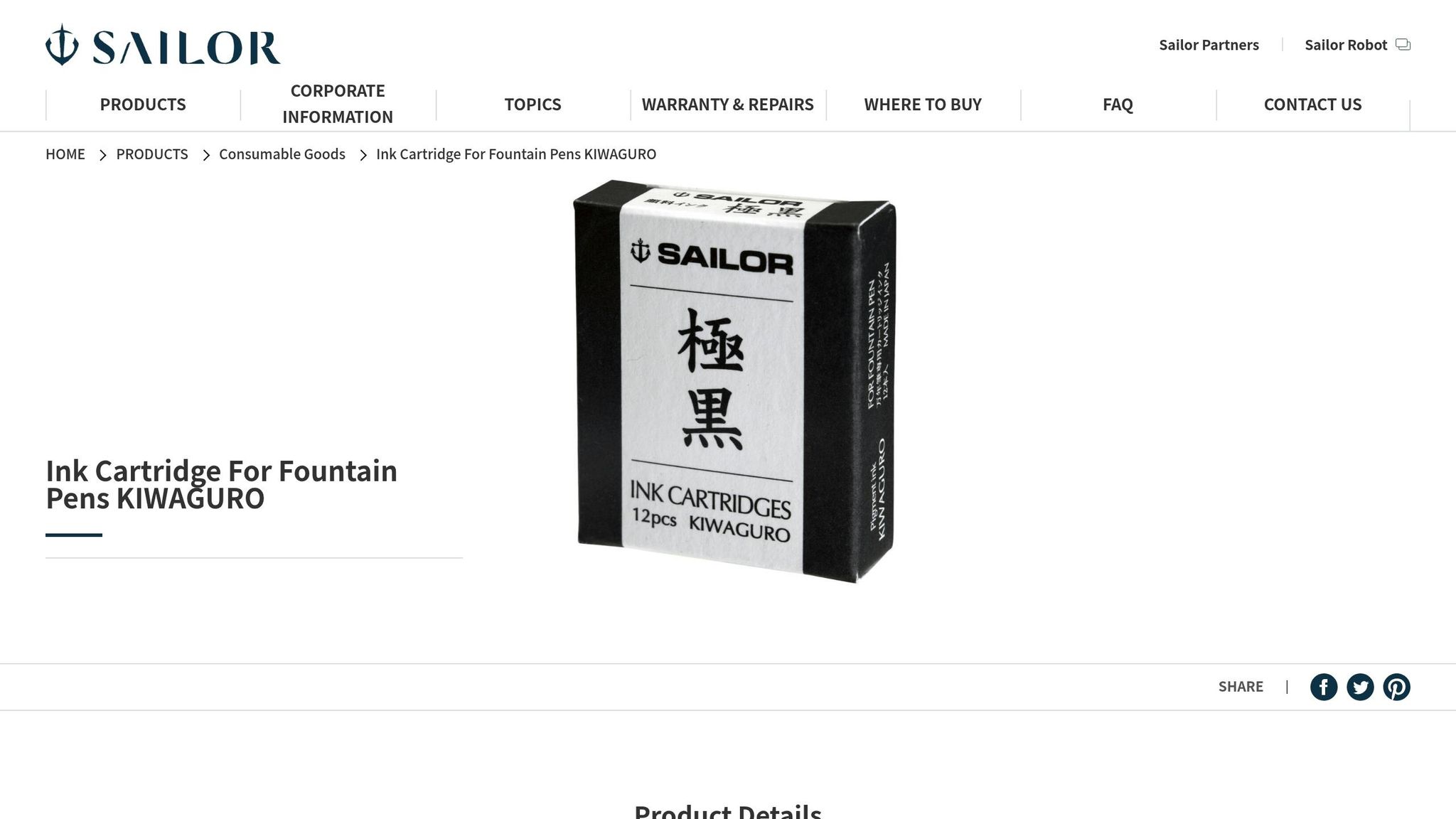
If you want a permanent black that behaves a lot like Platinum Carbon Black but feels a bit drier on the page, Sailor Kiwa-Guro is a strong pick. It’s a nano-pigment black that stays tight on absorbent paper, which makes it a good fit when feathering is the main issue.
Feathering Control
Kiwa-Guro does a good job keeping lines crisp on copy paper, notebooks, legal pads, and filler paper. On Staples 24 lb copy paper, one test found almost no feathering, no bleed-through, and normal writing dried in about 40 seconds.
Flow and Dryness
A lot of that control comes from the ink’s drier feel. Kiwa-Guro writes a bit drier than many smoother black inks, which helps fine and extra-fine nibs keep a clean, sharp line. With broad nibs, though, more ink hits the page, so that edge can fade on thinner paper.
Bleed-Through and Show-Through
Bleed-through is usually very low. That said, thinner sheets can still show ghosting, especially if you’re using a wetter pen or a broader nib.
Maintenance Demand
The downside is maintenance. Because this is a pigment ink, Kiwa-Guro needs regular flushing every 2 to 4 weeks and shouldn’t sit unused in a pen for long periods.
8. Pelikan 4001 Blue-Black
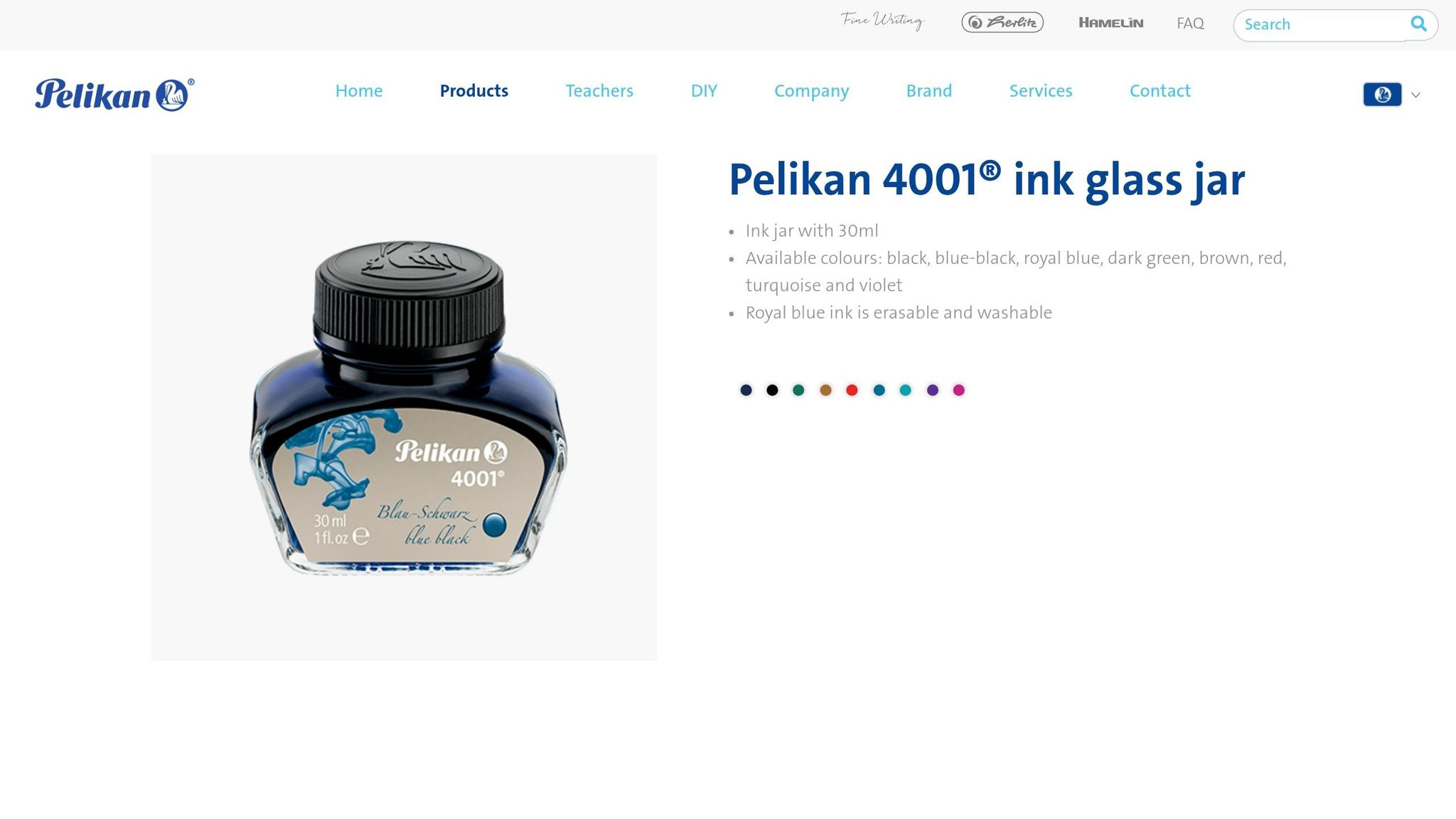
Pelikan 4001 Blue-Black is a light iron-gall ink that goes down as a dark blue, then dries into a gray-leaning blue-black. The look is restrained and office-friendly, which makes it easy to use for day-to-day work.
Feathering Control
This ink stays neat on standard copy paper and cheap notebooks, with very little feathering or bleed-through. It also does better than Pelikan Edelstein Tanzanite on feather-prone Staples Multiuse paper.
Flow and Dryness
The flow runs on the dry side, which helps keep lines clean and tight. That said, dry pens and fine nibs can feel scratchy with it. Medium and broad nibs, or pens that put down a bit more ink, tend to work better.
Bleed-Through and Show-Through
Bleed-through is very low, and the controlled flow helps keep show-through in check on typical notebook paper. If you like writing on both sides of the page, this ink makes that much easier.
Maintenance Demand
Because it's a light iron-gall ink, it needs periodic flushing. A good rule is every 1 to 3 months with regular use, and earlier if the flow starts to tighten up. It's best to avoid vintage pens with delicate sacs. The low pH, measured at pH 2.1, makes modern pens the safer pick.
For a darker, fully permanent black, the next ink moves to pigment.
9. Waterman Serenity Blue
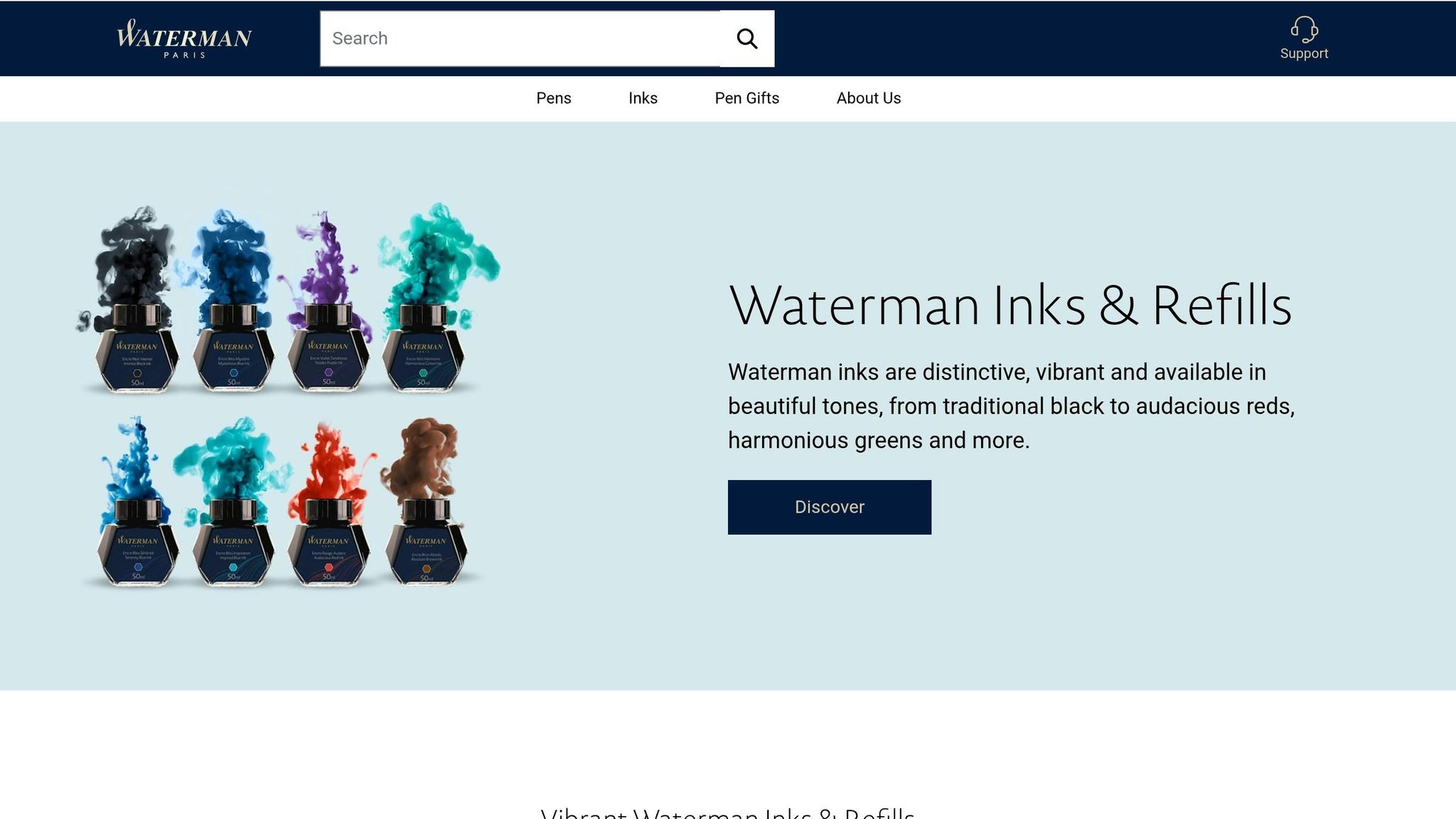
After the drier blue-blacks above, Waterman Serenity Blue feels smoother and easier to live with day to day. It’s a reliable daily ink, but it’s not built as a special anti-feather option.
Feathering Control
On fountain-pen-friendly paper like Rhodia or Clairefontaine, feathering is usually a non-issue. On standard 20 lb copy paper, though, it can still feather, so fine or extra-fine nibs tend to give the cleanest line. In plain terms, this is a dependable everyday ink, not a fix for bad paper in the way Noodler's X-Feather or an iron-gall ink can be.
Flow and Dryness
It runs balanced to slightly wet, which helps it write smoothly without dumping too much ink onto the page.
Bleed-Through and Show-Through
Bleed-through is usually limited with fine nibs, even on thinner paper. Move up to larger nibs, and you’ll often see more ghosting and bleed-through. Broad nibs can sometimes cross into bleed-through on absorbent office paper. For most office notes and notebook use, a fine or medium nib keeps things neat and usable.
Maintenance Demand
This is a standard dye ink, so it rinses out with little fuss and doesn’t need any special cleaning. That makes it a good pick for beginners or anyone who wants steady performance without extra upkeep.
Next: Parker Quink Black, another classic daily ink with a different feel.
10. Parker Quink Black

If Serenity Blue is the easygoing pick, Parker Quink Black is the budget-friendly black version. It’s a common, low-cost daily black in the U.S., and it works well on ordinary paper without much feathering. A 57 mL bottle usually sells for $8–$15.
Feathering Control
On Rhodia and similar paper, Quink Black shows very little feathering. It also holds up well on many office notebooks. That said, it isn’t built for feather control the way Noodler's X-Feather is. So on very absorbent or low-grade paper, a wetter pen or broader nib can still make some feathering show up, which is normal for a standard dye ink.
In water tests, it tends to wash toward a dark blue tone, which tells you one thing pretty fast: it isn’t waterproof.
Flow and Dryness
Parker Quink Black has average flow. It’s not especially wet, and it’s not especially dry either. On Rhodia with a medium nib, the dry time is reported at around 30 seconds.
That middle-of-the-road flow is a big part of why it behaves well on everyday paper. It also contains Solv-X, which helps keep the feed clean.
Bleed-Through and Show-Through
Bleed-through stays low on good paper, while ghosting becomes more noticeable on thin or very absorbent sheets. On 24 lb copy paper or decent notebooks, the ink remains manageable and easy to live with for daily writing.
Maintenance Demand
Quink Black is usually considered safe for both modern and vintage pens. Some users do mention clogging or hard starts if a pen sits unused for several days, especially when the cap doesn’t seal well.
In most cases, maintenance is simple. A water flush every few weeks is usually enough, and a short soak can clear more stubborn buildup.
Next up is another practical black, but with a different maintenance profile.
11. Sheaffer Skrip Blue-Black
Among everyday blue-blacks, Skrip Blue-Black earns its spot for one simple reason: it behaves. Sheaffer Skrip Blue-Black is a low-maintenance daily ink that dries fast and stays clean on office paper. A 50 mL bottle usually costs $12–$16, which puts it among the lower-cost blue-blacks in this roundup.
Feathering Control
Testing found no feathering or spreading on Clairefontaine, Rhodia, copier paper, Mead notebook paper, Tomoe River, and Moleskine. Its average-to-low flow helps keep lines neat and controlled on the page. On very cheap recycled paper with a broad nib, you may still see a little edge spread, but it stays fairly well behaved.
Flow and Dryness
Dry time comes in at about 7–9 seconds on Rhodia 80 gsm, based on nib size and paper. That makes it a good fit for quick notes, margin comments, and fast page turns. If you're left-handed or you move fast across the page, that shorter dry time can make day-to-day writing a lot less annoying.
Bleed-Through and Show-Through
Bleed-through is usually not a problem on standard U.S. office paper and composition notebooks. Show-through on the back of the page is light and rarely gets in the way of more writing when you use a fine or medium nib. Double-sided writing works well on 20 lb copy paper and most notebooks, though very thin or bargain paper will show more ghosting, especially with broader nibs.
Maintenance Demand
This is a big part of why Skrip Blue-Black suits beginners so well. It is non-acidic and cleans out easily with plain water, with no strict cleaning schedule required. Just flush the pen when you refill and use lukewarm water until it runs clear.
The trade-off is the color. It is muted and can lean teal or gray-blue instead of a dark, punchy blue-black. For some writers, that's a fair swap for cleaner performance and faster dry times on everyday paper.
If you want more permanence, the next ink moves closer to that goal.
12. Diamine Registrar's Ink
After a low-maintenance daily blue-black, Registrar's moves back into iron gall territory for tighter line control. Diamine Registrar's Ink is a dry iron gall ink that keeps lines neat on cheap paper and adds water resistance.
Feathering Control
The dry iron gall formula helps the line stay narrow on absorbent paper. On copy paper, loose-leaf, and notebook paper, it limits spread into the page and keeps writing cleaner. Testing on Tomoe River 68 gsm found no feathering, and it can also do well on lower-grade papers.
Flow and Dryness
Diamine Registrar's is a dry to medium-dry ink. That dry feel helps rein in spread, but very dry fine nibs can feel scratchy. The sweet spot is usually a fine nib in a pen with slightly generous flow. On cheap office paper, that tradeoff often makes sense because line control matters more than a slick writing feel.
Bleed-Through and Show-Through
Bleed-through is usually manageable on decent paper, though thin sheets can still show ghosting.
Maintenance Demand
Like other iron gall inks, it can leave residue if it sits in a pen too long. Flush the pen every few weeks, and don't leave the ink in unused pens for long stretches. Once dry, the writing stays legible after water exposure; the blue part washes away, leaving a permanent grey-black line.
This ink fits writers who want stronger feather control and water resistance without the maintenance load that comes with many pigment inks.
With the ink types covered, the next step is matching them to nib size, paper, and maintenance level.
Buying Tips for Beginners
Now that you've seen how the inks stack up, it gets easier to narrow down the right fit for your paper and pen.
Best First Ink Type for Most Beginners
If you want the simplest place to start, go with a dry dye ink or a dependable daily ink. Waterman Serenity Blue and Parker Quink Black are good starting points.
When Iron Gall Inks Make More Sense
If you write on cheap copy paper, legal pads, or other absorbent paper, iron gall inks are often the better pick. They bind more tightly to the paper as they dry, which helps limit spread more than standard dye inks.
Good options include Rohrer & Klingner Salix and Pelikan 4001 Blue-Black. Just make sure to flush your pen with water every two to four weeks so residue doesn't build up.
When Pigment Inks Are Worth the Extra Care
Pigment inks make the most sense for archival use: signatures, official notes, or anything you want to keep for a long time. From this list, Platinum Carbon Black and Sailor Kiwa-Guro fit that role well.
The catch is maintenance. Pigment ink can dry inside the pen and become harder to clean. If you write every day and clean the pen on a regular schedule, that's usually fine. If not, a dye ink is the easier first step.
How Nib Size Affects Feathering
A Fine or Extra Fine nib puts down less ink than a Medium nib, so it tends to feather less on absorbent paper. In plain terms, moving from a Medium to a Fine nib often cuts feathering more than changing inks by itself.
How to Build a Low-Cost Starter Setup
A simple low-feathering setup is a Fine or Extra Fine nib paired with a dry dye ink like Waterman Serenity Blue or Parker Quink Black. That combo lowers ink load on absorbent paper without special inks or high-maintenance cleaning.
Fountain Pen Revolution sells beginner-friendly pens, nibs, and ink, including Fine and Extra Fine options.
Use this quick guide to match ink type, nib, and use case.
| Common Need | Ink Category | Example Inks | Best Nib |
|---|---|---|---|
| Easiest everyday use | Classic dry dye | Waterman Serenity Blue, Parker Quink Black, Sheaffer Skrip Blue-Black | Fine or Extra Fine |
| Best on cheap/absorbent paper | Iron gall | Rohrer & Klingner Salix, Pelikan 4001 Blue-Black | Fine |
| Maximum permanence | Pigment | Platinum Carbon Black, Sailor Kiwa-Guro | Extra Fine |
| Low-feathering blue-black look | Iron gall or classic blue-black | Platinum Blue-Black, Sheaffer Skrip Blue-Black | Fine |
| Budget starter setup | Classic dry dye + beginner pen | Waterman or Parker ink + FPR pen | Fine or Extra Fine |
Pros and Cons by Ink Type
The inks above fall into a few clear groups, and each one handles feathering, dry time, and cleanup a little differently.
Here’s the simple trade-off: the better an ink is at controlling feathering and standing up to water, the more care it usually asks from you. So if feathering is your top concern, start with how well the ink grips the paper, then look at dry time, and then think about how much cleaning you're willing to do.
Low-Feather Permanent Blacks
These inks keep lines sharp, even on bad paper. That makes them a strong pick for cheap notebooks, office copy paper, and other surfaces that usually turn fountain pen writing into a fuzzy mess.
The catch is dry time. These inks often take longer to set, and they also need a bit more care when it’s time to clean your pen. Plain water may not clear out residue fast, especially if ink has been sitting for a while. A pen cleaning solution can help with longer-term buildup.
Iron Gall Inks
In this roundup, iron gall inks are the strongest low-feather choice for cheap, absorbent paper. As they dry, they bind to the paper fibers, which helps keep writing clear and easy to read, even on copy paper or school notebooks.
That said, they usually feel drier on the page. If your nib is very fine or already on the dry side, the writing experience can feel a bit scratchier. They also need more regular care than standard dye inks, so it’s smart to flush a frequently used pen every one to two weeks.
Pigment Inks
Platinum Carbon Black and Sailor Kiwa-Guro offer excellent permanence and crisp line control. Kiwa-Guro keeps lines very crisp and is easier to clean than most pigment inks. Platinum Carbon Black is extremely dark and stable once dry, but drying time can be long.
The main downside is maintenance. Pigment inks shouldn’t sit unused in a pen for long stretches, and regular flushing helps prevent buildup. Think of them like a high-performance tool: great results, but only if you keep up with basic care.
Everyday Dye Inks
These are the easiest inks to use and clean. For many people, that alone is a big win.
They do feather more on very cheap paper than iron gall or pigment inks, though. On better paper with a fine nib, feathering is usually minimal. Their main strength is convenience: they’re forgiving, low-maintenance, and easy for beginners to live with.
| Ink Type | Pros | Cons |
|---|---|---|
| Low-Feather Permanent Blacks (Noodler's X-Feather, Noodler's Black) | Sharp lines on poor paper; strong water resistance | Slow dry time; needs more thorough cleaning |
| Iron Gall (Salix, Pelikan 4001) | Very low feathering; strong water resistance; good on cheap paper | Drier feel; needs more frequent flushing |
| Pigment (Platinum Carbon Black, Sailor Kiwa-Guro) | Excellent permanence; crisp lines | Long dry times; can clog if neglected |
| Everyday Dye (Waterman Serenity Blue, Parker Quink) | Easy to clean; beginner-friendly; reliable everyday flow | More feathering on cheap paper; limited water resistance |
Use the buying tips above to match one of these groups to your paper, nib, and how much upkeep you’re okay with.
Conclusion
These inks all lead to the same takeaway: most feathering issues go away when you use a drier ink with a Fine or Extra Fine nib.
If you're just getting started, the simplest low-feather setup is Waterman Serenity Blue, Pelikan 4001 Blue-Black, or Parker Quink Black paired with a Fine nib. If that still doesn't do the job, step up to an iron gall ink like Rohrer & Klingner Salix or Diamine Registrar's Ink. If you want the strongest feather control, pigment inks such as Platinum Carbon Black and Sailor Kiwa-Guro tend to perform best, though they do ask for more careful cleaning.
A smart way to begin is with a dry everyday ink and a Fine or Extra Fine nib. Then, only move to stronger options if your paper still acts up. Fountain Pen Revolution offers affordable pens and Fine or Extra Fine nibs, which makes it an easy place to build a starter setup. In most cases, that pairing matters more than pricey gear.
FAQs
Which ink type feathers the least?
Drier inks usually feather the least because they put down less liquid. That means less oversaturation and less spread into the paper fibers. In many cases, high-viscosity inks also produce sharper, more controlled lines than wetter, low-viscosity formulas.
On standard or absorbent paper, dependable options like Pelikan 4001 or standard Waterman inks are often safe picks.
Do I need a Fine or Extra Fine nib?
Not always. But a fine or extra-fine nib can help cut down on feathering.
Here’s why: finer nibs lay down less ink than medium or broad nibs. On absorbent or lower-grade paper, that often means cleaner lines and less spreading.
If your writing feathers a lot, moving to a finer nib is a simple fix. If you like broader lines, or you write on high-grade coated paper, a broader nib can still work just fine.
How often should I clean my pen?
How often you clean your pen mostly comes down to the ink you use.
With standard dye-based inks, a flush every 4 to 6 weeks is usually enough.
With specialty inks like shimmer, pigment-based, or iron gall, clean the pen every 1 to 2 weeks. These inks can leave more residue and are more likely to clog things up.
If you're new to fountain pens and use yours often, every 2 to 4 weeks is a solid general routine.
You should also flush the pen:
- when you're switching ink colors
- before putting it away for a long period without use