

When choosing a pen, the material of its trims - like clips, rings, and caps - plays a big role in both its look and performance. Here's a quick rundown of the top 5 materials used for pen trims:
- Gold: Luxurious and corrosion-resistant, but expensive. Commonly alloyed (e.g., 14k or 18k) for durability. Gold-filled trims last longer than electroplated ones.
- Silver: Bright and elegant, especially in sterling or Argentium variants. Prone to tarnish but offers a timeless appeal.
- Stainless Steel: Durable, affordable, and low-maintenance. Often used in modern, minimalist designs.
- Titanium: Lightweight, strong, and resistant to wear. Available in unique finishes like anodized colors or PVD coatings.
- Brass: Warm, vintage look that develops a patina over time. Durable and antimicrobial but requires occasional polishing.
Quick Comparison
| Material | Durability | Look | Price Range | Maintenance |
|---|---|---|---|---|
| Gold | Moderate to High | Luxurious tones | $$$$ | Low |
| Silver | Moderate | Bright/reflective | $$$ | High (tarnishes) |
| Stainless Steel | High | Sleek/modern | $ | Very Low |
| Titanium | Very High | Matte or colorful | $$-$$$ | Very Low |
| Brass | Moderate | Evolving patina | $$ | Moderate |
Each material has its strengths, from gold's elegance to stainless steel's practicality. Your ideal choice depends on your style, budget, and how much upkeep you're willing to handle.
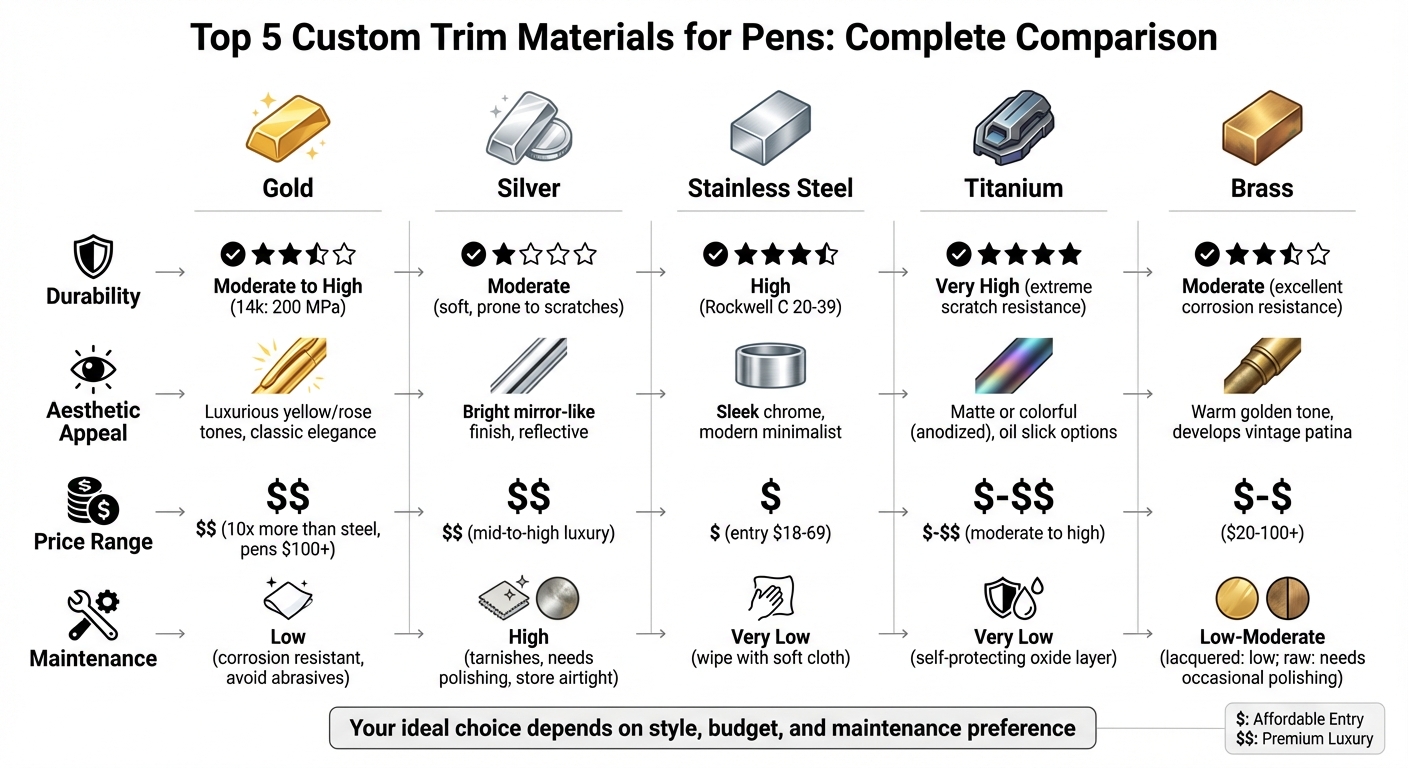
Custom Pen Trim Materials Comparison Chart: Durability, Cost, and Maintenance
1. Gold
Gold has always been a symbol of luxury and sophistication. As Captain Chang puts it:
Gold has long been favored for its shine.
Its allure goes beyond aesthetics, offering both beauty and practicality.
Aesthetic Appeal
Gold comes in a range of tones to suit different tastes. For instance, rose gold - a blend of copper and gold - offers a warm, rich appearance, while vermeil combines gold plating over sterling silver for an even more lavish effect. High-end pens often incorporate gold accents to emphasize their premium quality.
Durability
Gold's functionality is as important as its looks. Pure 24k gold, though stunning, is too soft for practical use, so pen trims typically use alloys like 14k (585) or 18k (750) gold. Electroplated gold, while visually appealing, has a thin layer of gold that may wear off over time, exposing the base metal in a process called "brassing." On the other hand, gold-filled trims feature a much thicker layer of gold bonded to the base metal, making them durable enough to endure years - even decades - of regular use. Additionally, 10k gold plating, which includes nickel, is tougher and more resistant to wear than 24k gold.
Cost
Gold components significantly increase the cost, often priced at about 10 times more than stainless steel. For those seeking a balance between affordability and elegance, 10k gold offers a budget-friendly option while maintaining a brilliant gold finish. Gold trims are typically found on pens priced above $100.
Maintenance Requirements
One of gold's standout features is its excellent resistance to corrosion, making it highly compatible with fountain pen inks and less prone to tarnishing. However, its softness makes it vulnerable to scratches, especially when it comes into contact with harder surfaces. For electroplated gold, using abrasive cleaning materials can speed up wear, so gentler cleaning methods are recommended. In contrast, gold-filled trims require minimal upkeep, making them a more durable option for daily use.
2. Silver
Silver stands out for its bright, mirror-like finish, making it a popular choice for metal trims. As Grumpy Guy Pens puts it:
"It is a beautifully bright and quality plating, easily the brightest of the silver-colored metal platings".
Aesthetic Appeal
Sterling silver, known for its 92.5% purity, is a favorite for intricate decorative techniques like engine turning or guilloché. These methods, when combined with translucent enamel, create surfaces that shimmer and play with light. Silver also pairs elegantly with Niello, a black metal sulfide that adds striking contrast and remains durable even when scratched. For those looking for enhanced brilliance, Argentium silver - at 93.5% purity - retains its polish longer than sterling silver, thanks to a protective germanium oxide layer that preserves its shine. High-quality silver plating, often around 20 microns thick, ensures a striking finish while offering unique wear characteristics.
Durability
Silver doesn't corrode, but its softness makes it susceptible to wear over time. Sterling silver may develop small dents, light scratches, and a patina that adds to its charm. Argentium silver, while more resistant to tarnish than traditional sterling, can eventually take on a subtle gold or "taterskin brown" hue.
Cost
Silver strikes a balance between affordability and luxury. It’s less expensive than gold or platinum, but solid sterling silver pens or those with intricate overlays are still considered high-end items. This makes silver an appealing option for those seeking luxury without the steep price tag of gold.
Maintenance Requirements
Keeping silver's brilliance intact requires some care. Silver reacts with sulfur in the air, as well as with skin pH, lotions, and perfumes, which can lead to tarnishing. To clean, use mild soap and water with a soft cloth, and polish with a silver-specific cloth to reduce tarnish. Storing your silver pen in an air-tight, dark container at room temperature can also help slow the tarnishing process.
3. Stainless Steel
Stainless steel has rightly earned its spot as the go-to material for pen trims, blending durability, sleek aesthetics, and affordability into one versatile package.
Durability
Through cold-rolling, stainless steel undergoes a process called work hardening, which significantly boosts its strength. Its yield strength jumps from around 240 MPa to an impressive 760 MPa. Amadeus W., an engineer with expertise in pen materials, highlights this quality:
"The ability to work harden this material is its most significant quality. During this process, its yield strength... increases from somewhere around 240MPa to 760MPa."
For premium pen components, 316L stainless steel is the standard. This alloy - made up of approximately 65% iron, 18% chromium, 14% nickel, and 3% molybdenum - offers outstanding corrosion resistance. It’s particularly well-suited for fountain pens, as its resilience withstands exposure to potentially damaging ink formulas. Unlike gold-plated trims that wear down over time, stainless steel is solid all the way through. Captain Chang explains:
"Making the barrel [or trim] out of stainless steel has the advantage of being very durable without being excessively heavy, and it stays pretty for a long time."
Strength aside, stainless steel also has a distinct visual appeal.
Aesthetic Appeal
Stainless steel delivers a polished, professional look with its "Chrome" finish, which aligns perfectly with modern, minimalist design preferences. It’s a favorite among enthusiasts who value simplicity over ornate embellishments. Pens made entirely from stainless steel are often nicknamed "Flighters" by dedicated users.
Cost
One of stainless steel’s standout features is its affordability, making high-quality pens accessible to a broader audience. Entry-level models, like the FPR Indus, are priced between $18 and $20, while premium options such as the FPR Jaipur V2 range from $44 to $69. By comparison, gold-trimmed luxury pens typically retail between $200 and $380. This price difference is no surprise, as gold components are roughly ten times more expensive than stainless steel.
Maintenance Requirements
Stainless steel’s practicality extends to its low-maintenance nature. It’s a "hard metal" that resists tarnishing, unlike silver, and doesn’t require specialized polishing products. A simple wipe with a soft, lint-free cloth is enough to remove fingerprints and oils. Its natural corrosion resistance ensures it stays looking fresh for years. For added protection, storing your pen in a case can help prevent minor surface scratches over time.
4. Titanium
Titanium stands out as a lightweight yet incredibly strong alternative to stainless steel, offering a mix of durability and comfort. Known for its aerospace-grade resilience, titanium has a density of just 4.51 g/cm³, making it much lighter than steel. This low weight, combined with its high strength-to-weight ratio, makes titanium-trimmed pens an excellent choice for long writing sessions.
Durability
What makes titanium truly exceptional is its ability to endure stress without breaking. Unlike steel, which can crack under extreme pressure, titanium flexes and returns to its original shape. As True Talon explains:
"Unlike steel which is brittle and tends to crack under extreme stress, titanium will generally bend and flex back to it's original shape."
Its natural oxide layer provides excellent rust resistance, and it can handle temperatures over 600°C (1,112°F). Interestingly, titanium becomes even stronger in colder conditions. Titanium finishes, such as Gold or Black plating, offer enhanced wear resistance compared to traditional coatings.
Aesthetic Appeal
Titanium isn’t just durable - it’s versatile in appearance too. Through anodizing, it can take on vibrant colors, including the striking "Oil Slick" finish. Titanium Gold plating offers the look of 24K gold with added durability, while Black Titanium finishes, ranging from dark gray to gunmetal, are especially favored by fans of everyday carry items.
Cost
The price of titanium varies depending on the finishing process. High-end finishes like Physical Vapor Deposition (PVD) are more expensive, placing them in the mid-to-premium price range. On the other hand, anodized titanium colors are more affordable for large-scale production. Custom titanium parts typically cost around $10 per piece.
Maintenance Requirements
Titanium is practically maintenance-free thanks to its self-protecting oxide layer. As R. C. Rutter of the International Association of Penturners notes:
"Titanium oxide is molecularly bonded (PVD) to the parts. This plating is unbelievably hard and durable. It will last for many, many years."
It resists rust, tarnish, and corrosion - even from ink exposure. Its non-magnetic nature prevents metallic dust buildup, reducing the risk of scratches. Best of all, titanium doesn’t need special polishing and retains its appearance for years of use.
sbb-itb-1dd4fe9
5. Brass
Brass brings a warm, golden tone and a touch of vintage charm to pen trims. This copper-zinc alloy evolves over time, developing a rich, golden-brown patina that adds character. As the Wood Fountain Pen Team puts it:
"The beauty of brass lies not only in its visual appeal but also in the unique characteristics and the craftsmanship that go into creating these exquisite writing instruments."
Durability
Brass is built to last. With excellent corrosion resistance, it outperforms many ferrous metals in terms of longevity. Brass pens, typically weighing between 20–60g, have a solid feel that reflects their craftsmanship. This weight is often associated with quality, and brass’s copper content gives it natural antimicrobial properties, reducing microbe survival from days to just a few hours. These qualities make brass a strong competitor among premium materials.
Aesthetic Appeal
Brass isn’t just about durability - it’s also about style. Lacquered brass retains a bright, golden finish with minimal maintenance, while raw brass develops a unique patina over time. This evolving look appeals to those who appreciate the "wabi-sabi" aesthetic of imperfection and natural change. For those who want to speed up the patina process, exposing brass to ammonia or vinegar fumes can create a vintage effect. The alloy’s color ranges from reddish tones to muted golden yellows, offering versatility in design.
Cost
The premium qualities of brass come at a mid-to-high price point. Brass pens typically range from $20 to over $100, depending on the brand and design complexity. For instance, handmade wood and brass fountain pens like The Hemmingway are priced between $49.00 and $59.00, while brass bolt-action pens such as The Axis are in the $99.00 to $129.00 range. These prices reflect brass’s reputation as a material that combines durability with a refined aesthetic.
Maintenance Requirements
Caring for brass depends on its finish. Lacquered brass requires little effort - just a wipe with a soft, lint-free cloth to remove fingerprints and oils. Raw brass, on the other hand, may need more attention if you want to maintain its shine, although many users embrace the natural patina. Tarnished brass can be cleaned with simple household items like toothpaste (for mild abrasion) or ketchup (as an acidic polish), applied for 30–60 seconds. For patina on internal threads, a fine abrasive can help ensure smooth functionality. To avoid uneven tarnishing, store brass pens in a cool, dry place and keep them away from harsh chemicals, perfumes, or lotions.
Material Comparison Table
When choosing custom trim materials, it's important to weigh factors like durability, appearance, cost, and maintenance to match your specific needs. Below is a breakdown of some of the most commonly used materials and their characteristics:
14k Gold strikes a balance between durability and luxury, with a Vickers hardness of up to 200 MPa. In contrast, 18k Gold has a softer composition, making it more prone to bending, though both resist corrosion effectively. However, these options come at a steep price - approximately ten times more than stainless steel. Sterling Silver, known for its bright finish, requires rhodium plating to prevent tarnishing, with rhodium valued at up to $1,500 per Troy ounce.
Stainless Steel 316L is a budget-friendly and durable option, with a Rockwell C hardness ranging from 20 to 39, significantly harder than 14k gold. Titanium, especially with a PVD finish, offers outstanding scratch resistance. Meanwhile, Brass provides a timeless aesthetic, either maintaining a bright finish with lacquer or developing a patina over time when left raw.
Here's a quick comparison of these materials:
| Material Variation | Durability | Appearance | Price Range | Maintenance |
|---|---|---|---|---|
| 14k Gold | Moderate (200 MPa) | Classic yellow/rose luxury | Very High | Low (corrosion resistant) |
| 18k Gold | Lower (softer than 14k) | Richer gold tone | Very High | Low (corrosion resistant) |
| Sterling Silver (.925) | Moderate | Bright silver | High | High (tarnishes easily) |
| Rhodium-Plated Silver | Extreme | Brilliant cool silver | Very High | Very Low (tarnish proof) |
| Stainless Steel 316L | High (Rockwell C 20–39) | Clean industrial silver | Low | Very Low |
| Titanium (PVD) | Extreme (scratch resistant) | Matte black or gold-tone | Moderate to High | Very Low |
| Brass (Lacquered) | Moderate | Bright golden finish | Low to Moderate | Low |
| Brass (Raw) | Moderate | Evolving golden-brown patina | Low to Moderate | Moderate |
For items like daily-carry pens that endure frequent use, materials like titanium or chrome finishes are ideal due to their resilience against abrasion. If you’re drawn to gold but need something more durable, 10k or 14k gold is a better choice than higher carat options, thanks to their increased alloy content. Similarly, sterling silver shines best with rhodium plating, which drastically reduces upkeep.
This guide can help you select the perfect material for your custom trim, aligning both with your practical demands and aesthetic preferences.
Conclusion
Choosing the right trim material for your pen comes down to balancing budget, style, and how you plan to use it. Each material has its own strengths. For example, stainless steel is a practical choice if durability and cost-effectiveness are your priorities. Its chrome finishes not only resist wear but also maintain a sleek, silver-white shine over time.
If you prefer a gold appearance with long-lasting durability, titanium gold (PVD) is a standout option. As Grumpy Guy Pens explains:
"Titanium nitride matched to the color of the gold is molecularly bonded to the part... The result is that the parts will virtually never wear".
On the other hand, traditional gold plating offers a timeless, luxurious look, but its softer nature means it may show signs of wear with frequent use.
For those who love a pen with personality, brass is a great pick. Over time, it develops a natural patina, giving each pen a vintage, one-of-a-kind appearance.
Fountain Pen Revolution caters to all preferences and budgets with customizable trim options. For entry-level writers, the FPR Darjeeling starts at just $18.00 USD. If you're looking for more options, the FPR Himalaya V2 comes in stainless steel with chrome or gold trim, starting at $44.00 USD. For a premium, handcrafted experience, the FPR Tanoshii Urushi Art fountain pen begins at $149.00 USD. Whether you're after durability, elegance, or a unique patina, there's a perfect pen to suit your writing style.
FAQs
What are the benefits and drawbacks of gold versus titanium pen trims?
Choosing between gold and titanium trims for your pen boils down to your preferences for style and durability.
Gold trims exude elegance and luxury, often crafted with 24k or 10k gold plating. Their timeless appeal makes them a favorite for those who appreciate a classic, high-end look. However, gold is a softer material, which means it’s more susceptible to scratches, wear, and pitting, especially if the pen sees frequent use.
On the flip side, titanium trims are all about durability. Known for their toughness, they resist scratches and wear exceptionally well. Options like black titanium or titanium gold offer a sleek, modern aesthetic while holding up beautifully over time. While titanium may not carry the same traditional luxury as gold, it’s perfect for anyone prioritizing longevity and a contemporary design.
The decision ultimately hinges on what matters most to you: the luxurious charm of gold or the lasting practicality of titanium.
What’s the difference in maintenance between silver and stainless steel pen trims?
Silver trims demand extra attention because they tend to tarnish over time. To keep their shine and avoid discoloration, regular polishing is a must. On the other hand, stainless steel trims are incredibly durable, resist tarnishing, and require very little maintenance, making them an easy-care choice for daily use.
What makes brass a great choice for pen trims?
Brass is a go-to material for pen trims, thanks to its long-lasting strength, pleasing heft, and classic charm. One of its standout features is how it ages - over time, brass forms a natural patina that adds a one-of-a-kind, vintage look. This quality is especially admired by pen collectors and enthusiasts.
Beyond its aging beauty, brass offers a warm, refined look and a solid feel, making it a perfect match for anyone who prioritizes both practicality and style in their writing tools.