

For fountain pen beginners, choosing the right ink can make or break your experience. The key is to start with inks that are safe for your pen, easy to clean, and work well on most paper types. Here’s what you need to know:
- Avoid risky inks: Skip India ink or iron gall formulas - they can damage your pen. Stick to beginner-friendly, water-soluble dye-based inks.
- Paper matters: Some inks feather or bleed on low-quality paper. Test inks to find ones that match your writing needs.
- Cost and variety: Affordable brands like Lamy, Diamine, and Fountain Pen Revolution offer great options under $15, with plenty of colors to explore.
- Ease of use: Start with simple inks before trying shimmer or waterproof options (like Organics Studio Glycine Blue Shimmer), which need extra care.
Top beginner picks include Pilot Iroshizuku for smooth flow, Lamy for affordability, Diamine for color variety, and Fountain Pen Revolution for budget-friendly bundles.
Quick tip: Try ink samples (5 ml vials) before committing to full bottles. This way, you can test colors and performance without overspending. Ready to dive in? Start simple, and enjoy the journey!
fountain pen inks 101 ✥ basics and ink/pen tour!
sbb-itb-1dd4fe9
What Makes an Ink Good for Beginners?
The right ink can make all the difference when you're starting out with fountain pens. It can transform your writing into a smooth, enjoyable experience - or, if chosen poorly, lead to frustration. Here's what to look for when choosing beginner-friendly inks.
Affordability and Accessibility
When you're new to fountain pens, keeping costs low is a smart move. Beginner-friendly inks are often budget-friendly, making it easier to dive into the hobby without feeling overwhelmed by the price. A basic starter kit - including a pen, ink cartridges, and paper - typically costs around $20–$30.
For those who want to explore without committing to full bottles, ink samples are a fantastic option. These small 5 ml vials usually provide enough ink for two or three refills, giving you the chance to try out different colors and find what works best with your pen.
Beyond cost, ease of use plays a big role in creating a positive first experience.
Ease of Use and Maintenance
For beginners, simplicity is key. Dye-based inks are a great starting point because they dissolve easily in water, making cleaning a breeze, and they rarely clog pen feeds. As Scriveiner London explains:
New fountain pen users benefit from reliable, forgiving inks that flow consistently and clean easily.
Some specialty inks, like shimmer inks, require extra care. These contain particles that settle at the bottom of the bottle and need to be shaken before use. sheening inks, while visually striking, can take longer to dry and may smear or require frequent cleaning to avoid buildup. For newcomers, sticking to straightforward dye-based inks helps minimize maintenance headaches until you're comfortable with regular cleaning routines.
Color Options and Ink Properties
Experimenting with colors can make your writing experience more enjoyable. While classic blue and black inks are reliable and predictable, exploring other shades can add a fun, personal touch. Look for inks that perform well on standard paper by reducing feathering and bleed-through. For example, "dry" inks are better for preventing feathering, while "wet" inks flow more smoothly and work beautifully on higher-quality paper.
Once you've mastered the basics, you can branch out into inks with special properties like shading (variations in color depth) or sheen (a metallic-like finish). However, it's best to start simple. Highly saturated or specialty inks can sometimes hide pen performance issues and require more upkeep. By beginning with dependable, easy-to-use inks, you'll set yourself up for a smooth and enjoyable fountain pen journey.
Popular Beginner Ink Brands
These brands offer a mix of affordability, ease of use, and reliable performance, making them ideal for newcomers to the world of fountain pens.
Pilot Iroshizuku Ink
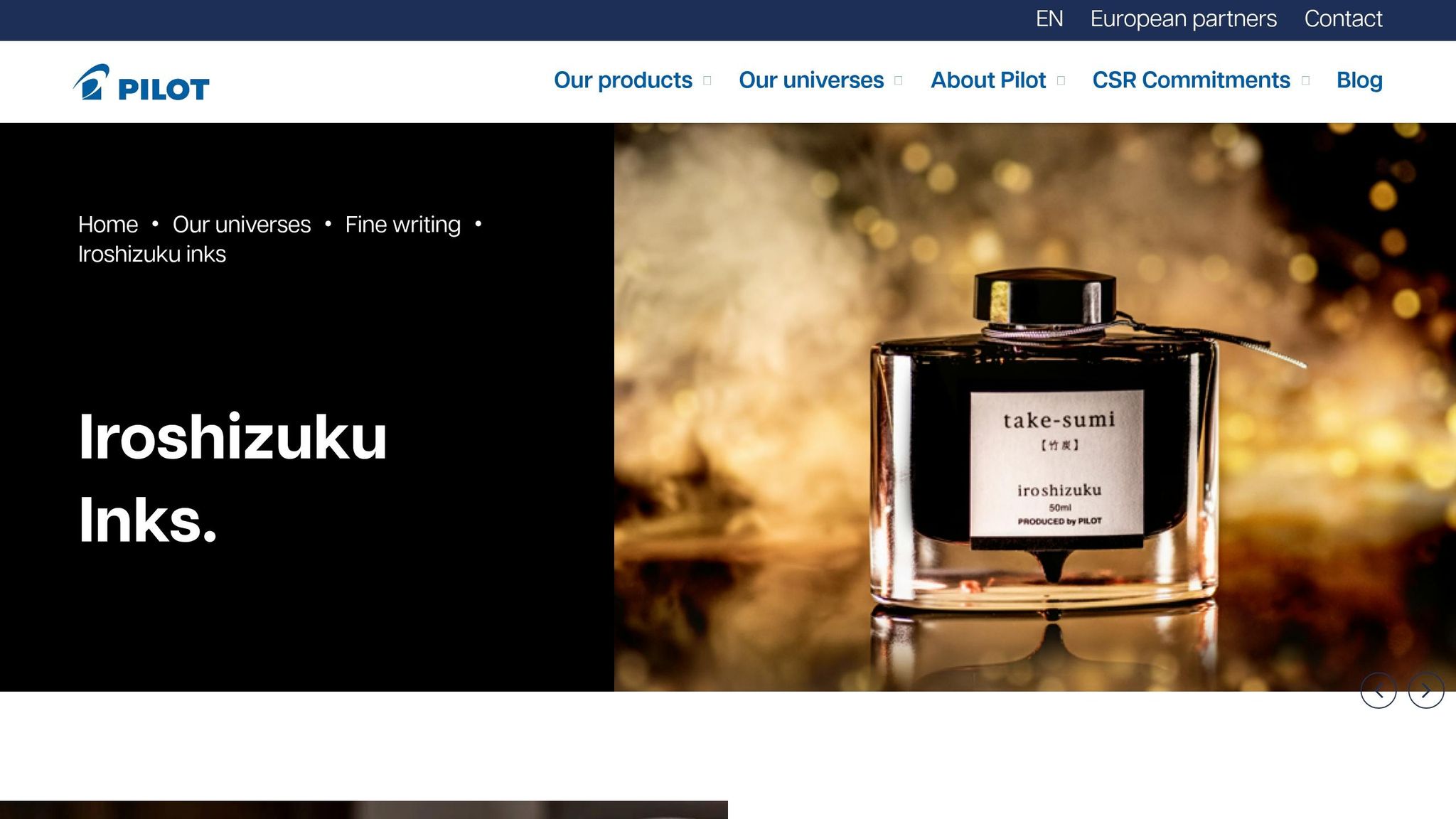
Pilot Iroshizuku inks are known for their high quality and smooth performance, even on budget-friendly pens. Their excellent lubrication reduces nib scratchiness and ensures consistent lines, while the watery consistency enhances flow, especially for drier nibs. These inks also deliver beautiful shading effects. The collection includes 24 standard colors inspired by Japanese nature, with limited editions expanding the palette to over 34 shades. Available in elegant 50 ml glass bottles with a built-in filling reservoir, they also come in 15 ml mini bottles for those who want to sample different colors. Drying times typically range from 8 to 14 seconds, depending on the paper used.
Filip from FollowMyPen captures the appeal of these inks perfectly:
"Iroshizuku inks strike a rare balance between beauty, reliability, and emotional expression. They enhance not only how writing looks, but how writing feels".
These pH-balanced, dye-based inks are safe for all fountain pens and easy to clean. However, their wetter consistency may cause feathering on lower-quality paper, and they offer minimal water resistance .
Lamy Ink
Lamy inks are a go-to choice for beginners due to their affordability and dependable performance. Designed to pair seamlessly with starter pens like the Lamy Safari, they provide a straightforward, hassle-free experience . While the color range is limited, the focus on consistent quality makes them an excellent starting point.
Diamine Ink
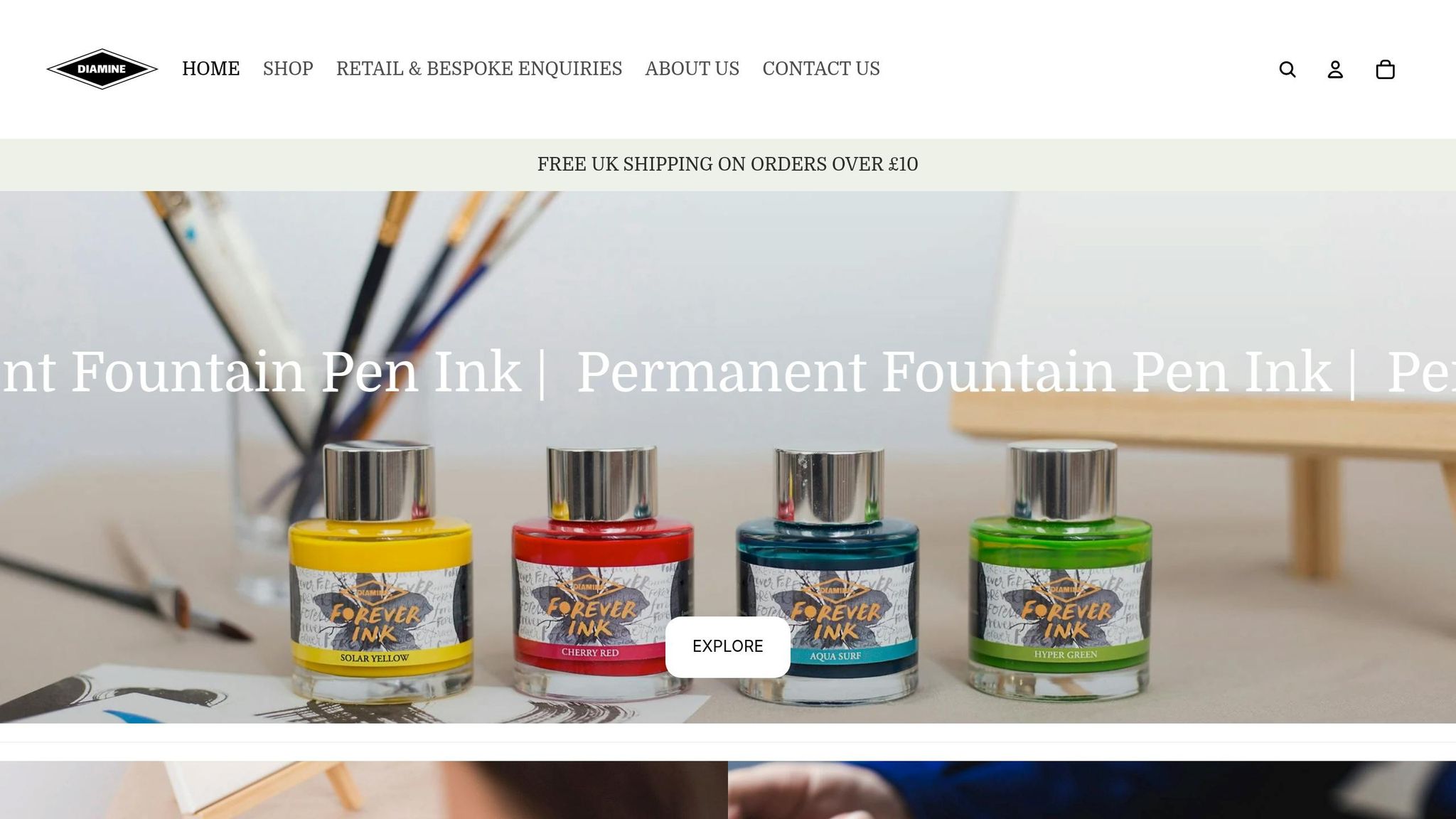
For those who love variety, Diamine inks are hard to beat. With a massive array of colors, this brand offers a spectrum far beyond the usual blue and black. Priced between $8 and $10 per bottle, they’re budget-friendly and highly regarded for their smooth flow properties . Diamine is a favorite among fountain pen enthusiasts looking to explore a wide range of shades without breaking the bank.
Noodler's Ink
Noodler's inks are celebrated for their affordability and unique properties, such as waterproofness. While they offer specialized formulations like permanent or bulletproof inks, beginners might prefer starting with their standard dye-based options, which are easier to maintain.
J. Herbin Ink

J. Herbin inks bring a touch of history and refinement to your writing experience. Known for their lighter, more delicate formulations, these inks are compatible with all pens, including vintage models. They offer vibrant colors with a gentler saturation, making them ideal for those who prefer subtler shades and a smoother writing experience. J. Herbin is a great choice for beginners seeking elegance and versatility.
Each of these brands brings something unique to the table, offering options that cater to different preferences and needs. They set the stage for a deeper comparison in the upcoming section.
Fountain Pen Revolution Inks
Features and Pricing
Fountain Pen Revolution inks are known for being budget-friendly, making them an easy choice for anyone exploring the world of fountain pens. The Classic line - offering colors like Black, Blue, and Blue-Black - starts at just $1.00 per bottle. For those looking for more variety, standard shades such as Cinnamon and Firecracker Red are priced at $1.25, while specialty shimmer inks like Galaxy Blue and Gilded Ivy begin at $1.75.
For beginners eager to experiment, variety packs are a great option. A 5-bottle bundle is priced at around $31.95, while the 6-bottle shimmer bundle comes in at approximately $51.95. Plus, with free shipping on orders over $65 within the U.S., it’s easy to stock up on inks and essential supplies without breaking the bank. These affordable options make Fountain Pen Revolution a go-to brand for those just starting out.
Why Beginners Choose Fountain Pen Revolution Inks
Fountain Pen Revolution inks stand out for their smooth flow, vivid color saturation, and excellent lubrication, which helps reduce nib drag and startup issues. They also dry quickly - usually within 10–20 seconds - and each 30 ml bottle can yield 200–300 pages, keeping the cost per page under $0.05.
The inks have earned glowing feedback from users, with over 2,500 reviews averaging a 4.8 out of 5 rating. Beyond inks, the brand offers helpful maintenance tools for beginners, such as the Pen Flush cleaning solution ($4.95) and the Railroad X lubricating additive ($5.95). With a shelf life exceeding 2 years (when stored properly) and a simple water-based cleaning process that takes less than 5 minutes, these inks remove many of the hurdles that can intimidate new fountain pen users.
Beginner Ink Comparison Table
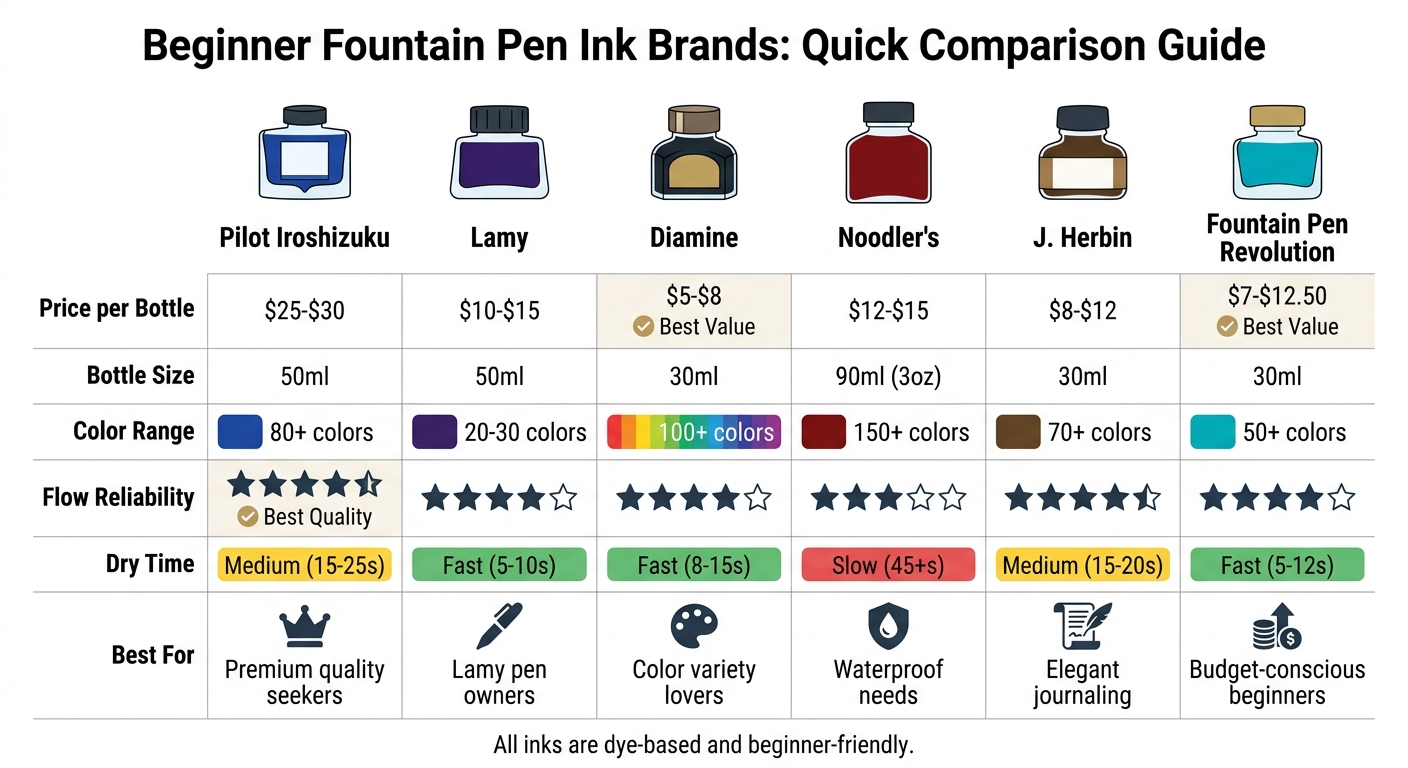
Beginner Fountain Pen Ink Brands Comparison Chart
When you're choosing the best fountain pens for beginners, figuring out which ink brand to start with can feel overwhelming. This table lays out six beginner-friendly ink brands, comparing their price, color options, flow performance, and dry time. It's a quick way to see each brand's strengths and decide what works best for you.
| Brand | Price per Bottle (USD) | Bottle Size | Color Range | Flow Reliability (1-5) | Dry Time | Pros for Beginners | Cons for Beginners |
|---|---|---|---|---|---|---|---|
| Pilot Iroshizuku | $25 - $30 | 50ml | 80+ colors | 5/5 | Medium (15–25s) | Smooth flow; great for archival use; high-quality ink | Expensive; bottle design might be tricky to use |
| Lamy | $10 - $15 | 50ml | 20–30 colors | 4/5 | Fast (5–10s) | Affordable; pairs perfectly with Lamy pens; easy to clean | Fewer color options; limited sheen effects |
| Diamine | $5 - $8 | 30ml | 100+ colors | 4/5 | Fast (8–15s) | Budget-friendly; huge color variety; forgiving on most pens | Can feather on cheap paper; shimmer inks dry slower |
| Noodler's | $12 - $15 | 90ml (3oz) | 150+ colors | 3/5 | Slow (45+s) | Large bottle size; waterproof options; great value per ounce | May stain pens; inconsistent lubrication across colors |
| J. Herbin | $8 - $12 | 30ml | 70+ colors | 4/5 | Medium (15–20s) | Elegant hues; smooth flow; good for journaling | Small bottle size; occasional clogging issues |
| Fountain Pen Revolution | $7.00 - $12.50 | 30ml | 50+ colors | 4/5 | Fast (5–12s) | Very affordable; fun color choices; beginner-friendly | Shimmer inks need extra shaking before use |
This table highlights why flow reliability and dry time are so important for beginners. Inks with a flow rating of 4/5 or higher, like Pilot Iroshizuku or Lamy, ensure smooth, consistent writing without interruptions. For those who take quick notes or are left-handed, fast-drying inks like Lamy and Fountain Pen Revolution are especially practical. Whether you're looking for vibrant colors, ease of use, or affordability, there's something here to suit every new fountain pen enthusiast.
How to Choose Your First Ink Bottle
Assess Your Writing Needs
When picking your first ink, think about how you write, not just the color. For quick notes, fast-drying inks are a smart choice to avoid smudging. On the other hand, if you're journaling or writing letters and enjoy seeing tonal variations in your strokes, you might prefer inks that highlight shading, even if they take a bit longer to dry.
If the paper you use daily tends to feather or bleed, opt for fast-drying and drier inks to minimize those issues. Need ink for signing legal documents or addressing envelopes? Waterproof (or "bulletproof") inks are a great option since they resist water, UV light, and tampering. Keep in mind, though, they can be harder to clean out of your pen once dried.
Before committing to a full bottle, try ink samples. Many brands offer 5 ml sample vials, enough for 2–3 pen fills. This lets you test how an ink performs with your preferred pen and paper - avoiding the disappointment of investing in a bottle that doesn't suit your writing style.
While finding an ink that fits your current needs, also think about how it might work as your collection grows.
Consider Long-Term Usability
Your first ink should not only meet your immediate needs but also adapt as your writing habits evolve. A versatile ink that works well with various pens is a solid starting point. For beginners, affordability and ease of maintenance are key factors.
Dye-based inks are a beginner-friendly choice because they flow smoothly, are easier to clean, and are less likely to clog pens. Pigmented inks, while more water-resistant and longer-lasting, require regular cleaning to prevent buildup. If you frequently switch ink colors or use delicate pens, stick with dye-based inks for less hassle.
It’s best to avoid specialty inks until you’re confident with basic pen care. Shimmer inks, for example, add a lovely sparkle but need shaking before use and thorough cleaning afterward - especially in pens that can’t be easily disassembled. Also, steer clear of inks not made for fountain pens, like traditional India ink or iron gall formulas, as they can damage your pen. Always double-check that an ink is specifically designed for fountain pens before filling yours.
Conclusion
The ink you choose plays a big role in how much you enjoy using a fountain pen. For beginners, it’s all about finding inks that are affordable, dependable, and easy to clean - so you can focus on writing rather than dealing with messy problems. Brands like Diamine, Noodler's, and J. Herbin offer great options starting at just $2.00 per bottle, while Fountain Pen Revolution even has inks priced as low as $1.00. These budget-friendly choices let you try out different ink properties without breaking the bank.
Getting started doesn’t mean sacrificing variety. If you prefer classic blacks and blues for daily use or want to experiment with eye-catching shades like Diamine’s Ancient Copper, there’s something for everyone. Variety packs are another great way to explore multiple colors and build your collection without worrying about picking the wrong one.
Your first ink doesn’t have to be a lifelong commitment. Start with easy-to-use dye-based inks and consider buying 5 ml samples to test out different options before investing in full-sized bottles. This approach gives you room to experiment while learning the basics of pen care.
Choose inks that match your writing style and future goals. A good, affordable ink that works well with different pens gives you a solid starting point to confidently expand your collection. There’s no better time than now to dive in and explore the world of fountain pen inks!
FAQs
Which beginner ink is least likely to feather on cheap paper?
Waterman Serenity Blue is an ideal choice for beginners exploring the world of fountain pens. It resists feathering even on more affordable paper, ensuring a smooth writing experience. Plus, it’s easy to clean and performs well across various paper types, making it a reliable and hassle-free option for newcomers.
How often should I clean my pen when switching inks?
To keep your fountain pen working smoothly, regular cleaning is essential, especially when switching inks. This simple habit helps prevent clogs and unwanted ink mixing. Here’s when to clean your pen:
- When switching ink colors or types to remove any leftover residue.
- Every few months as part of routine upkeep.
- Before storing it for extended periods (several weeks or longer).
For extra care, rinse the nib weekly with lukewarm water. This helps clear out ink buildup and keeps your pen writing effortlessly.
Should I start with cartridges or bottled ink?
Cartridges are a great choice for beginners because they’re super easy to use and require almost no upkeep. These pre-filled, sealed options are simple to replace, making them both mess-free and portable. Once you’ve gotten the hang of things, you might want to try converters. Converters let you refill your pen with bottled ink, giving you access to a wider range of colors and the potential for long-term savings. Starting with cartridges is a hassle-free way to ease into the world of fountain pens.