

Dual-tone nibs are fountain pen nibs with two contrasting metal finishes, typically combining gold with a white metal like rhodium or platinum. This design isn't just decorative - it highlights the nib's details and adds a protective layer. The process involves partial plating, where specific areas of the nib are coated to create clean, sharp contrasts. Originally exclusive to gold nibs, this technique is now used on stainless steel nibs as well.
Key Points:
- Appearance: Combines two metal tones for a striking look.
- Materials Used: Gold or steel base with partial plating in metals like rhodium or platinum.
- Process: Masking and selective plating create the two-tone effect.
- Functionality: Durable and smooth writing, with premium tipping materials.
- Cost: More expensive than single-tone nibs due to additional manufacturing steps, starting at $4 for steel options.
Dual-tone nibs offer a blend of style and functionality, making them a popular choice for fountain pen enthusiasts seeking an elevated writing experience.
What Are Dual-Tone Nibs?
Dual-tone nibs stand out for their contrasting metal finishes, combining two distinct tones on a single nib. Typically, this involves a gold nib partially plated with a white metal - often from the platinum group, such as platinum, palladium, or rhodium. The result is a striking contrast between the warm gold and the cooler silver tone, creating a visually appealing design.
The process behind this effect is highly precise. Manufacturers plate specific areas of the nib, often guided by engraved lines or decorative patterns that define the separation between the two finishes. For instance, Parker famously incorporated a "V" motif on their 1940s Vacumatic-filling Duofold nibs, showcasing their dual-tone craftsmanship. Over time, advancements in plating techniques have made it possible to apply these designs to both gold and stainless steel nibs.
Although originally exclusive to gold nibs, dual-tone finishes now enhance stainless steel nibs as well. Beyond aesthetics, the white metal plating also serves a practical purpose by providing a protective layer for the underlying material.
These designs are more than just decorative - they combine elegance with functionality. The contrasting tones highlight the nib's detailed craftsmanship, while the plating adds an extra layer of durability.
sbb-itb-1dd4fe9
Design Features of Dual-Tone Nibs
Key Components of Dual-Tone Nibs
Dual-tone nibs maintain the classic structure of a standard nib - tines, slit, breather hole, and an iridium-tipped point - but add a touch of artistry through selective plating. The tines are the two prongs that split at the center, with a narrow slit running between them to regulate ink flow. The breather hole, located at the base of the slit, not only supports ink flow but also enhances the nib's overall design. Finally, the tip features a durable piece of hard tipping material, often made from an iridium alloy, ensuring smooth and long-lasting writing performance.
What sets dual-tone nibs apart is the use of a selective plating process that highlights these components, giving the nib its distinctive two-tone appearance.
Plating Process
The dual-tone effect is created through partial plating, where only specific sections of the nib are coated, leaving the rest untouched. This is achieved by masking areas that should retain their original finish, resulting in clean, sharp boundaries between the two tones.
For stainless steel nibs, the process starts with engraving a separation line on the nib, marking where one color transitions to the other. Any structural modifications - such as custom engravings, regrinding, or adjustments to the breather hole - are completed before plating begins. Once prepared, the masked sections preserve the base color, while the exposed areas are plated with metals like rhodium, platinum, or other contrasting finishes.
Traditional designs often feature silver-plated tines paired with a gold body, though the reverse - gold-plated tines with a silver body - is also common. Modern styles have introduced darker tones, such as black rhodium for a sleek gray finish or black ruthenium for a rich, dark brown hue. These variations showcase the creativity and precision involved in crafting dual-tone nibs, elevating them to both functional and aesthetic masterpieces.
Differences Between Dual-Tone and Single-Tone Nibs
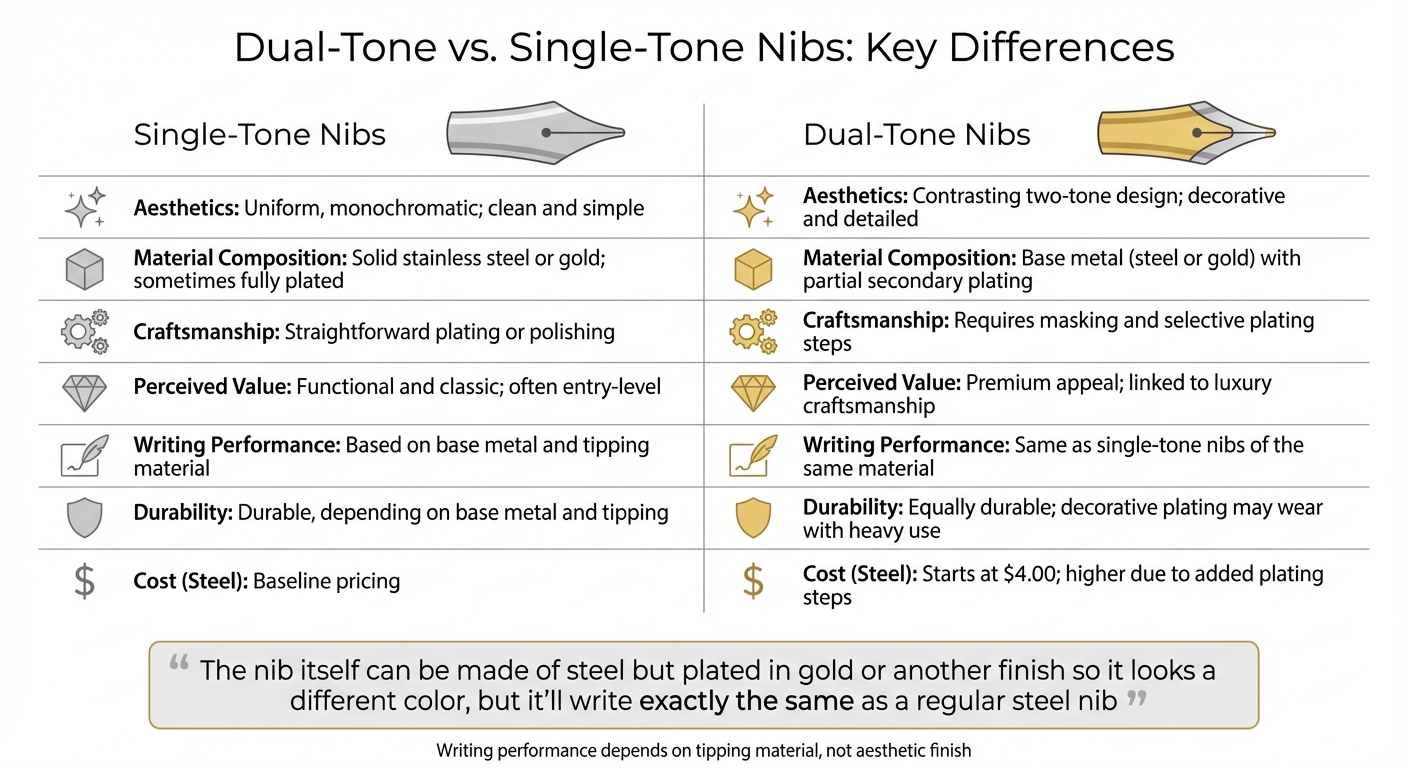
Dual-Tone vs Single-Tone Fountain Pen Nibs Comparison
Both nib types are reliable performers when it comes to writing, but their key differences lie in their appearance, crafting process, and perceived value. Single-tone nibs have a uniform finish - whether it's silver, gold, or black - offering a clean, minimalist design. On the other hand, dual-tone nibs stand out with their contrasting metallic finishes, often combining gold with silver-toned metals like rhodium or chrome for a more intricate, decorative look.
This contrast isn't just for show. It's often used to emphasize specific details, such as the tines, scrollwork, or branding, giving dual-tone nibs a more refined and detailed aesthetic. As Brian Goulet, the founder of The Goulet Pen Company, puts it:
"The nib itself can be made of steel but plated in gold or another finish so it looks a different color, but it'll write exactly the same as a regular steel nib".
This highlights an important point: whether single-tone or dual-tone, the writing performance remains consistent. What really matters for performance is the tipping material, typically an alloy containing iridium or rhodium. That said, dual-tone nibs are often associated with 14k gold nibs, which naturally offer better flexibility and corrosion resistance due to the properties of gold - not because of their aesthetic.
When it comes to cost, dual-tone nibs are generally more expensive. Why? The additional manufacturing steps, like masking and selective plating, increase production time and complexity. For example, entry-level steel dual-tone nibs can start at around $4.00, but more specialized options, like the two-tone Ultra Flex nib, can reach up to $55.00. This extra effort in production contributes to the higher perceived value of dual-tone nibs among fountain pen enthusiasts.
Comparison Table: Dual-Tone vs. Single-Tone Nibs
Here's a quick breakdown of how these two nib types differ in terms of aesthetics, craftsmanship, and value:
| Feature | Single-Tone Nibs | Dual-Tone Nibs |
|---|---|---|
| Aesthetics | Uniform, monochromatic; clean and simple | Contrasting two-tone design; decorative and detailed |
| Material Composition | Solid stainless steel or gold; sometimes fully plated | Base metal (steel or gold) with partial secondary plating |
| Craftsmanship | Straightforward plating or polishing | Requires masking and selective plating steps |
| Perceived Value | Functional and classic; often entry-level | Premium appeal; linked to luxury craftsmanship |
| Writing Performance | Based on base metal and tipping material | Same as single-tone nibs of the same material |
| Durability | Durable, depending on base metal and tipping | Equally durable; decorative plating may wear with heavy use |
| Cost (Steel) | Baseline pricing | Starts at $4.00; higher due to added plating steps |
Dual-tone nibs may cost more and involve extra craftsmanship, but for many enthusiasts, their ornate design and premium feel make them worth the investment.
Benefits of Dual-Tone Nibs
Dual-tone nibs offer more than just a striking appearance. They combine aesthetic appeal with practical benefits, delivering versatility and an enjoyable writing experience.
Improved Writing Performance
Dual-tone nibs are designed to provide a seamless writing experience. Many feature tips crafted from high-quality German materials, ensuring smooth strokes without any scratchiness. These nibs are known for their wet, fluid writing style and refined feedback. Some, like the Ultra Flex nib, are manually adjusted to offer a softer and more flexible touch. As Nick D. shared:
"Increasing the pressure widens the line with little effort, EXCELLENT!"
For those seeking unique line variations, the Architect nib stands out. It creates distinct strokes - 1.0mm horizontal lines and 0.5mm vertical lines - thanks to its specialized grind.
Visual Appeal
The dual-tone finish of these nibs adds an eye-catching element to any pen. Often marketed as a premium feature, they make for an excellent gift option. The two-tone design highlights intricate scrollwork and branding, reflecting expert craftsmanship and quality materials. As Josmar P. praised:
"Excelente…Os produtos vendidos pela FPR são de excelente qualidade e bonitos (Excellent... The products sold by FPR are of excellent quality and beautiful)"
This blend of elegance and functionality enhances the overall allure of dual-tone nibs.
Available in Multiple Nib Sizes
Dual-tone nibs come in a variety of sizes and specialty grinds, such as Extra Fine, Fine, Architect, and Ultra Flex. This range allows users to customize their writing experience. For instance, an Extra Fine nib creates a 0.4mm line, while a Fine nib produces a slightly thicker 0.5mm line. Switching to a Fine nib can help control ink flow without sacrificing smoothness. As Pat noted:
"This nib has corrected the issue [of writing too wet] and slowed the ink usage quite a bit. It's not scratchy and the feedback is very light"
At Fountain Pen Revolution, these dual-tone nibs are offered at accessible prices, starting at just $4.00 for a standard #5.5 Fine nib. This affordability makes it easy to experiment with different sizes and find the perfect fit for your writing style.
Conclusion
Dual-tone nibs bring together stunning design and impressive performance, creating a writing experience that feels both refined and reliable. With their eye-catching two-tone finish, these nibs add a touch of sophistication to any pen. Paired with high-quality German tipping materials and specialized grinds like Ultra Flex and Architect, they deliver noticeable performance enhancements.
Available in a range of sizes and styles, dual-tone nibs are a simple way to upgrade any pen while keeping it functional and stylish. For those who appreciate the fusion of artistry and practicality, these nibs strike the perfect balance. The two-tone plating not only enhances the look but also highlights the intricate engravings and craftsmanship that single-tone nibs often lack.
At Fountain Pen Revolution, these nibs provide an affordable way to customize your writing tools without compromising on quality or beauty. They prove that premium features can be both accessible and stunning.
FAQs
Does the two-tone finish affect how a nib writes?
The two-tone finish on a nib is purely for aesthetics and doesn't affect its writing performance. That said, certain two-tone nibs, like the FPR #6 Two-tone Architect Nib, are designed with unique features that can shape the writing experience.
Will the plating wear off over time?
Yes, the coating on dual-tone nibs can fade or wear away over time. How long it lasts depends on factors like how often the pen is used and the conditions it’s exposed to. However, with regular cleaning and careful handling, the plating can remain intact for years.
Can I swap a dual-tone nib into my current pen?
Yes, you can replace your pen's nib with a dual-tone one, provided it matches the size and design of your pen. Many fountain pen nibs, including dual-tone versions, are designed to be interchangeable with models that share the same specifications. Always double-check compatibility before swapping nibs to ensure a proper fit.