

Fountain pen nibs are evolving, moving beyond outdated "Iridium Point" labels to modern materials like tungsten-ruthenium alloys, titanium Grade 23, and stainless steel. These advancements enhance durability, writing smoothness, and cost-efficiency. Here's a quick breakdown:
- Tungsten-Ruthenium Alloys: Hard, acid-resistant, and cost-effective compared to iridium, which costs ~$4,500/oz vs. ruthenium's ~$465/oz.
- Titanium Grade 23: Flexible, springy, and tough, offering a balance between gold and steel nibs in terms of softness and firmness.
- Stainless Steel: Affordable, durable, and reliable for everyday writing, with hard tips ensuring longevity.
- Gold Alloys (14k/18k): Luxurious and corrosion-resistant, providing a soft, smooth writing experience but at a premium price.
Each material suits different needs: stainless steel for affordability, titanium for flexibility, and gold for a premium feel. The right nib depends on your writing style and budget.
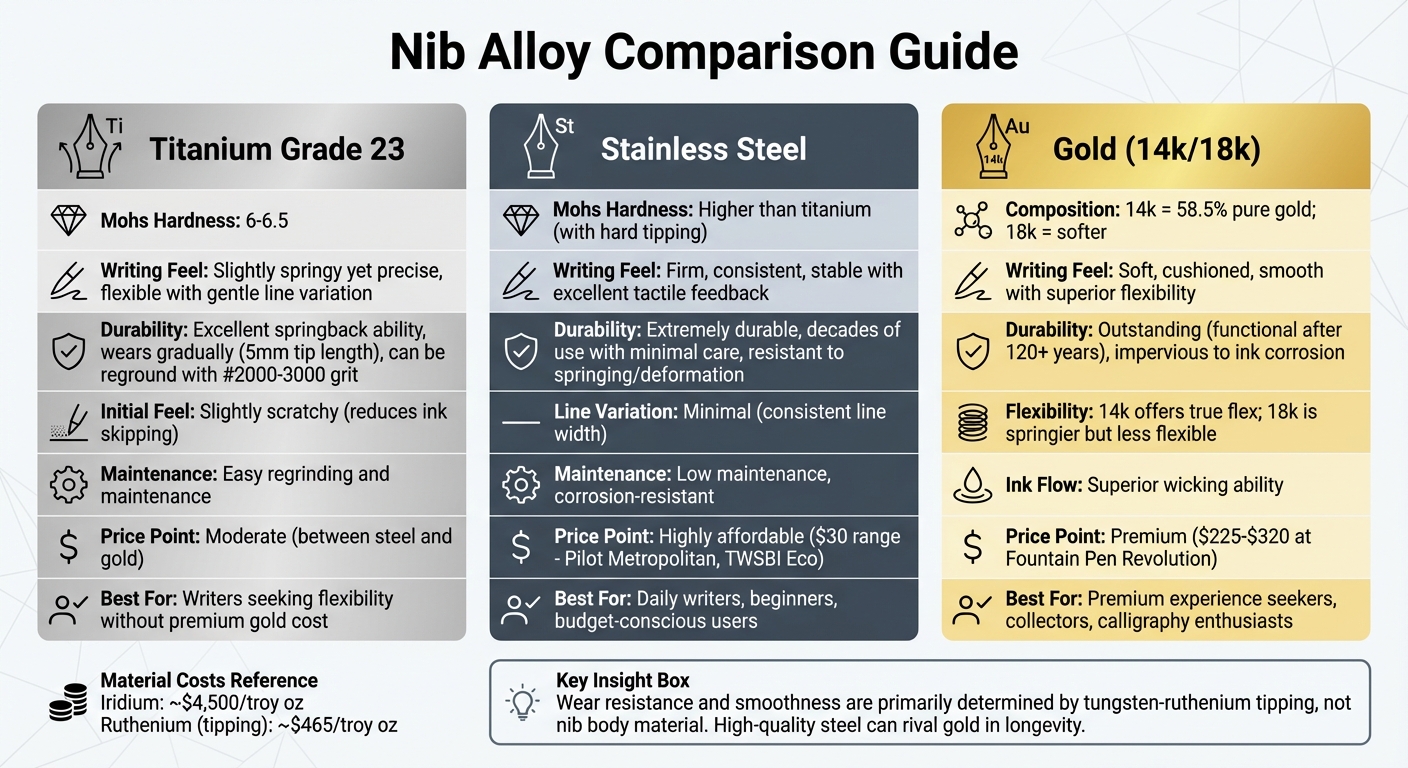
Fountain Pen Nib Materials Comparison: Titanium vs Steel vs Gold
On Nib Materials
sbb-itb-1dd4fe9
1. Titanium Alloys
Titanium alloys have become a standout feature in modern nib manufacturing. Most high-performance titanium nibs are crafted from Grade 23 titanium alloy (also known as Ti-6Al-4V ELI). This alloy has "Extra Low Interstitials", meaning it contains reduced levels of oxygen, nitrogen, and carbon - elements that can make materials brittle. The result? A nib material with improved flexibility and toughness, perfect for the constant flexing that occurs during writing. These qualities not only enhance the writing experience but also contribute to the nib's durability.
Durability
With a Mohs hardness of about 6 to 6.5, titanium nibs are slightly softer than traditional tipping materials like iridium, which range from 6.5 to 7.5. However, titanium makes up for this softness with its excellent springback ability:
"This nib will spring back even if a large force is applied. The material has great returning properties, like a spring. Way more springy than typical gold or steel nibs." - Eureka_Admin, Fountain Pen Researcher
To ensure longevity, manufacturers often extend the nib's tip length - sometimes as long as 5 mm - so it wears down gradually without losing functionality. If wear becomes uneven, users can easily regrind or smooth the nib with #2000–3000 grit sanding pads. This balance of durability and adaptability is what gives titanium nibs their distinctive writing feel.
Writing Performance
Titanium nibs offer a writing experience that many describe as "slightly springy yet precise". Unlike the rigidity of stainless steel or the soft pliability of gold, titanium provides a unique balance. It flexes subtly under pressure, allowing for gentle line variation, thanks to its long slit design and the thin sheet used in precision manufacturing.
Initially, some titanium nibs may feel scratchy, a feature meant to reduce ink skipping:
"Initially the nib may feel slightly scratchy. This is because the nib isn't polished too smoothly during the production process... too much polishing can lead to ink skipping." - Eureka_Admin, Fountain Pen Researcher
Over time, normal use smooths out this initial resistance. Since titanium is softer than traditional tipping materials, using light pressure and letting the ink act as a lubricant can minimize friction and extend the nib's lifespan.
Cost-Effectiveness
Titanium nibs strike a great balance between performance and affordability. While titanium as a raw material isn’t necessarily cheaper than stainless steel, its production process can be more efficient. Titanium nibs can be machined entirely from solid rods, eliminating the need for separate tipping materials. This streamlined approach reduces manufacturing complexity and offers long-term value.
The ease of maintenance and regrinding further adds to their cost-effectiveness. Titanium nibs deliver the flexibility and springiness reminiscent of gold nibs but without the hefty price tag of precious metals. With iridium trading at around $4,500 per troy ounce, precision-engineered titanium nibs remain an accessible alternative for many enthusiasts.
2. Stainless Steel Alloys
Stainless steel provides a balance of strength and durability that complements titanium's flexibility. It remains a trusted material, now improved through advanced alloy treatments. Stainless steel nibs are known for their firm, reliable performance at a fraction of the cost of gold. While they might not carry the same prestige, their practical benefits make them a go-to option for daily writers and those new to fountain pens.
Durability
Stainless steel nibs are built for longevity. Their hardness and rigidity make them resistant to damage, even under heavy pressure, preventing issues like "springing" or deformation. Modern alloy treatments have further enhanced their resistance to corrosion, ensuring they can function for decades with minimal upkeep. These nibs are often tipped with hard materials (commonly referred to as "iridium") to reduce wear, allowing them to endure millions of strokes while maintaining consistent performance.
"Stainless steel, often used in nibs today, can hold up beautifully for decades with minimal care." - Inkstable
For writers who apply significant pressure, stainless steel offers a distinct advantage:
"If one likes to 'push the limits' with a flex nib, a steel nib will be more resistant to damage." - Frank, Pen Expert
This durability ensures a stable and reliable writing experience, even with regular use.
Writing Performance
Stainless steel nibs deliver a firm and structured writing feel, providing excellent tactile feedback. This rigidity results in consistent line width and stability, making them ideal for extended writing sessions or detailed note-taking. While gold nibs are often praised for their flexibility and softness, well-crafted steel nibs can achieve comparable smoothness when properly designed.
Due to their lower elasticity, steel nibs produce less line variation under pressure - a feature many writers find appealing for everyday tasks. Some manufacturers are also experimenting with steel "flex" nibs that introduce a bit more line variation, though these remain less common than traditional rigid designs.
Cost-Effectiveness
Stainless steel nibs shine when it comes to affordability. Entry-level pens like the Pilot Metropolitan or TWSBI Eco, priced around $30, offer excellent performance without the high cost of gold nibs, which can exceed $300. This price gap reflects the lower production costs of steel compared to 14k or 18k gold alloys.
The combination of performance and affordability makes stainless steel nibs a smart choice. Pens like the Pilot 78G use specialized steel alloys to deliver a writing experience that rivals gold at a fraction of the price. With their durability, low maintenance, and accessible cost, steel nibs are a practical investment for both beginners and seasoned writers who value functionality over luxury.
3. Gold Alloys
After exploring titanium and stainless steel, let's dive into the luxurious world of gold alloys. Gold nibs sit at the top of the fountain pen hierarchy, bringing unique qualities that set them apart from their titanium and stainless steel counterparts.
Durability
Gold stands out as the most corrosion-resistant element used in fountain pen nibs. This makes it impervious to ink corrosion, even against the harsh ferrogallic inks of the past. However, pure gold is too soft for writing, so manufacturers pair it with a harder tipping material - usually a tungsten-ruthenium alloy - to handle the friction of regular use.
The durability of gold nibs depends heavily on their karat rating. For fountain pens, 14k gold (58.5% pure gold) is often considered the sweet spot. It offers an excellent balance of strength and flexibility, allowing the nib to bend and return to its original shape without damage. This balance makes 14k gold a popular choice, as it combines performance with resilience. On the other hand, nibs made from higher-karat gold, such as 18k or 21k, are softer and more prone to permanent deformation if pressed too hard. As Joshua from The Pelikan's Perch puts it:
14C-585 gold seemed to be the optimum material from which to derive a pleasing and durable nib.
Writing Performance
Gold nibs are prized for their soft, cushioned writing experience, which feels noticeably smoother compared to stainless steel. Thanks to their inherent flexibility, they adapt to the writer's pressure and angle, delivering fluid strokes with minimal resistance. Among gold alloys, 14k nibs are particularly valued for their true flexibility - they can bend under pressure to create line variation and then snap back to their original shape. In contrast, 18k gold nibs feel springier but often lack the same level of flexibility, either bending permanently or resisting until they fail.
Another advantage of gold nibs is their superior ink-wicking ability. Compared to titanium, gold ensures a consistent ink flow, even with highly saturated inks. While these benefits add to their allure, they also come with a higher price tag, reflecting their premium status, making them a key factor to consider when buying a fountain pen.
Cost-Effectiveness
Gold nibs are undeniably an investment. At Fountain Pen Revolution, 14k gold nibs range between $225 and $320, depending on size and flexibility. This pricing reflects not only the cost of materials - ruthenium, used in the tipping, trades at around $465 per troy ounce - but also the skill required to manufacture them. For writers who value durability and chemical resistance, gold nibs offer long-term reliability. Their softer writing feel and ability to provide true flex make them a worthwhile choice for those seeking a premium experience.
Advantages and Disadvantages
Here's a breakdown of how titanium, stainless steel, and gold stack up in terms of durability, writing feel, and cost:
| Alloy Type | Durability & Longevity | Writing Performance | Cost-Effectiveness |
|---|---|---|---|
| Gold (14k/18k) | Outstanding durability; many gold nibs remain functional even after 120 years. | Smooth, cushioned, and flexible; adapts well to user pressure. | Expensive |
| Stainless Steel | Extremely durable; resistant to damage and corrosion. | Firm, consistent, and stable; provides reliable tactile feedback. | Highly affordable |
| Titanium | Strong and resistant to corrosion; hard to repair if bent. | Soft with a noticeable bounce; ideal for flex writing but may face occasional ink flow issues. | Moderately priced; delivers premium performance at a lower cost than gold. |
This table underscores how the choice of material directly influences both performance and long-term value.
It’s worth noting that the wear resistance and smoothness of a nib are primarily determined by its tungsten–ruthenium tipping, not the material of the nib body. This hard tipping ensures durability and smooth writing, which is why a high-quality stainless steel nib can rival gold in terms of longevity.
Gary Lehrer sums it up well:
"With the quality of stainless steel, titanium, and alloys used for today's nibs, along with less corrosive inks, gold plating offers a visual appeal rather than a protective function."
When it comes to writing feel and value, each material has its strengths. Gold nibs provide a cushioned, adaptive experience that many writers love, while stainless steel offers consistent, no-frills feedback at a much lower price. Titanium sits in between, delivering some of gold’s softness without the hefty price tag, though it does come with challenges like repairability and occasional ink flow quirks.
For budget-conscious enthusiasts, stainless steel nibs are a solid choice, as their durability matches gold thanks to the shared hard tipping alloys. However, for those who prioritize ultimate comfort and corrosion resistance, 14k gold remains the top-tier option. These advancements showcase how engineering continues to refine the art of writing, one stroke at a time.
Conclusion
Choosing the right nib alloy depends on your writing habits, budget, and what you expect in terms of performance. For beginners or those who write daily, stainless steel offers a practical, reliable option. It delivers consistent results at a lower price point, making it a great starting choice. On the other hand, 14K gold is perfect for writers who want a bit more flexibility and durability. While it requires a higher upfront investment, it’s an excellent long-term option. As nib expert Richard Binder explains:
14K nibs can combine both superb writing characteristics and excellent corrosion resistance.
If you’re after something with a softer, springier feel, titanium might be your answer, as it falls between steel and gold in terms of flexibility. For collectors or calligraphy enthusiasts, 18K and 21K gold alloys provide an ultra-soft experience and greater line variation. However, these softer alloys are more susceptible to bending under pressure, so they require careful handling.
Thanks to modern manufacturing techniques, the performance gap between materials has narrowed significantly. For example, advanced steel nibs - like those in the Pilot 78G - can replicate the smoothness of gold through precise grinding. Since the tipping material primarily determines wear resistance, high-quality craftsmanship ensures durability across all nib types.
Brands like Fountain Pen Revolution make premium nibs more accessible. Their 14K gold nib units start at around $206.95, alongside affordable steel options and compatible JoWo and Bock nibs. These offerings allow writers to upgrade their pens without splurging on entirely new models, showcasing how alloy innovations have expanded options for enthusiasts.
David Nishimura aptly compares the focus on gold content to selecting wine based on alcohol percentage:
Focusing on the gold content of a nib is like picking a wine by its alcohol content.
Ultimately, the best nib is one that complements your writing style and feels right in your hand - whether that’s a dependable steel nib or a flexible gold one.
FAQs
Does tipping material matter more than the nib metal?
The material used for nib tipping plays a key role in how durable and smooth a pen feels over time. Alloys like iridium or tungsten are commonly used because they resist wear and help maintain steady ink flow. While the nib's metal - such as gold for softness or steel for firmness - affects flexibility and writing feel, the tipping material often has a bigger impact on long-term reliability and consistent performance, especially for those who write frequently. Together, these factors shape the overall writing experience.
Which nib alloy is best for heavy writing pressure?
When it comes to handling heavy writing pressure, 14k gold stands out as the top choice for nib material. Its firm and durable build makes it perfect for those with a heavier hand or for pens that see frequent daily use. This alloy provides the resilience needed to maintain smooth, consistent performance, even when subjected to significant pressure.
Can titanium nibs be tuned or re-ground at home?
Titanium nibs can indeed be adjusted or re-ground at home. Thanks to their spring-back qualities, they can handle some modifications. Tools like micro-mesh pads are great for smoothing or polishing the nib. However, since titanium is quite hard, it’s important to work with caution. Use gentle pressure and take your time to avoid causing any damage.