

Most nib tarnish can be avoided with 3 steps: clean and maintain your pen the right way. If I keep dried ink off the nib, let it dry fully before capping, and avoid rough cleaning, I can stop most dull spots before they start.
Here’s the short version:
- Tarnish is a surface film from air and moisture
- Ink residue is dried ink and often rinses off
- Corrosion is metal damage and is the more serious problem
- Gold alloys, plated nibs, and steel nibs each react in different ways
- Room-temperature water and a soft cloth are the safe go-to tools
- Hot water, alcohol, and abrasive cleaners can damage the nib or pen parts
- Regular flushing every 3–4 weeks helps cut down residue
- Highly saturated, shimmer, and waterproof inks often need more cleaning
- Long-term storage should be done only after the pen is fully cleaned and dried
One point matters most: a dull nib is not always damaged. In many cases, it is just leftover ink or light surface tarnish. I’d treat polishing as a last step, not a routine habit, since over-polishing can wear plating and scratch the finish.
If I want a nib to stay bright, the routine is simple: clean gently, dry all the way, touch the nib less, and store the pen in a dry spot.
4 Tips for Maintaining Your Fountain Pens
sbb-itb-1dd4fe9
How to Clean Your Nib Properly After Use
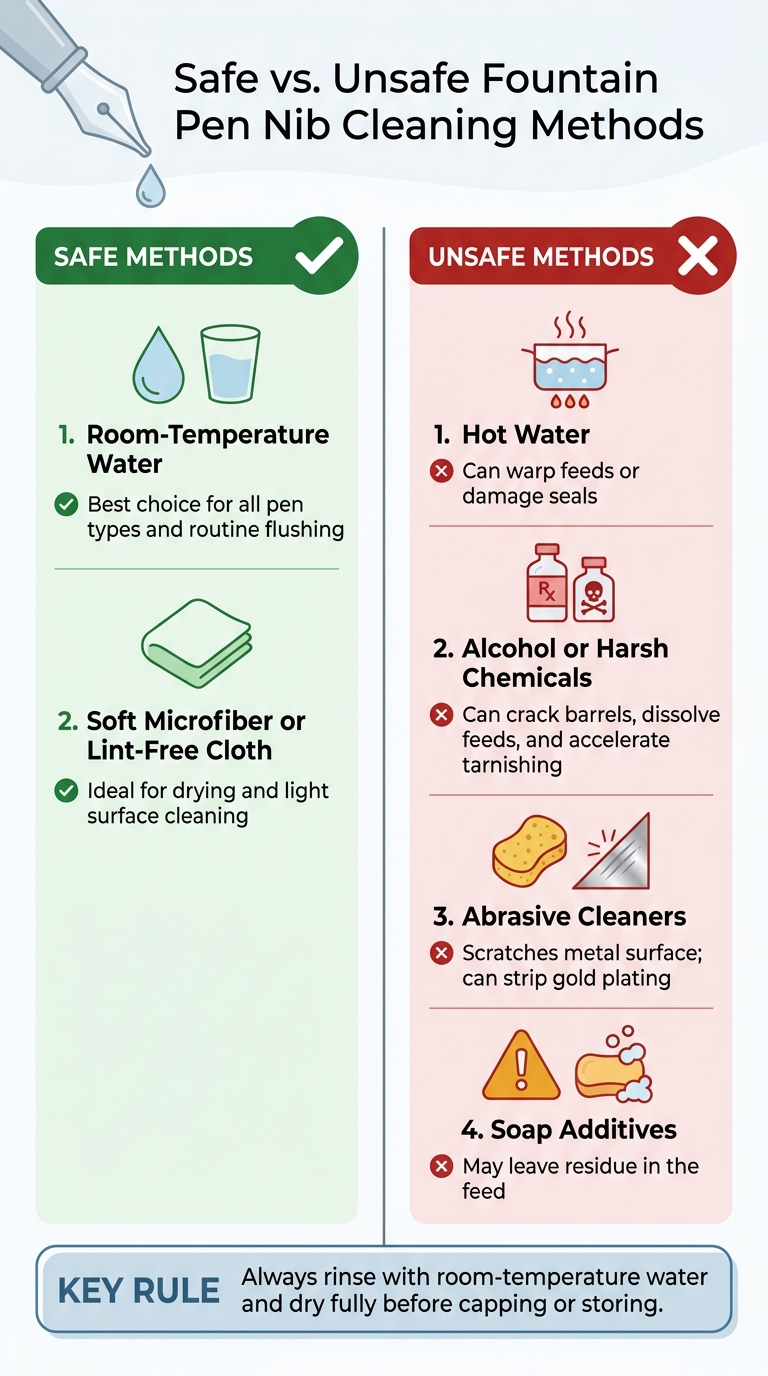
Safe vs. Unsafe Fountain Pen Nib Cleaning Methods
Regular cleaning helps prevent staining and tarnishing. The main job is simple: use water to clear out residue before it dries inside the feed. That’s why rinsing sits at the center of any pen-cleaning routine.
Step-by-Step Rinse Routine for Cartridge, Converter, and Piston Pens
The exact process depends on the filling system. In each case, keep flushing until the water runs clear. If ink stays behind, it can harden in the feed.
- Cartridge pens: Remove the empty cartridge, then flush water from the cartridge opening through the nib.
- Converter pens: Attach the converter and place the nib in clean water. Twist the knob to pull water in, then push it back out. Keep going until the water looks clear.
- Piston pens: Submerge the nib and work the piston so water moves into the barrel, then back out again. Repeat until clear.
Safe vs. Unsafe Cleaning Methods
Some cleaning methods are fine. Others can do more harm than good.
| Method | Safety | Notes |
|---|---|---|
| Room-temperature water | ✅ Safe | Best choice for all pen types and routine flushing |
| Soft microfiber or lint-free cloth | ✅ Safe | Ideal for drying and light surface cleaning |
| Hot water | ❌ Unsafe | Can warp feeds or damage seals |
| Alcohol or harsh chemicals | ❌ Unsafe | Can crack barrels, dissolve feeds, and accelerate tarnishing |
| Abrasive cleaners | ❌ Unsafe | Scratches the metal surface; can strip gold plating on plated nibs |
| Soap additives | ⚠️ Not recommended | May leave residue in the feed |
Drying matters just as much as rinsing. If moisture stays behind, it can set the stage for the next round of tarnish.
Why You Must Dry the Nib Fully Before Storage
Moisture left on the nib after cleaning can encourage oxidation, especially on gold alloy nibs that contain metals like copper, silver, or nickel. Put plainly, a nib can look clean and still be at risk if it’s stored damp.
After rinsing, pat the nib dry with a soft microfiber or lint-free cloth. Use a light dabbing motion rather than rubbing, then leave the pen uncapped until it is fully dry.
Once the nib is clean and dry, the next thing to watch is residue from the ink itself.
How to Control Ink Residue and Stop Tarnish Before It Starts
What looks like tarnish is often just dried ink residue. That’s an important difference. Tarnish changes the metal itself, while residue sits on the surface and usually comes off with room-temperature water or a soft microfiber cloth.
So the first move is simple: use clean ink and clean water. Good ink and steady filling habits help head off both problems before they start.
Use Fresh Ink and Check Bottles for Contamination
Before you fill your pen, take a quick look at the ink bottle. If you see debris or any sign of contamination, don’t ignore it. Dirty ink sends unwanted material straight into the feed, where it can dry down into stubborn deposits.
Some inks also leave more behind than others. Highly saturated, shimmer, and waterproof inks tend to cause more buildup in the feed, so they need more frequent cleaning.
If you have hard tap water, rinse with filtered or distilled water instead. That can help cut down on mineral scale in the nib and feed.
How to Prevent Residue Buildup During Regular Writing
Ink sitting in the nib and feed won’t stay wet forever. Given enough time, it dries out and hardens. That’s why regular flushing with a pen cleaning solution matters. A full clean before switching colors or putting the pen away for a while helps stop dried deposits from taking hold.
| Maintenance Trigger | Recommended Action | Purpose |
|---|---|---|
| Regular Use | Rinse every 3–4 weeks | Prevents gradual residue accumulation |
| Changing Ink Color | Full flush until water is clear | Prevents color blending and chemical reactions |
| Extended Non-Use | Clean before storage | Prevents ink from drying into stubborn deposits |
Once residue is under control, the next line of defense is storage that keeps the nib dry and protected.
How to Store and Handle Pens to Protect the Nib Finish
Store the nib in a stable, dust-free spot away from direct sunlight. Cleaning gets rid of residue. Good storage helps keep it from coming back.
Skip places near heating vents, air conditioners, or exterior walls. Big temperature changes push air in and out of the cap, which speeds up evaporation and tarnish. A dry drawer or cabinet with a steady temperature works well.
Short-Term vs. Long-Term Storage Practices
Short-term and long-term storage need different care.
| Feature | Short-Term (Daily/Weekly Use) | Long-Term (Months or More) |
|---|---|---|
| Ink Status | Keep inked to maintain feed moisture | Fully flush, clean, and dry the pen |
| Orientation | Horizontal or nib-up to prevent leaking | Horizontal or any stable position |
| Use Case | Frequent use | Extended storage |
For short-term storage, recap the pen as soon as you’re done writing, even if you’re only stepping away for a minute. The inner cap liner slows evaporation at the nib. That helps cut down on residue that can stain or corrode the surface.
For long-term storage, empty the pen and let it dry all the way. If water stays behind, it can evaporate and leave a more concentrated mix of dye and additives. That buildup can cling to the feed and speed up tarnish.
Cases, Sleeves, and Storage Materials That Protect the Nib Finish
Once you’ve picked the right location and position, physical protection is the next step. An exposed nib can collect dust or get scratched. A microfiber sleeve or a dedicated pen case adds a simple barrier between the nib and the outside world, helping protect the finish from grit and wear.
One small thing makes a big difference: the sleeve or case needs to be clean. If grit gets trapped inside, it can scratch the nib finish just as easily as no protection at all. Give storage sleeves and cases a quick shakeout or wipe before you put a pen inside.
Fountain Pen Revolution offers pen stands and cases for organized storage.
Light Polishing and Key Takeaways
When to Polish and When to Stop
If cleaning and storage don't fix a dull-looking nib, polishing is the last step.
Here's the basic rule: if the nib has been rinsed and dried and it still looks dull, you can try light polishing. Start with the gentlest option first: a soft microfiber cloth. If that doesn't remove the discoloration, step up to a jeweler's polishing cloth, like a Sunshine Cloth, which has a mild polishing compound.
When you polish, don't scrub back and forth. Hold the cloth steady and draw the nib across it instead. It's also smart to work over a folded towel, just in case the pen slips from your hand. Afterward, rinse the nib with cool or lukewarm water so any fibers or polishing compound come off before you refill the pen.
Gold-plated nibs should not be polished with abrasive compounds. Even something like Simichrome can wear away the thin plating and expose the base metal under it. For solid gold nibs, keep polishing brief and gentle. If the discoloration doesn't go away, stop there. At that point, you're likely dealing with pitting or damage that won't polish out.
Vintage nibs are a special case. A bit of patina may be part of their character, and it can be better to leave it alone.
Conclusion: A Simple Routine to Keep Nibs Clean and Bright
Most tarnish never becomes a problem if you stick to a simple rinse-and-dry routine. Rinse with room-temperature water after writing sessions, dry the nib all the way before capping or storing the pen, and keep pens in a dry, dust-free spot out of direct sunlight. Polishing should be rare. Day-to-day care should handle most of the work.
There's a simple difference here: residue usually rinses off, while tarnish calls for careful polishing - and only on nib materials that can handle it.
Rinse, dry, and store nibs the right way. Polish only when surface tarnish is still there.
FAQs
How can I tell tarnish from dried ink?
Rinse the nib with water first. If the discoloration is just dried ink, it should come off without much effort.
If the nib still looks dull or dark after that, you're probably looking at tarnish. That's a chemical change in the metal, not leftover grime on the surface. Ink washes away. Tarnish usually needs a polishing cloth to bring back the nib’s shine.
Can tarnish permanently damage a nib?
No. Tarnish is a surface-level chemical reaction. It causes dull, cosmetic discoloration, but it does not affect the nib’s metal structure or how it writes.
That’s the big difference between tarnish and rust. Rust damages metal. Tarnish just changes the surface appearance.
On gold alloy nibs, tarnish can usually be removed safely with a soft microfiber cloth or a gentle metal polish. With a light cleaning, the nib’s original luster can come back.
How often should I clean my fountain pen nib?
How often you clean your fountain pen nib depends on how you use the pen:
- Weekly if you write every day with pigmented inks
- Every two weeks with standard inks
- Monthly if you only use the pen now and then
You should also clean the nib well before switching ink colors or putting the pen away for a long stretch. That simple habit helps stop buildup, keeps the ink flowing the way it should, and helps protect the nib.