

Choosing between super flex and semi-flex nibs boils down to your writing needs and style. If you're into calligraphy or want bold, expressive strokes, super flex nibs are your go-to. They respond to light pressure and create dramatic line variations but require careful handling and slower writing. On the other hand, semi-flex nibs are sturdier and better for everyday tasks like journaling or note-taking. They offer moderate line variation and are easier to maintain, making them more beginner-friendly.
Key Points:
- Super Flex Nibs: Best for calligraphy and artistic work. Highly sensitive to pressure, creating bold line variations but needing delicate handling and slower writing.
- Semi-Flex Nibs: Ideal for daily writing and light sketching. Require moderate pressure, offering subtle line variation with greater durability and ease of use.
Quick Comparison
| Feature | Super Flex Nibs | Semi-Flex Nibs |
|---|---|---|
| Line Variation | Wide range (up to 3 mm) | Moderate (up to 1.6 mm) |
| Pressure Sensitivity | Very light pressure required | Moderate to heavy pressure |
| Best Uses | Calligraphy, expressive artwork | Journaling, daily writing, sketches |
| Durability | Delicate, prone to damage | Sturdier, beginner-friendly |
| Maintenance | Requires specific care | Easier to clean and maintain |
Choose super flex for artistic flair and semi-flex for balanced, practical use. Both FPR flex nibs shine when paired with the right paper and ink.
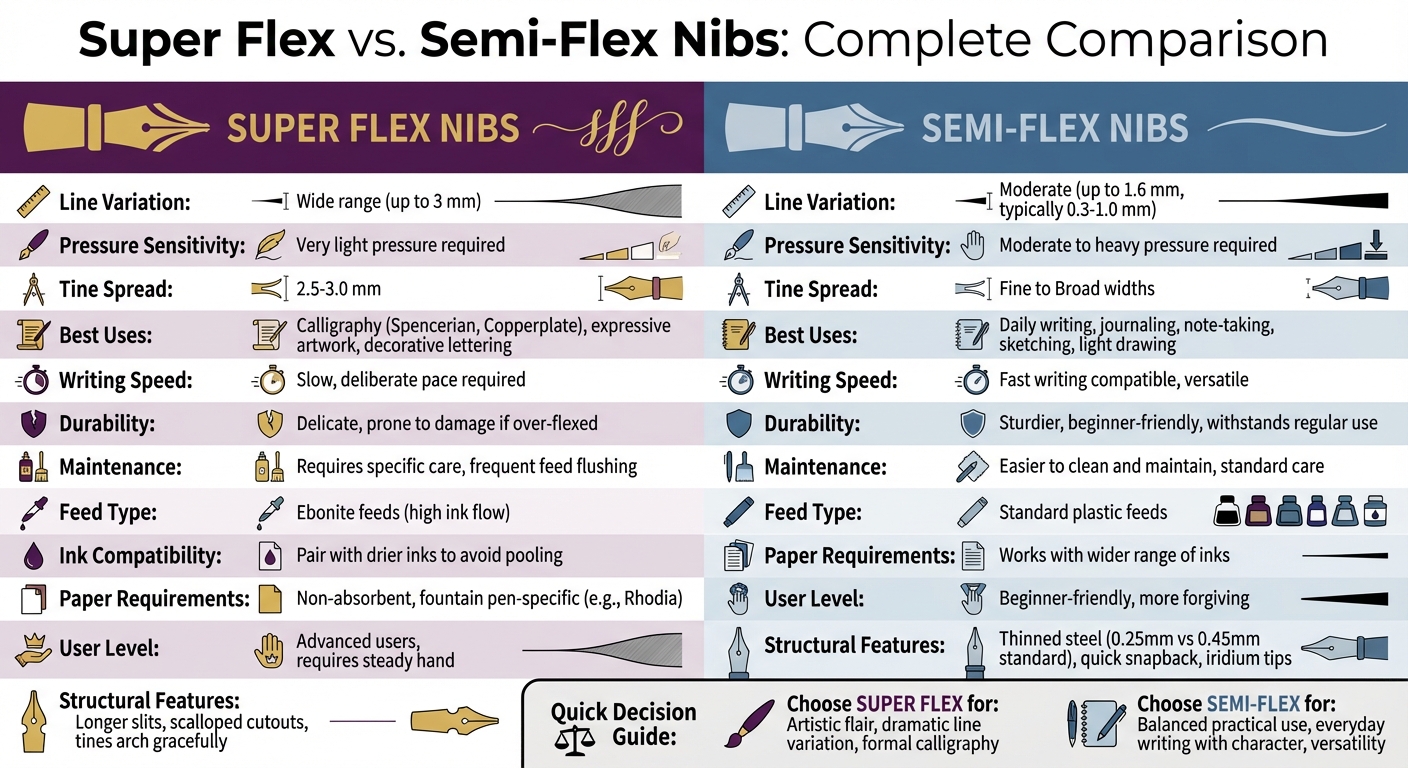
Super Flex vs Semi-Flex Fountain Pen Nibs Comparison Chart
Differences Between Super Flex and Semi-Flex Nibs
Line Variation and Flexibility Range
The most obvious distinction between super flex and semi-flex nibs lies in how much they vary line width. Super flex nibs produce significantly more dramatic line swelling, making them perfect for intricate scripts like Copperplate or Spencerian. For example, modern super flex nibs, such as the Fountain Pen Revolution 14K Gold Ultra Flex, can achieve a tine spread of about 2.5 mm to 3.0 mm. This creates a smooth, highly responsive experience that many calligraphers appreciate.
Semi-flex nibs, on the other hand, offer more moderate line variation - typically transitioning from Fine to Broad widths. Their design reflects this balance, with flex-optimized steel nibs, like Noodler's Ahab, thinned to about 0.25 mm compared to the standard 0.45 mm thickness. Super flex nibs often feature longer slits and scalloped cutouts to reduce resistance, along with ebonite feeds to handle the high ink flow required for wide tine spreads, preventing "railroading". Semi-flex nibs, however, generally work well with standard plastic feeds. These structural differences also influence how much pressure is needed to achieve their best performance.
Pressure Requirements and Writing Experience
The way these nibs respond to pressure further sets them apart. Super flex nibs are highly sensitive to light pressure, making them ideal for calligraphy. However, they demand a steady and delicate touch for smooth curves. As Tom Gidden explains:
For good, flowing curves, a delicate, steady hand is needed, and that's difficult to achieve while forcing the nib into the paper.
That said, rapid writing with super flex nibs can lead to railroading if the feed struggles to keep up with the ink demand.
By comparison, semi-flex nibs require moderate to heavy pressure to reach their full line variation. While this can make longer writing sessions more tiring, the added resistance offers greater control, making them better suited for casual, everyday writing.
Durability and Maintenance
Durability is another key factor to consider when choosing between these nibs. Super flex nibs are delicate and prone to damage if over-flexed, which can permanently misalign the tines or cause the nib to "spring", preventing it from returning to its original shape. Even seasoned users recommend leaving a 0.3 mm margin from the maximum flex limit during normal use.
Semi-flex nibs, by contrast, are much sturdier. They can withstand regular use, even by less experienced writers. Modern steel semi-flex nibs are also less likely to suffer damage from accidental over-flexing compared to their gold counterparts. Maintenance is simpler, too - semi-flex nibs only need standard cleaning and maintenance and pair well with most feeds. Super flex nibs, however, often require more specific care. Using drier inks and less absorbent paper can help maintain crisp lines and prevent ink pooling.
sbb-itb-1dd4fe9
Best Uses for Semi-Flex Nibs
Daily Writing and Journaling
Semi-flex nibs are a great choice for daily writing tasks because they strike a balance between flexibility and control. Their firmness helps avoid unintentional line variation, making them behave much like a standard rigid nib during quick writing sessions. As fountain pen reviewer Rachel de la Fuente puts it:
I like it, because when it means you can easily use it as a non-flex nib when writing quickly. I think the firmness makes it more versatile.
This balance allows for smooth, fast writing while still offering subtle line variations that can add a decorative touch. Whether you're jotting down notes, journaling, or writing for extended periods, semi-flex nibs, like those found on the FPR Quickdraw Flex, reduce hand fatigue and maintain a comfortable flow. They also shine when used for headers or signatures, offering controlled line variation ranging from 0.15mm to 1.6mm for a touch of flair. Their compatibility with standard converters further enhances their practicality for everyday use.
Sketching and Light Drawing
Semi-flex nibs bring their versatility into the realm of art, offering precision and dynamic line work for sketching and light drawing. These nibs respond to moderate pressure, allowing artists to create intentional line variations without the risk of accidental widening during detailed work. Their quick snapback ensures smooth transitions between thick and thin strokes, making them ideal for expressive yet controlled sketches.
With iridium tips that glide effortlessly across the page, semi-flex nibs minimize nib drag and ink splatter, even during rapid sketching sessions. This makes them perfect for detailed line drawings, quick studies, or any artistic project where precision and variation matter. Whether you're capturing intricate details or experimenting with dynamic strokes, semi-flex nibs provide the control you need to bring your vision to life.
Which Flex Nib Is Best? | Fountain Pen Comparison
Best Uses for Super Flex Nibs
While semi-flex nibs are excellent for everyday writing, super flex nibs shine in artistic and expressive applications.
Calligraphy and Decorative Lettering
Super flex nibs, often referred to as "wet noodles", are designed for the dramatic line variation that traditional calligraphy demands. Unlike semi-flex nibs, which offer a modest line variation of 0.3 mm to 1 mm, super flex nibs can achieve a striking range of 2.5 mm to 3 mm. This makes them perfect for intricate scripts like Spencerian or Copperplate, where bold downstrokes and delicate hairlines create stunning contrasts.
What sets super flex nibs apart is their sensitivity to pressure. They require far less force to reach their full line variation, and instead of simply spreading apart in a "V" shape, their tines arch gracefully during use. This arching action, combined with their quick "snap-back" when pressure is released, allows for seamless transitions between thick and thin strokes. As Mauricio Aguilar, Founder of VintagePen.net, puts it:
"The inability of the nib to have the desired elasticity and substantially arch its tines is a HUGE detriment to true flexy writing."
Modern options, like the Fountain Pen Revolution 14k Gold Ultra Flex nib, showcase these qualities. These nibs often feature ebonite feeds, which ensure a steady ink flow during flexed strokes, minimizing issues like railroading (where the ink film breaks between the tines). For optimal results in calligraphy, write slowly while flexing the nib, use drier inks and paper to keep hairlines sharp, and ease off pressure slightly before completing downstrokes. Beyond calligraphy, these nibs also bring a unique touch to expressive artwork.
Expressive Drawing and Artwork
Super flex nibs are equally valuable for artists, offering dynamic line work that brings a distinctive energy to illustrations. These nibs allow for effortless transitions from ultra-thin lines to bold, heavy strokes, enabling both intricate details and dramatic emphasis in the same piece.
The pooling of ink during flexed strokes enhances the effects of sheening inks, concentrating the color for striking visual shifts, even on less-than-ideal paper. They also pair well with shimmer inks, as the ebonite feeds and generous ink flow help prevent clogging from metallic particles.
For expressive drawing, control is key. Apply pressure carefully to avoid overstressing the nib's gold alloy, and adjust your speed to account for the increased friction as the tines spread. Pairing high ink flow with quality, ink-resistant paper can amplify color effects and reduce feathering, while drier inks help maintain precise hairlines. With the right technique, super flex nibs can transform your artistic vision into a masterpiece.
How to Choose Between Super Flex and Semi-Flex
Finding the right flex nib means aligning your writing technique with the right materials. While pressure and line variation are essential, pairing these with the right paper and ink can make all the difference.
Matching Nib Type to Your Writing Style
Your writing habits should steer your choice of nib. Semi-flex nibs, which require firmer pressure, are ideal for those with a heavier hand. On the other hand, super flex nibs, including ultra-flex "wet noodle" types, respond to even the lightest touch.
Writing speed is another factor to consider. As Mauricio Aguilar, Founder of VintagePen.net, explains:
Flexy writing is about art and not about speed.
If you tend to write quickly, look for nibs that remain stable during non-flexed strokes, offering a balance between expressive and standard writing. Super flex nibs, especially professional-grade ones, require a slower, more deliberate pace to maintain ink flow and prevent damage.
For beginners, steel-alloy flex nibs are a safer choice because they’re more forgiving than 14k gold nibs, which can permanently bend under too much pressure. Ultra-flex nibs, however, demand a steady hand and precise alignment to avoid scratchiness.
But it’s not just about your writing style - your choice of paper, ink, and maintenance routines also play a critical role in your flex nib experience.
Paper, Ink, and Maintenance Factors
The type of paper you use significantly impacts nib performance. Less absorbent paper helps maintain the sharp contrast between thin and thick strokes, while highly absorbent paper can blur those lines. Even a simple change in paper or ink can alter line width by up to 0.2 mm. For super flex nibs, which release more ink, fountain pen–specific papers like Rhodia are ideal for preventing feathering and bleed-through.
Ink selection is just as important. Pair very wet super flex nibs with drier inks to avoid pooling, which can obscure fine details. If you notice railroading during flexed strokes, switching to thinner inks can improve flow.
Maintenance is another key consideration. Super flex nibs require more frequent care, such as regular feed flushing, especially if you’re using shimmer inks that can clog the high-volume channels. Semi-flex nibs, on the other hand, are easier to maintain and work well with a wider range of inks, making them a practical choice for everyday use.
Conclusion
Super flex nibs create striking line variation, making them ideal for formal calligraphy styles like Spencerian or Copperplate. These styles rely on smooth transitions from delicate hairlines to bold swells, which super flex nibs handle beautifully. However, they demand patience, a light hand, and slower writing speeds to avoid wear or damage.
On the other hand, semi-flex nibs strike a balance between flair and practicality. They allow for subtle line variation with controlled pressure, making them great for everyday tasks like quick note-taking. They’re also beginner-friendly and require less upkeep compared to super flex nibs.
When deciding between the two, think about your writing habits. If you’re looking for a nib for expressive calligraphy or detailed artwork, super flex is the way to go. For regular writing with a touch of character, semi-flex is a reliable choice.
For those starting out, modern steel-alloy flex nibs offer a cost-effective way to explore flexibility before upgrading to 14k gold options. And don’t forget - using high-quality, non-absorbent paper like Rhodia can make a big difference. It prevents feathering and keeps your lines crisp and clean.
Ultimately, the best nib is the one that aligns with your writing style and artistic goals.
FAQs
How can I avoid railroading with a super flex nib?
Using a super flex nib effectively requires a light touch and controlled pressure. Applying too much force can cause the tines to spread excessively, which disrupts the ink flow and results in uneven lines. By practicing with minimal pressure, you can maintain a steady ink flow, create beautiful line variations, and avoid damaging the nib.
What paper works best for flex nibs without feathering?
Smooth, premium paper is a must when using flex nibs to avoid feathering and ensure clean, crisp lines. Brands like Rhodia, Clairefontaine, and Tomoe River are excellent choices. These papers are known for managing the ink flow and accommodating the line variation that flex nibs create.
How do I know if I’m using too much pressure and risking damage?
To keep a flex nib in good condition, pay attention to how the tines spread while writing. Applying too much pressure can force them apart excessively, risking damage or even breakage. Warning signs of overpressure include lines that are too wide or uneven, a feeling of resistance, or audible scratching. Instead, use a gentle touch and allow the nib's natural flexibility to create line variation. This approach helps preserve the nib's lifespan.