

Writing daily with a fountain pen can transform mundane tasks into an enjoyable ritual. The tactile feel of the nib on paper, the smooth ink flow, and the slower pace make it a mindful and rewarding experience. Here’s what you need to know to get started:
- Choose the Right Pen: Start with an affordable, beginner-friendly fountain pen. Look for a fine or medium steel nib for balance between smoothness and practicality.
- Pick the Right Paper and Ink: Use heavier, smoother paper (90–120 gsm) to prevent bleed-through. Opt for reliable ink brands like Pilot or Diamine for consistent flow.
- Focus on Comfort: Select a pen with a comfortable grip and weight. A relaxed hold and proper nib angle (45–55°) are key to reducing hand fatigue.
- Build a Habit: Begin with 5–10 minutes of writing daily. Use low-pressure tasks like journaling or jotting down to-do lists to stay consistent.
- Maintain Your Pen: Clean it every few weeks to ensure smooth performance. Always cap your pen when not in use.
Fountain pens don’t require a big investment to get started. With brands like Fountain Pen Revolution offering affordable options, you can explore this rewarding habit without overspending. Writing with a fountain pen isn’t just about putting words on paper - it’s about enjoying the process.
How to Write with a Fountain Pen
Selecting a Fountain Pen for Daily Use
If you want to make writing with a fountain pen part of your daily routine, it’s all about finding a pen that feels natural, writes smoothly, and fits seamlessly into your life. Whether you’re jotting down notes, journaling, or capturing ideas, the right pen should enhance your writing experience without distracting you.
Nib Sizes and Materials Explained
The nib, which is the metal tip of the pen that touches the paper, plays a big role in how your writing looks and feels. The size of the nib determines the thickness of your lines, and choosing the right one depends on your handwriting style and the type of paper you use.
- Fine (F) nibs: These create a narrow, precise line, making them ideal if you write small or use standard office paper. They help prevent ink from bleeding through cheaper paper and keep your writing neat, even in tight spaces like planners or forms. For many U.S. beginners, a fine nib is a safe and practical starting point.
- Medium (M) nibs: These produce a slightly thicker, wetter line, offering a smoother and more expressive writing experience. If you have larger handwriting, prefer a bolder look, or use higher-quality paper like journals, a medium nib can be a great choice. However, it may bleed or feather on thin paper.
- Extra-fine (EF) nibs: These are even thinner than fine nibs and work well for very small handwriting, though they might feel a bit scratchy.
- Broad (B) nibs: These create thicker lines and are better suited for headings or decorative writing on high-quality paper.
For most U.S. writers, a fine or medium steel nib strikes a good balance between smoothness and practicality.
When it comes to nib materials, steel nibs are a solid choice for beginners. They’re durable, affordable, and provide consistent performance. Modern steel nibs are smooth and reliable for daily writing, standing up to occasional drops or changes in writing angles. Gold nibs, on the other hand, offer a softer, more responsive feel with subtle line variations. While they can be a joy to write with, they’re typically found on higher-end pens and come with a much higher price tag - often over $100. For starting out, a well-made steel nib in the $5–$50 range is a smart and budget-friendly option.
Budget-Friendly Starter Options from Fountain Pen Revolution
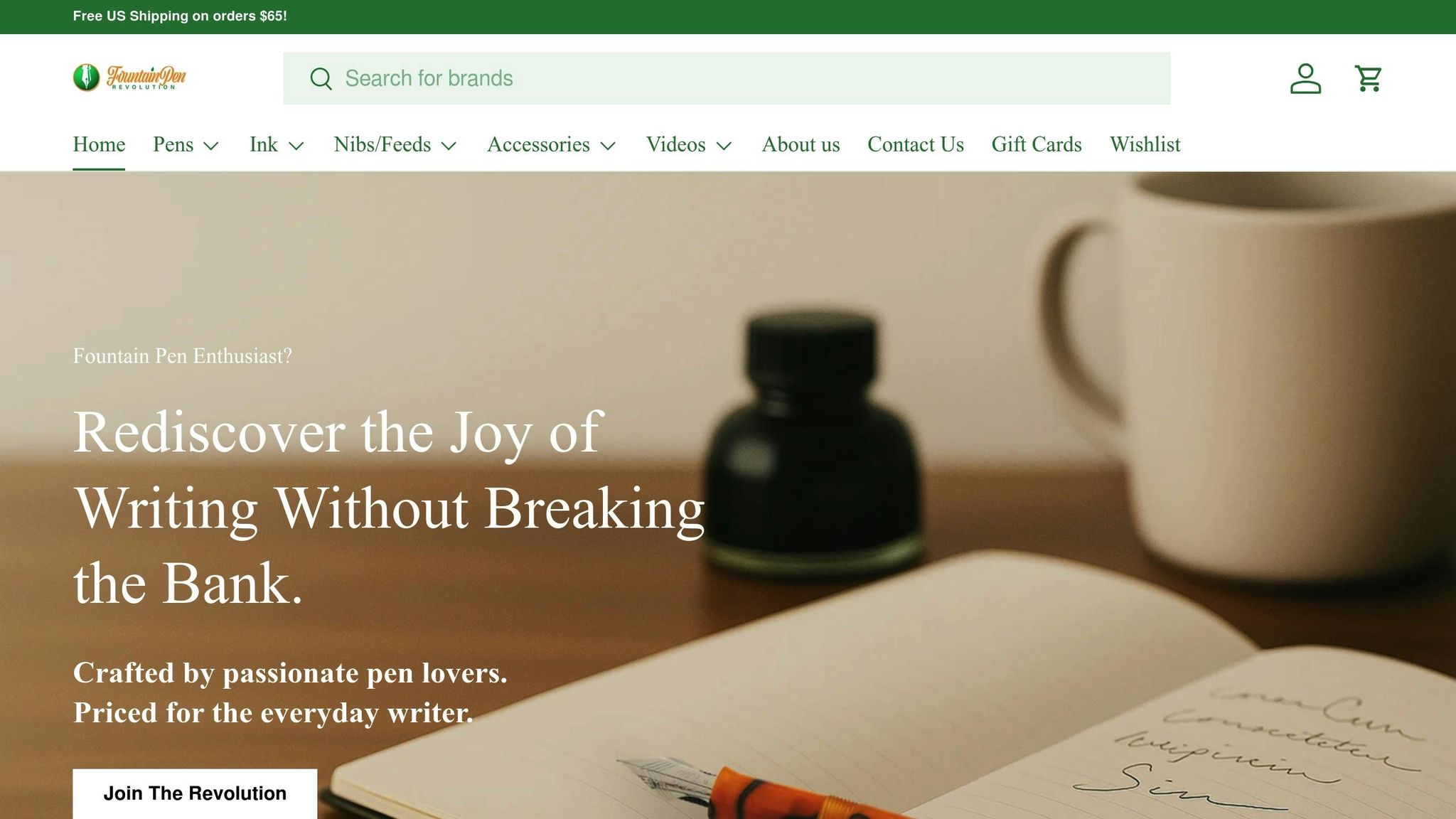
Fountain Pen Revolution (FPR) makes it easy to explore fountain pens without breaking the bank. Their focus on affordability allows you to try out daily writing with a fountain pen while keeping your initial investment low. Plus, their wide range of options means you can experiment with different nib sizes and styles as you figure out what works best for you.
FPR pens are often priced much lower than similar models from larger brands, making it possible to try multiple nib sizes - like a fine nib for work notes and a medium nib for journaling - without spending too much. If you’re unsure whether fountain pens will become a long-term habit, starting with an affordable option minimizes the risk.
FPR also offers starter sets that bundle everything you need, including a pen, ink, and basic accessories like converters. These kits take the guesswork out of getting started, and you can begin writing as soon as your order arrives. With prices starting around $35, these sets are an accessible way to dive into fountain pen writing.
One standout feature of FPR is their nib variety, even at lower price points. You’ll find options like extra-fine, fine, medium, broad, and even flex nibs for those who want to experiment with line variation. Unlike some retailers that limit nib choices for beginners or sell converters separately, FPR emphasizes giving you plenty of options right from the start.
Their pens also feature user-friendly filling systems, such as cartridge/converter or eyedropper options, making maintenance straightforward. Cartridges are great for convenience, especially at work or school, while converters let you use more economical bottled ink at home. This flexibility makes FPR pens practical for daily use in various settings.
By focusing on affordability and practical features, FPR pens offer an approachable way for U.S. writers to explore fountain pens without committing to a high-end purchase. You’ll enjoy the key benefits - smooth writing, refillable ink, and a touch of personal expression - at a price that feels manageable.
Finding a Comfortable Grip and Weight
Comfort is just as important as nib size when selecting a pen for daily use. If a pen feels awkward or tiring in your hand, you’re less likely to use it - even if it writes beautifully.
Grip shape is one of the first things to consider. A slightly contoured or tapered grip naturally guides your fingers into position, making it easier to hold. Straight cylindrical grips can sometimes slip, while sharp transitions between the barrel and grip can dig into your fingers during long writing sessions. The right grip should feel natural as soon as you pick up the pen, with your fingers settling into place effortlessly.
Barrel thickness also matters. A moderately thick barrel - thicker than a typical disposable ballpoint pen - reduces the need to pinch tightly, which helps prevent hand fatigue. This is especially useful for people with larger hands or those who experience mild joint discomfort. Very thin pens, on the other hand, may require a tighter grip to maintain control, which can lead to strain over time.
Section material impacts how secure the pen feels in your hand. Materials like satin or matte plastic, resin, or lightly textured finishes provide a better grip, even during longer writing sessions. Highly polished metal sections can become slippery, especially in warm conditions. A bit of texture or a non-glossy finish can make a big difference in comfort.
Weight is a personal preference, but for extended writing, lighter pens are generally easier on the hand. Lightweight plastic pens are ideal for long note-taking or journaling sessions because they don’t strain your hand. Heavier metal pens can feel sturdy and premium, but the added weight may cause fatigue after a few pages. When testing a pen, hold it for a while to see how it feels - not just for a few seconds.
A comfortable pen allows for a relaxed hold, reducing the need to clench your fingers. If you notice your hand cramping or tiring quickly, the pen’s ergonomics might not be right for you. Once you find a pen that fits your hand well, writing becomes effortless, and you’ll naturally want to use it more often.
With a pen that’s comfortable and performs well, you’re ready to incorporate fountain pen writing into your daily routine.
Building a Daily Writing Routine
With your chosen fountain pen in hand, writing can become a daily pleasure. The smooth ink flow and deliberate pace of using a fountain pen can transform even a few minutes of writing into something you genuinely enjoy. To make this a habit, focus on writing regularly, even in small increments. Here's how you can start small, create an inviting space, and track your progress to turn fountain pen writing into a daily ritual.
Begin with Small, Achievable Goals
Start with short, manageable writing sessions to ease into the habit. Research shows that beginning with just 5–10 minutes a day is more sustainable than attempting lengthy writing marathons. Keeping these sessions brief at first lowers the barriers to consistency.
For the first week, aim to write for just 5 minutes daily. Use this time for simple, low-pressure tasks - jotting down tomorrow's to-do list, copying a favorite quote, or writing a few sentences about your day. The goal isn’t to create perfect prose but simply to get in the habit of using your pen.
In the following weeks, gradually extend your writing time. By week two, aim for 8–10 minutes per session, and by week three, you might find yourself writing for 10–15 minutes. If your schedule allows, you can even split this time into two shorter sessions. After a month, many writers settle into a rhythm of 10–20 minutes a day, adjusting as needed to keep the experience enjoyable and strain-free.
To avoid hand discomfort, especially if you're new to fountain pens, take a short break every 5 minutes. Shake out your hand and check your posture. Fountain pens require less pressure than ballpoints, so allow your hand time to adapt. If you experience cramping, scale back your sessions temporarily and build up gradually.
When setting daily goals, focus on output rather than perfection. For example, aim to "fill half a page" or "answer one journaling prompt" like "What went well today?" or "What am I grateful for?" For creative projects, set micro-goals such as "write four lines of a poem" or "draft one paragraph of a story." Shifting your focus to small, concrete outputs reduces performance anxiety and makes the habit easier to maintain.
Another effective strategy is habit stacking - linking your new writing habit to an existing routine. For instance, you might decide, "After I pour my morning coffee, I’ll write for 5 minutes", or "When I sit down for lunch, I’ll update my planner for 8 minutes." These triggers act as gentle reminders, making it easier to stick to your routine without relying on willpower alone.
Set Up a Dedicated Writing Area
Having a designated spot for writing can make a big difference in maintaining your habit. A well-prepared space eliminates small obstacles that might otherwise derail your plans. When your pen, notebook, and other tools are ready to go, you can dive into writing without hesitation.
Your writing area doesn’t have to be elaborate. A sturdy desk, a comfortable chair, and good lighting are enough to get started. Proper lighting is particularly important if you’re writing early in the morning or late at night to prevent eyestrain.
Keep your pen easily accessible - don’t tuck it away in a drawer. A simple tray or pen stand keeps your fountain pen visible and within reach. For example, Fountain Pen Revolution offers affordable pen stands that not only store your pen but also serve as a visual prompt to write.
Position your notebook nearby, ideally open to the next blank page or marked with a sticky note, so you don’t waste time searching for where to start. Having a few sheets of scrap paper handy is also useful for test scribbles when you uncap your pen.
Store all your essentials - backup ink cartridges, a cleaning cloth, and other tools - in one spot, like a small box or cup on your desk. This reduces setup time, ensuring that when you find a few spare minutes, you can start writing immediately.
Using the same spot and time each day helps reinforce the habit, making it feel more automatic over time.
Track Your Progress and Stay Consistent
Tracking your writing habit can be a powerful motivator. Visual cues, like marking completed days on a calendar, help you see your progress and encourage you to keep going. Watching your streak grow can be surprisingly satisfying.
A simple habit tracker is an easy way to monitor your consistency. Create a grid in your notebook or on a separate sheet of paper, listing the dates along one side with a box for each day. Mark each day you write with a checkmark, an X, or a colored dot. This quick practice only takes seconds and gives you a clear view of your progress.
Set small milestones to celebrate along the way. These might include writing for seven consecutive days, filling your first notebook, or reaching a total of 10 hours of writing. When you hit a milestone, reward yourself with something simple, like trying a new ink color or picking up an inexpensive accessory like a pen case or stand. Keeping rewards modest ensures that the joy of writing remains your main motivation.
If you miss a day, don’t stress - just pick up where you left off the next day. Research suggests that avoiding two missed days in a row is key to maintaining a habit.
On particularly busy or stressful days, commit to a mini-session. Even writing a single sentence or a brief note can help you maintain momentum without adding pressure. This flexibility ensures your writing habit stays resilient, even during life's hectic moments.
Learning Proper Fountain Pen Technique
Once you've built a daily writing habit, fine-tuning your technique can make every writing session more enjoyable and less tiring. A good technique not only reduces hand fatigue but also ensures smoother ink flow, letting you make the most of your fountain pen. These pens work best with a gentle, deliberate approach. By mastering the basics of grip, angle, and movement, you can write comfortably and effortlessly - even during extended sessions. Let’s dive into the essentials of grip and control to help you unlock your pen’s full potential.
Proper Grip and Writing Angle
How you hold your fountain pen plays a huge role in both comfort and ink flow. Aim for a relaxed tripod grip, where the pen rests lightly on your middle finger, supported by your thumb and index finger. Keep your fingertips about ½ to 1 inch behind the nib so you can see the tip clearly and maintain good control without smudging.
A tight grip can lead to hand fatigue and messy smudges. If your fingers turn white or your hand feels tingly, you’re likely gripping too hard. Here’s a quick test: try sliding the pen slightly between your fingers. If it moves without falling out, your grip is just right.
The angle at which you hold the pen is equally important. Most fountain pens perform best when held at a 45–55° angle to the paper. Picture the back of the pen pointing somewhere between your shoulder and chest - not straight up toward the ceiling. This angle allows the nib’s tip to sit flat on the paper, enabling smooth ink flow through capillary action.
If the pen is held too steeply (almost vertical), you might notice scratchy, faint, or broken lines because only the nib’s edge touches the paper. On the other hand, holding the pen too flat (nearly parallel to the page) can create drag and cause inconsistent ink flow, especially on upward strokes.
Before diving into a long writing session, take a moment to check your setup:
- Look straight down at the nib to ensure it’s centered and aligned with the paper.
- Write a few test lines and curves in different directions. If any strokes feel scratchy or uneven, adjust the nib’s angle or rotation.
- Ensure your grip applies minimal pressure.
Many experienced writers recommend warming up with simple exercises - like loops, ovals, or figure-eights - to ensure your nib angle and grip are aligned before starting on a journal or planner.
Writing with Light Pressure
Once you’ve nailed the proper grip and angle, the next step is mastering light pressure. Unlike ballpoint pens, fountain pens don’t need much force to write. They rely on capillary action, where ink naturally flows from the nib onto the paper. Applying too much pressure can misalign the nib, damage the pen, or even tear the paper.
Pressing too hard can also lead to issues like feathering (where the ink spreads out) or bleeding through the paper - especially on standard U.S. notebook paper. Over time, a heavy hand can cause hand fatigue, making writing less enjoyable.
To develop a lighter touch, try this exercise: hold the pen just above the paper, then lower it until the nib barely makes contact and starts to write. Practice drawing simple shapes - lines, ovals, and loops - using only the pen’s weight. Focus on smoothness rather than speed. This helps train your hand to rely on the pen’s natural flow instead of muscle force.
When writing paragraphs, consciously reduce the pressure you’d normally use with a ballpoint pen. Periodically check if you can lift the pen slightly without losing contact with the paper. This simple awareness can help you develop a light, consistent style, allowing you to write for longer periods - whether it’s journaling or taking class notes - without discomfort.
Developing Better Writing Movements
With your grip and pressure in check, the next step is refining your hand movements for a more fluid writing experience. Writing with a fountain pen involves coordinating your fingers, wrist, and forearm. Each part of your hand plays a specific role:
- Fingers: Handle small, precise movements.
- Wrist: Manage short horizontal motions.
- Forearm: Move your entire hand for longer strokes or when reaching across the page.
If you’re used to ballpoints, you might rely too much on finger movement while keeping your wrist stiff. This habit can lead to fatigue when using a fountain pen. Instead, keep your wrist neutral and let your forearm glide lightly across the paper. Use your fingers to guide the pen rather than drive every motion. This approach spreads the effort across larger muscle groups, reducing strain and making long writing sessions - like journal entries or legal notes - more comfortable.
Good posture also plays a big role. Sit with your feet flat on the floor, keep your back straight, and position your forearms parallel to the writing surface. Rest the heel of your hand lightly on the page so it glides naturally with your movements instead of staying anchored in place.
Another helpful tip: rotate the paper instead of twisting your wrist to maintain a consistent nib angle.
Here are a few drills to improve control and comfort:
- Fill half a page with evenly spaced horizontal and vertical lines, focusing on smooth, consistent movements using your forearm.
- Practice rows of connected ovals or curves to build rhythm and maintain a steady angle and light pressure.
- Slowly write out the alphabet - uppercase and lowercase - while concentrating on keeping your grip relaxed and your lines consistent.
Spending just 5–10 minutes a day on these drills can lead to smoother writing and less hand fatigue within a couple of weeks. Many writers find that incorporating these exercises into their journaling routine helps them write comfortably for extended periods without needing frequent breaks.
Avoid rushing or making abrupt movements. Fountain pens thrive on a steady, moderate pace, so slowing down can improve line quality. If you notice skipping or hard starts despite proper technique, it might be time for some basic maintenance - like cleaning the nib or flushing the pen with water.
Finally, pairing good technique with the right pen can make a big difference in comfort. For beginners, a medium-diameter pen is often easier to hold lightly compared to a very thin one, as it reduces the urge to pinch. A pen with moderate weight - heavy enough to feel sturdy but not overly so - can also help by letting gravity do some of the work. Additionally, a medium or fine nib typically offers smoother performance on common U.S. papers, as extra-fine nibs can feel scratchy and broader ones may cause feathering on lower-quality paper.
sbb-itb-1dd4fe9
Pairing Your Pen with the Right Ink and Paper
Once you've nailed down your technique, it's time to refine your writing experience by choosing the right ink and paper for your fountain pen. The right combination can make a world of difference - improving ink flow, drying time, and line clarity. It’s all about minimizing frustrations and maximizing the joy of writing.
Choosing Paper That Works with Fountain Pens
Standard U.S. copy paper, usually around 20 lb (75–80 gsm), often struggles with fountain pen ink. Feathering and bleed-through are common issues, making it less ideal. Instead, opt for smoother, heavier paper - typically in the 24–32 lb (90–120 gsm) range. This type of paper offers a better surface for your nib to glide on and prevents ink from soaking through. Some trusted brands for fountain-pen-friendly paper include Rhodia, Clairefontaine, Leuchtturm1917, and Midori MD.
If you’re looking for loose-leaf or printer paper, HP 32 lb Premium Choice Laser paper is a popular pick. It performs exceptionally well with fountain pens and is budget-friendly, costing about $15–$20 for a 500-sheet ream.
Here’s a quick comparison of paper types:
| Paper Type | Weight | Texture | Feathering | Bleed-Through | Best For |
|---|---|---|---|---|---|
| Standard copy paper (20 lb) | ~75–80 gsm | Slightly rough, absorbent | Common | Common | Ballpoints, basic printing |
| Fountain-pen-friendly paper | 90–120 gsm | Smoother, less absorbent | Minimal | Rare | Fountain pens, formal notes |
| Specialty thin paper (Tomoe River) | 52 gsm | Very smooth, coated | Minimal | Rare | Journaling; showcasing ink effects |
One standout option is Tomoe River 52 gsm paper. Despite being incredibly thin, it resists bleed-through remarkably well and highlights ink shading and sheening beautifully. However, it has a longer drying time, making it more suited for leisurely journaling rather than fast-paced note-taking.
To get the best results, match your paper’s texture and weight to your nib size and ink type. Fine nibs and drier inks tend to work on a wider variety of papers because they lay down less ink, reducing feathering and bleed-through. On the other hand, broader or wetter nibs demand higher-quality paper to maintain sharp, clean lines. A good tip is to test your pen on different papers - work notepads, journals, or loose sheets - to find the combination that feels smooth, stays legible, and doesn’t ruin the back side of the page. Some writers even use separate notebooks: one with ultra-smooth paper for journaling and another with slightly more absorbent paper for quick notes.
Once you’ve found paper that works well, the next step is choosing an ink that complements it.
Picking Inks for Daily Writing
When selecting inks, aim for a balance of smooth flow, moderate wetness, and quick drying. For office or school use, classic colors like blue, black, or blue-black are popular for their readability and professional appearance. Brands like Waterman, Pilot, and Diamine are known for their reliable dye-based inks, which flow well and are easy to clean. A standard 30–80 mL bottle typically costs between $10–$20, making bottled ink a cost-effective choice compared to cartridges.
If you write quickly or are left-handed, fast-drying inks can help reduce smudging. Look for slightly drier inks or those labeled as “business” or “document” inks; these are designed for practical use and dry quickly, though they may lack the shading or sheen of more saturated inks. On the flip side, if you’re journaling or doing creative work, slower-drying, highly saturated, or sheening inks can add a touch of flair.
For notes that need to endure handling or spills, waterproof or permanent inks are a solid choice. Just remember, these inks often require more frequent cleaning, as they can be harsher on your pen’s internal components. For everyday writing on standard copy paper or basic notebooks, slightly drier inks paired with a fine or medium nib usually work best to avoid feathering and smudging.
If you’re new to fountain pens, brands like Fountain Pen Revolution offer affordable inks - often under $15 per bottle - perfect for experimenting with different properties to find what suits your writing style.
Basic Fountain Pen Maintenance
Taking care of your fountain pen doesn’t have to be complicated, but a little regular maintenance can go a long way. For pens you use daily, rinsing them with cool water every few weeks helps prevent dried ink buildup and ensures smooth ink flow. When switching ink colors - especially from darker to lighter shades - flush the pen thoroughly to avoid residue mixing.
To clean your pen, disassemble it as recommended by the manufacturer. This usually involves removing the cartridge or converter and, in some cases, the nib unit. Rinse the parts with clean water until the water runs mostly clear, then let everything air dry on a paper towel before reassembling. Avoid using hot water, alcohol, or ammonia unless specifically advised by the manufacturer, as these can damage delicate materials.
If your pen sits unused for a week, it’s a good idea to flush it before writing again to restart the ink flow. Storing your pen capped, with the nib facing up or horizontally, can also help keep the nib clean and maintain consistent ink flow. Specialty inks, like shimmer or highly saturated varieties, may require more frequent cleaning and are often best reserved for pens with broader nibs. Meanwhile, everyday inks are generally easier to manage and can stay in your pen longer between cleanings. For waterproof or permanent inks, plan on cleaning your pen more often to prevent clogging or damage to the internal components.
A little care ensures your pen stays in great shape, so every writing session feels smooth and effortless.
Fixing Common Daily Writing Problems
Even with the perfect pen, ink, and paper, small challenges can still pop up as you develop your daily writing routine. The good news? Most fountain pen issues are simple to resolve. Understanding the root of the problem and addressing it promptly can keep your writing sessions smooth and enjoyable.
Building on the grip and writing techniques we’ve already discussed, let’s tackle some common hiccups to ensure a seamless writing experience.
Solving Skipping and Hard Starts
If your pen skips or hesitates to start writing, it’s often due to dried ink in the feed or insufficient ink flow to the nib. Has your pen been sitting idle for a few days? Start by encouraging the ink to flow. Twist the converter or gently squeeze the cartridge until you see a drop of ink at the nib. Then, test it out on scrap paper to get things moving.
If that doesn’t work, a thorough cleaning might do the trick. Flush the pen with cool tap or distilled water - repeat the process about 20 times until the water runs clear. For stubborn dried ink, mix a few drops of mild dish soap (like Dawn) with water, flush the pen with this solution, and rinse it thoroughly with plain water afterward.
Your writing angle could also be the culprit. Fountain pens perform best when held at a 40–55° angle to the paper, with the nib’s top side facing up. Holding the pen too upright or too flat can interrupt ink flow. New users sometimes unknowingly rotate the pen while writing, moving the nib off its “sweet spot” and causing skipping or scratchiness.
Lastly, consider how much pressure you’re applying. Unlike ballpoint pens, fountain pens require minimal pressure. Pressing too hard can misalign or splay the nib tines, leading to chronic skipping or a scratchy feel. Let the ink flow naturally, keep your grip relaxed, and use a light touch. If you’ve tried cleaning, adjusting your angle, and easing your pressure but still face issues, the nib might be misaligned. In that case, consult a pen technician rather than attempting to fix it yourself.
Now, let’s address common paper-related challenges.
Handling Paper Bleed and Feathering
Bleed-through and feathering can be frustrating, but they’re usually caused by the paper and ink combination rather than the pen itself. If your ink spreads into fuzzy lines or soaks through the page, switching to a finer nib and a drier ink can help reduce these issues.
Wet inks often make bleed-through worse. Look for inks labeled as "well-behaved", "office-safe", or "fast-drying." These tend to be drier and work better on standard office paper. Pairing a fine nib with one of these inks gives you the best chance at clean, sharp lines on everyday paper.
Whenever possible, opt for fountain-pen-friendly paper. Brands like Rhodia, Clairefontaine, and Leuchtturm1917 are widely available in the U.S. and handle most inks beautifully. If you’re stuck with lower-quality paper, use lighter pressure, allow a bit more drying time, and stick with fine nibs and drier inks in black or blue to minimize issues.
Not sure whether the problem lies with your pen, ink, or paper? Try this simple test: Use your pen and ink on high-quality paper like Rhodia. If it writes smoothly, the issue is the original paper. Next, test a different ink with the same pen on good paper. If the new ink performs better, the original ink might be too wet or incompatible. Finally, try a different pen with the original ink and paper. If the second pen also struggles, the paper is likely the problem. This process can help you pinpoint the issue and find the right solution.
Now, let’s look at how to keep your pen ready for action.
Keeping Your Pen from Drying Out
Fountain pens can dry out if left uncapped, stored nib-up for too long, or not used regularly. The easiest way to prevent this is by writing a few lines every day. Whether it’s a quick to-do list, a journal entry, or just jotting down the date, keeping the ink moving through the feed helps prevent clogs.
Always cap your pen when not in use, and if you’re not planning to use it for a week, empty it before storing. For short-term storage, keep the pen horizontal or slightly nib-up - this prevents leaks while keeping the feed from drying completely.
If you’re in a dry climate or a heated workspace, consider inks known for reliable start-up and good lubrication. Avoid leaving pens in hot cars or near heating vents, as heat speeds up drying.
When you pick up a pen that’s been idle for a few days, prime the feed by writing a few lines. This simple habit ensures your pen is ready to go whenever inspiration strikes, without the hassle of hard starts or skipping.
Conclusion
Starting a daily writing habit with a fountain pen doesn’t demand perfection - just the right tools and a bit of consistency. You’ve explored the basics, from selecting the right pen to troubleshooting common issues, laying the groundwork for a smoother, more enjoyable writing experience. This simple foundation not only makes writing easier but also adds a touch of mindfulness to your day.
Fountain pens bring a unique charm to writing, making even extended sessions more comfortable. Their minimal pressure requirement helps reduce hand fatigue, whether you’re journaling for 10 minutes in the morning, jotting down to-do lists, or taking notes during meetings. Many enthusiasts enjoy the tactile experience - the smooth glide of the nib, the variety of ink colors, and the gentle sound of nib on quality paper. These small details turn everyday writing into a mindful and satisfying ritual.
"Rediscover the Joy of Writing Without Breaking the Bank." – Fountain Pen Revolution
You don’t need to splurge on luxury gear to start this practice. A comfortable pen, a reliable ink, and decent paper are all you need. Brands like Fountain Pen Revolution offer affordable starter pens designed for daily use. These budget-friendly options make it easy to experiment with different nibs and inks as you settle into your routine.
To get started, carve out a few minutes each day. Choose a pen and ink you enjoy, set aside 5–10 minutes - whether it’s before work, during a lunch break, or right before bed - and keep it simple. Write a few lines in a journal, copy a favorite quote, or draft a quick note to someone. Don’t worry about perfection - mistakes are part of the process. Over time, your muscle memory will improve, and common early issues like scratchy writing or hard starts can often be fixed with better paper or a quick pen cleaning.
For long-term success, remember a few key tips: always cap your pen when not in use, flush it regularly, use light pressure while writing, and keep a pen inked and ready for quick notes. Even small daily habits - like jotting down the date (MM/DD/YYYY), a short gratitude list, or meeting notes - help maintain the flow of ink and strengthen the habit.
Writing with a fountain pen is less about reaching a destination and more about enjoying the journey. Consistency matters far more than perfection, and each page you fill is a step forward. With an affordable, comfortable pen from Fountain Pen Revolution, good paper, and a few minutes of daily practice, writing can become a simple yet rewarding part of your routine. Whether you’re journaling about the weather in °F, planning a project in inches and feet, or making a grocery list, this mindful approach turns everyday writing into something special - an art form woven into the fabric of your daily life.
FAQs
What makes writing daily with a fountain pen better than using other types of pens?
Writing with a fountain pen every day can be a truly satisfying experience. Unlike other writing tools, fountain pens require minimal pressure, which helps reduce hand strain and makes extended writing sessions much more comfortable. Plus, their smooth ink flow creates consistent, polished handwriting that feels effortless.
Beyond practicality, using a fountain pen can transform daily writing into a thoughtful and enjoyable ritual. With countless options for nib sizes, ink colors, and pen designs, you can tailor the experience to your personal taste, adding a touch of creativity to every word you write. Over time, this sense of personalization and enjoyment can inspire you to write more often - whether you're journaling, jotting down notes, or diving into creative projects.
How do I keep my fountain pen writing smoothly over time?
To keep your fountain pen in top shape, a little routine care goes a long way. If you use your pen daily or enjoy experimenting with different ink colors, aim to clean it every few weeks. Simply flush the nib and feed with lukewarm water until the water runs clear, then allow everything to dry completely before refilling.
When it comes to storage, position your pen either horizontally or with the nib facing up. This helps prevent leaks and keeps the ink from drying out in the nib. And don’t forget - using high-quality fountain pen ink isn’t just a luxury; it helps avoid clogs and ensures your pen writes smoothly. With regular upkeep, your fountain pen will remain a reliable writing companion for years to come.
What should I look for when selecting ink and paper to get the best writing experience with my fountain pen?
Choosing the right ink and paper can make all the difference in your fountain pen experience. For ink, think about factors like color, flow, and how quickly it dries. If you're just starting out, bottled inks or cartridges from well-known, reliable brands are a great choice. Just make sure the ink is specifically made for fountain pens - using the wrong type can clog or even damage the nib.
As for paper, smooth, high-quality options are your best bet. They help prevent feathering (when the ink spreads out) and bleed-through (when ink seeps through to the other side). Look for paper with a weight of at least 80 gsm or more for the best results. Don’t be afraid to try out different ink and paper combinations to discover what works perfectly with your writing style!