

Counterfeit luxury pens are more common than ever, and they can be hard to distinguish from genuine ones. Fake pens lack resale value, warranty support, and the smooth writing experience of real gold nibs. Here’s how to identify fakes:
- Packaging: Look for high-quality boxes with precise logos and no typos. Generic or cheap packaging is a red flag.
- Materials: Genuine pens use premium materials like resin or gold, while fakes often use plastic or painted metal.
- Nib: Authentic nibs are engraved with precision and write smoothly. Counterfeit nibs are often stiff, scratchy, or poorly engraved.
- Weight and Balance: Real pens feel balanced and substantial, unlike lightweight or poorly balanced fakes.
- Documentation: Check for matching serial numbers on the pen, box, and certificates.
Quick Tips:
- Inspect the nib for clean engravings and proper gold content markings.
- Test the pen’s writing performance - it should glide effortlessly.
- Buy from trusted retailers or authorized dealers to avoid risks.
By knowing what to look for, you can protect your investment and enjoy a quality writing experience.

Authentic vs Counterfeit Luxury Fountain Pens: Visual Comparison Guide
Fake MontBlanc SCAM! Counterfeit Pens - How can you tell?
What to Check When Examining a Luxury Fountain Pen
When you're evaluating a luxury fountain pen, focus on three main aspects: packaging, construction, and writing performance. These elements can help you determine whether you're holding an authentic piece or a counterfeit.
Packaging and Presentation
Luxury pens come with high-quality packaging that reflects the brand's attention to detail. Expect a sturdy, hinged box with a faux leather exterior and a tailored fabric interior designed specifically for the pen. Generic packaging, like thin felt covers or loose ribbon holders, is a clear warning sign. As EndlessPens explains:
You can be fairly certain that your pen is not in authentic original packaging if it arrives in a thin felt cover.
Brand logos are another giveaway. For example, Montblanc uses a white star logo on a dark blue or black box, while counterfeit versions often feature a black star or reversed colors. If you're examining an S.T. Dupont pen, the box should include a form-fitted inlay. Captain Chang, a pen collector, emphasizes:
If you see a box that holds the pen with a ribbon, it's fake.
Documentation is just as important. Check for flawless printing with no typos or grammatical errors. Guarantee certificates should include model and serial numbers that match the pen and the sales receipt. If the numbers don’t align, that’s a major red flag.
Once the packaging checks out, move on to the pen itself.
Materials and Build Quality
The materials and craftsmanship of a luxury pen are unmistakable. Authentic pens are made with premium components like high-quality resin, sterling silver, or gold. For instance, Montblanc's black "precious resin" gives off a subtle wine-red glow under strong light, while counterfeits often use solid black plastic or painted metal.
Look closely at the finish and engravings. Genuine pens feature sharp, deeply engraved serial numbers (like those on Montblanc clip bands since 1991) and precise detailing. Counterfeit pens often have shallow or blurry engravings, and spelling errors are common. Also, beware of painted finishes, as authentic pens are crafted from solid materials throughout.
Pay attention to the pen's weight and balance. Authentic pens feel substantial due to their quality construction, while counterfeits are often too light or poorly balanced. For rollerball models, check whether the pen accommodates genuine threaded refills. Many convincing fakes only accept standard "plug-in" or Schmidt-style refills.
After verifying the build quality, the next step is to test the nib and how the pen writes.
Nib and Writing Performance
The nib is one of the most telling aspects of a luxury pen. Authentic nibs feature precise engravings with deep, clean lines. Counterfeits, on the other hand, often have blurred or shallow markings that don’t hold up under magnification. Using a 10x loupe, inspect the slit - it should run perfectly down the centerline from the breather hole to the tip. The tipping material should be evenly shaped, with accurate gold plating or solid 14k or 18k gold. EndlessPens notes:
While fake nibs may seem to be gold at first glance, you may find upon closer inspection that it is simply gold-colored paint that was haphazardly placed on the tip of the nib.
Writing performance is another critical indicator. A genuine gold nib writes effortlessly under its own weight, offering a slight "springiness" or flexibility. Counterfeit nibs, often made of steel, feel stiff and require more pressure to write. They also tend to have inconsistent ink flow, resulting in skipping, stuttering, or the need for frequent "priming".
Here’s a quick comparison to summarize the differences:
| Feature | Authentic Luxury Pen | Counterfeit/Fake Pen |
|---|---|---|
| Material | Precious resin with wine-red glow | Painted metal or plastic |
| Nib | Smooth, springy; 14k or 18k gold | Rigid, scratchy; steel with gold paint |
| Engravings | Sharp, deep, and aligned | Shallow, blurry, or with errors |
| Packaging Interior | Form-fitted velvet or soft fabric | Generic felt or loose ribbon holders |
How to Authenticate Specific Luxury Pen Brands
Each luxury pen brand has its own unique characteristics that counterfeiters often miss. Here’s how to spot authentic Montblanc, Pelikan, and Sailor pens.
Montblanc Pens
Genuine Montblanc pens are known for their precise craftsmanship and iconic details. The white star emblem on the cap should be perfectly centered and flush with the surface. When held against bright light, the "precious resin" material reveals a deep reddish-wine or translucent crimson glow - a hallmark of authenticity. Additionally, Montblanc pens made after 1997 have "Pix" engraved on the underside of the clip, and those produced since 1990 include a neat serial number on the clip ring. Some models also feature "Made in Germany" alongside a registered trademark symbol.
Be wary of flaws like surface bubbles, rough engravings, or nibs marked with "Iridium Point Germany" (IPG) - these are clear signs of a counterfeit. For an extra check, perform a magnet test. Authentic Montblanc nibs, made of 14K or 18K gold, are non-magnetic. If the nib reacts to a magnet, it’s likely not genuine.
Pelikan Pens
Pelikan pens stand out for their signature designs and high-quality engineering. One of their most recognizable features is the beak-shaped clip. The iconic striped "Souverän" barrel is crafted from cellulose acetate, which gives it a vibrant, bubble-free finish. Look for curved barrel designs and double rings, both of which are trademarks of authentic Pelikan pens.
The piston-filling mechanism is another key feature. It should operate smoothly without sticking, grinding, or threading issues. On the nib, check for gold content markings. For instance, the M800 model typically has "18C-750" stamped on the nib, while the M600 may display "14C-585." Both should also feature a finely engraved Pelikan logo. These details make it easier to distinguish real Pelikan pens from imitations.
Sailor Pens
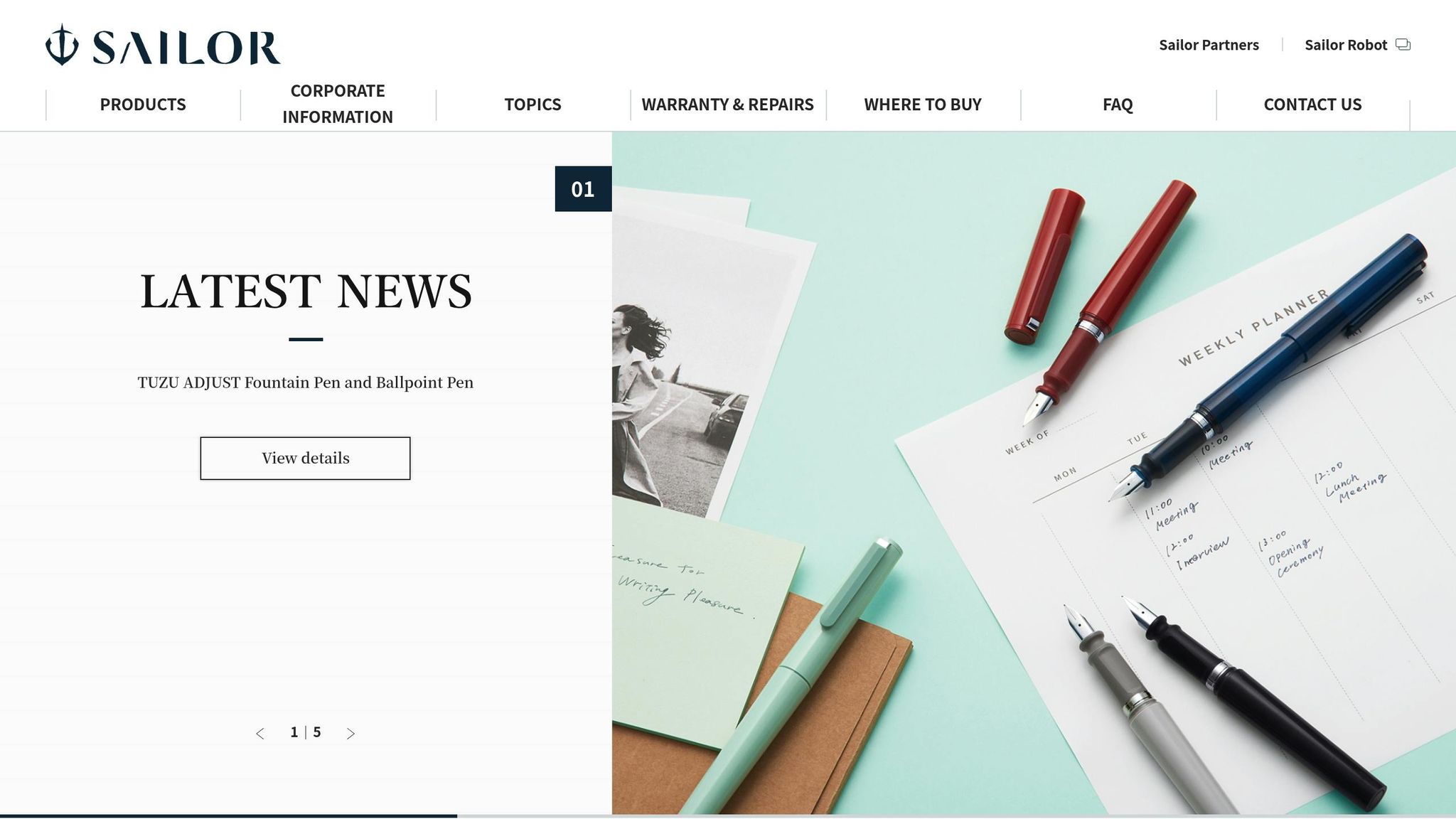
When authenticating Sailor pens, especially the Professional Gear models, start by examining the cap finial. A genuine Sailor pen will have an anchor medallion at the flat end of the cap, with crisp and deep engraving. Authentic Sailor pens also feature in-house manufactured nibs made from 14K or 21K gold. These nibs are engraved with the gold content and the Sailor anchor logo, ensuring their authenticity.
sbb-itb-1dd4fe9
Pre-Purchase Checklist for Avoiding Fakes
Taking extra precautions before buying a luxury pen can help protect your investment. Beyond inspecting the pen itself, verifying the seller's credibility and documentation is crucial.
Check Seller Reputation
A seller's reputation isn't just about high ratings. While good feedback is nice, it doesn’t guarantee authenticity. Make sure the seller is either an authorized retailer or a well-known pen vendor. As Captain Chang puts it:
Seller's claims of '100% Authentic!' doesn't mean a thing. Neither does feedback.
Be especially cautious when dealing with sellers from high-risk regions like Hong Kong or parts of Eastern Europe. Compare the seller's product photos with official brand images to identify any inconsistencies. For added assurance, share the photos in expert pen forums for validation. Also, prioritize sellers who offer clear return policies, particularly when buying secondhand luxury pens. Once you're confident about the seller, move on to verifying the pen's serial details and documentation.
Verify Warranty Cards and Serial Numbers
Always check that the serial number on the pen's clip band matches the one on the box and the certificate. Use a magnifier to examine the engraving - authentic serial numbers are machine-engraved with precision, while fakes often show shallow, uneven, or misaligned markings. Ensure the information on the guarantee certificate matches the sales receipt. For Montblanc pens produced after 1997, look for the "Pix" trademark engraved on the underside of the clip, alongside the serial number. If you notice any inconsistencies, contact the manufacturer directly. Keep in mind that some brands may reuse serial numbers or have incomplete records for non-limited editions. After verifying the documentation, you can assess the pen’s physical characteristics for further clues.
Test Pen Weight and Balance
A genuine pen has a solid, balanced feel - imbalance or a hollow sensation can be a red flag. The weight should feel just right, and the pen’s balance should be even. Any noticeable imbalance might indicate counterfeit materials. Pay attention to the surface texture of the barrel and cap; authentic high-quality resin feels warm and has a certain heft, unlike the brittle and lightweight plastics used in fakes. As noted by Montblanc Boutique:
Counterfeit pens might be too light, too heavy, or imbalanced, often because of the use of cheaper materials.
How to Protect Your Investment
Buy from Trusted Sources
Once you've verified the pen's details, the next step is to ensure your investment is secure by purchasing from trusted sources. Stick to official brand boutiques or authorized retailers for new pens. Reputable pen vendors are also reliable options for authentic products.
If you're buying second-hand, follow the pre-purchase checklist to confirm the pen's authenticity. Opt for secure payment methods like PayPal, and prioritize sellers from regions with lower fraud risks, such as the US, Canada, or Western Europe. For affordable and verified options, websites like Fountain Pen Revolution (https://fprevolutionusa.com) are worth exploring.
To give you an idea of pricing, a genuine Montblanc Classique pen usually starts at around $500, while limited editions can exceed $1,300. On the other hand, finding a "Starwalker" for $25 is a clear warning sign of a counterfeit.
Why Authenticity Matters
Ensuring authenticity isn't just about avoiding fake products - it's about safeguarding the quality, performance, and value of your purchase. Authentic pens are crafted for durability and consistent performance. For example, Montblanc's "precious resin" retains its elegant look over time, and genuine gold nibs provide smooth, reliable ink flow. In contrast, counterfeit pens often have uneven ink flow and a scratchy writing experience.
Authentic pens also hold their value. A well-maintained vintage Waterman Patrician can sell for anywhere between $300 and $1,500. Montblanc pens, in particular, are renowned for their strong resale value. On the other hand, counterfeits lose all resale value once identified. By investing in authentic pens, you're not just purchasing a writing instrument - you're securing a durable, high-performing product backed by craftsmanship and manufacturer support.
Conclusion
Identifying counterfeit luxury fountain pens takes a keen eye, brand knowledge, and smart buying habits. As Captain Chang wisely put it:
Your greatest weapon in the fight against counterfeit pens is knowledge.
Your first line of defense is a meticulous physical inspection. Look closely at the nib for sharp, precise engravings, check for the resin's signature wine-red glow, and scrutinize the packaging for high-quality materials and flawless documentation. Counterfeit pens often skip on intricate details, like threaded refills or retractable mechanisms, simply because these are costly to replicate.
Buying from trusted sources is another critical step. Whether it’s an authorized boutique, a reputable dealer, or a well-established vendor, these outlets provide the documentation, warranties, and peace of mind that come with authentic products. If you're venturing into the secondhand market, stick to well-known pen vendors and use secure payment methods to protect your purchase.
By combining careful inspection with smart purchasing choices, you can avoid counterfeits and enjoy the craftsmanship, performance, and enduring value that luxury fountain pens are known for.
For more tips and insights on authenticating luxury fountain pens, visit Fountain Pen Revolution at https://fprevolutionusa.com.
FAQs
How can I check if a luxury fountain pen's serial number is authentic?
To ensure a luxury fountain pen is genuine, start by checking its engraved serial number. This is usually located on the clip band or a metal ring. The number should perfectly match the one on the original box, warranty card, or certificate of authenticity. If there’s a mismatch, it’s a strong indicator the pen might not be authentic.
Also, pay close attention to the engraving itself. Genuine pens have clean, sharp, and precise markings, whereas counterfeit ones often show uneven or sloppy etchings. This detail can be a key clue in verifying authenticity.
What are some common material flaws found in counterfeit luxury fountain pens?
Counterfeit luxury fountain pens often reveal themselves through the materials used. For example, instead of premium, high-grade materials, counterfeiters might use cheap plastic or low-quality resin. Another red flag is in the branding - logos or designs might be painted on rather than engraved or embedded, making them prone to fading or peeling over time. Genuine sterling silver or solid gold components are frequently swapped out for inferior metals like brass or plated alloys, giving the pen a less polished and elegant appearance.
Take note of the pen's weight, texture, and finish. Authentic luxury pens are meticulously crafted with top-tier materials, offering a precision and quality that's incredibly hard to duplicate.
How can writing performance help identify a fake luxury fountain pen?
When it comes to luxury fountain pens, the way they write can reveal a lot about their authenticity. Genuine pens are crafted to deliver a smooth, steady ink flow, making writing feel balanced and effortless. Fake pens, however, often fall short, with issues like uneven ink flow, skipping, or a scratchy nib that can turn writing into a frustrating experience.
Take a close look at the nib and feed quality. If the pen doesn’t glide smoothly on paper or feels poorly made, it’s a red flag. Testing how the pen writes is a straightforward yet reliable method to identify a counterfeit.