

When choosing between acrylic and resin pens, understanding their differences in durability, heat resistance, and maintenance is key. Acrylic pens handle heat better, withstanding temperatures up to 176°F, while resin pens may soften at just 120°F. Acrylic is also stronger - 15 times tougher than glass - making it more durable for everyday use. Resin, however, offers unique aesthetics with intricate patterns but requires extra care, especially in hot environments.
Key Takeaways:
- Heat Resistance: Acrylic performs better in high temperatures; resin is more sensitive to heat.
- Durability: Acrylic is stronger and resists impact better than resin.
- Maintenance: Acrylic is easier to repair and polish; resin's patterns can be harder to match for repairs.
- Aesthetics: Resin pens often have vibrant, unique designs.
Quick Tip: For hot climates or frequent use, acrylic is a reliable choice. If you prioritize design and handle pens carefully, resin is a great option.
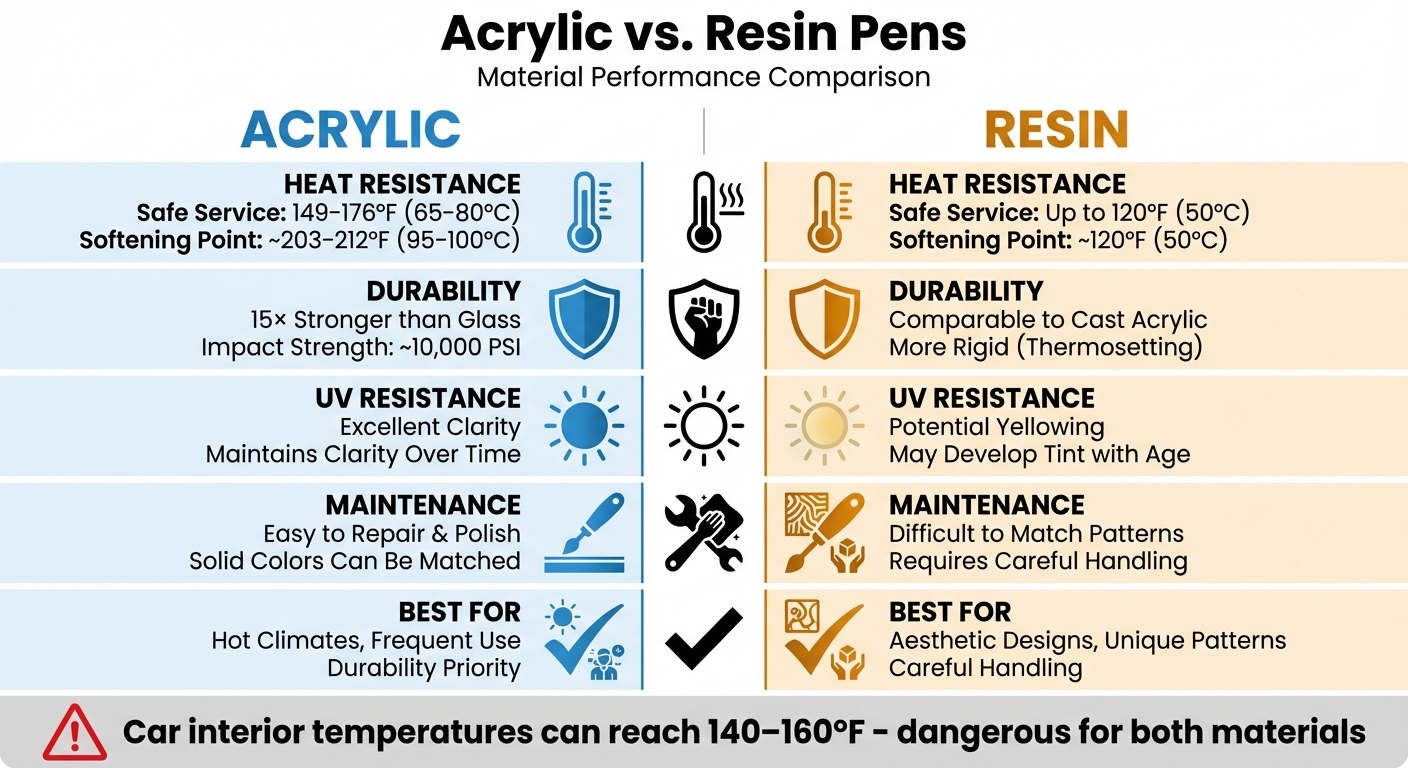
Acrylic vs Resin Pens: Heat Resistance and Durability Comparison
How Acrylic and Resin React to Heat
Heat Resistance and Softening Points
Acrylic (PMMA) tends to handle heat better than many decorative resins commonly used in pen crafting. Standard acrylic can remain stable at continuous temperatures between 158–176°F (70–80°C). It has a heat deflection temperature of around 203–212°F (95–100°C) and a glass transition temperature near 221°F (105°C). On the other hand, many epoxy resins begin to soften at approximately 120°F (50°C). This difference is crucial - on a scorching summer day, the interior of a parked car can easily reach temperatures between 140–160°F, which puts resin pens at significant risk.
Vincent Li, Co-founder of Feilong Acrylic, provides further insight:
If acrylic is briefly exposed to a mild heat spike - say, a short burst near 90–100 °C but no load and then cooled - it might survive with minimal distortion. But sustained exposure even to 60–70 °C for days or weeks can lead to gradual warping.
Both materials are susceptible to creep, meaning they can warp gradually under consistent heat, even without reaching their melting points. Acrylic, in particular, has a high linear thermal expansion coefficient, which means it can expand noticeably with moderate heating. This can affect the fit of tight components like caps and converters. These heat-related reactions directly impact the durability and performance of pens over time.
Storage and Repair Considerations
To preserve the quality and performance of acrylic and resin pens, proper storage is key. Avoid leaving pens in parked cars, where temperatures can quickly soar past safe limits. Instead, store them in cool, dark, climate-controlled areas, away from windowsills or direct sunlight. For those living in hot climates, an insulated or padded pen case can help protect pens from sudden temperature changes.
Heat doesn't just affect the pen's outer barrel - it can also create internal pressure, causing ink to leak through the nib or even forcing it out. High temperatures speed up ink evaporation, which can lead to clogs in the feed or converter. If your pen does get exposed to extreme heat, let it cool down slowly at room temperature. Rapid cooling might result in cracks or additional structural damage. Regular cleaning with cool water, especially in warmer climates, can also help prevent dried ink buildup and maintain smooth performance.
Pressure and Durability: Acrylic vs. Resin
Impact Resistance and Flexibility
Acrylic stands out with 15 times the impact strength of glass while being only half its weight. This makes it an excellent choice for items that need to endure everyday handling. As a thermoplastic, acrylic (PMMA) naturally offers some flexibility, whereas many premium pens are crafted from thermosetting resins. These resins are more rigid and deliver greater impact resistance.
However, both materials have their weak points. For example, compression-molded acrylics - recognized by their shimmering chip or stone-like patterns - are subjected to higher internal pressure during manufacturing. This process can make them more susceptible to cracking under stress. Over-tightening threaded sections, such as caps or converters, can lead to stress cracks in either material. Decorative resin pens, in particular, require careful handling when assembling or disassembling components. These vulnerabilities hint at how both materials might hold up over time with regular use.
Long-Term Wear and Tear
When it comes to longevity, acrylic and resin each have unique characteristics. Thermosetting resins are better at maintaining their shape, even under continuous use, and are less likely to deform when exposed to sustained heat or pressure. Acrylic, on the other hand, may soften slightly under similar conditions and tends to show more surface wear over time. Resins also have an edge in resisting scratches.
To extend the life of either material, storing pens in padded cases helps protect the finish and reduces the effects of daily wear. Both acrylic and resin are highly resistant to ink stains and water damage, making them relatively low-maintenance for regular users. Additionally, their lightweight properties make them comfortable for extended writing sessions, offering a clear advantage over heavier materials like metal.
Material Behavior in Manufacturing
Shaping and Curing Processes
Understanding how materials behave during manufacturing sheds light on why they impact pen performance so differently. When it comes to acrylic and resin pens, their production methods couldn't be more distinct. Acrylic pens are crafted by machining solid blocks on a lathe, using tools like roughing gouges and carbide finishers to carve out the desired shape. This process is entirely physical - no chemical changes occur in the material. However, the high-speed carving generates friction heat, which must be carefully controlled to prevent melting the acrylic's surface.
Resin pens take a completely different route. They begin as a liquid and undergo a chemical process called polymerization or cross-linking. Heat plays a crucial role here. Before mixing, resin components are often warmed in a water bath to lower their viscosity, making it easier for the liquid to flow into the intricate mold details around ink cartridges. During curing, resin generates its own heat through an exothermic reaction. Interestingly, for every 18°F (10°C) rise in temperature, the curing reaction doubles in speed. But there’s a catch - too much heat can lead to a "runaway" reaction, causing issues like smoking, cracking, or bubbles.
Pressure also serves unique purposes for each material. In injection-molded acrylic, pressure forces molten material into molds to form precise shapes. For resin, pressure ensures trapped air and excess material are expelled, preventing structural flaws like voids and reducing internal stresses that could compromise the pen’s durability. Without managing residual stresses caused by thermal and chemical shrinkage, a finished pen could warp or develop micro-cracks over time.
Achieving Smooth Finishes
The process of achieving a polished finish varies greatly between acrylic and resin. Acrylic requires intensive mechanical polishing after shaping, starting with coarse 80-grit sandpaper and gradually working up to 600-grit, followed by ultra-fine Micro-Mesh and plastic polish. Since the initial lathe-turned surface is rough, every scratch must be meticulously smoothed out with progressively finer abrasives.
Resin pens, on the other hand, can emerge with a "shiny glass-like finish" straight from the mold, provided that high-quality silicone molds are used. During curing, the liquid resin takes on the mold’s texture, eliminating the need for extensive post-processing. If reshaping is required after curing, manufacturers can press the barrel against a hard surface while the resin is still slightly flexible. Alternatively, they might apply a final clear resin layer - known as doming - to create a rounded, glossy finish without sanding. This self-finishing quality gives resin a production edge, though it comes with the challenge of managing the heat generated during curing. These subtle but critical differences in manufacturing shape not just the pen’s appearance but also its durability and overall quality.
Choosing the Right Material for Your Needs
Which Material Works Better in Hot Climates?
When it comes to hot or humid environments, thermosetting resins tend to hold their shape better than acrylic. For instance, cured epoxy resin stays stable at temperatures up to 120°F (50°C). Acrylic, on the other hand, can handle slightly higher temperatures, with a safe range of 149–176°F (65–80°C). However, prolonged exposure to temperatures as low as 140–158°F (60–70°C) can cause acrylic to warp or lose its rigidity. Vincent Li, Marketing Director at Feilong Acrylic, shares:
I've seen this in display cases left near heaters or sunny windows.
Heat can also affect pens in unexpected ways. It speeds up ink evaporation, which can clog feeds, or it may create pressure in sealed pens, leading to leaks - or even bursts. When it comes to UV exposure, acrylic has a clear advantage. It’s naturally resistant to UV rays and won’t yellow over time, while some polyester resins may develop a slight yellow tint as they age.
These differences highlight how critical it is to choose the right material and maintain it properly, especially in challenging climates.
Handling and Maintenance Tips
Taking care of your pens not only keeps them looking great but also helps counteract issues caused by heat and pressure. Always clean your pens using cool, fresh water - hot water can damage internal parts. Store pens in a cool, shaded spot, away from direct sunlight. If the pen is inked, it’s best to store it nib-up to prevent leaks caused by gravity. Avoid leaving pens in hot spots like parked cars or warm pockets, where temperatures can quickly climb beyond safe levels.
Acrylic pens are easier to repair and restore, thanks to their solid colors, which can be matched. Plus, the material responds well to polishing with plastic polish or buffing compounds. Resin pens, however, present a different challenge. Since each batch of resin creates unique patterns, finding matching replacement parts can be tricky. As the Mythic Pen Company explains:
The resins we use cannot be perfectly replicated batch to batch... if another part of the pen needs to be crafted for a repair, it is likely that the pattern will not match the remaining pen parts exactly.
Both materials are sensitive to harsh chemicals, so steer clear of alcohol or organic solvents like nail polish remover. For long-term storage, make sure to flush your pens thoroughly and let them dry completely before tucking them away. This extra step ensures your pens stay in top condition for years to come.
sbb-itb-1dd4fe9
Turning Acrylic vs. Allumilite Resin Pen Blanks
Comparison Table: Acrylic vs. Resin
To wrap up the material properties discussed earlier, here's a side-by-side comparison of acrylic and resin. This table highlights the key differences to help you understand their strengths and limitations:
| Property | Acrylic (PMMA) | Epoxy Resin |
|---|---|---|
| Safe Service Temperature | 149–176°F (65–80°C) | Up to 120°F (50°C) |
| Softening Point | ~203–212°F (95–100°C HDT) | ~120°F (50°C) |
| Melting/Flow Point | 266–320°F (130–160°C) | N/A (permanent damage occurs) |
| Glass Transition (Tg) | ~221°F (105°C) | Varies (typically lower) |
| Impact Strength | 15× stronger than glass | Comparable to cast acrylic |
| Reaction to Overheating | Warping, expansion, melting | Flexibility, permanent sagging |
| UV Resistance | Excellent; maintains clarity | May develop a yellow tint with age |
| Manufacturing Type | Cast (durable) vs. injection-molded (brittle) | Compression-molded (fragile) vs. standard |
Acrylic stands out with its higher heat tolerance, durability, and ability to maintain clarity over time. On the other hand, epoxy resin is known for its aesthetic appeal but requires more care, particularly in high-heat environments. This breakdown can help guide your choice based on your specific needs and usage conditions.
Conclusion
When it comes to handling heat, acrylic outperforms resin, making it a more reliable choice for durability and everyday use. Acrylic stays stable between 149–176°F (65–80°C), while resin begins to soften at around 120°F (50°C). This difference can be crucial if you live in a hot climate or often carry your pen in warm environments.
Acrylic also boasts impressive strength, with a tensile strength of approximately 10,000 PSI and impact resistance that’s 15 times greater than glass. Among acrylic options, cast acrylic stands out for its better thermal stability compared to extruded acrylic, which is why it’s a go-to material for high-quality fountain pens.
In warmer conditions or when pens are exposed to high temperatures, acrylic proves to be the more resilient option. On the other hand, resin pens require extra care and proper storage to avoid becoming overly flexible or suffering damage if temperatures exceed 120°F (50°C).
Ultimately, the choice between acrylic and resin depends on your priorities. If you value durability, heat resistance, and lasting clarity, acrylic is the clear winner. However, if you’re drawn to aesthetics and are willing to handle your pen with care, resin is still a viable option.
For more information and to explore a variety of quality fountain pens, check out Fountain Pen Revolution: https://fprevolutionusa.com.
FAQs
How can I protect my resin fountain pen in hot weather?
Resin fountain pens are undeniably elegant, but they require a bit of extra care to stay in top shape. Heat and sunlight can be their worst enemies - exposure to temperatures above 194°F or prolonged time in direct sunlight can cause the resin to soften, warp, or lose its color. To protect your pen, store it in a cool, shaded spot, like a drawer or a padded case, and keep it away from hot surfaces like car dashboards.
When it comes to cleaning, stick to lukewarm water and steer clear of harsh chemicals, as these can harm the resin. Aim to keep the pen in an environment where the temperature stays between 75°F and 85°F. With just a little attention, your resin fountain pen will remain as stunning and functional as the day you got it - even through the hottest days of the year.
Why are acrylic pens considered more durable than resin pens?
Acrylic pens tend to stand out for their durability, as they handle heat and pressure better than resin pens. Their sturdy composition makes them less likely to crack or break, which is why they’re a solid option for everyday use. On the other hand, resin pens, while celebrated for their striking appearance, can be more delicate and prone to damage when subjected to extreme conditions.
Can damaged resin pens be repaired?
Yes, repairing damaged resin pens is often possible, but the outcome largely depends on the type and extent of the damage. For minor issues like small cracks or chips, epoxy resin works well to fill and smooth out the imperfections. When dealing with fractures, techniques like solvent welding - where a resin-softening solvent is used to fuse pieces together - can be effective, though it may slightly alter the pen's material.
For very thin gaps, combining cyanoacrylate glue (Super Glue) with a fine powder, such as baking soda, can create a durable bond. However, keep in mind that resin is more brittle than acrylic, so these repairs might not withstand repeated stress or exposure to heat. If the damage is severe, like a shattered barrel, replacing the pen or seeking help from a professional is often the most practical solution.
Fountain Pen Revolution offers a range of affordable resin pens and provides advice on basic repairs, helping you determine whether a DIY approach or professional assistance is the better choice for your pen.