

Shimmer inks are stunning but require extra care to avoid issues like clogging, uneven flow, and cleaning challenges. Here's what you need to know:
- Clogs Happen: Glitter particles can block pen feeds, especially in fine nibs, or mix with paper fibers, causing flow problems.
- Uneven Sparkle: Shimmer particles settle quickly, leading to inconsistent sparkle or ink flow unless regularly agitated.
- Cleaning is Tough: Glitter clings to pen parts and can linger even after thorough cleaning.
Quick Fixes:
- Use pens with broader nibs (like stub or broad) to reduce clogs.
- Gently roll ink bottles and pens to keep shimmer evenly distributed.
- Clean pens weekly with water or pen flush to remove residue.
- Opt for shimmer-friendly pens (e.g., TWSBI Eco, Lamy Safari) that are easy to disassemble.
Shimmer inks demand more maintenance but deliver beautiful results when managed properly.
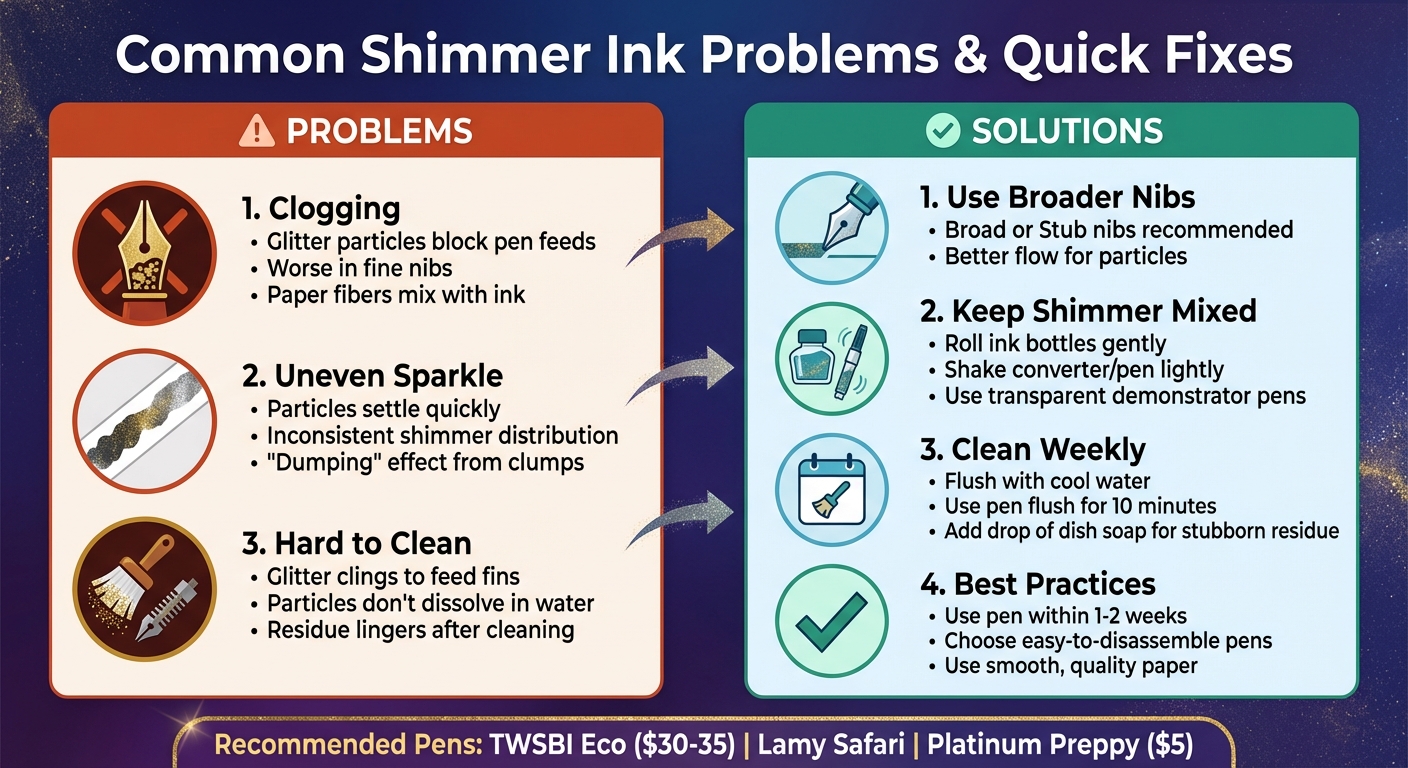
Quick Guide to Preventing and Fixing Shimmer Ink Problems in Fountain Pens
Common Shimmer Ink Problems
Clogging from Particle Buildup
Shimmer inks are packed with tiny mica or glitter particles that can cause trouble for fountain pens. These particles can block the narrow channels in the pen's feed or gather under the nib, disrupting the ink flow entirely. If your pen sits unused for too long, the water in the ink can evaporate, leaving behind a thicker, sludge-like residue that clogs things up even more. Pens with extra-fine nibs are especially prone to this issue because their smaller channels are easier to block. Using textured paper can also make matters worse, as loose fibers from the paper can mix with the ink and add to the blockage. This clogging doesn't just affect flow - it also messes with how evenly the shimmer particles distribute, leading to the next common problem.
Uneven Shimmer and Flow Issues
One frustrating aspect of shimmer inks is how quickly the particles settle. These heavier particles tend to sink to the bottom of ink bottles, converters, or even the pen's feed. If you don’t shake or agitate the ink regularly, you’ll notice inconsistent sparkle - sometimes you’ll get a burst of shimmer, and other times, none at all. This uneven distribution, often called the "dumping" effect, happens when clumps of particles suddenly release, creating an unpredictable writing experience. Pens with slower ink flow make this worse, as the particles have more time to settle, causing hard starts or even skipping during use. Beyond these frustrations, cleaning shimmer ink from your pen can be an entirely different challenge.
Cleaning and Residue Removal Challenges
Cleaning shimmer ink out of a pen is harder than dealing with regular ink. Since the shimmer particles don’t dissolve in water, they cling to feed fins and hide in the narrowest parts of the pen, often out of reach of standard flushing methods. Even after soaking and multiple cleaning cycles, these particles can stubbornly remain, as noted by fountain pen enthusiast Marta:
"The shimmers cling to the feed too much to be flushed away with water even with soaking."
Disassembling the pen for a thorough cleaning might seem like a solution, but it comes with risks. The delicate feed fins can be damaged, and even then, some shimmer residue might still linger in converters or other hard-to-reach spaces. This leftover glitter can unexpectedly reappear in your next ink fill, creating surprise sparkles where you didn’t want them.
How to Fix Shimmer Ink Problems
Preventing and Managing Clogging
One of the easiest ways to avoid clogs when using shimmer inks is to go with broader nibs. A Broad or Stub nib allows more ink and shimmer particles to flow through without getting stuck. When choosing a pen, opt for models that are easy to disassemble for cleaning, like TWSBI piston fillers, Japanese-style eyedroppers, or cartridge-converter pens. To minimize residue buildup, aim to use the inked pen until it's nearly empty within one to two weeks. The Gentleman Stationer advises:
"If you ink up a pen with a shimmer ink, I recommend writing that pen dry within a week or two, and cleaning it out as soon as you begin experiencing any issues with ink flow."
This approach prevents the ink from evaporating and leaving behind concentrated shimmer particles. Another tip: stick to smooth, high-quality paper like Tomoe River or Clairefontaine. These papers reduce the risk of paper fibers mixing with the ink, which can worsen clogging. Beyond clog prevention, keeping the shimmer particles evenly distributed is crucial for a consistent shimmer effect.
Getting Even Shimmer Distribution
To maintain an even shimmer, focus on keeping the particles suspended in the ink. Before filling your pen, gently roll the ink bottle between your palms to mix the particles without creating air bubbles. After filling, give the converter a light shake or swirl to keep the shimmer particles evenly distributed. Transparent demonstrator pens are especially handy since they let you see the shimmer particles in the reservoir. Fountain pen enthusiast Chrissy (FPG Donor) highlighted the role of nib size in showcasing shimmer:
"The silver shimmer shows up quite easily. I used a Waterman Man 200 that has a M nib and I had no trouble seeing the silver effect."
Cleaning Techniques That Work
Proper cleaning is essential for avoiding shimmer ink problems. Start by flushing cool water through the nib and feed using a bulb syringe until the water runs clear. For more stubborn residue, mix a drop of mild dish detergent into a glass of water to help break down any lingering particles. If particles persist, fill the pen with a dedicated pen flush solution and let it sit for about 10 minutes before rinsing again. For a deeper clean, an ultrasonic cleaner can be highly effective. It removes residue from disassembled pen parts that regular flushing might miss.
Inkquiring Minds Workbench Ep 23 - Cleaning the Shimmering Ink OUT!
sbb-itb-1dd4fe9
Choosing the Right Pen and Ink for Shimmer Inks
Selecting the right pen and ink is a key part of minimizing shimmer-related issues and ensuring a smooth writing experience.
Nib Sizes and Pen Types
The size of your nib and the design of your pen play a huge role in how well shimmer inks perform. Broad, medium, or 1.1mm stub nibs are ideal for shimmer inks because their wider channels allow shimmer particles to flow freely without clogging. As Brian Goulet, Founder of The Goulet Pen Company, explains:
"Juicy, wet writers are going to work best so a lot of writers will stick with flex nibs or broad or italic nibs for great results."
While fine and extra-fine nibs might work, they’re more prone to clogging and won’t showcase the shimmer as effectively.
Pens with easy-to-disassemble designs are a smart choice for shimmer inks. Cartridge-converters, piston fillers (like the TWSBI Eco, priced around $30–$35), and Japanese-style eyedroppers make maintenance much simpler. For budget-conscious options, the Platinum Preppy ($5.00) and Pilot Kakuno are excellent choices, offering wet ink flow and straightforward upkeep. If you’re willing to spend more, the TWSBI Diamond 580AL ($60.00–$100.00) combines a piston filler with a transparent body, letting you monitor shimmer particle movement. The Lamy Safari is another great pick with its easily swappable nibs, making cleaning quick and hassle-free.
Transparent demonstrator pens are particularly useful for shimmer inks. Their clear bodies let you see when shimmer particles settle at the bottom of the converter. A quick roll of the pen between your palms can redistribute the particles, helping to prevent flow problems.
Selecting Compatible Shimmer Inks
The ink you choose is just as important as the pen. Shimmer ink formulas vary widely, and some are easier to work with than others. For example, J. Herbin's 1670 and 1798 lines, including the popular Emerald of Chivor (approximately $36.00 for 50ml), are known for their smooth flow and fine shimmer particles, which make cleaning less of a chore. Similarly, Robert Oster shimmer inks, such as Heart of Gold, are designed for wet flow and work well in many pens. Diamine Shimmering inks offer a broad color range (samples start at $2.75), but their larger particles tend to settle faster, requiring more frequent agitation and cleaning.
Ink consistency plays a big role in performance. Brands like Troublemaker Inks, known for striking combinations like Copper Patina (teal with gold shimmer), deliver stunning results but may demand more maintenance. To avoid risking damage to an expensive or vintage pen, test shimmer inks in a budget-friendly pen first. This allows you to see how the ink behaves without worrying about potential damage. As The Gentleman Stationer points out:
"If a specific pen 'doesn't work well with shimmer,' it doesn't mean that the pen is 'defective,' just that the specific design of that pen is incompatible with how you personally want to use it."
Consider dedicating one pen exclusively to shimmer inks. Even after thorough cleaning, shimmer particles can linger in the feed and might affect the performance of non-shimmer inks used later. This practice helps maintain the integrity of your pens while keeping shimmer inks at their best.
Conclusion
Shimmer inks add a dazzling touch to your writing, but they demand a bit more care than standard fountain pen inks. To get the best results, you’ll need the right tools, consistent maintenance, and regular use. Pens with broad or stub nibs, like the TWSBI Eco or Lamy Safari, are ideal for showcasing shimmer inks while minimizing clogs. Plus, their easy-to-disassemble designs make cleaning a breeze.
Make sure not to leave shimmer ink in your pen for more than one to two weeks. As The Gentleman Stationer explains:
"As liquid evaporates in the pen, the shimmer particles make up a larger proportion of the ink, creating a thicker consistency that doesn't flow as well".
Weekly cleaning is essential. Flush your pen with warm water, and for tougher residue, add a drop of dishwashing liquid and let it soak overnight. This simple routine keeps your pen in top shape and ensures smooth writing.
Daily use also helps keep the shimmer particles suspended. Gently rolling your pen before writing redistributes the particles evenly, preventing clogs. If you’re a frequent shimmer ink user, consider dedicating one pen solely to these inks to avoid mixing glitter with your standard inks.
While shimmer inks require a bit of extra effort, their sparkling effects are well worth it. With the right pen, proper cleaning habits, and a little patience, you can enjoy the unique charm they bring to your writing. If you’re looking to get started, Fountain Pen Revolution offers a variety of affordable pens and accessories, from beginner-friendly sets starting at $35.00 to premium options designed to make cleaning and maintenance easier.
FAQs
Can shimmer ink damage a fountain pen?
Shimmer ink can sometimes clog a fountain pen, particularly if the pen sits unused for an extended time. The good news? This usually doesn’t lead to permanent damage - as long as you clean and maintain your pen regularly. Keeping your pen clean helps prevent buildup and keeps the ink flowing smoothly.
How often should I agitate a shimmer-ink pen?
To keep your shimmer-ink pen working smoothly and prevent clogs, give it a gentle shake every sentence or so while writing. This simple step keeps the shimmer particles evenly mixed, ensuring steady ink flow and a dazzling shimmer effect on the page.
What’s the fastest way to remove lingering glitter?
The fastest way to get rid of lingering glitter from shimmer ink is to flush your pen with water or a mild cleaning solution. Thorough cleaning is key to preventing clogs or flow problems. If there’s surface shimmer on the nib or feed, use a damp paper towel to gently wipe it away. Regular cleaning and flushing are crucial for avoiding buildup and keeping your pen’s ink flow smooth.