

Fountain pen inks can transform your writing with three standout effects: shading, sheening, and shimmering. Each offers a distinct look:
- Shading: Creates light-to-dark color gradients within strokes, adding depth and texture.
- Sheening: Reveals a metallic secondary color when viewed at an angle, often in areas where ink pools.
- Shimmering: Contains tiny metallic or mica particles that sparkle and shine under light.
These effects depend on factors like paper type, nib width, and ink composition. Smooth paper and broader nibs enhance these effects, while absorbent paper and fine nibs may limit them. Shading is ideal for subtle elegance, sheening adds bold metallic highlights, and shimmering delivers glittering flair for special occasions. Choose based on your style, project, and maintenance preferences.
| Feature | Shading | Sheening | Shimmering |
|---|---|---|---|
| Visual Effect | Light/dark tonal gradients | Metallic secondary hue | Glittering sparkles |
| Source | Ink distribution | Dye crystallization | Metallic/mica particles |
| Appearance | Subtle and matte | Reflective and bold | Glittery and eye-catching |
| Upkeep | Low | Moderate | High (requires shaking/cleaning) |
Whether you're journaling or creating art, these inks can elevate your writing to something visually stunning.
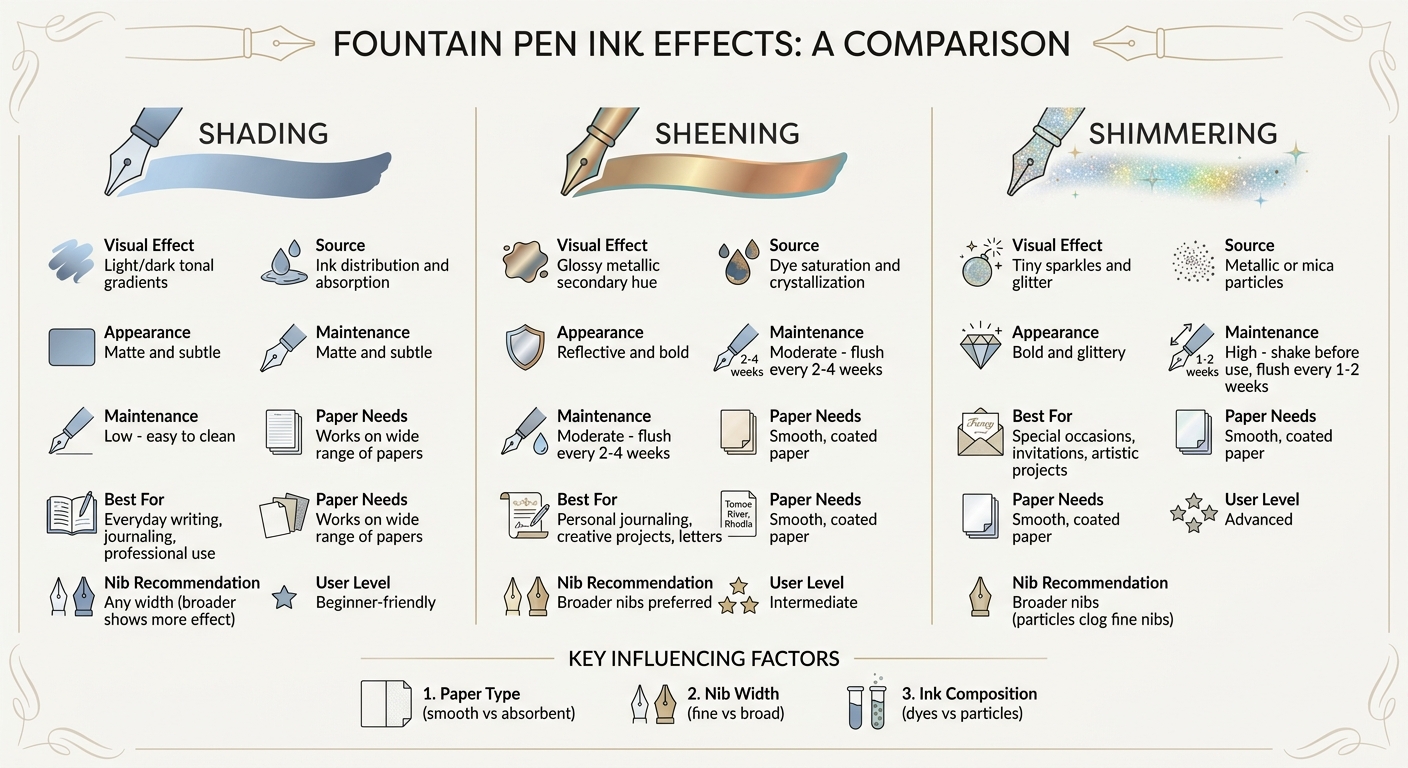
Comparison of Shading vs Sheening vs Shimmering Fountain Pen Inks
To Sheen or Not to Sheen? Fountain Pen Inks
sbb-itb-1dd4fe9
How Shading, Sheening, and Shimmering Inks Differ
Shading and sheening rely on dye-based effects, while shimmering depends on tiny solid particles suspended in the ink. Let’s break down how each effect contributes to the overall writing experience.
What is Shading?
Shading occurs when variations in ink application create light-to-dark gradients. As ink pools in certain areas, the dye concentration increases, producing darker tones. This effect is especially noticeable within a single stroke, adding depth and texture to your writing.
Ferris Wheel Press describes it beautifully:
"Shading inks create light-to-dark variations within each stroke, almost as if the ink itself is whispering a soft narrative across your page."
The result is a matte finish that feels understated yet dynamic. Shading is perfect for everyday use or journaling, offering visual interest without being overly flashy.
What is Sheening?
Sheening steps into the spotlight with its dramatic, metallic secondary color. When the ink dries, a completely different hue can appear on the surface. For instance, a rich blue ink might reveal a red or gold sheen when viewed at an angle. A popular example is Diamine Polar Glow, a blue ink that reveals a vivid red sheen.
Kelli McCown, Founder of Mountain of Ink, explains:
"The definition of sheen is a soft luster on a surface. Sheen in an ink is an appearance that the ink shines with a different color, that appears metallic or shiny."
This effect happens when high-saturation dyes crystallize on the paper’s surface, refracting light to reveal the secondary color. As Ferris Wheel Press puts it:
"Sheen is less about sparkle and more about transformation."
Sheening intensity varies. Some inks only show a faint sheen in large swabs, while others - referred to as "monster" sheeners - display their secondary color prominently, even on standard paper. The effect is most noticeable in areas where the ink pools, such as bold strokes or decorative lettering.
What is Shimmering?
Shimmering inks bring an entirely different kind of flair. These inks contain metallic or mica particles that reflect light, creating a glittering, almost magical effect.
Ferris Wheel Press captures the charm perfectly:
"Shimmer adds a sense of occasion to writing... transforming every letter into a celebratory flourish."
Unlike the smooth metallic glow of sheening, shimmering inks sparkle with tiny, distinct flecks. Because the particles are heavier than the liquid ink, they tend to settle at the bottom of the bottle. A quick shake before use redistributes the particles evenly.
Each of these effects offers a unique way to enhance your handwriting, whether you’re looking for subtle depth, striking metallic tones, or dazzling sparkles.
| Feature | Shading | Sheening | Shimmering |
|---|---|---|---|
| Visual Effect | Light/dark tonal gradients | Glossy secondary hue | Tiny sparkles or glitter |
| Source | Ink distribution/absorption | Dye saturation/crystallization | Metallic or mica particles |
| Appearance | Matte and subtle | Reflective | Bold and glittery |
| Maintenance | Low; easy to clean | Moderate; regular flushing | High; requires shaking and frequent cleaning |
Factors That Affect Ink Effects
How ink behaves on the page isn't just about the ink itself - it also depends on the paper, the nib, and the ink's own chemistry. These elements work together to influence sheen, shading, and shimmer.
Paper Type and Quality
The type of paper you use plays a massive role in how ink performs. Smooth, coated papers like Tomoe River or Rhodia are perfect for showing off sheen, shimmer, and vibrant colors. Why? Because these papers allow ink to sit on the surface longer without soaking in immediately. This extra drying time enhances the visibility of sheen and shimmer, making colors pop.
On the other hand, absorbent papers act differently. They pull ink into the fibers too quickly, which can dull or completely hide sheen and shimmer effects. Shading can still appear on these papers, but it’s usually less dramatic. Sheening, in particular, relies on the ink pooling on the surface to create that reflective, light-catching layer.
As Ferris Wheel Press explains:
"No ink performs alone. Colour vibrancy, shimmer visibility, and shading depth all depend on paper quality".
Nib Width and Wetness
The nib size you choose also has a big impact. Broader nibs put down more ink, which helps bring out secondary colors in sheen and highlights the sparkle of shimmering inks. Pens with wetter ink flow take this even further by creating larger pools of ink, enhancing all three effects.
Fine nibs, however, often fall short in this department. They lay down less ink, which means less sheen and shimmer. Plus, shimmering inks can clog their narrow feeds. For shading, broader nibs combined with slower, deliberate writing create beautiful light-to-dark gradients. Even how hard you press the pen or how fast you write can affect how ink dries and how much sheen appears.
Ink Composition and Saturation
The composition of the ink itself is the final piece of the puzzle. Sheening inks rely heavily on dye concentration. When applied thickly, these inks form tiny crystals on the page instead of soaking in, creating that metallic, reflective look. Some inks, nicknamed "monster sheeners", are so saturated that they can even show sheen on absorbent paper.
Shimmering inks, on the other hand, contain suspended metallic particles - usually mica or metallic dust. These particles tend to settle at the bottom of the bottle, so shaking the ink regularly is essential to keep the shimmer evenly distributed. Shading happens when ink pools unevenly, creating natural gradients from light to dark.
Each of these factors - paper, nib, and ink chemistry - works together to bring out the magic of your writing.
How to Choose the Right Ink
Choosing the right ink for your fountain pen depends on what you're writing, how often you use it, and how much upkeep you're willing to manage. Different inks suit different styles and preferences, and understanding how paper type, nib width, and ink chemistry interact can help you choose the perfect fountain pen.
When to Use Shading Inks
Shading inks are a great all-purpose option for fountain pen users. They work wonderfully for everyday writing, journaling, or any task where you want to add a bit of personality without extra hassle. These inks naturally create light-to-dark gradients as they pool on the page, adding a subtle but beautiful effect without requiring special paper or frequent cleaning.
For beginners, shading inks are a fantastic starting point. As Ferris Wheel Press explains:
"Shading inks are usually the easiest to start with. They require less specific conditions and perform well on a wider range of paper".
They’re forgiving, whether you write quickly or take your time, and they don’t need the precise setup that more complex inks like sheen or shimmer demand. If you’re aiming for a professional yet slightly personal touch, shading inks are a reliable choice. For more dramatic effects, you might want to explore sheening inks.
When to Use Sheening Inks
Sheening inks are perfect for projects where you want to add depth and a bit of surprise. These inks reveal a secondary metallic color, often at the edges of your strokes, when viewed under changing light. They’re ideal for personal journaling, creative projects, or thoughtful letters where a hint of flair is appreciated.
However, sheening inks require moderate upkeep. You’ll need to flush your pen every 2–4 weeks to keep it in good condition. For the best results, pair these inks with smooth, coated paper like Tomoe River and use a broader nib to let the sheen shine through. As Ferris Wheel Press puts it:
"Sheen works beautifully when you want depth without overt decoration... It rewards attention rather than demanding it".
Keep in mind, though, that high-sheen inks can take longer to dry and may smudge if handled too soon. If your goal is to create a bold and sparkling impression, shimmering inks might be the better option.
When to Use Shimmering Inks
Shimmering inks are all about making a statement. With their metallic or mica particles, they create a glittering effect that catches the light and immediately draws attention. These inks are best saved for special occasions like holiday cards, wedding invitations, or artistic projects where visual impact is key.
Using shimmering inks does require a bit more effort. You’ll need to gently shake the bottle before filling your pen and occasionally agitate the pen itself while writing to keep the shimmer evenly distributed. Cleaning is also more frequent - plan to flush your pen every 1–2 weeks, especially if you’re using a fine nib (broader nibs handle shimmer much better). Ferris Wheel Press advises:
"Shimmer is best reserved for moments where visual impact matters".
While shimmering inks aren’t ideal for quick, everyday writing, they’re unbeatable when you want to create something truly eye-catching.
Conclusion
Shading, sheening, and shimmering inks each bring their own flair to your writing. While shading inks are relatively easy to maintain, sheening inks require a bit more care, and shimmering inks demand regular cleaning to keep your pens in top shape.
If you're just starting out with one of the best fountain pens for beginners, try shading inks first - they're user-friendly and a great introduction. Once you're comfortable, explore sheening and shimmering inks to match your creative projects or mood. Over time, you can build a collection that caters to different writing needs and preferences.
As Ferris Wheel Press aptly says:
"At a certain point, these effects stop feeling like features and begin to feel like part of your writing voice".
Your choice of ink becomes a reflection of your personal style. Whether you lean towards the subtle charm of shading, the hidden allure of sheen, or the bold sparkle of shimmer, there's an ink out there that fits your vibe. Experimentation is key - try different inks until you find the ones that truly resonate with your writing style. This journey not only enhances your writing but also lets your individuality shine through.
FAQs
Can one ink shade and sheen (or shimmer) at the same time?
Yes, a single ink can display both shading and sheen (or shimmer) at the same time. Shading happens when the ink lays down with varying saturation in a single stroke, giving it a rich, multi-tonal look. Meanwhile, sheen or shimmer introduces a reflective or glittery quality, which catches the light. Some inks are specifically crafted to blend these effects, creating a visually striking combination of depth and sparkle that changes depending on the lighting.
How do I keep shimmering inks from clogging my pen?
To keep shimmering inks from clogging your pen, it's important to clean it on a regular basis. These inks have metallic or mica particles that can settle in the feed and nib over time. Before using the ink, give the bottle a good shake to evenly distribute the particles. After you're done writing, flush your pen with water or a cleaning solution to clear out any residue. Consistent maintenance like this prevents buildup and keeps your pen writing smoothly.
What’s the best paper to show sheen and shimmer clearly?
When it comes to showing off the sheen and shimmer of fountain pen inks, coated paper is your best bet. Options like Clairefontaine or Tomoe River paper are ideal because they slow down ink absorption. This keeps the ink sitting on the surface, allowing sheen (the light reflecting off glossy layers of ink) and shimmer (those tiny, reflective particles) to really stand out.
On the other hand, absorbent papers - like standard copy paper - soak up ink too quickly. This diminishes both sheen and shimmer, leaving your writing looking flat. If you want to see your ink’s full potential, stick to high-quality coated paper.