

If I had to boil it down fast: resin feels nicer in the hand, acrylic shows off the ink best, and Ultem takes the most abuse.
When I compare these three pen materials, I look at six things that affect daily use:
- Comfort
- Looks
- Transparency
- Scratch and drop resistance
- Heat tolerance
- Cleaning and care
A few numbers help frame the choice:
- Acrylic transmits about 92% of light, which is why clear demonstrators look so crisp.
- Ultem handles about 340°F (171°C), far above what most pen plastics deal with.
- Resin varies the most because “resin” can mean different formulas from one maker to another.
So the short answer is simple:
- Choose resin if you want a warmer, softer feel and patterned looks.
- Choose acrylic if you want clarity, bright color, and easy ink visibility.
- Choose Ultem if you want low weight, better heat tolerance, and tougher daily carry.
Ultem (Polyetherimide) Pen Review
sbb-itb-1dd4fe9
Quick Comparison
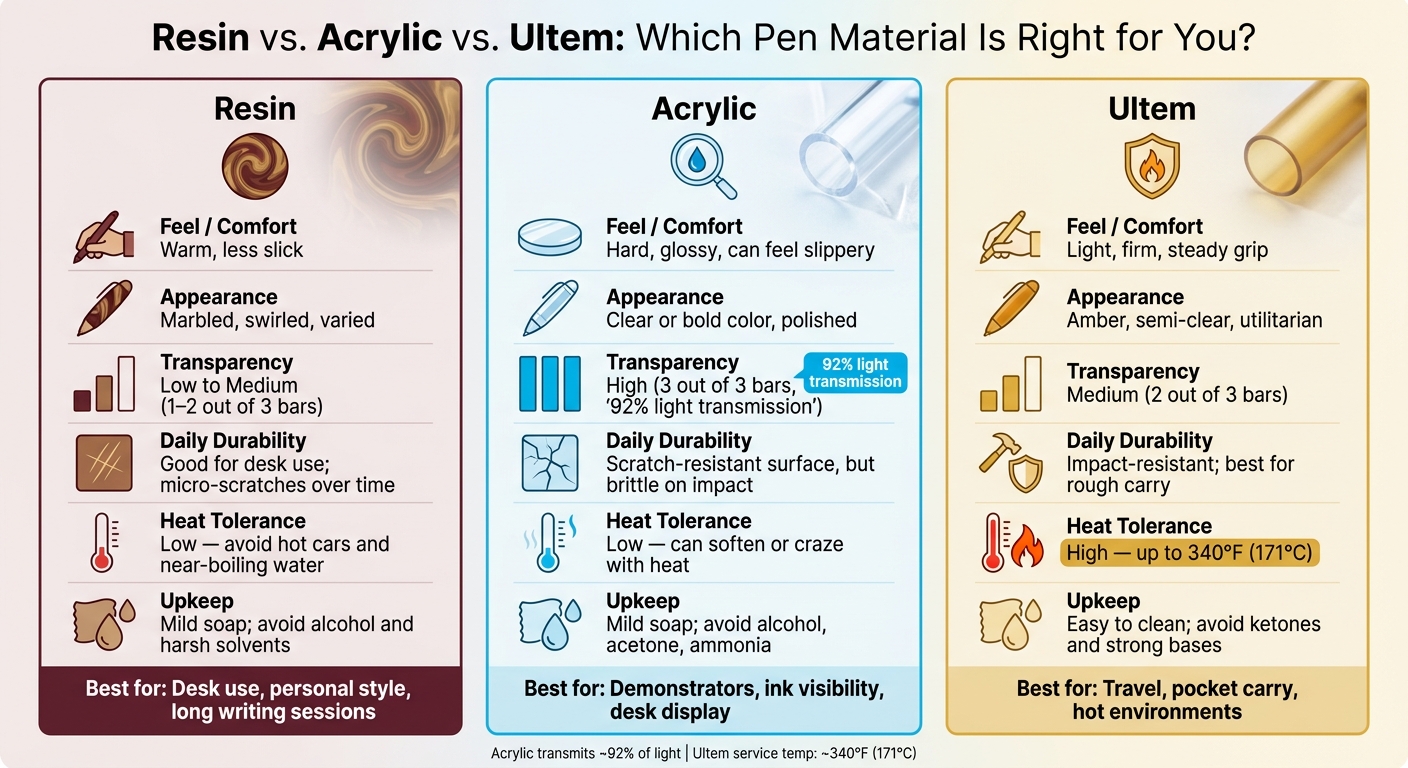
Resin vs Acrylic vs Ultem: Pen Material Comparison Chart
| Factor | Resin | Acrylic | Ultem |
|---|---|---|---|
| Feel | Warm, less slick | Hard, glossy, can feel slippery | Light, firm, steady grip |
| Looks | Marbled, swirled, varied | Clear or bold color, polished | Amber, semi-clear, plain |
| Transparency | Low to medium | High | Medium |
| Daily wear | Fine for normal use; may pick up small scratches | Better surface scratch resistance, but can chip on impact | Better for rough carry and travel |
| Heat | Less tolerant of hot cars and very hot water | Can soften or craze with heat | Around 340°F (171°C) service range |
| Upkeep | Mild soap, no harsh solvents | Mild soap, no harsh solvents | Easy to clean; avoid ketones and strong bases |
My takeaway: if your pen lives on a desk, resin or acrylic makes sense. If it rides in a pocket, bag, or car more often, Ultem is the safer pick.
Below, I break down how each one feels and where each material fits best in day-to-day writing.
Resin, Acrylic, and Ultem: Material Profiles
Those differences show up most in feel, finish, and how each pen handles daily carry.
Resin: Varied Looks and a Warm Hand Feel
Resin pens tend to feel a bit more personal, both on the desk and in the hand. One big reason is their look: swirling, marbled, and layered patterns give them a lot of visual character, and no two pieces look exactly the same.
In use, resin usually feels warmer and less slick than acrylic. A satin or soft-gloss surface can make the pen easier to hold, even if your hands are a little slick. Scratch resistance sits in the middle. Resin handles normal desk use just fine, but it’s often softer than acrylic, so micro-scratches can build up over time if you carry it with keys or other metal items. Durability also depends on the formula and the thickness of the pen body. Thin areas near ink windows or threads are more likely to crack.
Acrylic heads in the other direction: less warmth, more clarity, and more gloss.
Acrylic: High Clarity, Bright Color, Hard Gloss Finish
Acrylic’s main strength is clarity, which makes it a natural fit for demonstrators. If you want to check ink level, feed condition, or leftover residue at a glance, acrylic makes that easy. It also takes dye well, so colors often come out bright and saturated.
The finish is glassy and highly polished. Under normal desk use, acrylic is usually more scratch-resistant than softer resins. But there’s a catch. That harder surface also means acrylic is more brittle under impact. A drop onto tile or concrete is a common way to end up with chips or cracks, especially at thin stress points like cap lips or threads. In plain terms, acrylic works best for desk use and careful carry, not rough handling.
Ultem changes the picture again. It gives up some visual flair in exchange for strength and heat resistance.
Ultem: Light Weight, Strength, and Heat Tolerance
Ultem is known for toughness, reliability, and heat resistance. It can handle continuous use at temperatures up to roughly 340°F (171°C). So if a pen sits in a hot car for a short time or gets cleaned with hot water, Ultem is much less likely to warp or get damaged than acrylic or most resin.
It also stays light without feeling flimsy. That helps keep overall weight down while still offering solid impact resistance. Its amber translucence gives you a partial view of the ink inside. It’s not as glass-clear as acrylic, but it has a clean, utilitarian look that many people like. The smooth, non-glossy surface also feels secure during long writing sessions, which makes Ultem a strong choice for pocket carry and travel.
A quick comparison helps make those trade-offs easier to see, much like a fountain pen buying checklist for other features.
| Material | Feel and finish | Appearance | Daily durability |
|---|---|---|---|
| Resin | Warm, less slick, often satin or soft-gloss | Swirled, marbled, or layered; each piece varies | Good for normal desk use; can pick up micro-scratches; thin spots may crack |
| Acrylic | Hard, glassy, highly polished | Clear or brightly colored; great for demonstrators | Usually resists scratching better than resin, but can chip or crack when dropped |
| Ultem | Smooth, non-glossy, secure in hand | Amber translucent with a utilitarian look | Light, impact-resistant, and handles heat up to 340°F (171°C) |
Resin vs. Acrylic vs. Ultem: Side-by-Side Comparison
Here’s the quick version before we get into the details. The table lays out the main trade-offs, and the next sections show what those differences feel like in day-to-day use.
| Factor | Resin | Acrylic | Ultem |
|---|---|---|---|
| Writing comfort | Warm, slightly soft feel; easy to hold | Hard, smooth, and more slippery for some grips | Firm, lightweight feel |
| Appearance | Swirled, marbled, varied patterns | High-gloss, clear or vivid color | Amber semi-transparent, utilitarian |
| Transparency | Opaque to semi-translucent | High optical clarity | Partial amber translucence |
| Durability | Good for desk use; micro-scratches build up | Hard surface, but brittle on impact | Impact-resistant; handles rough carry well |
| Heat tolerance | Can warp or crack in hot cars or near-boiling water | Can soften or craze at high heat | High heat stability; handles hot water well |
| Upkeep | Periodic polishing; avoid alcohol and strong solvents | Avoid alcohol, acetone, and ammonia-based cleaners | Easy to clean; avoid ketones and strong bases |
Comfort is usually the first thing people notice.
Writing Comfort, Grip Feel, and Balance
Resin often feels best during long writing sessions. It has a bit of give under your fingers, which can ease grip fatigue over time. Makers can also use thinner walls and still keep the pen light, so you get that softer feel without extra bulk.
Acrylic feels harder and less forgiving. Its glossy surface can turn slippery when your fingers get warm or a little damp. Acrylic pens also tend to use thicker walls, which adds density. Some writers like that more planted feel, but the added weight can wear on your hand during longer sessions.
Ultem feels light and plain in the best way. It can be made thinner than acrylic without giving up strength, so it usually feels lighter in hand. The surface is firm and not glossy, which helps it stay steady as your hand warms up. That makes it a solid pick for long sessions, commuting, or writing on the go.
Once the pen is in your hand, the next thing you notice is how the barrel looks.
Looks, Transparency, and Visual Character
Resin gives you the most personality. Swirls, marbling, layers, and shifting colors make each piece look a little different, and that gives it a more handmade feel.
Acrylic gives the clearest view of the ink. If you like seeing the fill level at a glance, acrylic does that best. Ultem lets some light through, but only partly. Resin is the least transparent and leans more toward decoration than visibility.
That difference matters depending on where the pen spends its life. On a desk, looks tend to matter more. In a pocket or bag, toughness starts to matter a lot more.
Durability, Heat Response, and Upkeep
Ultem has a continuous service temperature around 338°F (170°C) and retains strength even after repeated high-heat sterilization. For pen use, that gives Ultem much more room for heat than resin or acrylic.
For cleaning, resin and acrylic do best with cool or lukewarm water and mild soap. Avoid alcohol on both. Ultem handles soap and isopropyl alcohol, but not ketones or strong bases.
The best choice often comes down to where the pen spends most of its time: on a desk, in a pocket, or in a travel bag.
Which Material Fits Your Daily Carry Style
The right material comes down to how you carry the pen and what matters most to you day to day. The trade-offs are pretty clear: resin leans toward comfort, acrylic leans toward visibility, and Ultem leans toward toughness.
Choose Resin for Character and a Softer Daily Feel
Go with resin if you want a pen that feels a bit more personal and better suited to calm, everyday use. It makes the most sense in a pocket, pen case, or on a desk.
It’s not the best pick for rough carry. If it rolls around loose in a bag, it can pick up micro-scratches over time. But if your pen usually stays in a shirt pocket or a pen case, resin is a good fit.
Choose Acrylic for Colorful Demonstrators and Desk Use
Pick acrylic if seeing your ink matters most and you want a pen that stands out on a desk. The high-gloss finish and bold color options give acrylic pens a lot of visual appeal, and a clear barrel makes it easy to see whether the pen is fully flushed when you switch inks.
The downside is simple: acrylic is more brittle. A hard drop onto tile or concrete can crack it. That’s why acrylic demonstrators usually make more sense in a case, not tossed loose into transit.
Choose Ultem for Tougher Daily Carry and Travel
Choose Ultem if you’re hard on your gear. For U.S. commuters, travelers, or anyone in warmer states who might leave a pen in a car now and then, Ultem’s continuous service temperature of around 340°F (171°C) gives it a meaningful safety margin over standard resin and acrylic.
The amber look is more utilitarian than decorative, which tends to suit daily-carry users. If dependability matters more than looks, Ultem is the easiest pick.
Conclusion: The Right Pen Material Depends on How You Write and Carry
After putting these materials side by side, the choice comes down to how you write (and how to improve your handwriting) and how you carry your pen.
Resin brings warmth and character. Acrylic stands out for its clarity and color. Ultem gives you the best mix of toughness and heat resistance.
That gap starts to matter the moment the pen leaves your desk. If you're picking a pen mostly for desk use, resin or acrylic makes a lot of sense. If the pen is going into a pocket, a bag, or a travel case, Ultem is the safer bet.
Resin and acrylic tend to reward careful handling. Ultem is more forgiving when a pen sees daily wear, bumps, and heavier use.
If you're not sure what you'll like, start small. For a low-risk way to try the feel of resin or acrylic before you commit, Fountain Pen Revolution has affordable options.
FAQs
Which pen material is best for everyday carry?
Acrylic is the best pick for everyday carry. It’s much tougher than resin, with impact resistance 15 times higher than glass, and it holds up better when temperatures change.
It also does a good job resisting ink stains and water damage. Resin can have eye-catching patterns, but it’s more delicate and more likely to soften or get damaged in heat.
Does acrylic crack more easily than resin?
Yes. Acrylic is usually more prone to cracking than resin, especially when it’s under stress or exposed to heat.
It can also show “crazing” - fine hairline cracks that often appear near the cap lip, inner threads, or trim areas. Resin, by contrast, is more likely to soften or show slight warping when heat is involved.
Is Ultem safe in a hot car?
Yes. Ultem can handle temperatures up to 482°F (250°C), which makes it much less likely than standard resin or acrylic to soften, warp, or crack inside a hot car.
That heat resistance helps Ultem hold its shape and stay durable in conditions where other pen materials can start to fail.