

The nib material of a fountain pen directly impacts how ink flows, how the pen feels, and how your handwriting looks. Here's a quick breakdown:
- Stainless Steel Nibs: Durable, affordable, and firm. Great for everyday use and heavy-handed writers.
- Gold Nibs: Softer, more flexible, and responsive. Ideal for expressive writing and smooth ink flow but more expensive.
- Titanium Nibs: A balance of steel's toughness and gold's flexibility. Offers a springy feel with subtle line variation.
Each material influences ink delivery, durability, and writing style differently. Whether you prefer the reliability of steel, the elegance of gold, or the uniqueness of titanium, choosing the right nib material enhances your writing experience. Let’s dive into the details.
FOUNTAIN PEN NIBS DEMYSTIFIED- A COMPREHENSIVE OVERVIEW- PART 2
Common Nib Materials
Understanding the materials used in fountain pen nibs is essential for appreciating how they impact ink flow and writing performance. Nibs are most commonly made from stainless steel, gold, or titanium, though some premium or vintage pens may feature other specialty materials.
Stainless Steel Nibs
Stainless steel nibs are a go-to option for many writers due to their durability and affordability. They offer a firm, consistent writing experience, making them perfect for everyday use. Type 316L stainless steel is particularly noteworthy, as its strength increases dramatically during manufacturing - from 240 MPa to an impressive 760 MPa. Brian Gray, founder of Edison Pen Company, highlights their reliability:
"Unless you absolutely need a nib with flex, give my steel nibs a shot. You will be impressed".
These nibs are celebrated for their corrosion resistance and crisp, reliable ink flow, ensuring smooth and dependable performance on the page.
Gold Nibs
Gold nibs stand out for their flexibility and responsiveness, offering a softer writing experience that can adapt to the user's hand over time. Available in 14k, 18k, or 21k alloys, they provide a springy feel with subtle line variation. For instance, 14k gold (58.5% gold content) can reach up to 200 MPa in strength, delivering a unique balance of flexibility and durability. However, as Amadeus W., an engineer specializing in fountain pen design, points out:
"Gold nibs are much more prone to damage through being bent when applying excessive pressure during writing".
Gold nibs are also resistant to corrosion from acidic inks, but their production costs are significantly higher than those of steel nibs. This added expense can increase a pen's retail price by $100 to $200. Despite the cost, gold nibs are prized for their smooth ink delivery and expressive writing experience.
Titanium Nibs
Titanium nibs offer a compromise between the rigidity of steel and the softness of gold. They provide a springy, tactile feel that allows for subtle line variation while maintaining durability. Titanium's lightweight yet strong nature makes these nibs less prone to damage compared to gold, while still offering more character than the stiffer steel options. This balance makes titanium nibs a versatile choice for a variety of writing styles.
Other Nib Materials
Some high-end or vintage fountain pens feature nibs made from palladium or silver alloys. Palladium, for example, is sometimes used in premium models as an alternative to gold, offering unique flexibility and a distinctive appearance.
Regardless of the primary material, quality nibs are always fitted with a durable alloy tip. Though often referred to as "iridium", this tipping material typically consists of a blend of metals such as osmium, tungsten, ruthenium, or rhenium. This tip is at least ten times harder than gold, ensuring smooth writing and longevity. These carefully chosen materials play a key role in determining ink flow and overall writing performance.
How Nib Materials Affect Ink Flow
The material of a nib impacts ink flow in three key ways: surface smoothness, flexibility, and chemical interaction with the ink.
Surface smoothness is crucial for ensuring consistent ink transfer to paper. High-quality nibs typically feature durable tipping materials like iridium or ruthenium at the writing point, which create a smooth surface for writing. However, even these materials can have tiny irregularities that interfere with capillary action, disrupting the steady flow of ink. Polishing these imperfections reduces friction and helps maintain a more reliable ink flow. The choice of material also influences the overall feel of the ink flow, offering unique writing experiences depending on the nib's composition.
Flexibility plays a significant role in regulating how much ink reaches the paper. When pressure is applied to a flexible nib, the tines spread apart, creating a wider ink channel and increasing the amount of ink delivered. This results in dynamic line variation. Yanning Li, Co-founder and CEO of Scriveiner London, highlights this relationship:
"The relationship between the tines and the slit gives a nib its character. It not only manages ink flow but also dictates the nib's flexibility, allowing for beautiful variations in line width as you write".
The elasticity of the nib material determines how quickly the tines return to their original position after pressure is released. Flexible nibs often work best with wetter, high-flow inks to avoid issues like railroading, where the ink splits into two thin lines. This flexibility, combined with the material's chemistry, ensures a smooth and responsive writing experience.
Chemical interaction between the nib material and the ink also influences performance and flow consistency over time. Gold, for example, is chemically inert, which helps maintain steady ink flow across a wide range of inks. Modern stainless steel is also highly resistant to corrosion, though older or lower-quality steel may react with certain inks over time. Factors like surface tension and the contact angle between the ink and the nib further determine how well the ink adheres to the nib's surface.
While the tipping material ensures a smooth writing experience, the base metal defines the overall tactile feedback and contributes to the pen's line variation. Each material brings its own unique characteristics to the writing process.
sbb-itb-1dd4fe9
Nib Material Comparison
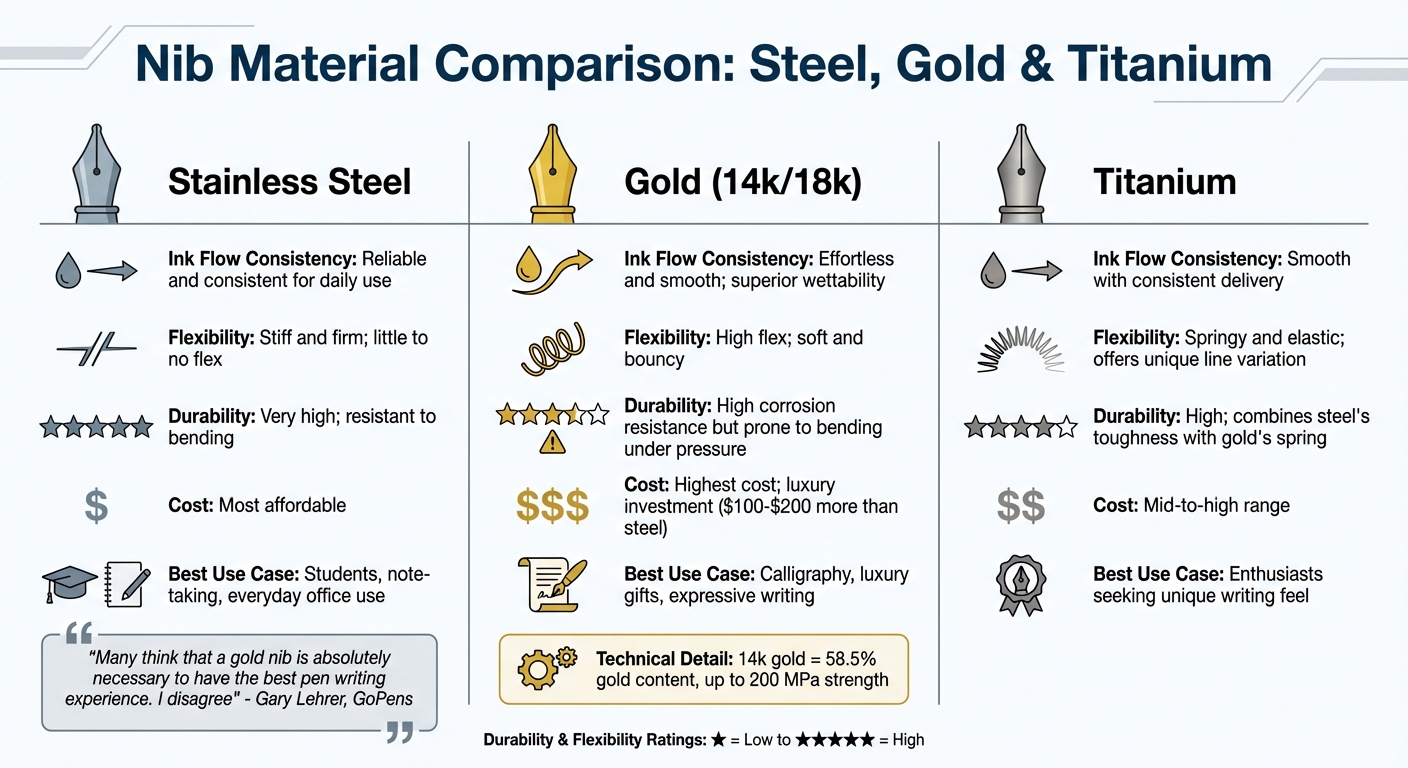
Fountain Pen Nib Materials Comparison: Steel vs Gold vs Titanium
Choosing the right fountain pen nib often comes down to understanding the unique qualities of stainless steel, gold, and titanium. Each material offers distinct characteristics that can significantly influence your writing experience. Here's a closer look at how these nib materials compare, helping you find the perfect match for your needs.
Stainless steel nibs are known for their reliability and affordability. They provide a consistent ink flow and are stiff and firm, making them a great choice for everyday use. Advances in steel alloys have made modern stainless steel nibs surprisingly smooth, rivaling the performance of gold nibs in daily writing situations. Gary Lehrer, the owner of GoPens, emphasizes:
"Many think that a gold nib is absolutely necessary to have the best pen writing experience. I disagree, because there are other important factors in play".
Gold nibs, typically available in 14k or 18k variations, are prized for their smooth ink flow and natural flexibility. They adapt to your writing pressure, creating a responsive and luxurious experience. While 18k gold nibs are softer, 14k gold offers a better balance between flexibility and durability. According to Conid Pen, "14k nibs are very good nibs and will probably last you a lifetime and (if taken good care of) could possibly even outlive your grandchildren". These nibs are perfect for calligraphy, expressive writing, and those seeking a touch of elegance.
Titanium nibs combine the durability of steel with the flexibility of gold, delivering a springy, elastic feel that allows for distinct line variation. While they require a more delicate touch, they are an excellent choice for enthusiasts looking for a unique writing experience. Positioned in the mid-to-high price range, titanium nibs strike a balance between performance and exclusivity.
Comparison Table
For a quick overview, here's how these materials stack up:
| Factor | Stainless Steel | Gold (14k/18k) | Titanium |
|---|---|---|---|
| Ink Flow Consistency | Reliable and consistent for daily use | Effortless and smooth; superior wettability | Smooth with consistent delivery |
| Flexibility | Stiff and firm; little to no flex | High flex; soft and bouncy | Springy and elastic; offers unique line variation |
| Durability | Very high; resistant to bending | High corrosion resistance but prone to bending under pressure | High; combines steel's toughness with gold's spring |
| Cost | Most affordable | Highest cost; luxury investment | Mid-to-high range |
| Best Use Case | Students, note-taking, everyday office use | Calligraphy, luxury gifts, expressive writing | Enthusiasts seeking unique writing feel |
This breakdown highlights the strengths and ideal applications of each nib material, helping you make an informed choice based on your preferences and writing habits.
Selecting the Right Nib Material
Matching Materials to Writing Preferences
Your choice of nib material should align with your writing habits. If you tend to apply heavy pressure, as many former ballpoint pen users do, stainless steel nibs are a dependable choice. Their rigidity allows them to withstand firm pressure without bending, ensuring consistent, clean lines. As Brian Goulet, Founder of The Goulet Pen Company, advises:
"If you're just starting out, stick with stainless steel nibs until you get more experience and can even tell the difference in the feel."
For those with a lighter touch who enjoy expressive strokes and subtle line variation, gold and titanium nibs are excellent options. Gold, in particular, offers a soft, cushioned feel, absorbing pressure with ease while resisting corrosion from acidic inks. If you're using standard paper, an extra-fine or fine steel nib might be the best fit, as it provides better control and faster ink drying.
By considering your writing pressure and paper type, you can select a nib material that enhances your overall writing experience.
Budget-Friendly and Premium Options
Cost is another key factor when choosing a nib. Fountain Pen Revolution caters to all budgets, offering options like affordable steel-nib pens starting at $35, which are ideal for beginners. Their Starter Sets include everything you need to begin writing right away, making them a great entry point for those new to fountain pens.
If you're ready to invest in something more refined, their Gold Nib Collection features 14k gold nibs that deliver a smooth, responsive feel, perfect for experienced writers seeking an elevated experience.
It's worth noting that the tipping material - the part of the nib that touches the paper - is typically made from the same durable alloy for both steel and gold nibs. This means a high-quality steel nib can write just as smoothly as a gold one. The main difference lies in the flexibility and bounce, so base your decision on what suits your writing style rather than the allure of premium materials.
Conclusion
When choosing a fountain pen, understanding how nib materials affect ink flow is key to finding the perfect match. Stainless steel nibs are known for their consistent performance and firm feel, making them a dependable choice for everyday writing - especially for those who apply more pressure. On the other hand, gold nibs offer a softer, more responsive touch that gradually adapts to your writing style over time. Somewhere in between, titanium nibs provide a unique, springy feedback that combines durability with a touch of flexibility. The way ink flows is influenced by the nib's flexibility and how it interacts with the feed and slit.
Your personal writing preferences play a big role in this decision. If you value crisp, precise strokes and long-lasting durability, a steel nib might be your best bet. But if you’re drawn to expressive line variations and a cushioned feel, gold or titanium could be the way to go. As Yanning Li, CEO of Scriveiner London, explains:
"Stainless steel nibs are the foundation of reliable, everyday luxury. They're engineered for decades of dependable service and represent exceptional value."
This perspective highlights the importance of aligning your pen choice with your writing habits. The real distinction between nib materials lies in their flexibility and "bounce", rather than smoothness alone.
For those exploring their options, Fountain Pen Revolution offers a range of choices. Their Starter Sets, priced from $35, feature quality steel nibs, while their Gold Nib Collection includes 14k gold nibs for a more premium experience. They’re also known for their Ultra Flex nibs, which deliver impressive line variation at accessible prices.
Choosing the right nib material can transform your writing journey from simply functional to genuinely enjoyable.
FAQs
What nib material is best for my writing style?
The choice of nib material boils down to your writing style and personal preferences. If you’re drawn to smooth, fluid strokes with a touch of flexibility, gold nibs might be your ideal match. They’re soft, naturally resistant to corrosion, and work beautifully for tasks like journaling or calligraphy. On the flip side, if you value a firm, consistent line and need something durable yet affordable, steel nibs are a dependable option, perfect for everyday writing or note-taking.
Budget is another key factor to weigh. Gold nibs typically fall within the $100 to $500+ range, while steel nibs are much more wallet-friendly, usually costing between $25 and $50. To make the best choice, test the nib on the paper you use most often. Gold nibs shine on smoother paper, enhancing their effortless glide, while steel nibs may feel more at home on slightly rougher textures. If you can, try out a demo pen or starter set to get a sense of how each material feels in your hand. Aligning the nib’s characteristics with your handwriting style can make all the difference in your writing experience.
What are the price differences between stainless steel, gold, and titanium nibs?
When it comes to fountain pen nibs, stainless steel nibs are the most budget-friendly option, typically priced between $25 and $50. If you're looking for a smoother and more flexible writing experience, gold nibs might be your choice, though they come with a higher price tag - ranging from $100 to $500 or more, depending on the craftsmanship and gold content. For something in the middle, titanium nibs offer a unique writing feel and impressive durability, with prices generally falling between stainless steel and gold options.
How does the flexibility of a fountain pen nib influence ink flow and line variation?
The way a fountain pen nib flexes can significantly influence both the ink flow and the look of your writing. A flexible nib reacts to pressure by spreading its tines, which lets more ink flow and creates bold, dynamic lines. This quality makes it a favorite for calligraphy or expressive writing styles. In contrast, a stiffer nib keeps its tines steady, ensuring a consistent ink flow and uniform line width - great for everyday writing or tasks requiring precision.
When selecting a nib, think about your writing habits and preferences. If you like to add personality and variation to your handwriting, a flexible nib might suit you best. But if you value steadiness and control, a stiffer nib could be the better option.