

Fountain pen nibs can last anywhere from 2 years to over 100 years, depending on their design, materials, and care. The three key factors that determine nib durability are:
- Nib Material: Stainless steel nibs are tough and affordable, while gold nibs offer a smoother writing experience but require careful handling.
- Tipping Material: Hard alloys like iridium or ruthenium protect the nib's tip, significantly extending its life.
- Nib Size & Flexibility: Fine nibs wear faster due to focused pressure, while broader nibs distribute pressure more evenly. Flexible nibs add expressive variation but are more prone to damage.
Proper maintenance - like regular cleaning, using compatible inks, and avoiding excessive pressure - can ensure your nib lasts decades, or even a lifetime. Whether you prefer the durability of steel or the smoothness of gold, the right choice depends on your writing habits and care routine.
Will My Fountain Pen Nibs Wear Out?
How Nib Materials Affect Durability
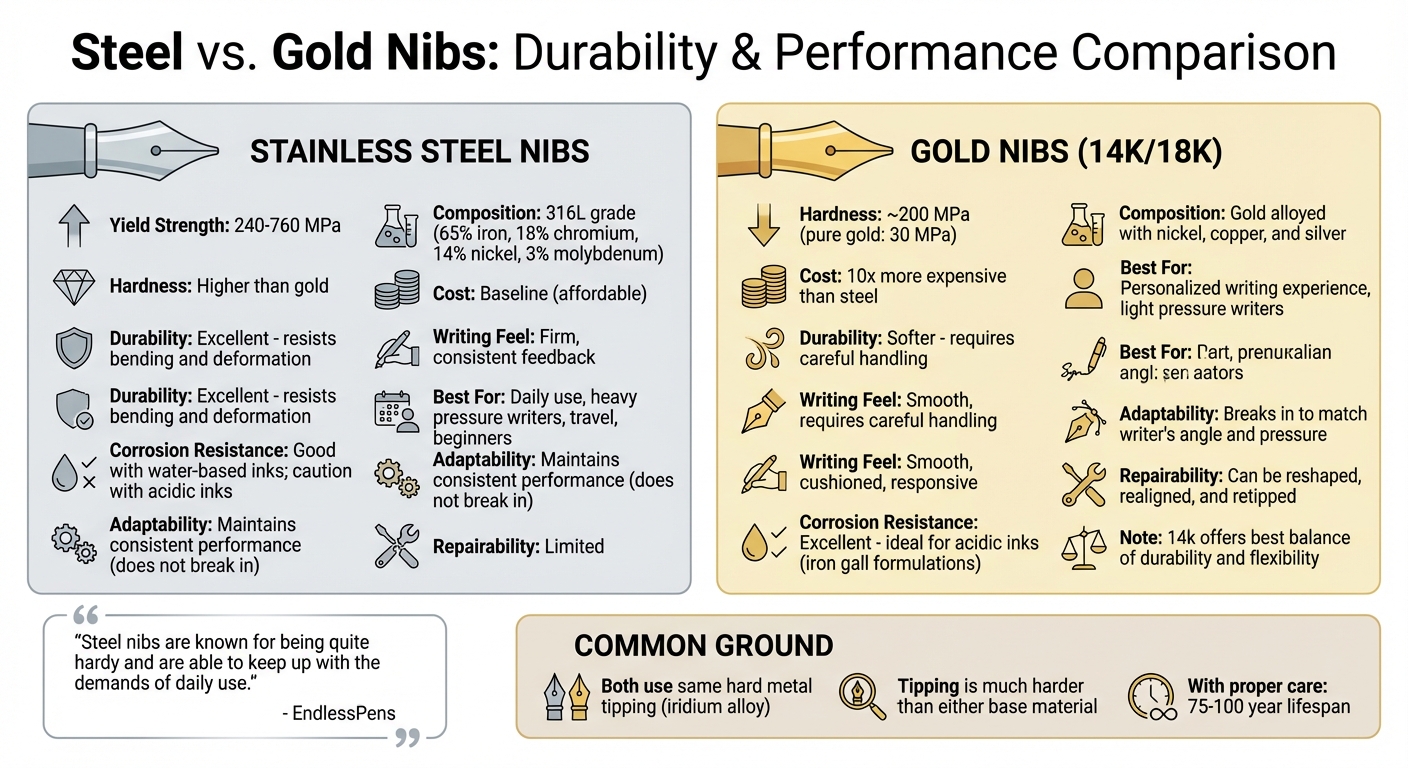
Fountain Pen Nib Materials Comparison: Steel vs Gold Durability and Performance
The material of a fountain pen nib plays a big role in its durability and how it performs. Stainless steel and gold nibs each bring unique advantages, depending on your writing style and how much maintenance you're willing to commit to.
Stainless steel nibs are known for their toughness. Their yield strength, which can range from 240 MPa to 760 MPa after manufacturing, makes them resistant to bending or deforming under pressure. For example, 316L stainless steel - a mix of 65% iron, 18% chromium, 14% nickel, and 3% molybdenum - offers excellent corrosion resistance when paired with modern inks.
Gold nibs, often made from 14k or 18k gold alloys, provide a softer and more responsive writing experience. While pure gold is quite soft (with a Vickers hardness of about 30 MPa), alloying it with metals like nickel, copper, and silver increases its hardness to around 200 MPa. Even though gold is softer than steel, its natural resistance to corrosion makes it ideal for use with acidic inks, such as traditional iron gall formulations, which could corrode steel nibs in a matter of days.
There’s a big cost gap between the two materials. Producing a gold nib can cost roughly ten times more than making a stainless steel one. However, both types rely on the same hard metal tipping - typically an iridium alloy - that’s much harder than gold. Let’s dive into how these materials compare in terms of performance and cost.
Steel Nibs: Durability and Cost Benefits
Stainless steel nibs are a great choice for writers who need a durable, reliable tool for daily use. Their rigid structure makes them perfect for those who apply a lot of pressure while writing - especially people transitioning from ballpoint pens, who may not yet have mastered the lighter touch that fountain pens require. Steel nibs resist bending, which helps maintain consistent line width and performance even with heavy use.
Another big advantage is affordability. Steel nibs are a staple in entry-level fountain pens because they’re cost-effective without compromising long-term durability. Their sturdy design also makes them ideal for travel or situations where your pen might face rough handling. Austenitic stainless steel (316L) resists corrosion when used with water-based inks, though it’s worth being cautious with highly acidic formulations.
"Steel nibs are known for being quite hardy and are able to keep up with the demands of daily use." - EndlessPens
Steel nibs also maintain their structure over time. Unlike gold nibs, which adapt to a writer’s style after extended use, steel nibs stay consistent, delivering the same writing experience to every user.
Gold Nibs: Smoothness vs. Wear Resistance
Gold nibs, on the other hand, offer a completely different experience. While they’re chemically durable and resistant to corrosion, they’re softer and require more careful handling to avoid physical damage. Their malleability gives them a softer, more cushioned feel when writing, and over time, they can "break in" to match the angle and pressure of your writing style. This adaptability makes them a favorite for those who value a personalized writing experience.
Gold’s resistance to chemical wear is another key benefit. Unlike steel nibs, gold nibs stand up well to acidic inks, such as iron gall formulations, which can damage steel.
Among gold alloys, 14k gold strikes the best balance between durability and flexibility. These nibs are tougher than softer 18k or 21k gold alloys but still provide the bounce and line variation that gold nibs are prized for. The added nickel content in 14k gold also makes the nib springier and less likely to bend permanently.
"While gold was more expensive, a solid gold nib tipped with hard metal lasts far longer than a steel nib." - Captain Chang
Another advantage of gold nibs is their repairability. If damaged, a gold nib can often be reshaped, realigned, or retipped by skilled professionals, which can extend its lifespan significantly despite the higher upfront cost.
Understanding these differences in materials can help you choose the nib that best fits your needs for durability and performance.
Tipping Material and Wear Resistance
A nib's longevity largely depends on a tiny 1 mm bead of hard alloy - its tipping material - that withstands the relentless friction of writing on paper. This small yet critical component is the only part of the nib that touches the paper. Without it, even the finest gold nib would quickly succumb to the abrasive nature of paper fibers. Let’s delve into the composition and techniques that make this essential element so resilient.
Despite being commonly referred to as "iridium", modern tipping materials are actually advanced alloys made from platinum-group metals like ruthenium, rhodium, and osmium, and sometimes even tungsten. These alloys are purposefully designed to endure the wear and tear of millions of writing strokes.
The quality of the tipping material has a profound impact on durability. For example, untipped nibs tend to last only around two years, while a well-tipped nib can perform for 75 to 100 years with proper care. Osmiridium tips generally last about 40 years, and tungsten tips can endure up to 80 years. This incredible durability is due to the fact that iridium-based alloys are at least 10 times harder than gold, making a gold nib without a protective tip unsuitable for extended use.
"The tipping material is made of a hard-wearing alloy including precious metals like rhodium. This offers maximum durability since the tip is what will be making contact with paper for years and years." - Brian Goulet, Founder, The Goulet Pen Company
Equally crucial is how this bead is applied to the nib. To ensure lasting durability, the tipping material must be welded to the nib at compatible temperatures - osmiridium, for instance, melts at 2,450°C, which is very close to the melting point of stainless steel at 2,500°C. This ensures a strong, reliable bond. After welding, the tip is meticulously ground and polished into various shapes, such as extra-fine, medium, or broad, to enhance ink flow. A properly applied tip not only shields the softer gold or steel body of the nib but also ensures smooth, consistent performance for decades.
How Nib Size Affects Longevity
When it comes to nib durability, size plays a big role alongside materials and tipping. The width of a nib directly impacts how pressure and friction are distributed. A fine nib focuses all writing pressure onto a tiny point, while a broad nib spreads that same force across a much larger area. This difference leads to distinct wear patterns and lifespans for each type.
Ink flow also ties into nib longevity. Broad nibs deliver more ink, which acts as a lubricant, reducing abrasive wear on the tip. Fine nibs, on the other hand, lay down less ink and tend to run "drier", meaning they rely less on lubrication during use.
The type of paper you use matters too. Fine nibs are more sensitive to rough paper, which can speed up wear. Their small tips can snag on loose fibers, creating that scratchy feeling. Broad nibs, with their larger contact area, handle coarse paper better but require smoother, less absorbent paper to avoid issues like feathering or ink bleed.
Fine Nibs: Wear Patterns and Lifespan
Fine nibs present unique durability challenges because they concentrate writing pressure on a contact point as small as 0.2–0.4 mm. With such a tiny tip, any pressure applied during writing focuses intensely on one small area. This can lead to a wear issue known as "baby's bottom", where the inner edges of the tines wear down faster than the tip itself. This uneven wear can cause hard starts or railroading, where ink skips in the center of your strokes.
That scratchy sensation you sometimes feel with fine nibs isn't always a sign of wear - it’s often just the natural feedback of a small point moving across textured paper. However, this sensitivity means fine nibs require a lighter touch to avoid damage. While most fountain pen nibs are built to last 10 to 30 years, excessive pressure can shorten the lifespan of a fine nib or even cause tine misalignment. To extend their life, use smoother paper and maintain a writing angle of about 60°, which helps the nib wear more evenly over time.
Broad Nibs: Surface Area and Durability
Broad nibs, on the other hand, have a clear advantage in durability thanks to their wider contact surface. With tipping widths often ranging from 0.8–1.0 mm or more, broad nibs spread writing pressure across a much larger area. This reduces the concentrated friction and force that fine nibs face, resulting in a smoother, more effortless writing experience. Many writers describe this as a "gliding" or "glass-like" sensation.
"A smaller tip touching the paper will never feel as smooth as a big wet nib tip." - Cult Pens
The generous ink flow of broad nibs also helps by continuously lubricating the tip, which protects it from wear. However, this comes with a trade-off: broad nibs use ink much faster than their fine counterparts. While their larger surface area makes them more resistant to pressure-related damage, their longer lifespan ultimately comes down to the combination of distributed force and better lubrication. With light pressure and the right paper, both fine and broad nibs can last anywhere from 75 to 100 years.
sbb-itb-1dd4fe9
Nib Flexibility and Durability
When it comes to pen longevity, nib flexibility plays a key role alongside materials and tipping. Flexibility refers to how much the tines of the nib spread apart under pressure while writing, directly impacting how long the nib will last. Firm nibs are rigid and resist bending, whereas flexible nibs are designed to spread, offering expressive line variation. Knowing these differences is crucial in selecting a nib that aligns with your writing style and durability needs.
Flexible nibs create dynamic, varied lines but require a delicate touch, while firm nibs prioritize durability. As Brian Gray, founder of Edison Pen Company, explains:
"A quality modern steel nib will offer virtually everything that a modern gold nib can, with the exception of flex to provide line variation".
This distinction is important because over-flexing a nib can permanently damage it. Let’s explore how firm nibs handle pressure and how flexible nibs balance expressiveness with durability.
Firm Nibs: Pressure Resistance and Longevity
Firm nibs, often made from stainless steel, are built to handle pressure without bending. They produce consistent lines and maintain their shape even with heavy use. This makes them perfect for tasks like fast note-taking or signing official documents. For example, U.S. Presidents like JFK and LBJ relied on firm medium nibs, such as the Esterbrook 2668, for signing legislation - these nibs provided steady, reliable performance without the risk of bending or smudging.
The durability of steel nibs is a clear advantage. They withstand significant pressure and resist structural fatigue, making them ideal for writers transitioning from ballpoint pens. Replacement steel nibs are also affordable, typically costing around $25, which makes them a practical choice for frequent writers. With proper care, a firm steel nib can last an impressive 75 to 100 years.
Flexible Nibs: Line Variation and Wear Rates
Flexible nibs, usually crafted from gold alloys like 14k or 18k, are designed to bend and create striking variations in line width based on writing pressure [23,27]. However, gold’s softness means these nibs are more prone to wear over time. Excessive flexing can lead to permanent deformation, often resulting in issues like "baby bottom" wear, where the inner edges of the tines wear down, causing hard starts and railroading.
Using a flexible nib requires a light, controlled touch, as heavy or fast writing can speed up wear. Additionally, upgrading to a gold flexible nib can add $100 to $200 to the cost of a pen, making it a significant investment worth protecting.
To prolong the life of a flexible nib, avoid pushing it beyond its elastic limit. Always ensure the tines snap back immediately after flexing. Regularly inspect the nib with a jeweler’s loupe to catch early signs of tine misalignment, a common issue caused by frequent pressure changes. And remember: fountain pens are designed to write with minimal pressure. Let the ink flow naturally through capillary action instead of forcing it.
Design Features That Extend Nib Life
Beyond materials and flexibility, a nib's structural design plays a critical role in ensuring its longevity. Features like the breather hole and feed system work together to protect nibs from common issues such as cracking, ink clogs, and pressure-related damage.
The breather hole is a key design element that helps distribute stress along the nib slit, reducing the likelihood of fatigue cracks. Positioned just behind the feed contact area, it also helps minimize ink evaporation. As engineer Amadeus W. explains:
"It reduces the stress at the endpoint of the slit by distributing the occurring forces across a larger area. Slits ending without a hole may show fatigue stress cracks after some time".
Meanwhile, the feed system ensures consistent ink flow, preventing hard starts and skipping. By doing so, it reduces the need for excessive pressure, which can lead to tine misalignment. The feed's combs also act as a small reservoir, holding ink for smooth delivery. Tyler Dahl, a professional nibmeister, highlights this feature:
"The combs of a feed are also a mini-storehouse for ink. They allow the feed to keep ink on-the-ready to be delivered to the nib at any time".
Proper maintenance of these features is essential for long-term performance. Clean the area around the breather hole every 2–6 weeks to avoid ink buildup. Use a jeweler's loupe to check for micro-cracks radiating from the breather hole, which could indicate stress damage. Additionally, ensure the feed is properly aligned with the nib to maintain effective capillary action.
When these structural elements are well-designed and maintained, nibs can last an impressive 75 to 100 years. Paying attention to these details is just as crucial as choosing the right material or flexibility for a fountain pen that stands the test of time.
Maintenance Tips for Longer Nib Life
Taking care of your fountain pen nib is essential if you want it to last for years - or even decades. The first step? Regular cleaning. Flush your pen with cool water every 2–4 weeks or whenever you switch inks. Avoid hot water, as it can warp internal components and damage the feed. For stubborn, dried-up ink, mix one part household ammonia with two to ten parts water. However, skip this solution if your pen contains aluminum, brass, or copper parts, as ammonia can corrode these metals quickly. A bulb syringe (around $5.00) can be a great tool to push water through the feed channels for a thorough clean. Clean pens not only perform better but also set the foundation for all other maintenance steps.
When storing your pens, always keep them vertically with the nib pointing up to prevent ink from settling and clogging the feed. Make sure the pen is capped when not in use to protect the nib from damage and stop the ink from drying out. If you plan to put your pen aside for more than two or three weeks, clean it thoroughly and empty the ink before storing.
"Just as your car needs its oil changed, your fountain pen needs internal cleaning. A once-a-month cleaning will often save you a trip to the nib specialist".
Proper storage and regular cleaning go hand in hand to prevent clogs and reduce mechanical stress on the nib.
Another important factor? Writing pressure. Fountain pens don’t need much pressure to write - they rely on capillary action to draw ink. Pressing too hard can wear out the nib prematurely. If the ink flow stalls after the pen has been inactive, resist the urge to press harder. Instead, dip the nib in water or fresh ink to get things moving again.
The type of ink and paper you use also plays a big role in your pen’s longevity. Stick to water-based fountain pen inks and steer clear of India inks, waterproof drafting inks, or high-sediment inks unless you clean the pen immediately after use. These specialty inks can cause clogs or even corrode the nib if left to dry. Pair your pen with smooth, fountain pen–friendly paper to minimize friction and avoid fibers that could snag or damage the nib. And never use harsh chemicals like rubbing alcohol, bleach, or acetone - they can ruin the feed and barrel materials.
Conclusion
The lifespan of a pen depends on factors like nib material, tipping quality, usage habits, and maintenance. Stainless steel nibs are celebrated for their resilience in daily use, while gold nibs provide a smoother writing experience but may wear down faster under heavy pressure. The tipping material - often iridium or ruthenium - is key to protecting the nib and ensuring its longevity.
Nib size and flexibility also play a role in wear and tear. Fine nibs focus pressure on a smaller area, potentially causing faster wear, while broader nibs distribute stress more evenly. Flexible nibs, on the other hand, require a gentler touch to avoid damage.
As noted by One Pen Show, "A fountain pen should last for at least 10-20 years, up to 100 years with proper care and maintenance".
To extend your pen's life, thoughtful design must be paired with proper handling. Writing with light pressure, cleaning the pen every two weeks, using high-quality ink, storing it capped or nib-up, and writing on smooth paper are all effective ways to maintain your nib's performance.
If you're new to fountain pens or looking to expand your collection, Fountain Pen Revolution offers a range of affordable, durable options. Their starter sets, starting at $35.00, include everything you need to begin. For enthusiasts, their premium pens feature handmade craftsmanship and robust tipping materials. They also offer replacement nibs, fountain pen–friendly inks, and accessories to keep your pens performing beautifully for years to come.
FAQs
What’s the difference between steel and gold nibs, and which one should I choose?
When deciding between a steel or gold nib, it all comes down to your writing habits and what you value most in a pen.
Gold nibs offer a softer, more flexible feel, giving you a smooth and cushioned writing experience. They can even create subtle line variations, making them a favorite for those who enjoy expressive writing styles, such as journaling or calligraphy. That said, gold nibs come with a higher price tag - typically between $100 and $500 or more - and they’re not as resistant to wear, especially if you tend to press hard while writing.
On the other hand, steel nibs are known for their firmness and durability. They provide consistent feedback and maintain a steady, uniform line, no matter how much pressure you apply. This makes them a practical choice for everyday tasks like taking notes or office work. Plus, they’re much easier on the wallet, usually priced between $25 and $50. While they lack the flexibility of gold nibs, modern steel nibs still deliver a smooth and reliable writing experience.
So, if you’re looking for a luxurious, pressure-sensitive option, go with a gold nib. But if durability, consistency, and affordability are more your speed, a steel nib is the way to go. Fountain Pen Revolution offers a variety of both, making it easy to find the right match for your style.
How can I maintain my fountain pen nib to make it last longer?
Proper care and maintenance can go a long way in keeping your fountain pen nib in excellent condition for years. The key? Regular cleaning. After each refill, rinse the nib with room-temperature tap or distilled water to wash away any dried ink. For a more thorough cleaning, flush the pen once a month by filling and emptying it several times with water. If stubborn ink residue builds up, you can soak the nib briefly in a solution made from one part household ammonia and two parts water. However, skip this method if your pen has aluminum parts, as ammonia can cause corrosion. Always stick to gentle cleaning tools like a soft toothbrush or microfiber cloth, and avoid using hot water to prevent damage to the nib's delicate materials.
Beyond cleaning, a few mindful writing habits can help reduce nib wear. Write with a light touch - there’s no need to press hard. Stick to high-quality paper and inks with proper viscosity to minimize friction. When you’re not using your pen, store it upright with the cap on, and refill it regularly to keep the nib well-lubricated. By following these straightforward steps, you can ensure your fountain pen nib stays in top shape for decades, providing smooth and reliable performance.
How does nib flexibility influence writing feel and pen durability?
Nib flexibility is a key factor in shaping both the writing experience and the lifespan of a fountain pen. Flexible nibs, often loved by calligraphers and fans of expressive writing, allow for line variation by spreading the tines with light pressure. This creates a more dynamic and artistic touch to your handwriting. On the other hand, stiffer nibs produce consistent line widths and provide a steady, uniform feel, making them ideal for those who prioritize precision over flair.
That said, flex nibs need careful handling to maintain their durability. Regular bending of the tines can cause wear over time, especially if the nib is made from softer materials or subjected to excessive pressure. High-quality flex nibs are usually crafted from robust materials like treated steel or gold blends, offering a balance between flexibility and strength. To keep your flex nib in great condition, apply light pressure, use smooth paper, and ensure proper ink flow. With the right care, a well-crafted flex nib can provide years of enjoyable writing while retaining its distinctive character.