

If you use the wrong cleaning tool, you can waste time - or damage the pen. After reading this, I’d keep it simple: use a converter flush for Parker, plain-water converter or piston flushing for Lamy, and a 2 oz bulb syringe for Pilot. For dried ink, Parker leans on a cool-water soak up to 24 hours, Lamy needs gentle flushing and care with nib removal, and Pilot may need direct nib/feed cleaning.
Here’s the short version:
- Parker: Easiest day-to-day cleaning. The converter often does the job on its own.
- Lamy: Works well with cartridges, converters, and piston models, which may eventually require you to lubricate fountain pen pistons, but seals and nibs need a light touch.
- Pilot: Usually needs the most active flushing because of its tighter feed setup and proprietary fit.
- For all three brands: Use cool or room-temperature water only. Skip hot water, alcohol, and strong solvents.
- One number worth noting: the article points to a 24-hour soak as the upper limit for stubborn Parker clogs.
- Another useful detail: a 2-ounce bulb syringe is the main routine-cleaning tool for many Pilot cartridge/converter pens.
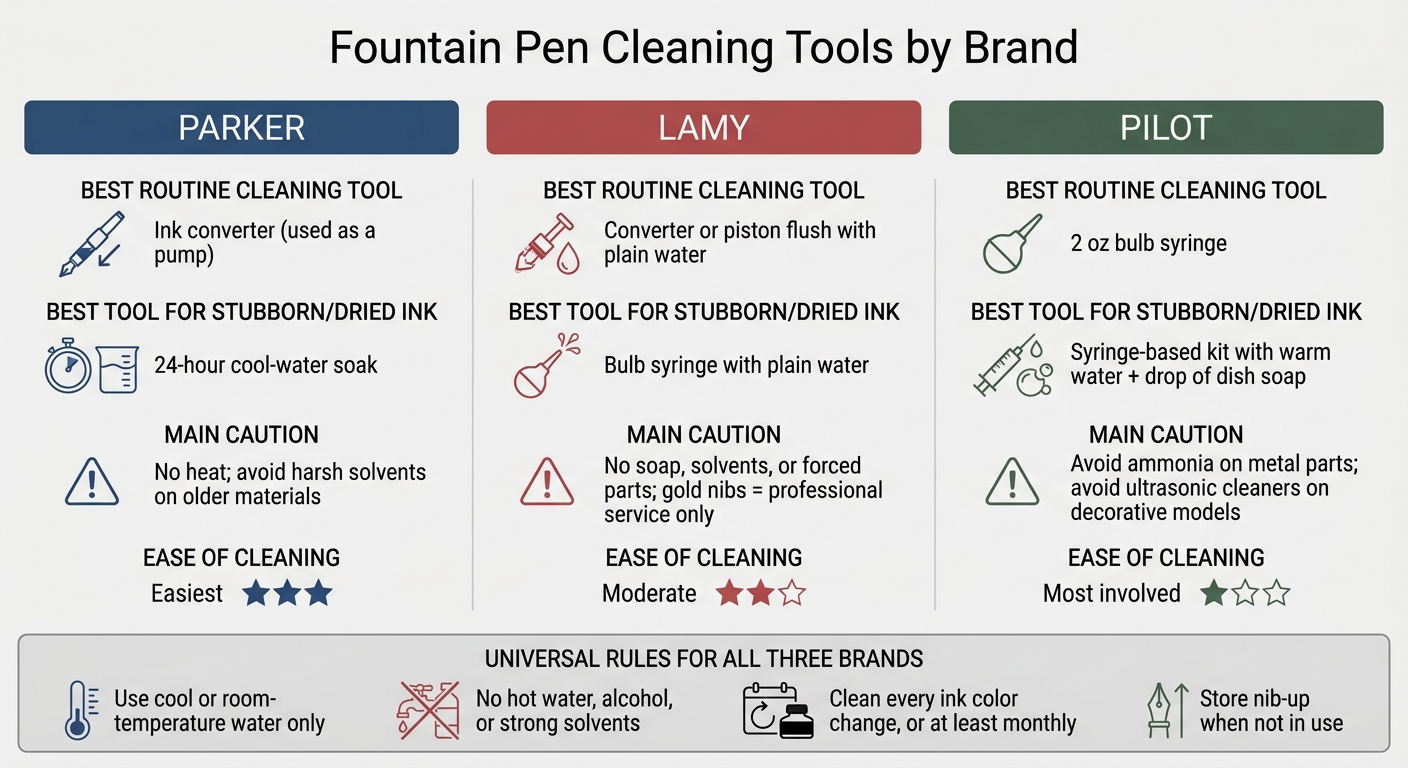
Fountain Pen Cleaning Tools by Brand: Parker vs Lamy vs Pilot
How to Deep Clean your fountain pens | Lamy Safari, Pilot Kakuno
sbb-itb-1dd4fe9
Quick Comparison
| Brand | Best routine tool | Best tool for dried ink | Main caution |
|---|---|---|---|
| Parker | Converter used as a pump | Cool-water soak | No heat; be careful with older materials |
| Lamy | Converter or piston flush | Gentle flush, sometimes with a bulb syringe | Avoid soap, solvents, and forcing parts |
| Pilot | 2 oz bulb syringe | Direct nib/feed cleaning or syringe-based kit | Avoid ammonia on metal parts |
If I were building one small kit for these brands, I’d keep a bulb syringe, blunt-tip syringe, distilled water, lint-free cloth, and pen flush on hand. The rest of the article breaks down when each tool fits, where it does not, and what to avoid with each brand.
1. Parker Fountain Pens
Filling-System Compatibility
Parker’s cartridge/converter system is pretty easy to clean with basic tools. A bulb syringe works well for flushing the nib and feed, while a blunt-tip syringe helps with cartridges and converters. For regular upkeep, pull cool water through the nib with the converter, then push it back out a few times until the water runs clear.
If that doesn’t fix the issue, the feed may need more than a standard flush.
Safe Deep-Cleaning Options
When a converter flush falls short, soaking is the next move. Dip only the nib and grip section in cool water for up to 24 hours. Because Parker ink is water-soluble, a cool-water soak will often clear a clog without much fuss.
After the soak, flush the pen again with cool water, then blot it dry with a lint-free cloth or paper towel. In most cases, that’s enough to deal with stubborn ink buildup without moving to stronger cleaning methods.
Brand-Specific Cautions
Heat is a bad idea here. Parker’s plastic parts can warp or crack, so avoid hot water and don’t try to dry the pen with heat. If you’re cleaning a vintage Parker made from delicate resins, stay away from harsh chemical solvents and use gentle pen cleaners instead.
If you make your own pen flush, rinse afterward with distilled water so minerals don’t build up inside the pen.
Best Routine Tools
For day-to-day cleaning, start with the converter. If the feed needs a stronger rinse, bring in a bulb syringe. Then finish by drying with a lint-free cloth.
Parker is the easiest of the three brands to clean. Lamy takes a different approach when it comes to flushing.
2. Lamy Fountain Pens
Filling-System Compatibility
Lamy fountain pens usually use cartridges, removable converters like the LAMY Z 28, or built-in piston systems such as the LAMY 2000. That setup makes cleaning pretty straightforward. Syringe-based cleaning kits work well with most Lamy models and can flush the nib and feed fast. Cartridge-shaped syringe adapters also fit many Lamy grips, which helps move water through the feed with less hassle.
So yes, Lamy pens are often easy to flush. Still, it’s smart to take a gentle, seal-safe approach instead of trying to power through a clog.
Safe Deep-Cleaning Options
If repeated flushing doesn’t solve the problem, soak the front section in room-temperature water for several hours. Sometimes that extra patience does more than forcing water through the pen.
For a LAMY 2000, stick to model-specific service steps and do not force the piston. If the piston feels stiff, lubricate it instead of pushing more water through. You can also use a soft toothbrush on the feed surface to help clear ink from the outer grooves.
Brand-Specific Cautions
Avoid soap, detergents, solvents, and hot water. They can damage parts or loosen seals. Gold nibs should be serviced by the LAMY Repair Centre only, and mixing ink colors can create precipitate that clogs the feed.
Best Routine Tools
For day-to-day cleaning, a converter or piston flush is usually enough. In most Lamy pens, a bulb syringe or converter flush is the best routine tool. If your tap water is hard, filtered or distilled water can help cut down on mineral buildup.
After cleaning, let the front section air-dry all the way on a soft cloth before you put the pen back together.
Pilot uses a more constrained nib and feed setup, so the best tool match changes again.
3. Pilot Fountain Pens

Filling-System Compatibility
Pilot pens like the Vanishing Point and Decimo usually use a proprietary cartridge-converter system that works with Pilot-Namiki ink cartridges. It’s smart to use a cleaning kit made for Japanese pens, since the wrong adapter may not seal the grip section.
For cartridge and converter models, a 2-ounce bulb syringe is the standard tool for flushing water through the grip section and nib. If a basic flush doesn’t do the job, Pilot pens often need the nib and feed cleaned more directly.
Safe Deep-Cleaning Options
When flushing stops short, manual cleaning is the next step. Use a rubber nib grip or a small strip of tape to get traction, then pull the nib and feed straight out. A soft-bristled toothbrush works well for gently scrubbing the nib and feed and loosening stubborn ink, especially shimmer or sheen inks.
If dried ink is stuck between the tines, brass flossing sheets can help remove stubborn buildup. After soaking, dry every part on a lint-free cloth before putting the pen back together.
Brand-Specific Cautions
Avoid ammonia-based flushes on Pilot pens with metal parts. If you make your own flush, the common DIY mix is 1 part 5% ammonia to 9 parts water, plus a few drops of dishwashing liquid.
Ultrasonic cleaners can work well for deep maintenance, but they’re best avoided on Pilot models with decorative inlays or delicate surface finishes. In most cases, mild water-based cleaning is the safest default for these pens.
Best Routine Tools
For regular cleaning, you only need a 2-ounce bulb syringe and a lint-free cloth. After flushing, place the nib face down on a lint-free cloth or paper towel overnight so any leftover water can drain from the feed.
Pros and Cons by Brand
Routine Cleaning: Strengths and Weaknesses
These differences show up most during a basic flush. Parker is the easiest to deal with, Lamy gives you the most options, and Pilot leans hardest on syringe flushing.
Parker pens usually clean up with little fuss through the converter. Lamy piston models do part of the job on their own during refill, which is handy. Pilot is a bit different. It tends to work best with active flushing, most often with a bulb syringe.
Deep-Cleaning Limits and Risks
Once a basic flush stops working, the gap between these brands gets much clearer. With Parker, the safest move is to flush from the front end and soak the pen if needed. A 24-hour cool-water soak tends to work well because Parker ink is water-soluble.
With Lamy, removable steel nibs give you more access for a deeper clean. But there’s a catch: if you pull the nib the wrong way, you can bend the tines. And if the pen has a gold nib, leave that job to a professional.
Pilot pens need a bit more care when ink dries inside the feed. Their fine nibs are more sensitive to built-up residue, and proprietary converters like the CON-40 can take longer to flush out.
Best Tool Match by Brand
Tool choice comes down to the pen’s filling system and feed design. Here’s the direct match for each brand.
| Brand | Pros | Cons | Best Tool (Routine) | Best Tool (Stubborn Clogs) |
|---|---|---|---|---|
| Parker | Straightforward flushing; water-soluble ink dissolves easily | Disassembly restricted on most models; clogs need long soak times | Ink converter (used as a pump) | 24-hour cool water soak |
| Lamy | Piston models self-flush during refill; removable steel nibs allow deeper access | Risk of bending nib during removal; feed structures need brand-specific care | Converter/piston flush with plain water | Bulb syringe with plain water |
| Pilot | Reliable syringe-based flushing clears narrow channels effectively | Fine nibs sensitive to dried residue; proprietary converters can be slow to flush | Bulb syringe | Syringe kit with warm water and a drop of dishwashing liquid |
Conclusion
After comparing the three brands, the best pick in most cases is a bulb syringe. It’s the best all-around tool because it makes routine flushing faster across Parker, Lamy, and Pilot.
Best Cleaning Tool for Each Brand
In day-to-day use, the best tool comes down to the filling system.
- Parker: Use the converter for routine flushing. For stubborn clogs, use a cool-water soak.
- Lamy: Use plain-water flushing for regular care. Remove the nib only when you need deeper cleaning.
- Pilot: Use a bulb syringe for routine flushing. For the feed, use a syringe-based kit.
Save pen flush for dried ink or when you’re switching colors.
A Simple Cleaning Kit for U.S. Users
If you clean more than one pen, a small kit can handle most routine jobs. Keep a 2 oz bulb syringe, distilled water, a lint-free cloth, a blunt-tip syringe, and pen flush for deep cleaning. Clean your pens every time you switch ink colors, or at least once a month if you’re using the same ink. Store pens with the nib facing up when not in use to help reduce drying or clogs in the feed.
FAQs
How often should I clean my fountain pen?
It depends on how often you use it and the ink you pick.
- Heavy use: clean it weekly
- Moderate use: clean it every two weeks
- Occasional use: clean it monthly
- Always clean it before switching ink colors
- Clean it sooner if you notice ink flow problems or dried ink buildup
When should I use pen flush instead of plain water?
Use pen flush when plain water can’t clear heavy, stubborn, or pigmented ink buildup. For routine cleaning and light residue, stick with lukewarm distilled water.
If dried clogs, visible ink, or uneven flow are still there after several water flushes, pen flush is the better choice for a deeper clean, including the solution in the Fountain Pen Revolution tuning and cleaning kit.
Can I use one cleaning kit for Parker, Lamy, and Pilot pens?
Yes. Most fountain pen cleaning tools - like bulb syringes, microfiber cloths, and soft-bristled toothbrushes - work well with Parker, Lamy, and Pilot pens.
One good kit, such as the Fountain Pen Revolution FPR Tuning and Cleaning Kit, is usually enough. Basic cleaning comes down to flushing the nib and feed with water or a pH-neutral pen flush.