

Metallic inks are ideal for writing and designing on dark paper because they use reflective metal particles to create a shimmering effect. Unlike standard inks that rely on light reflecting off white surfaces, metallic inks stand out on dark backgrounds due to their unique composition. Here's what you need to know:
- How They Work: Metallic inks contain fine metal flakes (like aluminum or bronze) that align during drying, reflecting light directly.
- Why They Shine on Dark Paper: Their opacity and reflectivity ensure visibility where regular inks fade.
- Paper Matters: Smooth, coated paper enhances their shine, while absorbent or textured paper dulls the effect.
- Nib and Pen Tips: Broad nibs work best to showcase metallic effects, but these inks require regular pen cleaning to prevent clogs.
- Drying Time: Metallic inks take longer to dry, especially on non-absorbent surfaces.
For best results, use smooth paper, broad nibs, and maintain your pen regularly to enjoy the vibrant, reflective qualities of metallic inks on dark paper.
Main Properties of Metallic Inks
Opacity and Coverage
Metallic inks pack in 2–4 times more pigment than standard inks, making them highly visible on dark surfaces like black or navy paper. This extra pigment gives the ink the opacity it needs to stand out. The size and shape of the metallic particles play a big role in coverage quality. Smaller particles provide better hiding power and finer details, but they scatter light more, which can reduce shine. Larger particles, on the other hand, create a glossier finish but may compromise coverage. Circular "silver dollar" pigments tend to offer better coverage compared to irregular "cornflake" shapes.
The type of paper also affects how well metallic inks perform. On absorbent or uncoated paper, the ink tends to sink into the fibers, dulling its metallic effect. For the best results, smooth or coated papers are ideal because they allow the metallic particles to stay on the surface, where they can reflect light effectively. If you're working with highly absorbent dark paper, applying several thin layers instead of one thick coat can help achieve a richer, more vibrant look. The high pigment concentration also impacts the ink's reflective properties as it dries.
Sheen and Reflectivity
The signature shimmer of metallic inks comes from a process called "leafing." As the ink dries, the metallic pigments rise to the surface and align in a flat, uniform layer. This creates a smooth surface that reflects light evenly, producing a striking shine. The effect is dynamic - its brightness and color shift depending on the viewing angle and lighting, creating a glittering, eye-catching result on dark backgrounds. Rolf Montag, Product Manager at Siegwerk, explains it best:
"If the pigments lie flat against each other, then they form a smooth, flat surface that reflects the incident light symmetrically... the surface appears shiny and uniform".
However, these dense pigments tend to settle quickly in ink bottles or pen reservoirs. To maintain a consistent sheen and color, it's important to stir thoroughly before and during use. Be cautious, though - overstirring can disturb the metallic flakes and reduce their shine.
Flow and Drying Time
The formulation of metallic inks doesn’t just impact their appearance - it also affects how they behave in fountain pens. Metallic inks are thicker than standard inks due to the suspended metal particles, which can influence how smoothly they flow through the pen's feed and nib. Ideally, the ink's consistency should be similar to whipped cream: thick enough to ensure opacity but fluid enough for smooth writing. In fountain pens, surface tension plays the biggest role in how "wet" the ink feels, while viscosity comes into play secondarily.
Drying time is another factor to consider. Metallic inks generally take longer to dry because of their high pigment concentration and the thicker layers needed for opacity. On porous paper, the ink dries faster as it gets absorbed, but on smooth or coated surfaces, drying relies on evaporation and can take significantly longer. As the solvents evaporate, the ink may thicken further, potentially causing flow issues or clogging. Keeping an eye on the ink's consistency and adding a drop of water when needed can help maintain smooth flow. Achieving that stunning metallic shine on dark paper does require a bit more care, but the results are well worth the effort.
Silver Liquid Metallic Sumi Ink - swatch on black paper
How Paper Type Affects Metallic Inks
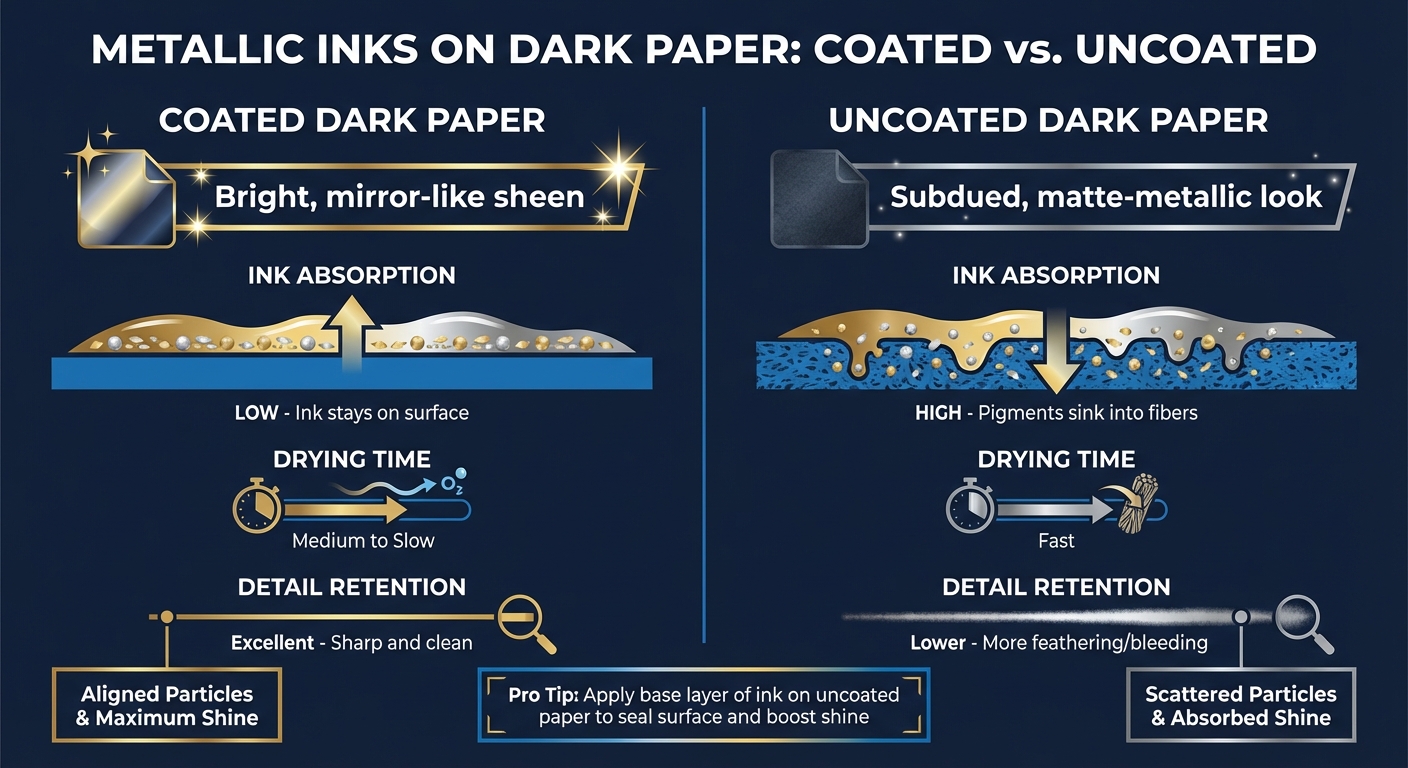
Coated vs Uncoated Dark Paper Performance with Metallic Inks
When it comes to metallic inks, the type of paper you use plays a crucial role in determining how the final effect turns out. Just like pigment composition and ink formulation, the paper’s texture and absorbency can significantly influence the metallic shine.
Smooth vs. Textured Paper
A smooth paper surface is ideal for achieving that bold, reflective metallic shine. On smooth paper, metallic pigments settle flat, reflecting light evenly and creating a mirror-like effect similar to hot stamping. On the other hand, textured paper disrupts this alignment, scattering the pigments and dulling the metallic luster.
John Henry from Letterpress Commons explains:
"As the paper stock becomes more fibrous, the effect is dulled down considerably. Many printers will use a base layer of a printed color of ink just to coat the surface of the paper prior to printing the metallic images".
This base layer acts as a sealant, smoothing out the paper’s pores and fibers. By creating a more uniform surface, it helps metallic pigments achieve a better shine, even on textured or dark papers. This technique is particularly useful when working with fibrous or absorbent materials.
Absorbency and Ink Behavior
Paper absorbency directly affects how metallic inks behave. Highly absorbent papers pull the ink vehicle and pigments deep into their fibers, which prevents the pigments from aligning properly on the surface. This disrupts the reflective "leafing" effect that gives metallic inks their shine. Conversely, less absorbent papers allow the pigments to stay on the surface, where they can settle flat and shimmer.
The drying process also varies depending on the paper’s absorbency. Porous, absorbent papers dry quickly as they soak up the ink, but this rapid drying often sacrifices the metallic luster. Non-absorbent or coated papers, however, dry more slowly through oxidation. This slower process gives metallic particles time to rise to the surface and align evenly, resulting in a more pronounced shine.
Coated vs. Uncoated Paper
Coated papers are the go-to choice for maximizing metallic ink performance. These papers keep the ink on the surface, allowing the pigments to form a reflective layer that closely resembles the effect of hot foil stamping. Uncoated papers, however, tend to absorb the ink, causing the pigments to sink into the fibers and produce a softer, matte-metallic finish.
| Feature | Coated Dark Paper | Uncoated Dark Paper |
|---|---|---|
| Visual Effect | Bright, mirror-like sheen | Subdued, matte-metallic look |
| Ink Absorption | Low; ink stays on the surface | High; pigments sink into fibers |
| Drying Time | Medium to slow (oxidation drying) | Fast (rapid absorption drying) |
| Detail Retention | Excellent; sharp and clean | Lower; more feathering or bleeding |
For uncoated papers, applying a base layer of ink can help seal the surface, reducing absorbency and boosting the metallic shine. This simple step can make a noticeable difference in the final result.
sbb-itb-1dd4fe9
Using Metallic Inks With Fountain Pens
Metallic inks bring a touch of brilliance to writing, especially on dark paper, but they require a bit of care and know-how to get the best results. The shimmer comes from metallic particles in the ink, which can sometimes make it tricky to maintain smooth ink flow and proper pen performance. At Fountain Pen Revolution, our fountain pens are designed to provide a generous ink flow, making them a great match for metallic inks and their reflective qualities.
Nib Selection for Metallic Inks
When it comes to metallic inks, the nib you choose can make or break the effect, especially on dark paper. Broader nibs - like medium, broad, or double broad - are ideal because they lay down more ink, creating larger pools where the metallic particles can settle and catch the light. As Brian Goulet, founder of The Goulet Pen Company, explains:
"Broader nibs, on the other hand, are great for showing special ink properties and they usually feel smoother."
He also adds:
"Mediums are a size I really like for when I have inks that have high sheen, shimmer, or shading properties, as I think it shows off the writing aspects that are most unique to fountain pens."
For those looking to highlight metallic effects even further, stub and italic nibs are worth considering. These nibs create wide strokes that enhance the shimmer, though they may require extra care to avoid scraping off excess ink. On the other hand, fine and extra-fine nibs don’t deposit enough ink to showcase the metallic properties effectively, especially against a dark background. The secret is to use a "wet writer" - a pen that delivers a generous ink flow - so the metallic pigments can fully shine. Pairing this setup with smooth, non-absorbent paper ensures the metallic particles stay on the surface, reflecting light beautifully.
Once you’ve chosen the right nib, keeping your pen clean is crucial for maintaining optimal ink flow.
Cleaning and Maintenance Tips
Metallic inks can be more demanding when it comes to pen maintenance. If your pen sits unused for more than a week, it’s important to flush it out to prevent clogs. A pen flush or ultrasonic cleaner works well for thorough cleaning.
For the best results, use a bulb syringe to push water or cleaning solution through the grip section, which is far more effective than just using the pen’s converter. If you encounter stubborn clogs, you can disassemble the nib and feed for a deeper clean. A simple homemade flush - one part household ammonia to ten parts water - can help, but avoid using ammonia on aluminum, brass, or copper parts to prevent damage.
For dried ink, soaking the nib and feed in room-temperature water or pen flush for several hours (or even overnight) can loosen particles. An ultrasonic jewelry cleaner can also help dislodge any ink trapped deep in the feed. After cleaning, stand the nib section vertically on a paper towel (nib down) to let gravity and capillary action remove any remaining moisture. Always use cold or room-temperature water, as hot water can warp delicate pen parts.
Once your pen is clean and flowing smoothly, you can focus on techniques to enhance the ink’s appearance on dark paper.
Layering and Overwriting Techniques
Metallic inks are often semi-opaque, meaning the dark paper beneath can show through a single layer of writing. To boost both coverage and shine, try layering. Write your first layer, let it dry completely (preferably overnight), and then go over it again. This method prevents smudging and ensures the ink cures properly. Avoid applying too much ink in one go, as this can lead to longer drying times or even a film forming on the surface.
Switching to a print writing style instead of cursive can also help. Lifting the nib between letters allows more ink to pool, which enhances the shimmer and opacity on dark paper. Be mindful, though - metallic pigments can be delicate and prone to abrasion. Handle your writing with care, and if needed, use a protective coating to preserve your work.
Conclusion
Metallic inks bring a striking appeal to writing on dark paper, but achieving the best results requires a solid understanding of how they work. Their distinctive shine, created by reflective metal particles, shifts depending on the angle of light, adding a dynamic visual effect.
The type of paper you use plays a big role, too. Coated papers enhance the ink's brilliance, while uncoated papers tend to absorb it, dulling the effect. Techniques like layering the ink or using broader nibs can help amplify the metallic finish.
Don't overlook maintenance - it's just as important as technique. Metallic pigments can settle and clog your pen, so regular cleaning is essential. At Fountain Pen Revolution, our pens are designed with a generous ink flow, making them ideal for showcasing the full potential of metallic inks. Whether you're creating art or writing, these pens help bring your metallic ink creations to life.
FAQs
What makes metallic inks shine on dark paper?
Metallic inks owe their shimmering effect to tiny metal flakes, typically crafted from aluminum or bronze, suspended within the ink. When the ink dries, these flakes settle on the surface, reflecting light and producing a bold, eye-catching metallic finish - especially noticeable on dark paper.
This characteristic makes metallic inks an excellent choice for creating elegant, vibrant designs or writing that truly pops on darker backgrounds.
What kind of paper works best with metallic inks on dark surfaces?
For metallic inks to truly shine, opt for coated paper with strong ink hold-out properties. This kind of paper keeps the metallic pigments on the surface, maximizing their reflective quality and delivering bold, attention-grabbing results. Using dark paper can amplify the contrast, making metallic colors stand out even more dramatically. Be sure to test your ink and paper pairing beforehand to ensure you get the effect you're aiming for.
How can I stop my fountain pen from clogging when using metallic inks?
Metallic inks are known for their eye-catching, reflective quality, made possible by tiny metal particles suspended in the ink. While they can create mesmerizing effects, these particles can settle over time, potentially clogging a pen's feed or nib if the ink isn't cared for properly.
To keep your pen in great shape and avoid clogging issues, start by gently shaking the ink bottle before each use. This ensures the metallic particles remain evenly distributed. Opting for a pen with a broader nib can also help, as it allows thicker ink to flow more smoothly. After using metallic ink, make it a habit to flush your pen with distilled water or a cleaning solution to clear out any residue. If you know the pen will sit unused for a while, clean it thoroughly and store it properly to prevent dried ink from causing blockages.
With these simple care tips, you can enjoy the dazzling shimmer of metallic inks on dark paper - without the hassle of clogs or interruptions.