

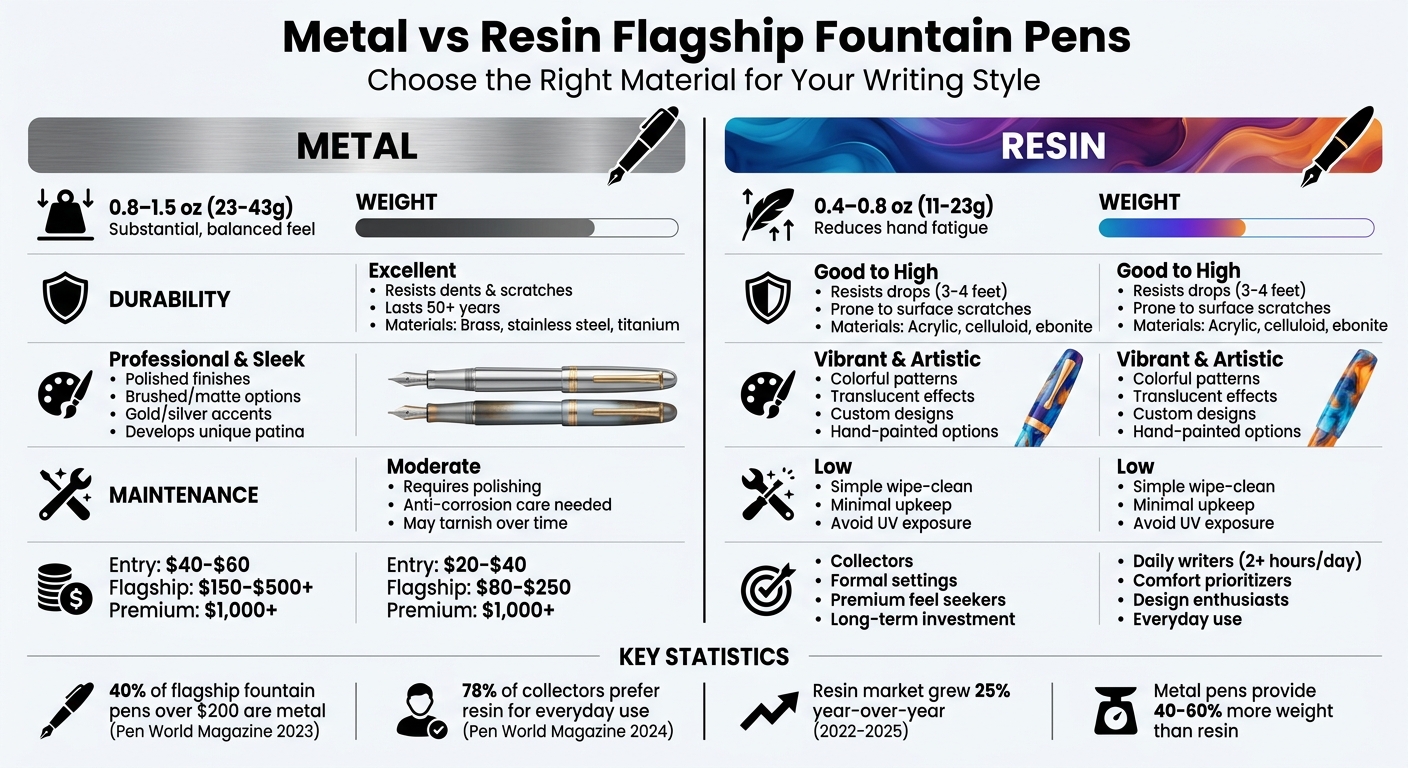
When deciding between metal and resin flagship fountain pens, it boils down to weight, durability, and style preferences. Metal pens are heavier, durable, and offer a sleek, professional finish, making them ideal for collectors or those seeking a premium feel. Resin pens, on the other hand, are lighter, comfortable for extended writing, and come in vibrant, artistic designs, appealing to daily users and those who value creativity.
Key Takeaways:
- Metal Pens: Durable, weighty (0.8–1.5 oz), polished finishes, withstand wear over decades, ideal for collectors or formal settings.
- Resin Pens: Lightweight (0.4–0.8 oz), ergonomic, colorful designs, resistant to minor drops but prone to surface scratches, great for everyday use.
Quick Comparison:
| Feature | Metal Pens | Resin Pens |
|---|---|---|
| Durability | Excellent, resists dents/scratches | Good, resists drops but scratches |
| Weight | Heavier (0.8–1.5 oz) | Lighter (0.4–0.8 oz) |
| Aesthetics | Sleek, polished, professional | Vibrant, artistic, customizable |
| Comfort | Balanced, solid feel | Lightweight, reduces hand fatigue |
| Price Range | $150–$1,000+ | $80–$800+ |
Choosing the right fountain pen depends on your writing habits and personal style. Collectors often lean toward metal for its longevity and refined look, while daily writers prefer resin for comfort and design variety. Both materials offer flagship options across various budgets and styles.
Metal vs Resin Fountain Pens: Complete Comparison Guide
Pilot resin falcon vs Pilot metal falcon
sbb-itb-1dd4fe9
Metal Pens: Features and Benefits
Metal fountain pens are a staple in the high-end market, prized for their durability, refined aesthetics, and premium feel. Crafted from materials like brass, stainless steel, titanium, and even precious metals, these pens are built to last for decades while maintaining their visual allure. Their solid construction and thoughtful design make them a favorite among dedicated writers and collectors alike. Let's break down what makes metal pens stand out, focusing on their durability, weight, and visual appeal.
Durability and Longevity
One of the standout traits of metal pens is their ability to endure years of use with minimal wear. Brass, for example, is highly resistant to corrosion and can maintain its integrity for decades, while stainless steel offers exceptional strength and resistance to rust. A great example is the Pilot Vanishing Point, known to retain its durability even after 20 years of daily use. Titanium takes things a step further by resisting dents and scratches, all while staying relatively lightweight.
The manufacturing techniques used for metal pens also play a key role in their longevity. CNC machining, which achieves precision down to 0.01 mm, is employed in models like the Sailor King of Pen. Meanwhile, PVD coatings provide scratch-resistant finishes that last up to 10 times longer than traditional lacquer. Borrowing techniques from watchmaking, these methods result in pens that can easily last 50 years or more. According to Pen World Magazine's 2023 analysis, metal pens account for about 40% of flagship fountain pen sales over $200.
While their durability is impressive, the weight of metal pens also adds to their appeal, particularly in terms of ergonomics.
Weight and Balance
Metal pens tend to weigh between 0.88 and 1.76 oz (25–50 grams), offering a heftier feel compared to resin pens, which usually weigh 0.53–1.06 oz (15–30 grams). For instance, the Meisterstück 149 weighs around 1.13 oz (32 g), and the Pelikan M1000 comes in at 1.34 oz (38 g). This added weight often translates to better balance, with the center of gravity positioned near the grip, making long writing sessions more comfortable and controlled.
"Metal bodies provide resonant feedback enhancing writing joy, absent in lighter resins." – Richard Binder, master nib grinder
The Goulet Pen Company highlights how the inertia of metal pens aids in consistent line variation, particularly for calligraphy with flex nibs. Additionally, Pilot engineers note that stainless steel's ability to dampen vibrations contributes to smoother nib performance. That said, pens weighing over 1.76 oz (50 g) might feel too heavy for individuals with smaller hands or during extended use.
Aesthetic Appeal
Metal pens don't just excel in performance - they also shine in the looks department. Polished finishes, like the rhodium-plated stainless steel on the Lamy 2000, create a sleek, reflective surface. Brushed finishes, such as those on the Pilot Custom 823, offer a matte, satin-like appearance that resists fingerprints. For added texture, laser-etched patterns are often used on titanium models, like those from Danitrio. Gold or silver accents, such as vermeil (gold layered over sterling silver) on Waterman Experts, bring a sense of luxury without the cost of solid precious metals.
Over time, these finishes develop a unique character. For example, brass forms a patina that adds depth and personality, while modern alloys like 316L stainless steel resist tarnishing. According to Pen Place auction data, polished finishes can boost resale value by 20–30%. The Pilot Vanishing Point, a fan favorite with over 2,500 reviews on Goulet Pens, receives a 4.8/5 rating for its "indestructible build" and "perfect heft for control." Interestingly, matte brushed finishes have grown more popular than polished chrome for their modern aesthetic, as noted in 2024 Reddit r/fountainpens user polls.
While metal pens offer unmatched durability and balance, resin pens bring their own set of strengths. Those will be explored in the next section.
Resin Pens: Features and Benefits
While metal pens are known for their weight and sturdiness, resin pens bring a unique set of perks that appeal to both everyday writers and collectors. Crafted from materials such as acrylic, celluloid, or ebonite, these pens combine lightness, durability, and eye-catching designs. Whether you're someone who spends hours writing or a collector looking for a standout piece, resin pens offer qualities that metal pens can't quite replicate.
Lightweight Design
One of the standout features of resin pens is their light weight. They typically weigh between 0.53–0.88 oz (15–25 grams), making them about 40–60% lighter than their metal counterparts. This can make a world of difference during long writing sessions. Whether you're journaling, taking notes, or drafting documents, a lighter pen reduces strain and improves control. Fountain pen reviewers, like those on The Pen Addict, often highlight how lighter pens enhance comfort, especially during extended use.
The key to this lightness lies in the material. Resin's lower density allows manufacturers to create thinner pen walls without compromising strength. This refined balance gives resin pens an agile, effortless feel in hand. In fact, ergonomic studies suggest that resin pens can reduce the perceived effort of writing by up to 40%. A 2024 survey by Pen World Magazine also found that 78% of fountain pen collectors prefer resin pens for everyday use, citing their balance and ease of handling.
Durability and Resistance
Despite their light weight, resin pens are impressively durable. Modern resin materials, such as hand-poured acrylics or ebonite, boast tensile strengths of 60–80 MPa, allowing them to withstand drops from heights of 3–4 feet without cracking. Unlike the brittle plastics of the past, today’s resins are designed to resist scratches and yellowing when cared for properly - avoid prolonged sun exposure and clean with a soft cloth to keep them in top shape. Pen restoration expert Richard Binder notes that resin pens, when maintained, can last over 50 years without significant wear.
Real-world examples back this up. Users on Fountain Pen Network forums report that the Sailor Pro Gear model has endured over a decade of daily use, even surviving accidental drops without cracking. Similarly, the Platinum 3776 Century series maintains its glossy finish and vibrant color even after decades of use, as noted by experienced collectors like Brad Dowdy. Resin also handles environmental challenges well - it resists ink acidity (pH 3–10) and humidity, unlike metals that may corrode or tarnish. According to a study by the Pen Makers Guild, resin shows minimal dimensional change (less than 1%) after 1,000 hours of UV exposure when treated with stabilizers. It also tolerates temperature swings from -10°F to 120°F without warping, making it ideal for varied climates across the U.S.
Design Versatility
Beyond functionality, resin pens shine in the aesthetics department. Manufacturing techniques like hand-pouring, layering, and vacuum infusion open up endless possibilities for colors, patterns, and custom designs that metal simply can't achieve. For instance, the Visconti Homo Sapiens features resin infused with volcanic lava, creating a textured, heat-resistant finish in deep magma tones. The Montblanc Heritage 1912 showcases mottled celluloid reminiscent of vintage Bakelite, while the Aurora 88 offers stunning swirling blue designs, all thanks to resin's flexibility.
For collectors, this design versatility means owning pens that are both practical and visually striking. The Danitrio Genkai, for example, features hand-painted resins that blend everyday usability with artistic appeal. Limited-edition models, often produced in small batches of just 191 pieces, add an element of exclusivity for enthusiasts. The demand for artisanal resin pens has soared, with the market growing 25% year-over-year from 2022 to 2025. Unlike metal, resin supports translucent effects and intricate embeds, such as gold flakes, giving each pen a distinct personality. And for those new to resin pens, affordable options like the FPR UltraFlex, priced at $35–$50, make these benefits accessible to beginners and seasoned writers alike.
These features highlight why resin pens stand out and set the stage for a comparison with metal models.
Metal vs. Resin: Direct Comparison
Now that we've looked at the characteristics of metal and resin pens individually, let's see how they stack up against each other. Here's a breakdown of their key differences.
Metal pens are known for their durability and stability. At 0.8–1.5 oz, they feel solid and well-balanced in the hand, offering a sense of control while writing. However, they do need regular polishing to keep their shine and to prevent tarnishing or corrosion. The polished finishes exude elegance, making these pens an excellent choice for formal settings.
On the other hand, resin pens focus on comfort and artistic flair. Weighing between 0.4–0.8 oz, they’re lightweight and reduce hand fatigue, especially during long writing sessions. Resin pens often feature vibrant colors and translucent designs, giving them a unique visual appeal. While resin is fairly durable, it’s more prone to surface scratches and fading from UV exposure. Over time - typically after 10 to 15 years of regular use - resin may show signs of aging but remains functional. Maintenance is minimal, requiring just a quick wipe to keep them clean.
Comparison Table
Here’s a side-by-side comparison of the two materials:
| Feature | Metal Pens | Resin Pens |
|---|---|---|
| Durability | Excellent scratch and dent resistance; can last generations | Moderate to high; resists chemicals but prone to surface scratches |
| Weight | 0.8-1.5 oz (23-43g); substantial, balanced feel | 0.4-0.8 oz (11-23g); lightweight, reduces fatigue |
| Aesthetics | Polished, luxurious finishes (matte, glossy, or plated in gold/silver) | Vibrant colors; artistic patterns and translucent effects |
| Maintenance | Moderate; needs polishing and anti-corrosion care | Low; simple wipe-clean, minimal upkeep |
| Writing Comfort | Stable and controlled; lower center of gravity | Lightweight and ergonomic; evenly distributed weight |
| Environmental Resistance | Excellent temperature range (-10°F to 120°F); humidity may cause oxidation | Good overall stability; UV exposure can fade colors; slight warping risk in high heat |
| Price Range | $150-$500+ USD (flagship); $40-$60 USD (entry-level) | $80-$250 USD (flagship); $20-$40 USD (entry-level) |
When it comes to nib performance and ink flow, both materials perform equally well, as these factors depend more on the nib's construction and size than the pen's body. Choosing between metal and resin ultimately depends on your personal preferences, writing habits, and how you intend to use your pen.
Choosing the Right Material for Your Needs
When it comes to selecting the perfect pen material, the decision often hinges on how you prioritize durability, design, and cost. Let’s break it down based on different needs and preferences.
Collector vs. Everyday User
Collectors and everyday users often have very different priorities. Collectors are drawn to resin pens because of their incredible variety in design. Think swirling celluloid patterns, marbled acrylics, or even hand-painted urushi finishes. These features make each pen a true work of art and a prized collectible. For instance, the Namiki Yukari Royale (crafted with hand-painted urushi resin, priced between $1,000–$1,500) or the Pelikan Souverän M1000 (featuring striated celluloid resin, $350–$450) are standout examples that collectors love to display.
On the other hand, if you’re someone who writes a lot - say, two or more hours a day - you’ll likely appreciate the durability of metal pens. Metal’s higher impact resistance (around 2–3 times stronger than resin) makes it ideal for heavy use, whether you’re tossing it into a bag, using it at your desk, or traveling frequently. A great example of this is the Pilot Custom 823 in stainless steel, which costs around $300 and can handle years of wear and tear. This practical difference often drives a clear divide between collectors and everyday users in terms of priorities.
Personal Aesthetic Preferences
Beyond durability, your personal style plays a big role in choosing the right material. Metal pens often exude a sleek, professional vibe, with finishes like rhodium-plated gold or brushed titanium (comparing nib materials). These are perfect for business settings where a polished, executive look is key. A great example is the Pilot Vanishing Point in rhodium ($250), which offers a refined and understated style, ideal for corporate environments.
Resin, on the other hand, is all about bold, artistic expression. If you want your pen to reflect your personality, resin pens come in vibrant colors and creative patterns. Take the Danitrio Genkai (priced at $800+), which features custom resin designs with acrylic swirls or even stabilized wood inlays, making it a true statement piece. So, whether you lean toward minimalist elegance or expressive creativity, the material you choose can say a lot about your aesthetic preferences.
Budget Considerations
Of course, budget is always an important factor. Metal pens tend to fall into a few price tiers:
- $250–$500 for entry-level luxury options
- $500–$1,000 for mid-tier selections
- $1,000+ for premium pieces like the Visconti Homo Sapiens Bronze ($800–$1,200)
Resin pens offer similar tiers, though they often start at a slightly lower price point:
- $200–$400 for introductory models like the Pilot Custom 74
- $400–$800 for mid-range options such as the Pelikan M800
- $1,000+ for artisanal designs like the Nakaya Piccolo ($1,000–$1,500)
For those just starting out, entry-level pens under $50 are a great way to develop your writing habits before committing to a flagship model. Once you’re ready to invest, you can set your budget based on your goals: under $300 for beginner flagships, $300–$800 for solid collection pieces, and $800+ for aspirational pens. Brands like Fountain Pen Revolution offer a variety of choices across these price points, ensuring there’s something for every writer.
Conclusion
Deciding between metal and resin pens ultimately comes down to what matters most to you. Metal pens are known for their durability and solid, weighty feel (usually around 25-45 grams), which many associate with a premium writing experience. On the other hand, resin pens are prized for their lightweight comfort (typically 15-30 grams) and endless design options, allowing for a more personalized touch. Neither is inherently "better" - it all depends on your needs and preferences.
If you're aiming to build a collection or want a pen that can stand the test of time, metal is a strong contender thanks to its longevity. But if you’re someone who writes extensively every day, resin’s lighter weight and vibrant designs might be a better fit. Many professionals lean toward resin for its comfort, while collectors often gravitate toward metal for its lasting appeal and heft.
Cost and maintenance are also important to consider. Metal pens can range from $150 to $500+ USD for flagship models, with high-end options exceeding $1,000. Resin pens, while generally more affordable, typically fall between $80 and $300 USD for quality pieces. Both materials benefit from proper care - metal pens gain a unique patina over time, while resin pens keep their vibrant look with simple precautions, like avoiding extreme temperatures.
Whether you’re drawn to the sleek, professional vibe of metal pens like the Ambassador or the artistic, colorful charm of resin, Fountain Pen Revolution offers an accessible way to explore both options. Their affordable pens, starting around $20-$50, let you try out different materials without a big commitment - perfect for finding what suits your style before upgrading to a flagship model.
FAQs
Will a metal pen tire my hand in long writing sessions?
Metal pens crafted from heavier materials like brass or stainless steel can weigh anywhere from 30 to over 60 grams. This added weight might lead to hand fatigue during lengthy writing sessions. On the other hand, pens made from lighter metals, such as aluminum, typically weigh between 10 and 20 grams, making them a more comfortable option for extended use. Ultimately, the best choice comes down to the pen's weight and what feels comfortable for you.
How can I prevent resin pens from scratching or fading?
To keep resin pens looking their best, treat them with care and clean them often. Use a soft, lint-free cloth to gently wipe away oils, dirt, or fingerprints. Steer clear of abrasive materials or harsh cleaners, as they can harm the surface. When you're not using the pen, always cap it and store it properly to preserve its finish and prevent unnecessary wear.
Does the body material change nib feel or ink flow?
The body material of a pen doesn't directly influence how ink flows - that's primarily determined by the nib, feed system, and the type of ink you use. However, the material does play a big role in weight, balance, and overall comfort. For example, metals like brass add heft, which can provide extra stability for smoother, more controlled strokes. On the other hand, lighter options like aluminum can help minimize hand fatigue, especially during longer writing sessions. These subtle differences can indirectly affect how steady and consistent your writing feels.