

When choosing a fountain pen, the material matters. Here's why:
- Light metals like aluminum (10–20g) reduce hand fatigue, ideal for long writing sessions.
- Heavier metals like brass (30–60g) provide stability and control, preferred for precision.
- Titanium (20–40g) offers a balance of strength and lightness, but at a higher cost.
- Gold nibs are flexible and luxurious, while steel nibs are firmer and more affordable.
Weight affects comfort. Lighter pens are easier on the hand, while heavier ones stabilize strokes. Balance is key; an imbalanced pen can cause strain. Whether you prioritize comfort, durability, or control, the right alloy can enhance your writing experience.
Kaweco Metal Sport comparison
Metal Alloys Used in Fountain Pens
Fountain pens are crafted from various metal alloys, each contributing to their unique feel and performance.
Aluminum Alloy Pens
Aluminum is known for being lightweight, with a density of about 2.7 g/cm³. Most aluminum pens weigh between 10–20 grams, making them a great choice for extended writing sessions as they minimize hand fatigue. To enhance durability and aesthetics, aluminum is often anodized, which protects against scratches and provides a range of color options. This material is also budget-friendly, making it a popular choice for beginners.
Stainless Steel Pens
Stainless steel, particularly Type 316L, is a blend of chromium, nickel, and molybdenum, offering excellent corrosion resistance and durability. With a density of 7.8–8.0 g/cm³, stainless steel pens typically weigh 20–45 grams, striking a balance between the lightness of aluminum and the heft of brass. During manufacturing, the steel undergoes work-hardening, boosting its yield strength from 240 MPa to 760 MPa. This process ensures a nib that is both firm and responsive, maintaining its shape under pressure. The moderate weight adds to the pen's versatility, making it suitable for a variety of writing preferences.
Brass and Copper Pens
Brass and copper pens are heavier, with densities ranging from 8.4–8.9 g/cm³, resulting in pens that weigh 30–60 grams or more. This added weight provides a sense of control and stability, which many writers find appealing. Brass is commonly used for both the pen body and internal components due to its durability. However, raw brass and copper develop a patina over time and may leave a metallic scent on your hands. For some, this aging process adds a vintage charm that enhances the writing experience.
Titanium Alloy Pens
Titanium is a standout material for its combination of strength and lightness, with a density of about 4.5 g/cm³. This balance makes titanium pens ideal for daily use and everyday carry. While their high strength-to-weight ratio is a major selling point, titanium pens tend to be more expensive compared to other materials.
Gold Alloy Nibs
Gold nibs are the hallmark of luxury in fountain pens, typically made from 14k or 18k gold. In 14k gold, the alloy is mixed with silver, copper, and sometimes nickel to increase strength. This alloying process raises gold's Vickers hardness from 30 MPa to 200 MPa, creating nibs that are both durable and flexible. Gold's natural malleability allows the nib to "break in" and adapt to your writing style over time. With a density of approximately 12.8 g/cm³ for 14k gold, the nib also adds a touch of weight, contributing to the pen's overall balance. Additionally, gold's resistance to corrosion makes it well-suited for use with inks, even though modern inks are far less acidic than those of the past.
"I personally believe that 14k nibs react much better to this thinning [to add flex] than 18k." - Gary Lehrer, Owner, GoPens.com
To combat wear, nearly all gold nibs are tipped with a bead of harder metal, often referred to as "iridium", though it is typically an alloy of osmium, ruthenium, or tungsten .
Up next, we’ll explore how the weight of these materials impacts writing comfort.
Metal Alloy Weight Comparison
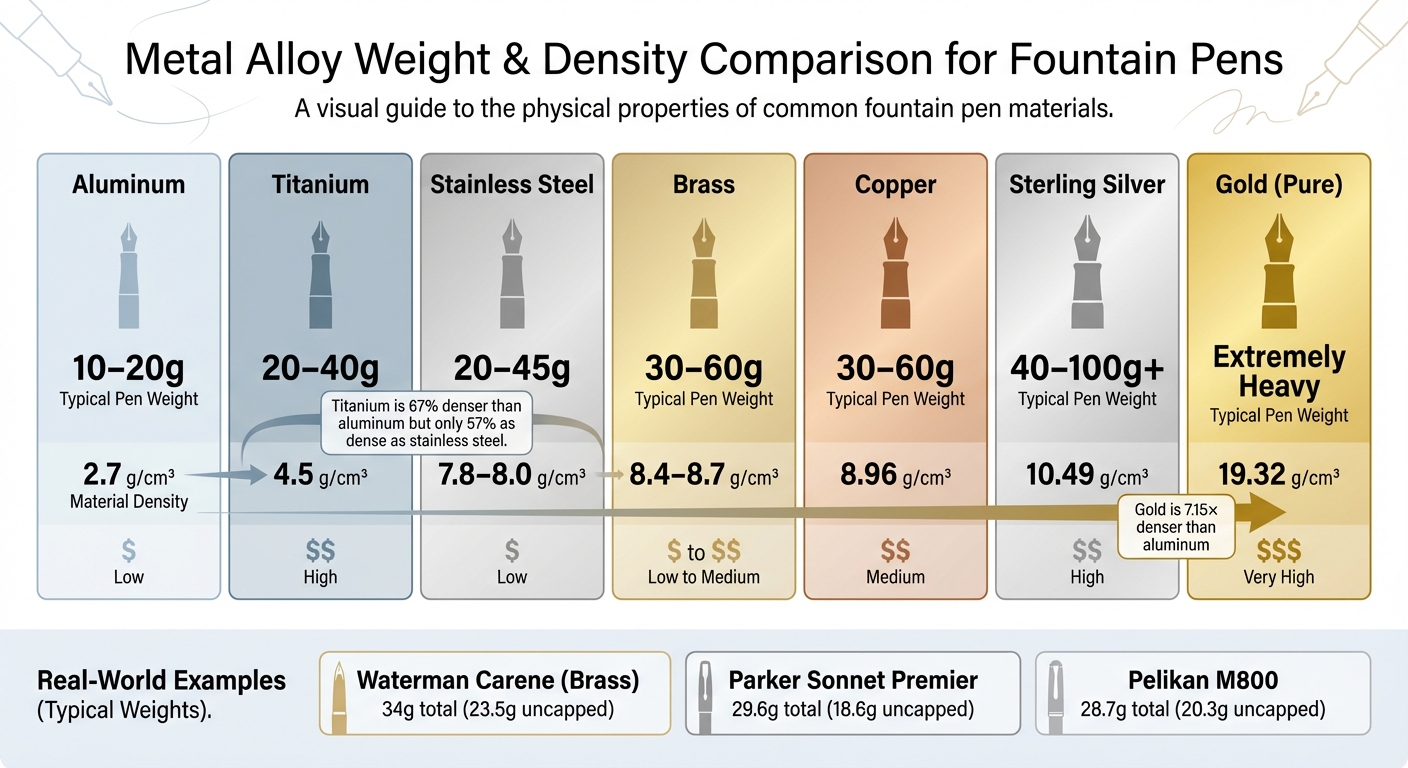
Fountain Pen Metal Alloys Weight and Density Comparison Chart
When choosing a fountain pen, the metal used plays a huge role in determining its weight, feel, and overall experience. The table below highlights the key properties of common pen materials, helping you understand how these metals compare.
| Metal Alloy | Typical Pen Weight | Material Density (g/cm³) | Relative Cost |
|---|---|---|---|
| Aluminum | 10–20g | 2.7 | Low ($) |
| Titanium | 20–40g | 4.5 | High ($) |
| Stainless Steel | 20–45g | 7.8–8.0 | Low ($) |
| Brass | 30–60g | 8.4–8.7 | Low to Medium ($–$) |
| Copper | 30–60g | 8.96 | Medium ($) |
| Sterling Silver | 40–100g+ | 10.49 | High ($) |
| Gold (Pure) | Extremely Heavy | 19.32 | Very High ($$) |
The density values above reveal why certain materials, like gold, contribute so much weight even in small amounts. Density measures how heavy a material is for its volume. For example, gold is about 7.15 times denser than aluminum, which explains why even a small gold component can make a pen feel significantly heavier. On the other hand, titanium is 67% denser than aluminum but only about 57% as dense as stainless steel, making it a balanced option for those looking for something lightweight yet durable.
To put these numbers into perspective, here are some practical examples of pen weights:
- Waterman Carene (brass): 34g total (23.5g uncapped)
- Parker Sonnet Premier: 29.6g total (18.6g uncapped)
- Pelikan M800: 28.7g total (20.3g uncapped)
Cost is another factor to consider. The price of raw materials varies dramatically. For instance, a stainless steel component might cost around $0.04, while a titanium rod for a single pen can go for $40.00. Exotic metals like zirconium can range from $50.00 to $100.00, making materials like titanium and zirconium a premium choice for enthusiasts willing to invest in something special.
How Pen Weight Affects Writing Comfort
Let’s dive deeper into how the weight of a fountain pen can shape your writing experience.
The weight of a fountain pen plays a big role in how comfortable your hand feels during long writing sessions. Unlike ballpoint pens, which need downward pressure to roll the ball, fountain pens rely on their own weight to glide smoothly across the page. If a pen is too light, you might find yourself pressing harder than necessary, leading to strain. On the other hand, a pen that's too heavy can make lifting it between strokes tiring, ultimately causing fatigue.
"The weight of the pen should be enough to make the line, and all we are doing is gliding it across the surface of the paper... More weight than is needed to make the smooth line is more weight that we will have to lift to break the line between our written words. And that can cause a long term fatigue." - Russ Fairfield, Penturner
This highlights why balanced weight distribution is key when it comes to pen design.
Balance beats overall weight every time. For instance, a 50-gram pen with a 25-gram cap may feel awkward if the heavy cap is posted on the back, making the pen top-heavy. This imbalance forces your hand to grip tighter to maintain control, which can lead to hand cramps or even increase the risk of carpal tunnel syndrome during extended use.
Ideally, the pen’s center of gravity should align near the junction of the barrel and the section - right where your fingers naturally rest. If the weight shifts too far forward, your hand has to work harder to compensate, leading to fatigue. If it shifts too far back, the nib might lift off the page, disrupting your writing flow. Many high-quality custom pens are designed to weigh between 15 and 25 grams, striking a balance that reduces both pocket strain and hand fatigue.
The materials used in the pen also make a difference. Brass, copper, and stainless steel add a reassuring heft but can feel overwhelming in larger pens. Meanwhile, lighter materials like aluminum and titanium offer durability without the extra weight, making them ideal choices for long writing sessions.
sbb-itb-1dd4fe9
Writing Comfort by Alloy Type
When it comes to how a pen feels in your hand, the type of metal used plays a huge role. Different alloys can influence everything from hand fatigue to writing precision, making it worth considering the material of your pen.
Light Alloys for Extended Writing
If you're someone who spends hours jotting down notes or drafting essays, pens made from lightweight alloys like aluminum and titanium are your best bet. Aluminum is one of the lightest metals out there, while titanium offers a similar feather-light feel but with added durability. These materials are perfect for reducing hand strain during long writing sessions, whether you're a student tackling an essay, a professional drafting reports, or someone who loves journaling.
"Titanium fountain pens typically weigh less than their brass or steel counterparts, making them comfortable for prolonged writing sessions." – TopTenReviewed
In fact, studies show that 65% of people prefer lightweight pens for everyday use. A lighter pen keeps your hand relaxed, letting you write longer without discomfort.
Heavy Alloys for Writing Control
On the other hand, if precision is your priority, heavier alloys like brass, stainless steel, and copper might be more your style. These metals add heft to the pen, which helps stabilize your hand and ensures the nib stays firmly in place for clean, consistent strokes. Stainless steel nibs, in particular, are known for their firm and reliable feel.
"Certain types of pens (particularly metal pens made of copper, stainless steel, or brass) are better suited... for shorter notes and pocket carry, because their heft can make your hand quite tired after several pages." – The Gentleman Stationer
While heavier pens might not be ideal for marathon writing sessions, they excel when precision and control are key.
Gold Alloys for Flex and Balance
Gold nibs strike a balance between lightness and control, offering a unique flexibility that adjusts to your writing style over time. This malleability cushions the pressure of your hand, making gold nibs an excellent choice for both casual writing and more expressive tasks. Whether you're jotting quick notes or crafting detailed letters, gold alloys deliver a smooth and adaptable experience.
Each alloy brings something different to the table, so whether you're after lightweight comfort, steady control, or a balanced, flexible feel, the right pen can transform your writing experience.
Selecting Metal Alloy Pens from Fountain Pen Revolution
Now that you’ve got a handle on how metal alloys can influence your writing experience, let’s explore the options available at Fountain Pen Revolution (FPR). Whether you’re just dipping your toes into the world of fountain pens or hunting for a premium upgrade, there’s a pen here to match your preferences and budget.
Starter Sets with Steel Alloys
If you’re new to fountain pens, stainless steel alloy pens are an excellent place to begin. FPR offers starter sets starting at $35.00, which include everything you need: a pen, ink, and essential accessories.
Take the FPR Quickdraw, for example. Priced between $32.00 and $35.00, this steel alloy pen is perfect for beginners, offering dependable performance without breaking the bank. Steel nibs are a great choice for newcomers because they’re durable, easy to maintain, and provide consistent line widths - similar to the feel of a ballpoint pen. As Gary Lehrer from GoPens.com explains:
"I believe that all lower cost beginner or entry-level fountain pens are made with alloy nibs. These nibs are the right place to start your fountain pen experience."
- Gary Lehrer, GoPens.com
FPR’s steel nibs stand out, thanks to their variety. Beyond the standard sizes (Extra Fine to Broad), you can experiment with specialty grinds like Ultra Flex, Architect, and Stub nibs - features usually found on much pricier gold nib pens. Individual steel nibs are affordable, ranging from $5.00 for standard options to $22.00 for Ultra Flex nibs. For those eager to try multiple styles, FPR offers sampler packs: a 5-nib set for about $28.00 or an 8-nib set for $56.00.
If you’re ready to elevate your writing experience, FPR’s premium alloy pens are worth considering.
Premium Pens with Brass or Gold Nibs
For a more refined experience, FPR’s premium pens start at $44.00 and offer an immediate upgrade in both feel and performance. The FPR Himalaya V2 (starting at $44.00) and FPR Ambassador (starting at $49.00) feature brass bodies that add noticeable weight to your pen. This added heft isn’t just for show - it provides better control and stability, which many seasoned writers appreciate.
Brass pens, being about twice as heavy as aluminum ones, help keep the nib steady on the page, resulting in precise, controlled strokes. Over time, some brass pens develop a patina, giving them a vintage, personalized look.
For those seeking even more premium options, the FPR Rialto (starting at $54.00) and FPR Statesman (starting at $69.00) showcase exceptional craftsmanship and performance.
And if you’re looking for the ultimate writing experience, the Gold Nib Collection is where you’ll find it.
Gold Nib Collection
FPR’s Gold Nib Collection features 14k gold nibs, offering a writing experience that’s truly in a league of its own. Gold nibs are celebrated for their flexibility and their ability to adapt to your unique writing pressure over time. They provide a softer, more responsive feel compared to steel nibs, which many describe as "expressive" and ideal for adding character to your writing.
"Gold nibs represent the pinnacle of luxury in the fountain pen world, offering a unique and distinctive writing experience."
While gold nibs come with a higher price tag, they’re especially cherished by calligraphers and anyone who enjoys line variation in their writing.
FPR remains a trusted name, boasting a 4.8 out of 5 rating on Trustpilot from 500 reviews. Customers often highlight how FPR pens exceed expectations in both quality and performance.
Conclusion
Understanding the weight of a pen’s metal is essential for finding the right balance in your writing experience. If you’re gearing up for long writing sessions, lighter metals like aluminum or titanium can help reduce hand fatigue. On the other hand, if you prefer a pen with a solid, grounded feel for better control, materials like brass or stainless steel can provide the stability you need for precise strokes.
Beyond weight, the nib material plays a crucial role in shaping your overall comfort. Gold nibs offer a more flexible writing experience, adapting to your hand's movements, while steel nibs deliver reliable, consistent performance. As Gary Lehrer from GoPens.com explains:
"The gold nib is not inherently better than a steel alloy nib. It all depends on your preference and your vision of how your pen should write".
This guide has highlighted how different materials impact performance, but the ultimate choice comes down to what feels right for you. Fountain Pen Revolution offers a range of options to suit various preferences and budgets. Whether you’re starting out with an affordable steel nib pen like the FPR Quickdraw for $32.00 or indulging in the Gold Nib Collection with 14k gold nibs, there’s something for everyone.
Take the time to consider your writing habits, the level of control you prefer, and the comfort that suits you best. Then, explore Fountain Pen Revolution’s collection to find a pen that fits your style and budget perfectly.
FAQs
What makes titanium pens better than those made from aluminum or brass?
Titanium pens stand out for their strength, lightness, and resistance to corrosion, making them a better option compared to aluminum or brass. Titanium’s impressive strength-to-weight ratio ensures a pen that’s both sturdy and comfortable, perfect for long writing sessions. Unlike aluminum, it doesn’t easily bend or warp, and it outlasts brass in terms of durability.
What’s more, titanium naturally resists rust and corrosion, even in tough conditions like humid climates or near the ocean. Plus, titanium can be anodized, opening up possibilities for unique colors and finishes, so you can add a stylish, personal flair to your pen. If you’re after a pen that blends durability, comfort, and style, titanium is hard to beat.
How does a pen's weight impact comfort during long writing sessions?
The weight of a pen can significantly impact how comfortable it feels during extended writing. Lighter pens are often a go-to choice for those who write for long periods, as they help minimize hand fatigue and strain. In contrast, heavier pens tend to feel sturdier and more luxurious, but they might become uncomfortable over time, especially for individuals with smaller hands or reduced grip strength.
A pen's weight is largely determined by the materials used in its construction. Pens made from plastic or resin are generally lighter, making them ideal for lengthy writing sessions. On the other hand, metal pens provide a more durable and solid feel but come with added weight. Some designs incorporate internal weights, such as brass, to enhance the sense of quality, though this also increases the overall heft. Striking the right balance between weight and comfort ultimately comes down to your personal preferences and how you intend to use the pen.
What are the benefits of choosing a gold nib over a steel nib?
A gold nib brings distinct benefits that many fountain pen enthusiasts appreciate. Known for being softer and more flexible, gold nibs often provide a smoother, more fluid writing experience. Over time, they can subtly adjust to your writing style, offering a more tailored and personal feel.
Although gold nibs are often linked to luxury and artistic expression, they do come with a higher price tag compared to steel nibs. Still, for those who value a refined and elevated writing experience, the cost may feel justified.