

Fountain pen issues like skipping, clogging, and leaking can disrupt your writing experience. Most of these problems are caused by dried ink, misalignment, or improper ink usage. Here’s what you need to know:
- Clogged Feeds: Often caused by dried ink, paper fibers, or sediment. Clean your pen regularly to prevent buildup.
- Skipping and Hard Starts: Misaligned nibs, low-quality paper, or low ink levels can lead to inconsistent writing. Adjust the nib and use fountain-pen-friendly paper.
- Inconsistent or Dry Flow: Obstructed air channels or dry ink in low-humidity environments are common culprits. Check the ink and clean the feed.
- Excessive Flow and Leaking: Loose cartridges, heat, or damaged seals can cause ink overflow. Secure parts properly and avoid exposing pens to high temperatures.
- Railroading: Thick or low-flow inks and tight nib tines can cause split lines. Switch to wetter inks or adjust the nib.
Quick Tip: Regular cleaning, proper ink selection, and correct storage can prevent most issues. For persistent problems, consult a professional or your pen’s manufacturer.
Adjusting Your Fountain Pen - Part 1: Ink Flow
sbb-itb-1dd4fe9
Common Ink Flow Problems and Their Causes
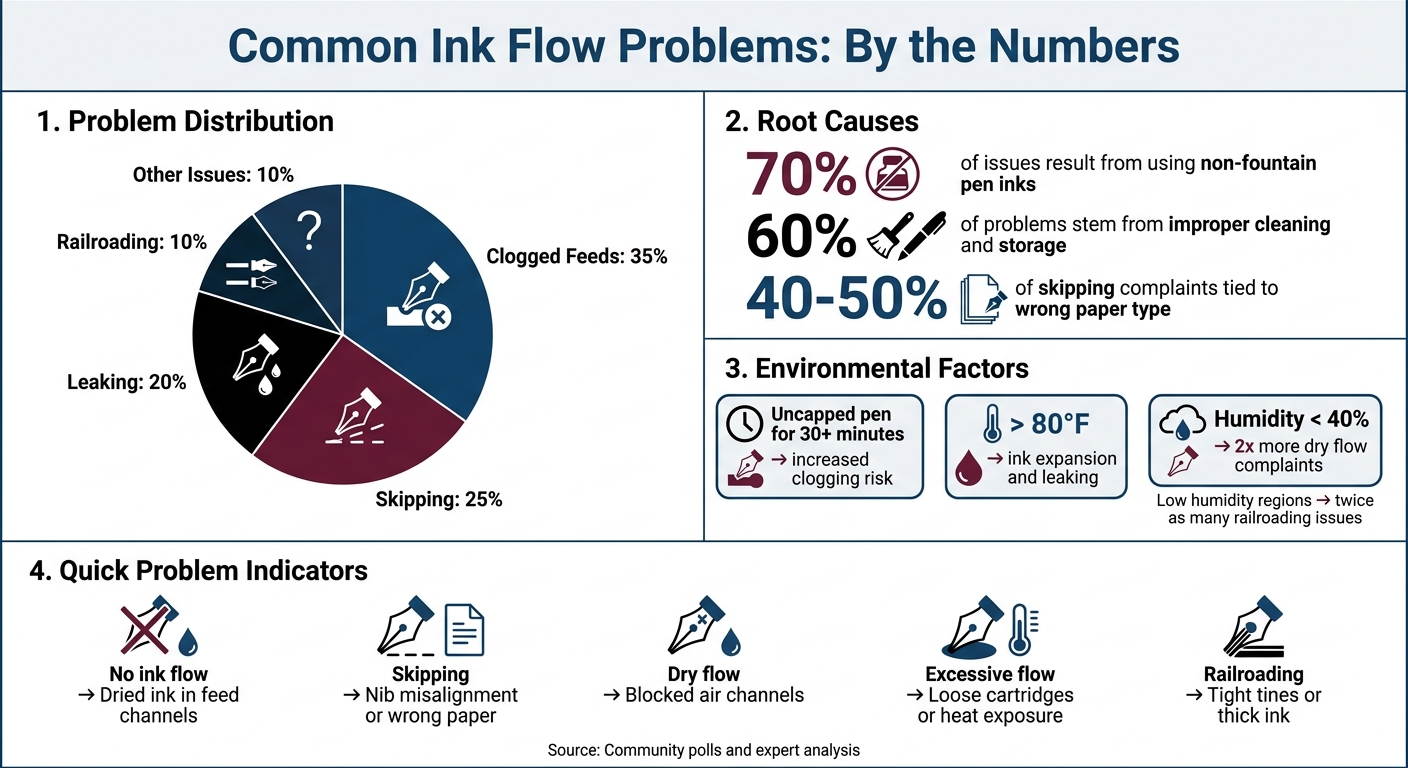
Fountain Pen Ink Flow Problems: Causes and Statistics
Understanding the reasons behind ink flow issues can save time and frustration. According to community polls, clogged feeds cause 35% of all ink flow problems, followed by skipping at 25% and leaking at 20%. Experts point out that 70% of these issues result from using inks not designed for fountain pens - a small oversight with big consequences. Here's a closer look at these common problems and what causes them.
No Ink Flow or Clogged Feed
If no ink reaches the nib, the likely culprit is dried ink clogging the feed channels. These narrow capillary pathways can harden when ink evaporates, completely stopping the flow. Specialists warn that leaving a pen uncapped for more than 30 minutes or using it infrequently can worsen this, especially with pigmented inks that contain particles. Even brand-new pens aren't immune - factory residue left during assembly can block channels. Over time, paper fibers and ink sediment also build up, creating stubborn clogs.
Skipping and Hard Starts
Skipping occurs when the pen writes inconsistently, leaving gaps or struggling to start after a pause. This often happens due to nib misalignment, which disrupts the delicate balance between the tines and the feed, causing intermittent ink starvation. Dropping a pen or breaking in a new nib can lead to these issues, though they often improve after writing 10–20 pages. Paper quality plays a major role too. Surveys show that 40–50% of skipping complaints are tied to using standard printer paper instead of fountain-pen-friendly options like Rhodia or Tomoe River. Additionally, low ink levels in the cartridge or converter can exacerbate the problem.
Inconsistent or Dry Ink Flow
Faint or uneven lines indicate that ink isn't reaching the nib steadily. This is often due to blocked air channels caused by ink residue or debris, which disrupts the pressure balance needed for proper flow. To check, hold the pen nib-up - if the ink doesn't settle evenly, the channels may be obstructed. Dry inks with high evaporation rates can make things worse, especially in low-humidity environments like the U.S. Southwest, where enthusiasts report twice as many dry flow complaints. Misaligned feeds can also contribute when the nib and feed aren't properly connected.
Excessive Ink Flow and Leaking
Too much ink flow results in overly wet writing, feathering on paper, and ink pooling around the feed. Loose cartridges or converters are often to blame, as they fail to seal properly and flood the feed. Similarly, damaged o-rings or barrel seals can create leaks. Heat is another factor - leaving a pen in a car above 80°F can cause the ink to expand, forcing it through normal channels and leading to leaks. This is a common issue with entry-level pens, where silicone grease on seals may degrade over time.
Railroading
Railroading happens when your strokes show a split line, where ink fails to bridge the gap between the nib tines. This occurs when the tines are too tight or when ink flow can't keep up with the nib's demands. Thick, low-flow inks like iron gall or shimmer varieties often struggle to spread across the nib tip. User tests reveal that dry climates with humidity below 40% make railroading worse, though switching to wetter dye-based inks usually solves the problem. Railroading is less common - affecting only about 10% of reported issues - and tends to occur among experienced users experimenting with specialty inks.
How to Fix Ink Flow Problems
If your fountain pen isn't writing smoothly, don't worry - most ink flow issues can be resolved with some targeted troubleshooting. The key is identifying the problem and addressing it with proper care and adjustments.
Cleaning and Maintaining the Feed
Start by taking apart your pen, removing the nib and feed. Soak these parts in warm water mixed with a few drops of dish soap for 15–30 minutes to loosen any light clogs. For tougher blockages, especially from pigmented inks, a pen flush is your best bet. Use a bulb syringe to push the cleaning solution through the feed channels until the water runs clear. Once cleaned, rinse thoroughly with distilled water to remove soap residue and let the components dry completely before putting the pen back together.
If cleaning doesn’t solve the issue, the problem might lie in the alignment of the nib and feed.
Adjusting Nib and Feed Alignment
Proper alignment between the nib and feed is crucial for smooth ink flow. Check if the feed is snug against the nib and if the tines are centered over the feed channels. Uneven ink flow or darker writing on one side are signs of misalignment. Carefully remove the nib and feed assembly (consult your pen’s manual for guidance), then reposition the feed so it sits evenly beneath the nib tines. If you’re unsure about making these adjustments or the issue persists, consider consulting a professional for assistance.
Choosing the Right Ink
The ink you use matters more than you might think. Stick to fountain pen–specific inks, which are designed to maintain the correct viscosity and flow. For example, Fountain Pen Revolution inks have received glowing reviews, with a 4.8/5 rating based on over 500 customer reviews. One expert from Pen Chalet even called them the "best budget wet ink for beginners". Avoid using India ink, calligraphy inks, or any non-fountain pen ink, as these can cause clogs or damage due to their thicker consistency or particle content.
Checking and Securing Cartridges or Converters
Improperly seated cartridges or converters can disrupt ink flow. Insert these components vertically until you hear or feel a click, ensuring a proper seal. For converters, fill them by submerging the nib in ink and twisting the piston, following the manufacturer’s instructions. Make sure there’s no gap between the cartridge or converter and the pen section, as this can lead to leaks or poor flow. Regularly inspect these connection points for signs of wear or cracks, and replace them if needed.
Preventing Future Ink Flow Issues
Keeping your fountain pen in top-notch condition doesn't have to be complicated. A few simple habits can ensure smooth writing for years to come.
Regular Cleaning Schedule
Clean your fountain pen every 2–4 weeks. This routine helps prevent ink buildup in the feed channels, which is a common cause of restricted ink flow. In fact, improper cleaning and storage account for nearly 60% of fountain pen performance issues. By sticking to a cleaning schedule, you’ll avoid many of the problems that can disrupt your writing experience. Pair this with proper storage, and your pen will stay in great shape.
Proper Storage Practices
How you store your pen can make a big difference in its performance. Storing your pen horizontally keeps the nib and feed evenly saturated, preventing ink from pooling or drying out. As Mesmos highlights, horizontal storage promotes consistent ink flow. On the other hand, storing your pen nib-up can cause hard starts, as gravity pulls ink away from the feed. Nib-down storage, meanwhile, risks leaks, especially when air pressure changes force ink into the cap.
For long-term storage (anything over a month), clean your pen completely and store it dry. Use a drawer, a cloth-lined box, or a dedicated pen case with soft-lined slots to avoid scratches and protect the pen from light exposure. These precautions will ensure your pen stays ready to perform whenever you need it.
Avoiding Extreme Conditions
Heat and sunlight can wreak havoc on your fountain pen. High temperatures speed up ink evaporation, leaving behind residue that clogs the feed. Heat can also cause materials to expand, potentially leading to stress fractures in the barrel or cap. UV radiation is especially harmful to vintage pens, as it can oxidize ebonite, turning its deep black finish into a dull brownish-green.
To avoid these issues, store your pens in a cool, dark place - away from windows, radiators, and other heat sources. A stable environment helps maintain ink flow and protects your pen’s materials, ensuring it remains a dependable writing tool for years to come.
When to Seek Professional Help
Routine maintenance can solve many fountain pen issues, but some problems call for expert attention. If cleaning, flushing, and ensuring ink compatibility don’t fix the problem, it might be time to consult a professional. Issues like persistent skipping, hard starts, or inconsistent ink flow often indicate deeper mechanical problems that require specialized repair tools and knowledge.
Physical damage is another clear sign you need professional assistance. Over-tightening components or applying stress to the pen body can lead to broken seals, misaligned feeds, or damaged nibs. These repairs demand precision and expertise. Before seeking help, it’s worth testing the pen with a known wet ink to rule out simpler causes.
For high-end pens, professional care is especially important to maintain their performance and value over time.
If common troubleshooting steps don’t work, reaching out to the manufacturer’s customer service is a smart move. As Pilot Pen Australia suggests:
If none of these solutions resolve your issues, please contact us for further assistance. Our Customer Service team will be happy to organise an assessment of your PILOT fountain pen.
Many manufacturers provide repair services or can refer you to a qualified nibmeister - someone who specializes in fountain pen restoration and adjustments.
Waiting too long to address an issue could turn a minor fix into a major, expensive repair. Seeking professional help promptly ensures your pen remains in top condition and complements the proactive care steps discussed earlier.
Conclusion
Ink flow problems - like clogged feeds, skipping, railroading, or leaking - can frustrate anyone, whether you're new to fountain pens or a seasoned user. Thankfully, most of these issues can be resolved with simple fixes: clean your pen regularly, align the nib and feed correctly, use inks that work well with your pen, and double-check that all parts are securely connected.
Preventing these problems is just as important as solving them. A few good habits go a long way: clean your pens often to avoid clogs, store them horizontally in a protective case, and keep them away from heat or extreme temperature changes. These small steps not only reduce the chance of issues but also help your pen last longer.
If these measures don’t solve the problem, it’s okay to call in an expert. Some situations require tools and skills that only a professional nibmeister can offer.
Taking care of your fountain pen with the right fountain pen maintenance supplies ensures smooth, consistent performance. For affordable pens and accessories designed to reduce ink flow headaches, check out Fountain Pen Revolution.
FAQs
How can I tell if my pen needs a deep clean or just a quick rinse?
If your pen skips, hesitates, or leaves uneven marks, it’s probably time for a deep clean. Dried ink or debris might be clogging the nib or feed. For smaller issues, start with a quick rinse using lukewarm water. If that doesn’t solve the problem, disassemble the pen and carefully clean the nib and feed to get the ink flowing smoothly again.
What’s the safest way to adjust nib tines without damaging them?
To adjust nib tines safely, apply light pressure and use appropriate tools, such as the edge of a credit card or brass shims, to align them. Before making any changes, examine the nib closely with a magnifier (10× to 20×) to ensure precision. Start by practicing on lower-cost pens to gain confidence, and never pull or twist the tines aggressively. If you're uncertain about the process, it's best to seek help from a professional nibmeister to avoid causing irreversible damage.
Which ink types are most likely to cause clogs or railroading?
Dry inks and heavily pigmented or shimmer-filled inks are often responsible for clogging or causing railroading in fountain pens. These types of inks can interfere with the pen's ability to maintain a steady flow, particularly in finer nibs or pens with more delicate feeds. To avoid these problems, it's essential to clean your pen regularly and choose inks that work well with your specific pen model.