

When choosing between fountain pens and ballpoint pens for letterform practice, the decision depends on your goals and experience level. Here’s a quick summary:
- Fountain pens are ideal for advanced practice. They require less pressure, glide smoothly, and allow for expressive line variations. However, they need regular maintenance and work best on high-quality paper.
- Ballpoint pens are better for beginners. They’re easy to use, require no maintenance, and work on almost any paper. But they need more pressure, which can cause hand fatigue during extended use.
Quick Comparison
| Attribute | Fountain Pen | Ballpoint Pen |
|---|---|---|
| Writing Mechanism | Capillary action (liquid ink) | Rotating ball (oil-based ink) |
| Pressure Required | Minimal | Firm |
| Line Variation | High (customizable nibs) | Low (uniform lines) |
| Hand Fatigue | Low | High |
| Maintenance | Regular cleaning/refilling | Minimal |
| Paper Suitability | Best on smooth, quality paper | Works on most surfaces |
| Initial Cost | Higher | Lower |
Fountain pens excel in precision and artistry, while ballpoints are practical for building basic skills. Choose based on your practice needs and preferences.
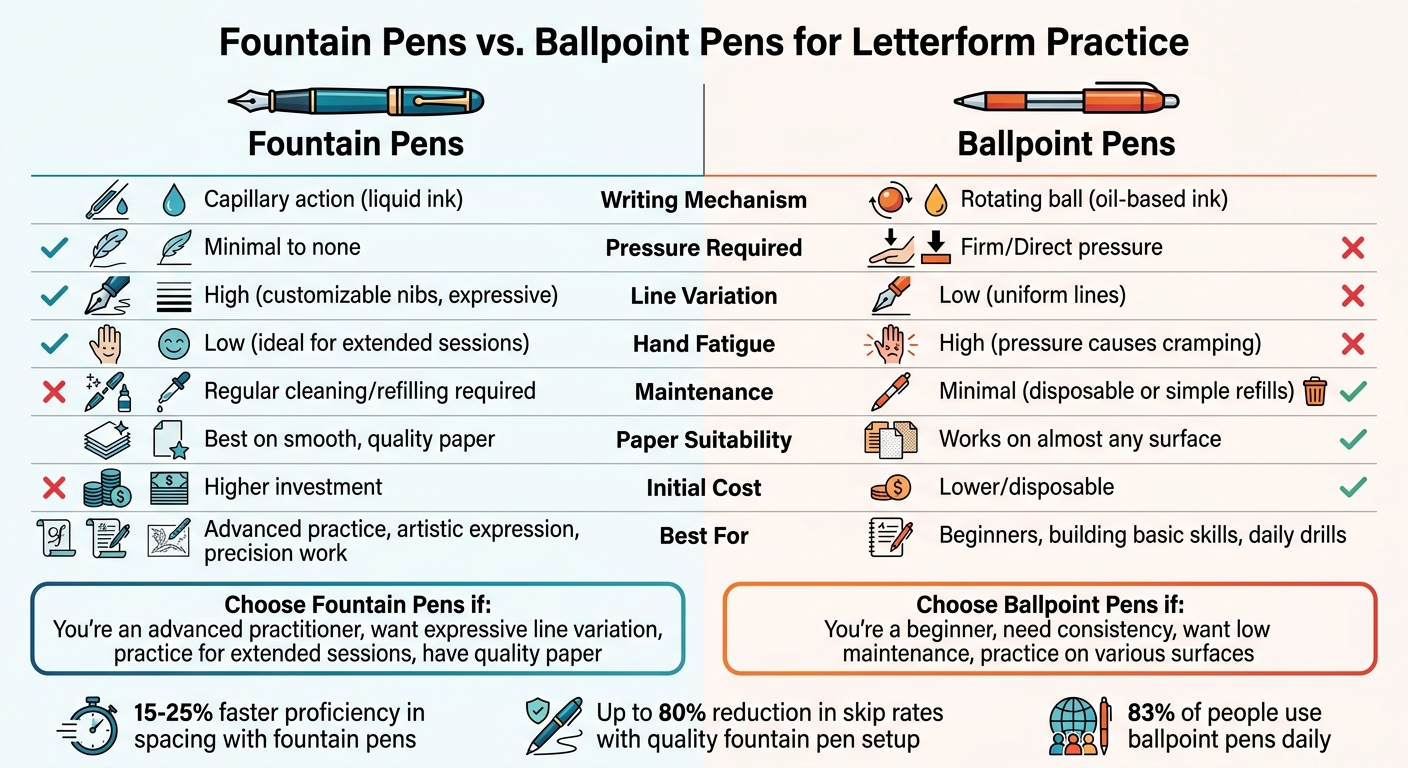
Fountain Pens vs Ballpoint Pens: Complete Comparison for Letterform Practice
5 Handwriting Styles for your Fountain Pen Tutorial
sbb-itb-1dd4fe9
Fountain Pens for Letterform Practice
When it comes to practicing letterforms, fountain pens bring a distinct set of advantages that make them a favorite among enthusiasts.
Line Variation and Pressure Sensitivity
One of the standout features of fountain pens is their ability to create natural line variation. The nib's tines spread under pressure, resulting in thicker downstrokes and thinner upstrokes. This quality mirrors the behavior of traditional calligraphy tools, giving you better control over your strokes. If you're looking for a pen with a highly responsive nib, consider flex nib options like the Pilot Falcon or budget-friendly choices from Fountain Pen Revolution, which start around $28.
For those who prefer a more forgiving experience, semi-flex nibs strike a nice balance. They allow enough sensitivity to practice pressure control without overwhelming the ink flow. For instance, when forming a lowercase "o", the nib responds to pressure by creating a thinner inner stroke and a thicker outer oval. Similarly, applying extra pressure on the descender loop of a "g" results in a more defined and controlled curve. These subtle variations not only improve the look of your strokes but also help you fine-tune letter spacing.
Spacing and Stroke Precision
Fountain pens excel in delivering smooth, consistent ink flow, which is key for precise spacing and clean strokes. The fixed contact point of the nib provides stability, helping you maintain even spacing across your practice.
To maximize your results, use high-quality, fountain-pen-friendly paper like Rhodia or Tomoe River (80–100gsm). These papers minimize ink bleed and enhance stroke clarity, making it easier to achieve tight and consistent spacing. Calligraphy expert Michael Sull has highlighted the "expressive bounce" of fountain pens, which helps build muscle memory. In fact, many practitioners report reaching proficiency in spacing 15–25% faster when using wet-ink tools, thanks to the immediate feedback they provide.
Precise spacing and stroke control go hand in hand with proper pen care.
Maintenance Requirements
Regular maintenance is essential to keep your fountain pen performing at its best. Flush the pen with water every one to two weeks to prevent ink buildup, which can lead to railroading - when the tines spread, but ink doesn’t flow properly. Stick to bottled inks like Waterman or Iroshizuku, as India ink contains binders that can clog the feed.
Store your pen nib-up and wipe it daily with a microfiber cloth to maintain its performance. Monthly nib polishing can also help preserve sensitivity, reducing disruptions in up to 50% of your strokes. Pairing high-quality, non-feathering inks with coated paper like HP Premium Choice (24lb) can cut skip rates by up to 80%, allowing for longer, uninterrupted practice sessions.
Ballpoint Pens for Letterform Practice
Ballpoint pens are a dependable choice for beginners honing their handwriting skills. While they don’t offer the dynamic line variation of fountain pens, their consistent performance and ease of use make them a practical starting point for improving letterforms.
Consistency and Ease of Use
Ballpoint pens use thick, oil-based ink delivered through a small rolling ball, ensuring uniform lines with every stroke. This consistency is key for building muscle memory during repetitive practice sessions.
The ink dries quickly, reducing smudging and keeping lines crisp. This feature is particularly beneficial for left-handed writers, who often face challenges with smearing as their hand moves across the page.
"Ballpoint pens make [neat writing] easier thanks to their controlled ink flow and quick drying time, which allow for smooth, uninterrupted movement." - Bastion Bolt Action Pens
Unlike fountain pens, which glide effortlessly, such as the FPR Indus Fountain Pen, ballpoints require more pressure to roll the ball and release ink. This tactile feedback helps you feel the paper's texture, reinforcing steady, controlled movements essential for neat handwriting.
For optimal results, use a medium tip (0.7–1.0mm), hold the pen lightly, and angle the paper slightly to allow natural wrist movement. Practicing loops, circles, and alphabet runs for just five minutes a day can lead to noticeable improvements in neatness.
This consistency, combined with minimal upkeep, makes ballpoints a practical tool for daily practice.
Low Maintenance and Versatility
One of the biggest advantages of ballpoint pens is their low maintenance. They can remain unused for months without drying out, unlike fountain pens. This makes it easy to pick up where you left off without any prep, helping you stick to a regular practice schedule.
Ballpoints also work well on a variety of surfaces, from standard copy paper to glossy materials and multi-part forms. For beginners who may not want to invest in specialized paper, this versatility removes a common barrier to starting.
Their widespread availability and affordability make ballpoint pens accessible to nearly everyone. With about 83% of people using ballpoint pens daily, they’re the most common writing tool for everyday tasks. Whether you choose an inexpensive multi-pack or a high-quality refillable metal pen for better balance and durability, ballpoints provide a low-risk, reliable way to begin your handwriting journey.
Although fountain pens offer artistic flair, ballpoint pens deliver the consistency and simplicity needed to build a strong foundation in handwriting.
Fountain Pens vs. Ballpoints: Direct Comparison
The following table and analysis break down the core differences between fountain pens and ballpoints, helping you choose the right tool for your writing practice.
Comparison Table: Key Attributes
When selecting between fountain pens and ballpoints for letterform practice, understanding their unique features can align your choice with your goals and skill level.
| Attribute | Fountain Pen | Ballpoint Pen |
|---|---|---|
| Writing Mechanism | Capillary action (liquid ink) | Rotating ball (oil-based paste) |
| Pressure Required | Minimal to none | Firm/Direct pressure |
| Line Variation | High; expressive and customizable via nibs | Low; consistent and uniform lines |
| Hand Fatigue | Low; ideal for extended practice sessions | High; pressure can cause cramping over time |
| Ink Type | Water-based liquid; thousands of colors | Oil-based paste; limited color options |
| Maintenance | High; requires regular cleaning and refilling | Virtually zero; disposable or simple refills |
| Paper Suitability | Best on high-quality, smooth paper | Versatile; works on almost any surface |
| Initial Cost | Generally higher investment | Generally low/disposable |
These distinctions play a crucial role in how each pen performs during practice, as detailed below.
Practice Outcomes Analysis
The differences outlined above translate directly into practice experiences. Fountain pens are ideal for refining advanced letterforms, while ballpoints are better suited for beginners. With their smooth glide and minimal pressure requirements, fountain pens reduce hand strain, allowing for longer and more focused practice sessions.
Fountain pens also stand out for their ability to create expressive line variations, thanks to their range of nib options - fine, medium, broad, or even flexible nibs for calligraphic styles. In contrast, ballpoints produce uniform lines, which are helpful for building basic muscle memory but lack the artistic flexibility of fountain pens.
One drawback of ballpoints is the firm pressure they require, which can lead to hand fatigue during extended use. This makes them more suitable for short, daily drills rather than prolonged practice sessions.
"A ballpoint gets the job done. A fountain pen makes you want to find more jobs to do. One is a tool of necessity; the other is an instrument of joy." - Mesmos
For those interested in trying fountain pens without diving into the complexities of bottled ink, Fountain Pen Revolution (https://fprevolutionusa.com) offers accessible options. Their cartridge systems simplify the process while retaining the ergonomic benefits and expressive potential that make fountain pens so enjoyable.
Choosing the Right Tool for Your Goals
When deciding between a fountain pen and a ballpoint, it’s important to consider where you are in your handwriting journey and what you hope to achieve. Each tool has its strengths, and the right choice depends on your skill level and practice objectives.
Ballpoints for Beginners
If you’re just starting out, a ballpoint pen is a solid choice. These pens are easy to use and don’t require you to worry about ink flow, cleaning, or special paper. Plus, they work on almost any surface. Their firm control helps beginners develop consistency in their strokes.
That said, ballpoints do have a drawback: they need firm downward pressure to rotate the internal ball, which can lead to hand fatigue during long practice sessions. This makes them best suited for short, daily drills aimed at building muscle memory for basic strokes. As Ferris Wheel Press puts it:
If what you need is a pen that's always ready, with zero fuss, then a ballpoint is the way to go.
Once you’ve built a solid foundation with a ballpoint, you can step up to a fountain pen to refine your technique further.
Fountain Pens for Advanced Practice
Fountain pens are a great next step for those ready to take their handwriting to a more advanced level. They require less pressure and glide smoothly across the page, reducing hand strain during longer sessions. This slower, more deliberate writing style encourages precision and attention to detail.
One of the biggest perks of fountain pens is their ability to create expressive line variations, thanks to different nib sizes. If you’re transitioning from a ballpoint, it’s important to adjust to a lighter touch, as fountain pens reward finesse over force. Beginners might find cartridge-based fountain pens a good starting point (see our fountain pen buying checklist for more details) since they’re cleaner and easier to manage than bottled ink systems.
For those ready to explore fountain pens without breaking the bank, Fountain Pen Revolution (https://fprevolutionusa.com) offers starter sets starting at $35. These sets include everything you need - pen, ink, and accessories - making it an affordable way to dive into this rewarding practice.
Conclusion
Deciding between a fountain pen and a ballpoint pen depends largely on your skill level and what you aim to achieve with your letterform practice. Ballpoint pens are perfect for beginners, offering firm and consistent control suited for everyday writing and building foundational skills. On the other hand, more experienced users often appreciate the refined performance of fountain pens.
Fountain pens stand out for their ability to create expressive line variations while minimizing hand fatigue during extended writing sessions. As Mesmos aptly put:
A ballpoint gets the job done. A fountain pen makes you want to find more jobs to do. One is a tool of necessity; the other is an instrument of joy.
For those focusing on advanced letterform work, the smooth glide and light pressure of a fountain pen allow for greater precision, freeing you to concentrate on your craft rather than the mechanics of the tool.
If you're curious about fountain pens but hesitant to spend too much, there are affordable ways to get started. Consider exploring options like Fountain Pen Revolution (https://fprevolutionusa.com), where starter sets begin at just $35. This makes it easy to experience the benefits of fountain pens without breaking the bank, helping you improve your everyday handwriting with ease.
FAQs
What nib should I start with for letterform practice?
A Medium nib is an excellent choice for practicing letterforms. It strikes a balance between smooth ink flow and control, allowing beginners to focus on creating even spacing and clear, clean strokes. Because it’s neither too broad nor too fine, a medium nib offers versatility - making it a great tool for refining your technique before trying out other nib sizes.
How can I prevent ink bleed or feathering with a fountain pen?
To avoid issues like ink bleed or feathering, choose high-quality paper designed for fountain pens, such as Rhodia or Clairefontaine. These papers are less absorbent, making them ideal for crisp writing. Pair this with drier inks to prevent oversaturation. Regularly cleaning your nib and feed also ensures consistent ink flow. For even sharper, cleaner lines, consider using a finer nib and maintaining proper care for your pen.
How do I switch from ballpoint pressure to a fountain pen touch?
To shift from the firm pressure of a ballpoint pen to the gentle touch of a fountain pen, focus on using light, steady pressure. Hold the pen with a relaxed tripod grip, angling it between 40° and 55°. Avoid pressing down hard - let the pen’s natural weight guide your writing. Keep your wrist loose and use your entire arm for fluid movements. Practice basic shapes like vertical lines and ovals to improve control and master the smooth, effortless flow of fountain pen writing.