

Yes, ergonomic pen grips can reduce hand fatigue. They are designed to make writing more comfortable by lowering the effort needed to hold a pen, promoting a natural hand position, and evenly distributing pressure across your fingers. This is especially helpful for fountain pen users, whose writing style demands precision and a light touch.
Here’s why ergonomic grips work:
- Wider diameter: Reduces the pinch force required to hold the pen.
- Soft materials: Silicone or foam provides cushioning and prevents slipping.
- Contoured shapes: Guides fingers into a relaxed, neutral position.
- Reduced muscle strain: Encourages the use of larger muscle groups rather than overworking small hand muscles.
Compared to standard pen sections, ergonomic grips offer better comfort and control, especially during long writing sessions. They are particularly useful for those who experience cramping, stiffness, or discomfort while writing.
If you often write for extended periods, switching to an ergonomic grip can help you write more comfortably and with less strain. Pairing these grips with fountain pens, which require minimal pressure, can further enhance the writing experience.
Don't Wreck Your Hands! Comfortable Grips & Accessibility Aids for Pencils & Brushes
What Makes a Pen Grip Ergonomic
Ergonomic grips are designed to ease hand strain by optimizing how the pen fits your hand. They reduce the effort needed to hold the pen while improving control and comfort.
"Ergonomic hand tool design involves optimizing the handle to effectively carry out the intended function of the tool with the least load to muscles, tendons, skin, and joints." – DOAJ
What sets ergonomic grips apart is their thoughtful design. Instead of forcing your hand to adjust to the pen, these grips are shaped to follow the natural structure and movement of your hand. This attention to detail makes them distinctly different from standard pen designs.
Design Features of Ergonomic Grips
One standout feature of ergonomic grips is their wider diameter. While standard pens tend to measure about 8.3 mm in diameter, ergonomic pens range from 11.9 mm to 13.6 mm. This added width helps your fingers stay relaxed, reducing the pinch force needed to hold the pen.
Another key element is the use of soft, textured materials like silicon rubber or foam instead of hard plastics. These materials provide better friction, so your fingers don’t slip, allowing you to maintain a lighter grip. Studies show that silicon rubber sleeves (2–3 mm thick) can lower muscle activity and reduce discomfort during long writing sessions.
The contoured shapes of ergonomic grips also play a big role in comfort. Designers use anthropometric data to create grips that accommodate various hand sizes. For example, researchers at Shiraz University developed an ergonomic pen prototype in five sizes, earning an average comfort rating of 8.35 out of 10 from 28 test participants. These designs often include finger indentations or flared areas near the tip, which naturally guide your fingers into the best position.
Some grips even add textured surfaces or raised dots, further reducing the need for a tight hold.
How They Differ from Standard Pen Sections
Ergonomic grips take a completely different approach compared to standard pen designs.
Standard pen sections are typically slim, cylindrical, and uniform - optimized for production rather than comfort. Their rigid materials offer little grip, often requiring you to squeeze harder to keep the pen from slipping.
Ergonomic grips, however, are built with comfort in mind. Features like a flared base near the pen tip act as a natural stopping point for your fingers, while the wider barrel spreads pressure evenly across your hand. This design helps prevent stress from building up in specific areas, like your fingertips.
Material choice is another major difference. Hard plastic in standard pens transfers stress directly to your skin and joints. In contrast, soft silicon rubber compresses under pressure, acting as a cushion that reduces strain on muscles such as the flexor pollicis brevis.
| Feature | Standard Pen Section | Ergonomic Pen Grip |
|---|---|---|
| Diameter | Slim (~8.3 mm) | Wider (11.9 mm–13.6 mm) |
| Material | Hard plastic or metal | Soft silicon rubber or textured foam |
| Shape | Cylindrical and uniform | Contoured with finger indentations or flared areas |
| Grip Force | Higher pinch force needed | Reduced through increased diameter and friction |
| Hand Posture | Often leads to cramped positions | Supports a neutral wrist and relaxed finger posture |
For fountain pen users, ergonomic grips bring even more benefits. Since fountain pens require less downward pressure due to their smooth ink flow, an ergonomic grip not only spreads pressure evenly but also reduces the horizontal pinch force needed to stabilize the pen. At Fountain Pen Revolution, our fountain pens are designed with these ergonomic principles in mind, ensuring that even long writing sessions are comfortable and free from fatigue.
How Ergonomic Grips Reduce Hand Fatigue
Ergonomic grips address hand fatigue in three key ways: they lower the effort needed to hold a pen, encourage a natural hand position, and spread pressure evenly across your fingers. These features have helped many writers experience less strain during extended writing sessions.
Reducing Pinch Force and Pressure
One of the standout benefits of ergonomic grips is their ability to reduce the force required to hold a pen. A wider grip diameter plays a big role here. For example, a study comparing a flared silicone grip pen to a standard hard plastic pen found that the ergonomic option significantly decreased muscle activity and finger and forearm discomfort.
A thicker barrel provides more surface area for your fingers to rest on, while silicone rubber increases friction, reducing the effort needed to maintain a firm hold.
"When the pen is placed in between the proximal phalanges of the index and middle finger... there is stronger contact between pen and fingers so that there is less need for active holding of the pen." – Baur et al., Human Movement Science
In addition to lessening grip force, these designs also encourage a more natural hand position.
Supporting a Natural Hand Position
Ergonomic grips are often contoured to guide your hand into a neutral posture, which helps reduce strain on muscles, tendons, and joints. This positioning prevents overuse of the small muscles in your fingers and shifts more of the workload to your wrist and forearm, which are better equipped for sustained movement.
In one study, participants rated a 3D-printed ergonomic pen - designed using detailed human measurements - an impressive 8.35 out of 10 for comfort. This pen was also versatile enough to suit hand sizes ranging from the 5th to the 99th percentile.
"By getting upper limbs at neutral posture, writing is more comfortable lower chance of hand injuries." – Shiraz University of Medical Sciences
This ergonomic design also separates the tasks of holding and moving the pen. Your fingers stabilize the pen while larger muscle groups handle motion, which can help reduce fatigue during long writing sessions.
Best Uses for Fountain Pen Writers
For fountain pen enthusiasts, ergonomic grips offer even more benefits. Since fountain pens require very little downward pressure due to their smooth ink flow, pairing them with an ergonomic grip minimizes the need for excessive force. This combination reduces strain from both vertical and horizontal pressures.
Ergonomic grips are especially helpful for long-form writing, whether you're journaling, taking notes in a meeting, or drafting a manuscript. Writers who use fine nibs, which demand precision, also appreciate how wider, textured grips improve control without increasing grip pressure.
At Fountain Pen Revolution, our fountain pens are thoughtfully designed with these ergonomic principles, ensuring you can focus on your words - not hand fatigue.
sbb-itb-1dd4fe9
Choosing the Right Ergonomic Grip
Finding the right ergonomic grip for your fountain pen can make a world of difference in comfort and writing efficiency. Your choice should factor in hand size, writing habits, and any discomfort you may experience. Whether you prefer a pen with a built-in ergonomic section or a slip-on sleeve for your favorite model, there are plenty of options to explore.
Types of Ergonomic Grips
Triangular grips are a great starting point. These grips naturally guide your fingers into the tripod position, where the thumb, index, and middle fingers work together to support the pen. Pens like the Lamy Safari incorporate this design into their section, making them an excellent choice for beginners or anyone looking to refine their grip.
Cushioned or foam grips are ideal for reducing finger fatigue during long writing sessions. Similarly, silicone or rubber grips offer a non-slip surface, which is especially useful if you tend to grip tightly or have sweaty hands.
For those dealing with arthritis or joint pain, grips with larger diameters can reduce the force needed to hold the pen. The Pilot Dr. Grip, for instance, is endorsed by the Arthritis Foundation and features a soft rubber grip paired with smooth-flowing ink for ease of use. Another option is the U-shaped grip, like the PenAgain, which rests on the index finger to redistribute pressure and minimize pinching motions.
| Grip Type | Best For | Key Benefit |
|---|---|---|
| Triangular | Tripod writers | Guides fingers into efficient placement |
| Cushioned/Foam | High-pressure writers | Absorbs pressure during extended use |
| Wider/Chunky Barrel | Large hands / Arthritis | Reduces the need for tight gripping |
| U-Shaped (PenAgain) | Repetitive strain | Relieves pressure by resting on the index finger |
| Silicone/Rubber | Sweaty hands | Provides a soft, non-slip texture |
Whichever grip you choose, ensure it fits your fountain pen and meets your hand's specific needs.
What to Consider for Fountain Pens
Before buying a slip-on grip, double-check that it fits securely on your fountain pen's barrel. Many grips are designed for slimmer pencils or ballpoint pens and may not stay in place on a fountain pen. Material choice also matters: silicone and rubber grips offer excellent friction and cushioning, and they’re easy to clean with a damp cloth and mild soap. On the other hand, foam grips provide comfort but require more delicate cleaning.
Barrel diameter is another important factor. A study on ergonomic pen design suggests offering pens in five sizes to accommodate a wide range of hand measurements, covering at least 90% of users. If you have larger hands, a wider barrel can reduce the force needed to grip the pen. However, if you’re used to slimmer pens, transitioning to a thicker barrel might take some time to feel natural.
"The hand posture and the related grip strength are influenced by the shape of the handle and the hand size." – Shiraz University of Medical Sciences
Lastly, ensure the grip doesn’t interfere with your pen’s functionality. It shouldn’t block the nib, feed, or any filling mechanisms like a piston knob. If your pen has section threads for disassembly, make sure the grip can be easily removed for cleaning and maintenance.
Once you’ve found the right fit, you can start refining your writing technique to take full advantage of the ergonomic design.
How to Adjust to Ergonomic Grips
Switching to an ergonomic grip often requires a bit of practice. During the initial adjustment period, your handwriting or speed might feel slightly off, but this will improve as your hand adapts. Start with shorter writing sessions and gradually extend them over time.
Pay attention to finger placement, ensuring they stay on the grip’s designated contact points rather than slipping onto the barrel. Keep your knuckles relaxed to avoid unnecessary tension.
Try shifting the movement from your fingers to your wrist and forearm. This adjustment reduces strain on the smaller joints in your hand and helps you make better use of the grip’s design. Pairing your grip with a high-flow ink fountain pen can further reduce the effort required to write.
"A grip that's too tight can cause tension and cramps. Try to hold the pen in a relaxed way, avoiding excessive grip." – Montegrappa
If you still experience discomfort, such as thumb pain, consider modifying your grip. Stabilizing the pen in the web space between your index and middle fingers can significantly reduce writing pressure.
At Fountain Pen Revolution, we offer affordable fountain pens that work seamlessly with ergonomic grips. Our starter sets, starting at just $35, include everything you need to write more comfortably and enjoyably.
Ergonomic Grips vs. Standard Pen Sections
Ergonomic vs Standard Pen Grips: Key Differences and Benefits
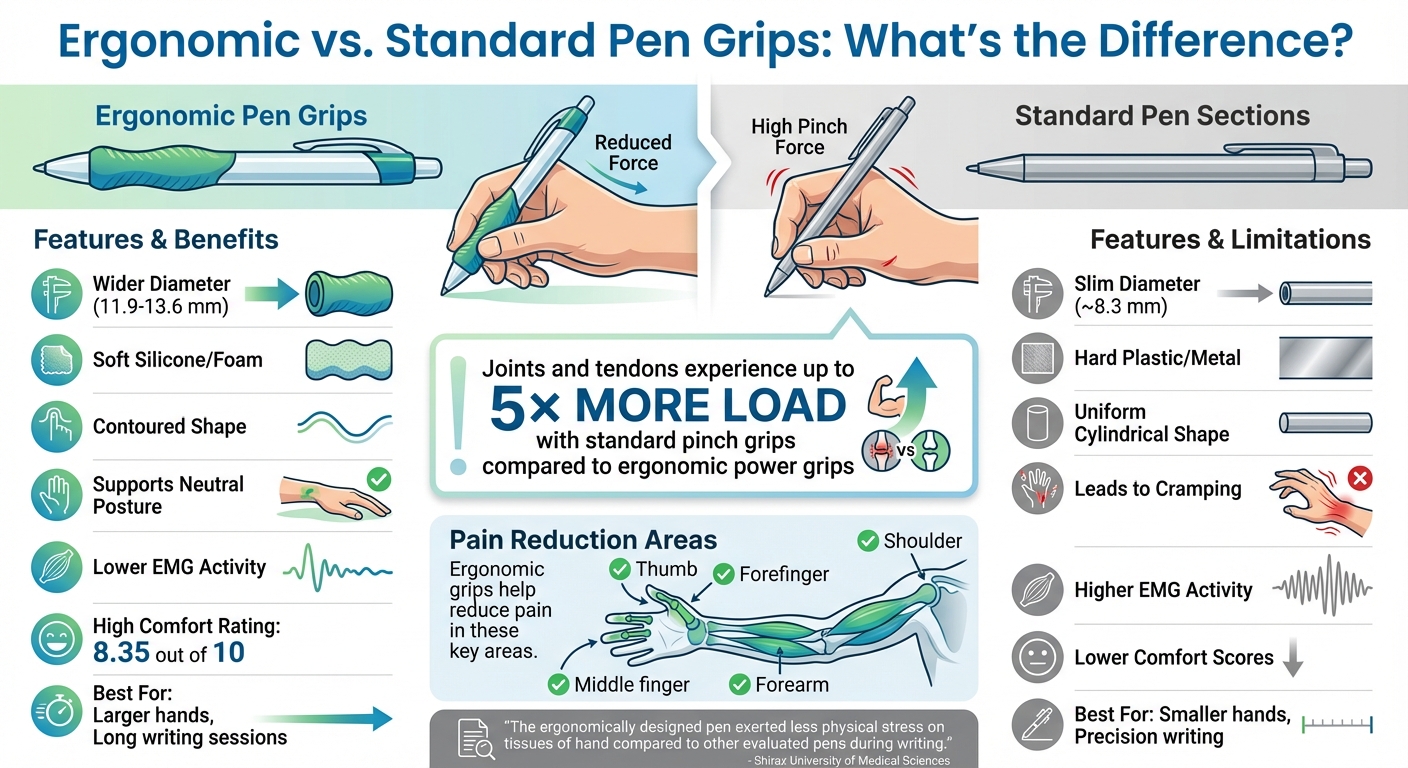
When comparing ergonomic grips to standard pen sections, the differences are more than just cosmetic - they directly influence hand comfort and muscle strain during writing. Standard pen sections are usually narrow, crafted from hard plastic or metal, and can be slippery. This slipperiness often forces users to grip tighter for control. On the other hand, ergonomic grips are designed to be wider and are made from softer, non-slip materials like silicone rubber, which naturally reduce the effort needed to maintain a firm hold.
Research sheds light on these distinctions. In a one-hour writing study, participants using pens with silicone-covered ergonomic grips reported significantly less pain in their thumb, forefinger, middle finger, forearm, and shoulder compared to those using standard hard plastic pens. This difference is rooted in how the hand's joints and tendons respond. A pinch grip, often required with standard pens, can load joints and tendons up to five times more than the power grip enabled by ergonomic designs.
"The ergonomically designed pen was more comfortable to use. Also, it exerted less physical stress on tissues of hand compared to the other evaluated pens during writing." – Shiraz University of Medical Sciences
That said, standard pen sections do have their own merits, particularly for users with smaller hands. These slimmer designs are often easier to maneuver, and some writers prefer the firmer grip provided by plastic or metal materials for greater precision. Additionally, standard sections avoid the adjustment period that ergonomic shapes sometimes require.
Comparison Table: Ergonomic Grips vs. Standard Sections
| Feature | Standard Pen Sections | Ergonomic Pen Grips |
|---|---|---|
| Pinch Force | High; requires a tighter grip | Low; larger diameter and non-slip materials reduce force |
| Suitability for Long Sessions | Limited; leads to increased fatigue | Excellent; minimizes muscle strain |
| Fountain Pen Compatibility | Universal | May need specialized sections |
| Material | Hard plastic or metal | Silicone rubber or soft-touch polymers |
| Muscle Load (EMG) | Higher EMG activity | Lower EMG activity |
| Best For | Smaller hands and precision writing | Larger hands or those prone to tight gripping |
For fountain pen enthusiasts, these differences can significantly affect writing comfort and control. Ergonomic grips are particularly beneficial because they support the light touch and precise nib angles essential for smooth ink flow. If you often write for long periods or experience hand discomfort, consider this: pens with ergonomic designs scored an impressive 8.35 out of 10 for comfort, far surpassing their standard counterparts.
Conclusion: Do Ergonomic Pen Grips Reduce Hand Fatigue?
Ergonomic pen grips can significantly ease hand fatigue for fountain pen users by spreading pressure evenly across the hand, which helps reduce cramping and discomfort. These grips work to lower both writing pressure and grip force, offering relief not only to healthy individuals but also to those dealing with writer's cramp.
"Using an ergonomic pen is an effective solution to reduce upper limbs musculoskeletal disorders." – DOAJ
Fountain pens, known for their smooth ink flow and minimal need for downward pressure, pair perfectly with ergonomic grips to lessen overall strain. This makes ergonomic grips more than just a thoughtful design - they’re a practical tool for addressing everyday writing challenges.
For those passionate about fountain pens and seeking a more comfortable writing experience, Fountain Pen Revolution offers affordable options crafted with ergonomic principles in mind. With starter sets starting at $35 and a variety of nibs, inks, and pen stands available, you can find ergonomic solutions that match both your budget and personal style. The right combination of pen and grip can truly turn writing from a tiring task into an enjoyable experience.
FAQs
Do ergonomic pen grips help reduce hand fatigue more effectively than regular pen designs?
Ergonomic pen grips are crafted to ease hand fatigue during long writing sessions. They offer a larger, softer grip area that reduces strain on your hand muscles and joints, making writing much more comfortable compared to regular pen designs. This is particularly helpful for those who write often or experience discomfort with standard pens.
For an upgraded writing experience, you might want to check out fountain pens. Many of these come with ergonomic features and customizable grips, providing an extra layer of comfort.
What features make a pen grip ergonomic and reduce hand fatigue?
An ergonomic pen grip is crafted to match the natural shape of your hand, aiming to ease strain during long writing sessions. These pens often feature a wider barrel to reduce pinching, soft or cushioned materials like rubber or silicone for a secure, comfortable grip, and contoured designs with grooves or thumb rests to gently guide your fingers into a relaxed position.
Another important aspect is balanced weight distribution, often achieved with a slightly weighted barrel or nib. This helps lessen the need for a tight grip, reducing tension in your hand and forearm. Together, these design elements promote a natural hand and wrist alignment, making writing less tiring and more comfortable over time.
Fountain Pen Revolution integrates these ergonomic features into its affordable fountain pens, offering a smoother and more enjoyable writing experience for everyone.
Can ergonomic pen grips help with conditions like arthritis or writer's cramp?
Ergonomic pen grips can greatly improve writing comfort, especially for individuals dealing with conditions like arthritis or writer's cramp. These grips are crafted to encourage a more natural hand position, which helps ease strain and reduces discomfort during long writing sessions.
For those experiencing writer's cramp, these grips can help lessen the tendency to apply too much pressure while writing - a common challenge with the condition. Similarly, individuals with arthritis often find these grips simpler to hold, as they reduce stress on the joints and make writing a less painful experience.