

Ebonite and acrylic are two popular materials used in fountain pens, each offering distinct features:
- Ebonite: Known for its warm texture, durability, and vintage aesthetic. It’s heavier, requires regular maintenance, and may develop a patina or emit a rubber-like odor over time. Generally more expensive, with prices starting around $80 for specialty models.
- Acrylic: Lightweight, smooth, and available in vibrant colors and patterns. It’s low-maintenance, odorless, and resistant to scratches and oxidation. More affordable, with typical prices ranging from $45–$55.
Quick Comparison
| Feature | Ebonite | Acrylic |
|---|---|---|
| Durability | Strong but prone to oxidation | Scratch-resistant and durable |
| Aesthetics | Classic, muted patterns | Bright, colorful designs |
| Feel | Warm, non-slip texture | Smooth, cool surface |
| Maintenance | Requires care (polishing, etc.) | Low-maintenance |
| Cost | Higher ($80+) | Lower ($45–$55) |
| Weight | Heavier | Lighter |
| Odor | May emit a faint smell | Odorless |
Choose ebonite for a timeless, vintage feel and comfort. Opt for acrylic if you prefer modern designs and ease of use.
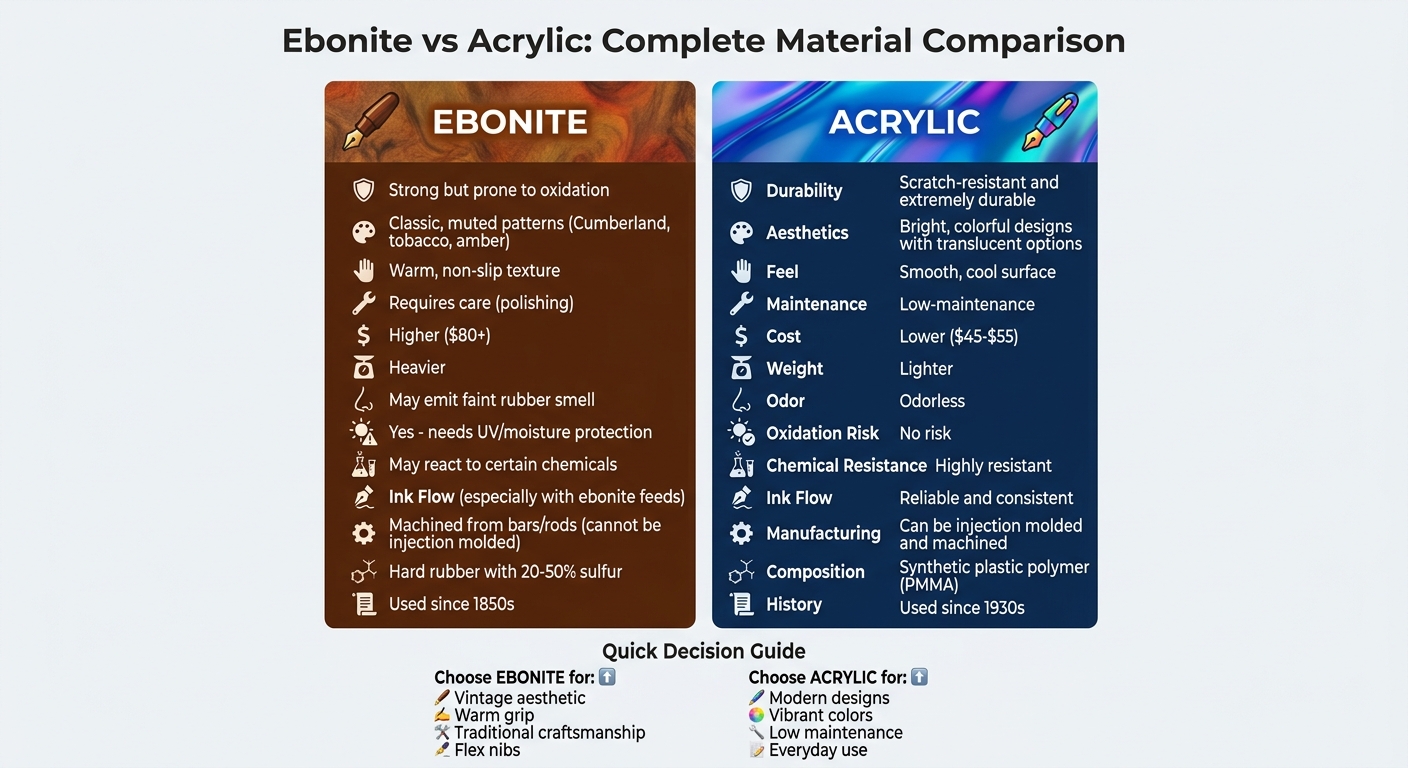
Ebonite vs Acrylic Fountain Pen Materials Comparison Chart
Material Composition and Properties
What is Ebonite?
Ebonite is a type of hard rubber created by vulcanizing natural rubber with 20–50% sulfur at about 302°F (150°C) for several hours. It was first developed in 1843 as a substitute for ebony wood.
Unlike modern plastics, ebonite can't be injection molded. Instead, it’s manufactured in sheets, bars, or rods, which are then carefully machined to form the final pen shape.
The high sulfur content gives ebonite excellent thermal insulation, which helps prevent ink leakage. However, it can also produce a distinctive "bicycle tire" smell and develop a dull brown patina over time. In comparison, an ebonite and acrylic fountain pen offers a more contemporary option with its own set of benefits.
What is Acrylic?
Acrylic is a synthetic plastic polymer that has been widely used in pen making since the 1930s. Its popularity stems from its ease of molding and machining, which allows for vibrant and versatile designs.
This material can be crafted in virtually any color and even in transparent forms, making it a go-to choice for modern fountain pen bodies. Acrylic also provides a smooth, cool surface, is generally lighter than ebonite, and avoids issues like odor or discoloration. These qualities highlight the distinct differences in durability and writing experience between the two materials.
sbb-itb-1dd4fe9
Durability and Structural Strength
Resistance to Damage
Ebonite and acrylic both hold up well under regular use, but they handle stress in distinct ways. Ebonite is known for its toughness, forming pen bodies that can endure daily handling. Its naturally warm and slightly softer texture offers a comfortable, non-slip grip, which can help prevent accidental drops. On the other hand, acrylic stands out for its excellent scratch resistance. With its harder and cooler surface, acrylic ensures consistent quality during manufacturing and maintains its polished look over time. These differences in durability also play a role in how these materials age and require upkeep.
Longevity and Maintenance
When it comes to longevity and care, ebonite and acrylic take separate paths. Ebonite has been a trusted material for fountain pens since the 1850s, earning its reputation as a classic choice. As described by jar, a Senior Member at FPGeeks:
Properly aged and cured, properly worked and turned, ebonite produces a pen body that is warm to the touch, non-slip, long lasting, durable, attractive and aesthetic.
Ebonite does come with some quirks. Over time, it may develop a brownish patina, a feature many enthusiasts find appealing. However, it can release a faint rubber-like odor when exposed to warmth. These traits are part of what gives ebonite its charm, though they require a bit of appreciation for its natural aging process.
Acrylic, by contrast, is practically maintenance-free. It stays odorless and keeps its original appearance for years, appealing to those who prefer a pen that looks as pristine as the day it was made. While lower-quality ebonite might show slight inconsistencies, premium ebonite, often used in ebonite feeds, offers a more refined and durable option.
Aesthetics, Feel, and Writing Experience
Appearance and Customization
Ebonite and acrylic pens bring distinct visual styles to the table. Acrylic pens are known for their vibrant colors and intricate swirls, creating eye-catching designs that stand out. On the other hand, ebonite leans heavily into a more traditional, vintage aesthetic. Popular patterns like the Cumberland (black and red ripples), tobacco accents, and amber tones give ebonite pens a classic charm that appeals to enthusiasts of timeless designs.
As Jon Szanto, a Senior Member at FPGeeks, puts it:
"Acrylic pens will likely come in more flamboyant colors, and frequently more color choices... even in a very non-flashy material and design, [ebonite] can be a nice bit of warm elegance."
When it comes to finish, high-quality ebonite can achieve a smooth, polished surface, but lower-cost options may show slight material inconsistencies. This difference is also reflected in pricing. For instance, Santini Italia offers their ebonite Libra Cumberland model for about €359 ($424), while the acrylic Libra Black is priced at around €259 ($306). Similarly, Narwhal's acrylic pens typically cost $45–$55, whereas their special anniversary ebonite version is priced closer to $80. These aesthetic differences go hand in hand with how the pens feel and perform.
Tactile Feel and Comfort
The way a pen feels in your hand can make or break the writing experience, and ebonite and acrylic deliver very different sensations. Ebonite stands out for its ability to quickly warm to the touch, offering a comfortable, non-slip grip that feels natural. Yazeh, another Senior Member at FPGeeks, describes it poetically:
"If I were to rhapsodize it, I would say, [ebonite] embraces my hand."
In contrast, acrylic pens feel cooler and smoother when first held, with a slicker surface that lacks ebonite's warmth. While both materials have their merits, the choice often comes down to personal preference - whether you favor ebonite's cozy, organic feel or acrylic's polished and sleek texture.
Impact on Writing Performance
The differences in material don't just affect aesthetics and comfort - they also influence how the pen performs during writing. Weight distribution plays a key role here. Ebonite pens are generally heavier than their acrylic counterparts, even when the two are the same size. This extra weight allows for thinner yet well-balanced designs, which can help reduce hand fatigue during long writing sessions by requiring a lighter grip. Acrylic, being lighter, is often better suited for larger pen designs where keeping the overall weight down is important.
Another factor to consider is the feed material. Many fountain pen enthusiasts prefer ebonite feeds because they provide better ink flow, particularly when paired with flexible nibs. This makes ebonite a favorite among those who prioritize smooth, consistent writing performance.
Pros and Cons Table
Comparison Table
Here's a side-by-side look at ebonite and acrylic to help you decide which material aligns better with your writing preferences. The table below captures the strengths and weaknesses of each option based on their material properties.
| Feature | Ebonite | Acrylic |
|---|---|---|
| Durability | Strong but prone to oxidation and brittleness | Extremely durable; resists impacts and scratches |
| Aesthetics | Classic, warm appearance with muted or rippled patterns | Bright, modern look with translucent, vibrant colors |
| Writing Feel | Warm, natural texture that adapts to hand temperature | Smooth, lightweight, and cooler to the touch |
| Ink Flow | Excellent, especially with ebonite feeds | Reliable and consistent ink delivery |
| Chemical Resistance | May react to certain chemicals | Highly resistant to chemical exposure |
| Cost | Higher price (specialty models start around $80) | More budget-friendly (typically $45–$55) |
| Oxidation Risk | Yes - requires protection from UV light and moisture | No risk of oxidation |
| Maintenance Needs | Needs regular care, including polishing, to maintain its finish | Low-maintenance; simple cleaning suffices |
| Weight | Heavier feel, even in slimmer designs | Lighter, ideal for larger pen designs |
| Odor | May release a mild rubber or sulfur-like scent when warm | Completely odorless |
Ebonite is prized for its warmth and natural texture but demands more care and is less resistant to physical damage. Acrylic, on the other hand, offers modern aesthetics, durability, and minimal upkeep, making it a practical choice for many. While ebonite's insulating properties can help reduce ink leakage, its fragility and oxidation risks make it less forgiving.
This breakdown provides a clear picture of how these materials compare, particularly in pen craftsmanship.
How Each Material is Used in Pen Making
Ebonite in Handmade Pens
Ebonite is a favorite for handmade and vintage-style fountain pens, especially when traditional aesthetics and craftsmanship take center stage. Manufacturers typically source ebonite as bars or rods - Leonardo Officina Italiana, for instance, gets marbled ebonite from Germany and solid-colored varieties from Japan. The material is then machined from solid blanks.
Crafting with ebonite isn't simple. It demands extra time, specialized tools, and a lengthy curing process before it can be worked on. Despite these challenges, ebonite remains prized for its warm, velvety texture, non-slip grip, and one-of-a-kind appearance. Salvatore Matrone from Leonardo Officina Italiana highlights this appeal:
Ebonite is different, warmer than other pen materials, it has a different look and texture than other materials.
Ebonite is also the top choice for feeds, particularly in flex-nib pens, because it ensures better ink flow compared to plastic alternatives. High-end models like the Sailor King of Pen incorporate ebonite for this very reason. Its thermal insulation properties help prevent hand heat from warming the air inside eyedropper-style pens (see our guide on how to fill an eyedropper pen), which reduces the risk of ink leakage caused by pressure changes. Additionally, ebonite's density allows for the creation of thinner pen designs that still feel weighty and substantial in the hand.
While ebonite is cherished for its traditional qualities, modern materials like acrylic offer a different kind of versatility.
Acrylic in Modern Designs
Acrylic has become the material of choice for modern pen designs, offering unmatched flexibility and ease of use. Manufacturers work with cast acrylic (PMMA) by cutting, drilling, and forming it into shape. For large-scale production, injection molding is used to create barrels and caps in plain colors. David Cooper from Conway Stewart explains:
We have found that [cast acrylic] provides us with everything we need for our pens – it holds its colour, it is resistant to weathering and UV radiation, and it can be easily cut, drilled and formed.
Acrylic shines when it comes to bold, eye-catching designs. It allows for vibrant colors, intricate patterns, and effects like translucent swirls or shimmering depths - visual elements that ebonite simply can't replicate. Beyond aesthetics, acrylic is also recyclable and safer to handle. Unlike ebonite, which can release toxic fumes during production and is subject to strict environmental regulations, acrylic aligns better with modern environmental and safety standards. This makes it an ideal choice for manufacturers looking to combine striking designs with efficient, responsible production methods.
Choosing Between Ebonite and Acrylic
Who Should Choose Ebonite?
Ebonite is a fantastic choice for anyone who loves a vintage look, a warm, non-slip grip, and a classic, refined feel. This material quickly adapts to your body temperature, making it especially comfortable for extended writing sessions. As Jon Szanto from FPGeeks describes:
I find it [ebonite] warms up faster and stays comfortable warm in hand, giving you the impression is it somehow softer.
Collectors and fans of traditional designs are often drawn to ebonite for its historical connection to fountain pens. Patterns like Cumberland or woodgrain give these pens a timeless charm. Plus, ebonite’s density allows for thinner designs while still offering a satisfying weight in hand.
That said, if you’re more interested in modern aesthetics or lightweight materials, acrylic might be a better fit.
Who Should Choose Acrylic?
Acrylic is perfect for those who love vibrant colors, smooth textures, and low-maintenance materials. It’s ideal for everyday use, especially if you want a pen with striking patterns and a lighter feel. Unlike ebonite, acrylic doesn’t have a faint rubber scent, which some users might prefer.
Explore Fountain Pen Revolution's Collection
Whether you’re drawn to the vintage warmth of ebonite or the bold designs of acrylic, Fountain Pen Revolution has something for everyone. Their collection includes handmade and premium pens at prices that won’t break the bank. Visit Fountain Pen Revolution to find the perfect pen that matches your style and budget.
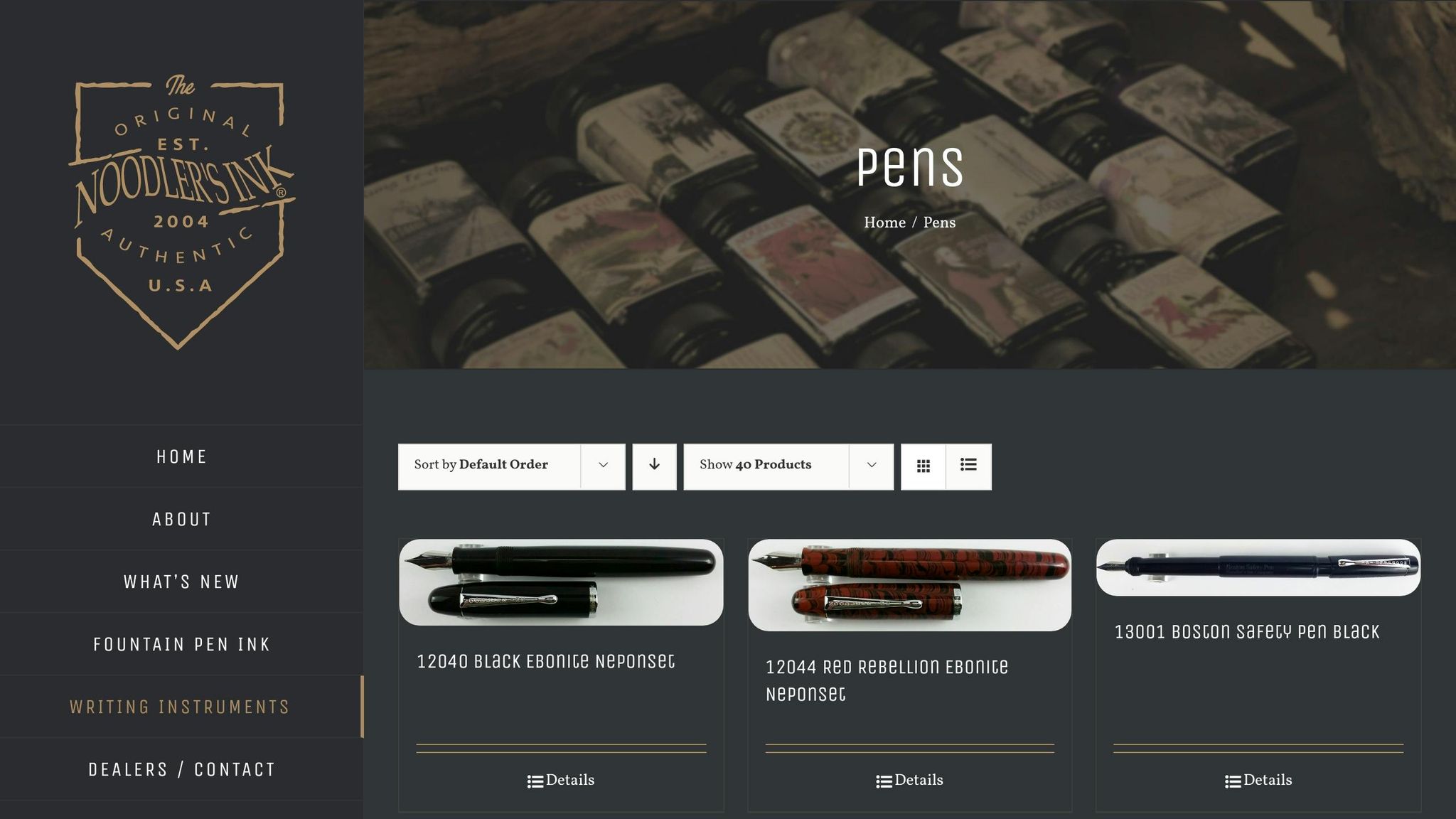
Noodler's Konrad (Ebonite and Acrylic)
FAQs
How do I stop ebonite from oxidizing?
To keep ebonite from oxidizing, store it in a cool, dry place, away from direct light, heat, or moisture. Regularly polishing it with appropriate materials can bring back its glossy finish and reduce oxidation. Additionally, cleaning it carefully and handling it gently will help preserve its look and durability over time.
Will an ebonite pen smell bad over time?
Ebonite pens may start to emit an odor over time if they aren't cared for properly. To keep this from happening, regular cleaning and proper storage are essential. Make sure your pen stays dry and clean - this simple routine can go a long way in preserving its condition and preventing any unpleasant smells.
Does pen material change ink flow or leakage?
The type of material used, like ebonite or acrylic, plays a big role in how ink flows and whether leaks occur.
Ebonite feeds have a textured surface that helps maintain a steady ink flow and minimizes leakage. However, they need regular care to prevent problems like oxidation.
On the other hand, acrylic feeds are made from smoother plastic, making them less affected by environmental factors. That said, they require precise manufacturing to ensure a consistent ink flow, especially when paired with specialized nibs.