

If your black ebonite pen is turning brown, olive, or gray, the cause is usually surface oxidation. In plain English: light, air, heat, and moisture change the outer layer of hard rubber over time.
Here’s the short answer:
- Sunlight and UV are the main cause
- Heat speeds the color change
- Moisture and long soaking can make it worse
- Mild oxidation may come off with gentle cleaning or a hard-rubber deoxidizer
- Deep oxidation may need light polishing
- Prevention is simple: keep the pen cool, dry, and out of the light
A few points matter right away:
- A quick wash won’t remove oxidation because the surface itself has changed
- Hidden spots under the cap or around threads often stay darker and glossier, which helps you judge damage
- Do not use acetone, alcohol, bleach, ammonia cleaners, or long water soaks
- Indoor storage around 64–72°F and 40%–60% humidity is often suggested for hard rubber care
- Car interiors can pass 100°F in summer, which can speed surface damage
If I were checking an ebonite pen, I’d do this first:
- Compare the outside to protected areas
- See if the surface is only dull or also rough and chalky
- Start with the least aggressive fix
- Change storage habits so the color loss doesn’t come back
This article explains the cause, how to judge mild vs. deep oxidation, what I’d use to restore color with care, and what I’d avoid.
Deoxidizing Blackened Hard Rubber Fountain Pens - with La Belle Epoque Deoxidizer
sbb-itb-1dd4fe9
Why Ebonite Turns Brown or Olive
That color change is surface oxidation, not dirt. Oxygen, UV light, and moisture alter the outer layer of the rubber, which can shift black ebonite to brown, olive, or gray. A quick wash won't fix that because oxidation isn't sitting on top of the material - it's a change in the material itself.
Ebonite contains sulfur, and that makes the surface easier to oxidize. As that outer layer changes, oxidized compounds build up at the surface and the finish starts to look dull and faded.
How Light, Heat, Air, and Moisture Speed Up Oxidation
UV light is the main cause. Sunlight and strong indoor lighting both give off UV radiation, which breaks chemical bonds in rubber. So if a pen sits on a desk near a window, it can brown unevenly. One side may fade faster simply because it gets more light than the side in shadow. One short exposure usually doesn't leave a visible mark, but bright light day after day can slowly do the job.
Heat adds fuel to the fire. Car interiors during a U.S. summer can easily climb past 100°F, and that extra warmth speeds oxidation at the surface. The problem gets worse with repeated swings in temperature. For example, taking a pen from a hot car into an air-conditioned office over and over can stress the material and speed color loss compared with steady, cool storage.
Moisture can also push the process along after UV has already done some damage. Long soaking during cleaning and maintenance is a common mistake. Leaving a hard rubber section in water for hours can turn black areas dull brown much faster than many people expect, especially if the water is warm.
That's why storage matters just as much as direct exposure.
Storage Habits That Make Discoloration Worse
The biggest problems usually come from repeat exposure, not one small slip-up. A pen left uncapped on a sunny desk is a classic example. It gets steady UV, room heat, and oxygen from the air all at once - basically all the main triggers in one place.
Cars are another trouble spot. Glove boxes and center consoles can get very hot in summer, and if the pen sits near a window, heat and UV hit it together. Damp places can also make things worse. Bathrooms, wet basements, and areas near kitchen sinks may leave a thin film of moisture on the surface, which can speed surface reactions in parts already hit by UV.
How to Judge Whether the Color Loss Is Mild, Moderate, or Severe
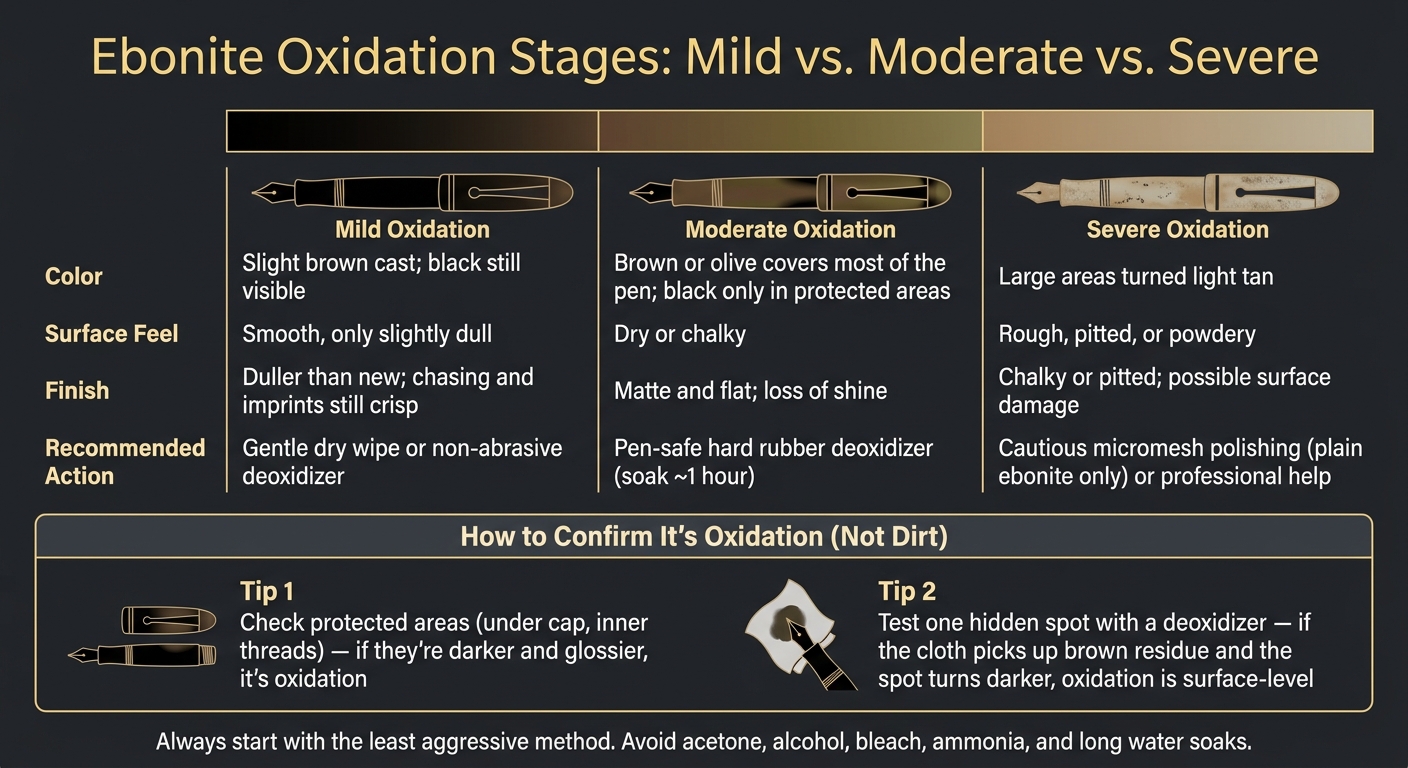
Ebonite Oxidation Stages: Mild vs. Moderate vs. Severe
Start by checking how far the oxidation has gone. That matters because the fix changes with the condition. A pen that's only a little faded can often be handled with simple cleaning. A pen with broad discoloration or surface damage may need a much more careful polish.
The same light, heat, air, and storage conditions that caused the color shift also affect how far it spreads. So before you do anything, get a clear read on the surface. That quick check helps you decide whether gentle cleaning will do the job or whether you need to move more cautiously.
Signs of Mild, Moderate, and Severe Oxidation
Remove the cap and inspect the section underneath it. You can also check the inner threads and barrel. Those protected areas usually get much less light and air, so they often keep more of the pen's original color. If those spots look darker and glossier than the outside, the lighter exterior color is almost certainly oxidation.
| Stage | Color | Surface Feel | Finish |
|---|---|---|---|
| Mild | Slight brown cast; black still visible | Smooth, only slightly dull | Duller than new; chasing and imprints still crisp |
| Moderate | Brown or olive covers most of the pen; black only in protected areas | Dry or chalky | Matte and flat; loss of shine |
| Severe | Large areas turned light tan | Rough, pitted, or powdery | Chalky or pitted; possible surface damage |
A strong sulfurous odor, especially when it comes with powdery residue or crumbling, points to advanced deterioration and calls for extra caution.
How to Tell Oxidation Apart from Dirt or Residue
The simplest way to tell the difference is to compare exposed areas with protected spots like the section under the cap, inner threads, or the inside of the barrel. If the protected areas remain much darker and glossier, you're probably looking at oxidation, not dirt that can be wiped away.
If those protected spots don't give you a clear answer, test one hidden area first. Put a small amount of an ebonite-safe de-oxidizer on a soft cloth and rub lightly. If the cloth picks up brown residue and the test spot turns darker and glossier, the oxidation is likely limited to the outer layer. If almost nothing changes and the area stays light tan or rough, the oxidation has likely gone deeper.
Mild oxidation often responds to gentle cleaning. Deeper discoloration needs a more careful approach. Once you've judged the severity, you can pick the least aggressive restoration method.
Safe Ways to Restore Ebonite Color
Start with the least aggressive method that can remove the oxidized surface without changing the pen's shape or softening its details. If the oxidation is mild to moderate, this is the right place to begin.
Start with Gentle Cleaning and Non-Abrasive Deoxidizing Methods
Begin with dry wiping using a soft microfiber or cotton cloth in light, straight strokes. This clears away dust, fingerprints, and loose grime that can make oxidation look worse than it is. A soft artist's brush helps around cap bands, clip bases, and engraved spots where a cloth can't reach.
If dry wiping doesn't do enough, the next step is a pen-safe hard rubber deoxidizer. These products loosen the oxidized surface through chemical action, so you can wipe it away with far less rubbing than sanding would require. One often-cited hard rubber deoxidizer suggests about 1 hour for a normally oxidized pen and several hours for badly oxidized pieces, with parts fully submerged only for the stated period. Leave them in too long, and the surface may soften or the part may shift in size. After soaking, remove the part and wipe it firmly with a clean rag or shop towel to lift the softened oxidation.
That matters because this method is much less likely to damage chasing, imprints, and sharp edges than abrasive polishing. Instead of grinding into the pen, it works on the layer that's already degraded.
Use abrasion only if cleaning and deoxidizing still leave the surface dull.
When and How to Use Fine Polishing on the Surface
Fine micromesh polishing should be saved for plain ebonite without chasing or imprints. Each pass removes material for good, so a careful hand matters.
If you decide to use micromesh, start with the least aggressive grit that will cut the oxidation. Use light pressure, keep your strokes even, and stop often to check the surface under good light. Once the discoloration fades, move through finer grits to reduce micro-scratches. Then finish with a gentle plastic polish or a thin coat of carnauba wax to bring back gloss. Micromesh should not be used on pens with chasing or shallow imprints, because it can wear those details away too.
What Not to Use on Hard Rubber
Avoid acetone, alcohol, ammonia cleaners, bleach and other oxidizing cleaners (instead, use a dedicated fountain pen cleaning solution), and long water soaks. Any of these can crack, haze, or permanently roughen the finish. Conservation guidance is blunt here: never soak hard rubber in water, especially warm or hot water. Light-aged hard rubber can turn brown in seconds when exposed to water, and hot water can cause irreversible discoloration and warping. That guidance goes even further, noting that even water with mild soap can, in some circumstances, lead to outright destruction.
That’s why water, solvents, and harsh cleaners are the wrong place to start.
How to Keep Ebonite Darker for Longer
Store Ebonite Away from Sun, Heat, and Prolonged Moisture
Once you've restored the surface, storage does most of the heavy lifting. Keep the pen where it won't sit in sunlight, heat, or trapped moisture. A closed case, drawer, pen sleeve, or pen roll helps block UV light and slows oxidation. By contrast, a pen left uncapped on a bright desk near a window will age faster than one tucked into an opaque case.
Aim for a cool, steady spot. Skip hot cars, windowsills, radiators, and damp areas. One pen-care source suggests storing pens at 64–72 °F with 40%–60% relative humidity, and notes that long exposure to temperatures above 72 °F and humidity above 60% can speed up aging. Before you put the pen away, make sure it's fully dry.
Simple Maintenance for Ebonite Pens and Feeds
The same rules apply to ebonite feeds. They can discolor too, so it's smart to keep the whole pen dry and out of the light. Clean it gently, handle it with dry hands, and store it away from heat and sun. And don't polish it on a routine schedule. Restore the surface only when it needs attention.
Conclusion: Oxidation Is Common, Restoration Should Be Cautious, and Prevention Matters Most
After restoration, prevention is what keeps ebonite dark. Ebonite turns brown because UV light, heat, air, and moisture oxidize the surface. Gentle restoration can help, but cool, dry, dark storage is still the best long-term defense.
FAQs
Can brown ebonite turn black again?
Yes. Brown ebonite can often be brought back to its original black color because the discoloration is usually just on the surface.
Gentle polishing or special re-blackening treatments can remove that oxidized outer layer and reveal the darker material underneath. But go easy. Too much polishing can alter the pen’s shape or wear down delicate imprints.
How fast does ebonite oxidize?
Ebonite oxidation builds up over time. Sunlight, heat, moisture, and plain air exposure can speed the process up. And here’s the tricky part: the color change may not show up at first, even when the chemical reaction is already under way.
Because oxidation is cumulative, even brief but repeated exposure to light or water can add up. Over time, that can lead to brown or olive discoloration fairly fast.
Should I restore it or leave it alone?
That comes down to what matters more to you: how the pen looks or keeping risk as low as possible.
In most cases, oxidation sits on the surface. The material underneath usually stays intact, and the original color can often come back after restoration.
If you decide to restore it, there’s a catch. Polishing removes a thin layer of material, which can weaken or even erase imprints or chasing. If that gives you pause, working with a professional restorer is the safer move.