

Choosing between dye-based and pigmented inks depends on your needs. Dye-based inks are known for their bright colors and smooth flow, making them ideal for short-term prints, glossy photos, and fountain pens. However, they fade faster and are prone to smudging when exposed to water. Pigmented inks, on the other hand, offer durability, water resistance, and long-lasting results, making them perfect for archival documents and outdoor materials. Their muted colors and higher maintenance requirements are trade-offs for their longevity.
Quick Comparison
| Criteria | Dye-Based Inks | Pigmented Inks |
|---|---|---|
| Color | Bright and saturated, especially on glossy paper | Muted tones with rich blacks and sharp text |
| Water Resistance | Low; smudges easily when wet | High; resists spills and moisture |
| Longevity | Fades quickly, especially in sunlight | Lasts decades, even under UV exposure |
| Maintenance | Low; smooth flow, minimal clogging | Higher; particles may clog nozzles or pens |
| Fountain Pens | Smooth flow, easy cleaning | Requires special pens and frequent cleaning |
If you need vibrant, short-term prints, go with dye-based inks. For durability and archival-quality results, pigmented inks are the better choice. Fountain pen users should consider dye-based inks for ease of use, but pigmented options can work with proper care.
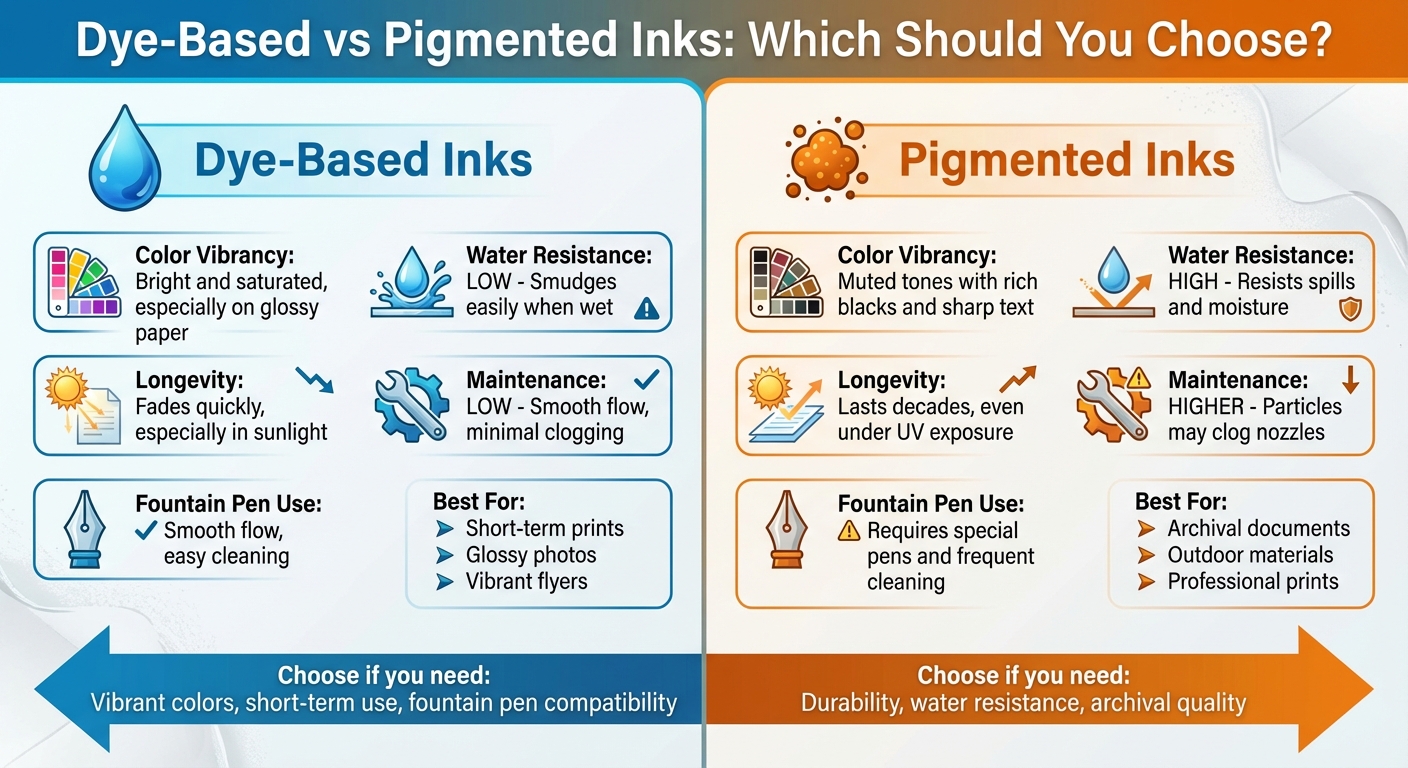
Dye-Based vs Pigmented Inks Comparison Chart
What is the difference between Dye & pigment inks? | Paper for Fine Art & Photography
1. Dye-Based Inks
Dye-based inks rely on dissolving the colorant entirely in a liquid carrier, resulting in smooth blends and strikingly vivid colors. Let’s take a closer look at their defining traits, including color vibrancy, water resistance, and upkeep.
Color Vibrancy
One standout feature of dye-based inks is their ability to produce rich, saturated colors. Because the dye fully penetrates the paper, these inks deliver bright, eye-catching hues, especially on glossy or coated surfaces. For instance, hobbyist photographers can create stunning 4×6 prints, while small businesses might use these inks for attention-grabbing flyers and coupons. Even students find them appealing for printing colorful charts and visuals that need to last just until the end of a semester.
Water Resistance
On the downside, dye-based inks are less resistant to water. Since the dyes are water-soluble, even a small spill or light rain can cause smudging or bleeding. This makes them a poor choice for outdoor signage or heavily handled materials. However, for indoor use or short-term projects - typically lasting under a year - they can perform adequately without major issues.
Maintenance Needs
One advantage of dye-based inks is their low maintenance. Because the colorant is fully dissolved, they’re less likely to clog printer nozzles, reducing the need for frequent cleanings. This efficiency appeals to home users and small offices looking to manage printing costs. That said, the need for reprints due to fading or water damage can occasionally offset these savings.
Fountain Pen Compatibility
Dye-based inks shine in the world of fountain pens. Most traditional fountain pen inks are dye-based, ensuring smooth ink flow, quick starts, and hassle-free cleaning. This makes them ideal for everyday writing, note-taking, and journaling. They’re also a favorite among users who frequently switch ink colors, as they’re easy to rinse out without leaving residue. Many U.S. fountain pen enthusiasts enjoy the wide variety of vibrant colors available, along with the simple upkeep these inks require. Retailers like Fountain Pen Revolution offer affordable pens and dye-based inks, giving both beginners and seasoned writers the chance to explore different shades with minimal effort.
2. Pigmented Inks
Pigmented inks are made up of suspended color particles that stay close to the paper's surface. This unique characteristic impacts their performance in areas like color quality, durability, and maintenance.
Color Vibrancy
When it comes to color, pigmented inks tend to produce slightly muted tones compared to dye-based inks. They shine in delivering rich blacks and precise tonal detail, making them a favorite for fine art prints and professional documents. If you're printing bright vacation photos or marketing materials that demand bold, attention-grabbing hues, pigmented inks might appear less vibrant or have a matte finish. But for tasks where accuracy and longevity take priority - like black-and-white photography or high-quality professional prints - pigmented inks are the go-to choice.
Water Resistance
One of the standout qualities of pigmented inks is their ability to resist water. They handle spills and light moisture far better than dye-based inks. This makes them ideal for applications like mailing labels, outdoor signage, or documents that are frequently handled and might encounter moisture. For businesses in the U.S., especially those printing shipping labels or creating outdoor materials, this water resistance ensures that printed content remains legible and intact, even in less-than-ideal conditions.
Pigmented inks also excel in lightfastness and fade resistance. Unlike dye-based prints, which can show noticeable fading after 25–30 years (or even sooner under direct sunlight), pigment prints can maintain their color stability for decades when displayed indoors. A label-printing manufacturer notes that pigment-ink labels can last up to two years outdoors with minimal fading under UV exposure, while dye-based inks are generally recommended for indoor use within a year. For artists selling prints, archivists, or anyone prioritizing longevity, pigmented inks are the clear choice.
Maintenance Needs
The same particles that give pigmented inks their durability can also lead to maintenance challenges. These particles may settle or clog fine printer nozzles or pen feeds, especially if the equipment isn't used regularly. To avoid issues, it's important to use printers consistently, run cleaning cycles periodically, and follow the manufacturer’s storage guidelines. For inkjet printers, a cleaning cycle every few weeks can help keep nozzles clear. It's also worth noting that pigmented ink cartridges tend to have a higher upfront cost compared to dye-based options.
Fountain Pen Compatibility
Pigmented inks can be tricky when it comes to fountain pens. They are more likely to clog standard pens, so it's essential to use pens specifically designed for pigment-based inks. Regular cleaning is a must, and many experienced fountain pen users dedicate affordable, easy-to-maintain pens for pigmented or permanent inks. For U.S. buyers interested in exploring these inks without risking expensive pens, retailers like Fountain Pen Revolution offer budget-friendly options that allow for experimentation with specialty inks. These practical distinctions highlight why pigmented inks are often compared directly with their dye-based counterparts.
sbb-itb-1dd4fe9
Pros and Cons
Here's a quick comparison of key features to help you weigh the benefits and drawbacks of dye-based and pigment inks:
| Criteria | Dye-Based Ink Pros | Dye-Based Ink Cons | Pigment Ink Pros | Pigment Ink Cons |
|---|---|---|---|---|
| Color Vibrancy | Rich saturation and striking hues on glossy paper | Fades faster over time | Consistent color quality that lasts longer | Colors may look lighter or less vivid initially |
| Water Resistance | - | Low resistance; prone to smudging when wet | Highly resistant; holds up well against moisture | - |
| Maintenance | Dries quickly and flows smoothly, reducing clogs | - | Long-lasting but may require more frequent cleaning to prevent nozzle clogs | - |
| Fountain Pen Use | Works well with fountain pens; smooth flow without settling | - | Archival quality for lasting prints | Can clog delicate nibs due to particles in the ink |
This table highlights the strengths and weaknesses of each ink type, helping you make a decision that fits your specific needs.
Experts suggest dye-based inks for vibrant and cost-effective prints, especially if you're printing photos on glossy paper for short-term use (less than a year). On the other hand, pigment inks are ideal for projects requiring durability and archival quality, making them worth the higher price for long-term results.
For fountain pen enthusiasts, dye-based inks are a solid choice due to their smooth flow, but it's wise to test them in small amounts to avoid potential maintenance headaches. If you're looking to experiment, Fountain Pen Revolution offers budget-friendly inks and pens to get you started.
Conclusion
Deciding between dye-based and pigmented inks depends entirely on what you need from your prints. Dye-based inks are known for their vibrant colors that make photos on glossy paper stand out. They dry quickly and are easy on the wallet. However, they tend to fade more quickly - lasting decades indoors but struggling when exposed to sunlight - and are more prone to smudging if they come into contact with moisture.
On the other hand, pigmented inks sit on the surface of the paper, offering long-lasting durability. They excel in water and smudge resistance and produce crisp, sharp text. The downside? Their colors might not appear as striking, especially on glossy paper, and they often come with a higher price tag.
In summary, if you're after vibrant, short-term glossy prints, dye-based inks are a great choice. But if durability, archival-quality documents, or outdoor signage is your priority, pigmented inks are the better option.
For those exploring fountain pens and inks, Fountain Pen Revolution provides affordable options starting at $11.00 USD. They offer inks from brands like Diamine and Noodler's, along with their own FPR collection. Whether you're new to fountain pens or a seasoned enthusiast expanding your collection, their selection makes it simple to find inks and pens that match your writing needs.
FAQs
What’s the difference between dye-based and pigmented inks?
Dye-based inks stand out for their bright, vibrant colors and their ability to flow effortlessly, making them a top choice for creating bold, attention-grabbing artwork or writing. That said, they do have their downsides - they're prone to fading over time and can bleed through thinner paper.
On the flip side, pigmented inks are prized for their durability and water resistance, delivering clean, sharp lines that hold up over time. While they’re built to last, they come with a trade-off: they can sometimes clog fountain pens, meaning you'll need to take a bit of extra care to keep your pen in great shape.
What type of ink is best for preserving documents over time?
When it comes to creating documents that need to endure over time, pigmented inks are the way to go. These inks are designed to resist water and fading, making them perfect for archival materials or any writing that needs to maintain its quality for years to come. Unlike dye-based inks, which can blur or lose their vibrancy over time, pigmented inks form a more permanent bond with paper, ensuring your work stays clear and readable for decades.
Are pigmented inks safe to use in all fountain pens?
Pigmented inks can be a great choice for many fountain pens, but they’re not a one-size-fits-all solution. Some pens might clog or run into performance issues because pigmented inks contain thicker particles compared to dye-based ones.
To keep your pen in top shape, always refer to the manufacturer’s guidelines to ensure compatibility. Regular cleaning is also essential when using pigmented inks - it helps maintain smooth writing and prevents residue from building up over time.