

Cleaning your fountain pen is essential to keep it working smoothly and prevent clogs. The two main options for cleaning solutions are ammonia-based and non-ammonia-based. Here’s the quick breakdown:
- Ammonia-based solutions are powerful for dissolving dried ink and tough clogs but can damage delicate materials like aluminum and vintage plastics. Use them sparingly and always rinse thoroughly.
- Non-ammonia solutions (distilled water, mild dish soap) are gentler and safer for most pen materials, especially vintage pens, but may struggle with stubborn ink buildup.
Key Takeaways:
- Ammonia: Best for deep cleaning tough clogs; avoid with vintage or delicate materials.
- Non-Ammonia: Ideal for routine maintenance and safe for all pens.
- Always rinse thoroughly after using any cleaning solution to avoid residue buildup.
Quick Comparison:
| Factor | Ammonia Solution | Non-Ammonia Solution |
|---|---|---|
| Effectiveness | High (dissolves dried ink) | Moderate (fresh ink only) |
| Material Safety | Risky for vintage pens | Safe for all materials |
| Cost | ~$2 (DIY) | ~$1 (distilled water) |
| Best Use | Deep cleaning, tough clogs | Routine upkeep, vintage pens |
Choose the right method based on your pen’s material and cleaning needs! For a complete solution, consider using a fountain pen cleaning kit to maintain your collection.
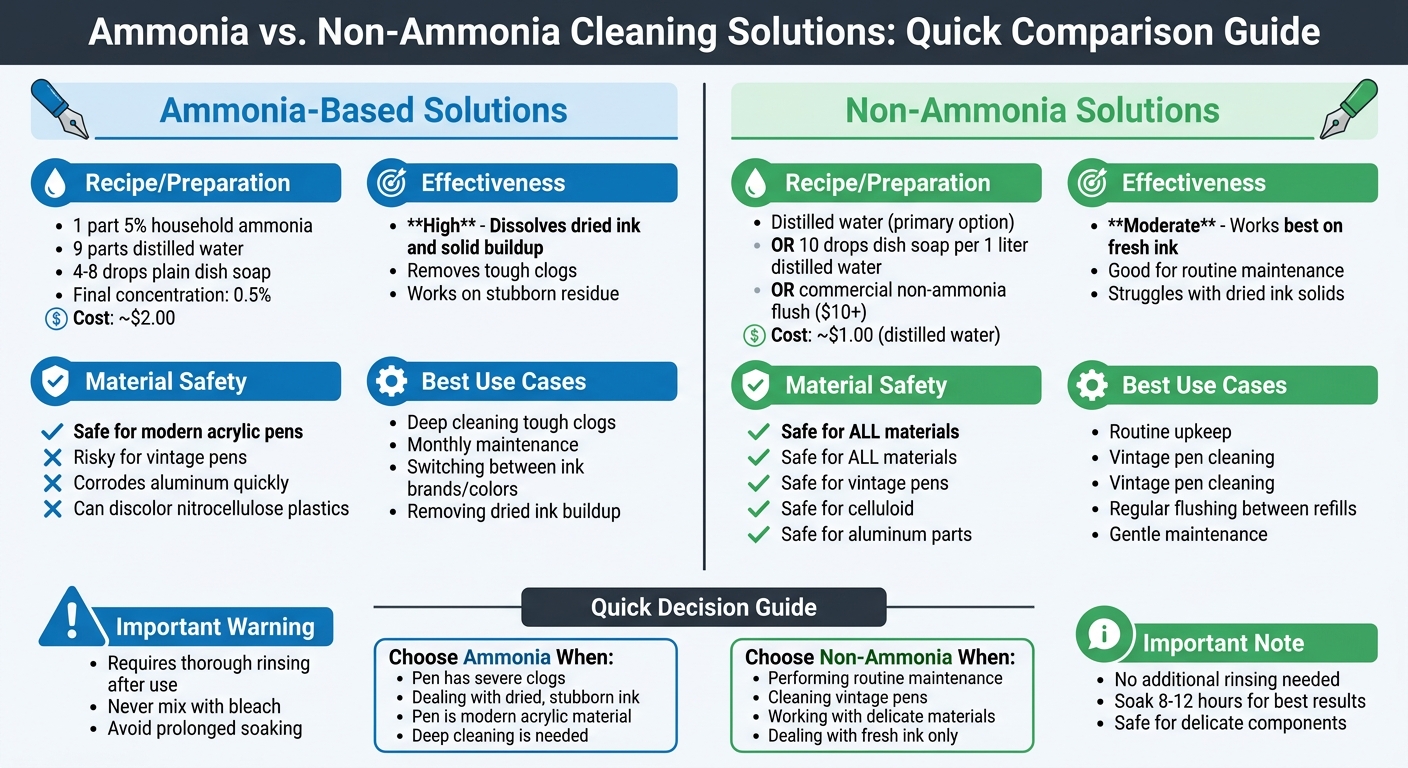
Ammonia vs Non-Ammonia Fountain Pen Cleaning Solutions Comparison
DIY Make Your Own Fountain Pen Wash / Flush
sbb-itb-1dd4fe9
Ammonia-Based Cleaning Solutions
Ammonia solutions pack a punch when it comes to cleaning, offering far more cleaning power than water alone. They’re particularly effective at dissolving dried ink and restoring the ink flow in pens that have become clogged.
How to Prepare an Ammonia Solution
To make an ammonia cleaning solution, mix 1 part 5% household ammonia with 9 parts distilled water to create a final concentration of 0.5%. Stick to distilled water to prevent limescale buildup in the pen’s feed. If you're working with a 10% ammonia solution, dilute it further by doubling the amount of water to maintain the same safe concentration.
For an extra boost, add 4–8 drops of plain dish soap (avoid any with added lotions) to help break down oils. Combine everything in a squeeze bottle using a funnel, then shake gently to mix. This DIY solution costs around $2.00 to make, which is significantly cheaper than commercial pen flushes.
You want the total effective amount of ammonia in your pen flush to amount to 0.5% - no more!
How to Use Ammonia Solutions
Skip soaking your pen and instead flush it actively with the ammonia solution. A bulb syringe works well for this - use it to push the solution through the feed three or four times. This method removes clogs without exposing delicate parts to prolonged chemical exposure. Once you’re done flushing, rinse the pen thoroughly with plain distilled water multiple times to ensure all traces of ammonia and soap are gone.
Be sure to rinse your pens in clear fresh water several times after using pen flush to be sure you've removed any residue of soap and ammonia before storing or refilling.
These steps help explain when ammonia solutions shine compared to other cleaning and maintenance options.
Advantages of Ammonia Solutions
Ammonia solutions are far more effective than plain water or mild soap mixes, especially when dealing with stubborn dried ink that clogs a pen’s feed. They’re great for breaking down tough solids and even for removing ink stains from pen plastics. If you’ve been using inks with glitter particles or high-saturation pigments, ammonia solutions can tackle the heavy residue these inks leave behind.
For modern pens made from acrylic plastics, ammonia provides a deep clean at a fraction of the cost of commercial cleaning products. However, ammonia isn’t suitable for vintage pens or those made from delicate materials like celluloid, resin, or aluminum.
The ammonia eats aluminum quite fast
Non-Ammonia Cleaning Solutions
Non-ammonia cleaning methods provide a gentler way to maintain the best fountain pens for beginners and experienced users alike, making them a great choice for regular upkeep and for safeguarding fragile materials. Unlike ammonia-based options, these solutions are safe for most standard inks and help preserve delicate components like vintage celluloid and aluminum parts.
Distilled Water Soaks
A simple overnight soak in distilled water is often enough to remove most ink residue without relying on chemicals. To do this, disassemble the pen and submerge the parts in distilled water for 8–12 hours. Using distilled water is key because it prevents limescale buildup in the feed - an issue that can arise with tap water. Plus, it’s an affordable option, with bottles costing around $1.00 each.
"Soaking in regular (distilled) water will remove most of the gunk." - One Pen Show
After soaking, flush the pen with fresh distilled water using a bulb syringe. If traces of ink persist and your fountain pen is not writing correctly, you may need to step up to a slightly stronger cleaning solution.
Dish Soap Solutions
When water alone doesn’t cut it, adding a small amount of dish soap can help. Mix 10 drops of plain dishwashing detergent (such as Dawn or Joy) with 1 liter (about 1 quart) of distilled water and shake gently. Be sure to choose a detergent without lotions or additives to avoid leaving residue inside the pen.
Flush this solution through the pen’s feed to loosen stubborn ink deposits. Afterward, rinse thoroughly with clear distilled water to remove any soap that could interfere with future ink flow.
If ink clogs persist despite these steps, you might want to try a commercial non-ammonia flush for deeper cleaning.
Commercial Non-Ammonia Flushes
For tougher cleaning tasks, pre-made non-ammonia flushes are a convenient option. These products, priced at $10 or more per bottle, are specifically formulated for fountain pen care. Some enthusiasts also recommend professional surfactants like Kodak PhotoFlo 200 or Ilford Ilfoto, which are designed to leave minimal residue, ensuring smooth ink flow.
Ammonia vs. Non-Ammonia Solutions
Ammonia Solutions: Advantages and Disadvantages
Ammonia-based cleaners are excellent at tackling stubborn ink residue that water alone can't manage. They’re particularly effective for breaking down the sticky buildup that often occurs when mixing different ink brands or colors. Regular monthly cleaning with ammonia can help prevent clogs and reduce the need for professional nib maintenance.
That said, ammonia comes with its risks. It can corrode aluminum quickly and may discolor nitrocellulose plastics if pens are left soaking for too long. This makes it unsuitable for vintage pens, especially older Wahl Eversharp models from the 1920s and 1930s, which should never be cleaned with ammonia solutions.
Non-Ammonia Solutions: Advantages and Disadvantages
Non-ammonia options, like distilled water or mild dish soap solutions, are much safer for nearly all fountain pen materials. They’re ideal for routine maintenance, especially when dealing with vintage pens. These solutions work well for regular flushing between ink refills and don’t require extra rinsing after cleaning. They’re also very affordable - distilled water typically costs about $1.00 per bottle.
However, non-ammonia methods are less effective on dried ink solids, particularly in piston fillers or when waterproof inks are involved. They’re best suited for fresh ink cleanup or lighter maintenance tasks.
Comparison Table: Ammonia vs. Non-Ammonia
Here’s a quick side-by-side look at how these two solutions stack up:
| Factor | Ammonia Solution | Non-Ammonia Solution |
|---|---|---|
| Cleaning Power | High; dissolves solid ink buildup | Moderate; works best on fresh ink |
| Modern Pen Safety | Safe for most materials, but risks aluminum corrosion | Safe for all materials |
| Vintage Pen Safety | Risky; avoid with celluloid or aluminum parts | Safe for vintage pens |
| Cost | Extremely low (DIY mixtures cost pennies) | Minimal (distilled water ~$1/bottle) |
| Post-Cleaning | Requires thorough rinsing to remove residue | No additional rinsing needed |
| Best Use | Clogs, ink changes, monthly deep cleaning | Routine care and vintage pen cleaning |
When to Use Each Solution and Safety Tips
Selecting the right cleaning method depends on how severe the ink buildup is and how delicate the pen's materials are.
When to Use Ammonia Solutions
Ammonia is perfect for tackling tough, dried ink that water alone can’t handle. It’s particularly useful when switching between different ink brands or colors, as these can sometimes react and create thick clogs. Ammonia is also great for cleaning cartridge pens and breaking down grease or baked-on grime. To use it safely, dilute household ammonia at a 1:2 ratio with water. Afterward, flush the pen three to four times with distilled water to remove any residue. Using tools like a de-soldering bulb or ear syringe can help push the solution through the pen's feed system effectively.
When to Use Non-Ammonia Solutions
For regular cleanings - especially monthly maintenance - or when working with vintage pens, opt for gentler solutions like distilled water or a mild dish soap mixture. These options are safer for pens with fragile components. Vintage pens, in particular, benefit from non-ammonia solutions, as ammonia can corrode aluminum parts or discolor nitrocellulose barrels. For routine care, cool or room-temperature tap water is often enough.
Even if you just flush several times with tap water on an irregular basis, you should be able to avoid most clogging problems.
Save ammonia treatments for pens that are truly clogged or heavily fouled.
General Cleaning Precautions
No matter which cleaning solution you choose, follow these safety guidelines. Never mix ammonia with bleach-based products, as this creates toxic chloramine gas. If using commercial-strength ammonia (30%), be aware that it can damage plastics unless properly diluted - stick to household ammonia (5–10%) as directed. When soaking pens with dried ink, avoid agitating the solution if the pen has delicate gold nibs, such as those made from 14K or 18K gold. Lastly, never store a pen for long periods with a full cartridge or converter, as this can lead to stubborn clogs that are much harder to clean.
Conclusion
Deciding between ammonia and non-ammonia cleaning solutions depends on your fountain pen's condition and maintenance needs. For everyday care, simple distilled water flushes are usually enough. However, persistent ink residue - especially from specialty inks like shimmering or pigmented formulas - might call for ammonia-based solutions as part of your cleaning routine.
As Brian Goulet, Founder of The Goulet Pen Company, puts it:
Cleaning a fountain pen is essentially rebooting it, you'll flush out any dried ink or blockages that may have developed over time, and you'll get that ink flowing again as it was originally intended!
Think of cleaning methods as a tiered approach: distilled water for regular upkeep, dish soap for mild issues, and ammonia solutions for tackling stubborn clogs. The key is to match the cleaning method to your pen's specific needs.
That said, ammonia-based solutions come with risks. They can corrode aluminum parts and discolor nitrocellulose barrels, making them unsuitable for vintage pens. While effective for severe clogs, these solutions demand careful use, especially with delicate materials. Regular cleaning - such as monthly maintenance or when switching ink colors - can prevent mechanical problems like gasket wear in piston-fillers or vacuum issues that lead to skipping.
Proper maintenance goes beyond just cleaning; it helps extend the life of your pen while keeping it in peak condition. Much like changing the oil in your car, flushing your pen clears feed channels and ensures smooth operation.
To keep your fountain pen in top shape, start with water for light maintenance, use soap for moderate residue, and save ammonia for the toughest clogs. Always dilute ammonia properly, rinse thoroughly, and avoid storing pens with full cartridges for long periods. By mastering these cleaning techniques, you’ll ensure your fountain pen performs beautifully for years to come.
FAQs
How do I know if my pen has aluminum parts?
When comparing aluminum and stainless steel pens, it's helpful to check the manufacturer's specifications or product descriptions for details.
Aluminum pens are known for being lightweight and often come in a variety of colorful anodized finishes. However, they tend to be more susceptible to scratches and corrosion over time.
Stainless steel pens, on the other hand, are heavier but offer greater durability. They're also more resistant to scratches, making them a sturdy option for everyday use.
What should I do if distilled water and soap still won’t clear a clog?
If distilled water and soap don’t do the trick, you can try soaking the nib and feed in a homemade ammonia-based solution. This method works well for stubborn ink residues, but be cautious - avoid using it on vintage or aluminum pens, as it might cause damage. You can also use tools like a bulb syringe for flushing or an ultrasonic cleaner for deeper cleaning. Once done, make sure to rinse everything thoroughly with distilled water to remove any leftover residue and keep your pen in good condition.
Can ammonia damage my nib or pen seals?
Ammonia-based cleaners can pose risks to specific parts of fountain pens. For example, gold nibs crafted from 9-14K alloys may experience stress corrosion cracking over time. In contrast, nibs made from higher-purity gold (18K or more) are generally less vulnerable. Additionally, ammonia can break down certain plastics, rubber seals, and aluminum components, leading to discoloration or even damage. To protect your pens, it's wise to avoid or minimize the use of ammonia, especially on vintage models or pens made with delicate materials.