

Fountain pens offer a smooth writing experience but require proper care and technique. Many users unintentionally damage their pens or compromise performance due to avoidable mistakes. Here's a quick overview of the most common issues and how to prevent them:
- Pressing too hard on the nib: Fountain pens need only a light touch; excess pressure can damage the nib.
- Using the wrong paper: Low-quality paper causes ink feathering, bleed-through, and poor writing results.
- Filling with incompatible ink: Non-fountain pen inks, like India ink, can clog or corrode the pen.
- Skipping regular cleaning: Neglecting cleaning leads to clogs and uneven ink flow.
- Writing with the nib upside down: This damages the nib and disrupts ink flow.
- Dropping the pen nib-first: Impacts can misalign or ruin the nib, making it unusable.
- Letting ink dry inside the pen: Dried ink clogs the feed, causing hard starts and uneven lines.
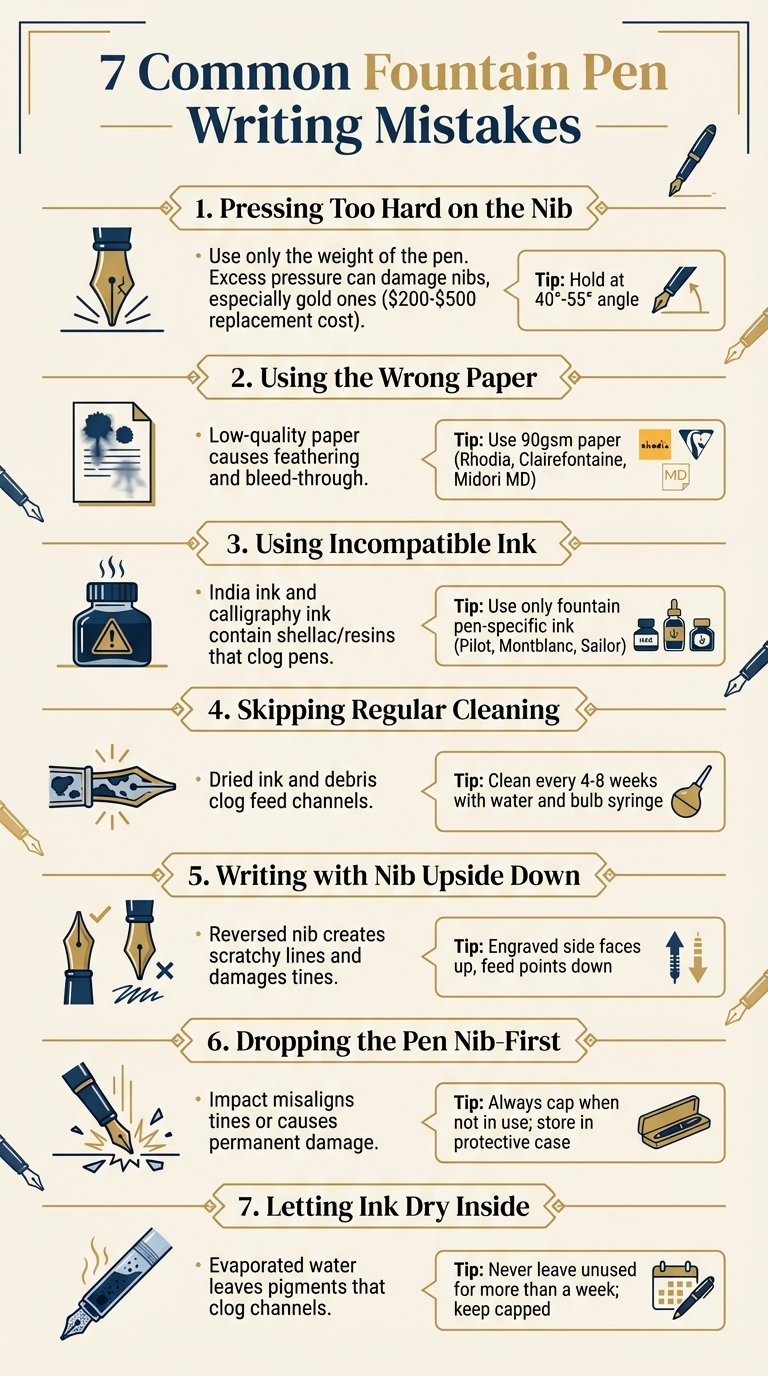
7 Common Fountain Pen Writing Mistakes and How to Avoid Them
5 Most Common Fountain Pen Mistakes!
1. Applying Too Much Pressure on the Nib
One common mistake among fountain pen users is pressing too hard on the nib. This habit often comes from years of using ballpoint pens, which demand more force to transfer ink onto the page.
But fountain pens are a different story. Applying too much pressure can damage the nib, especially softer gold nibs, which may require an expensive replacement ranging from $200 to $500. As Pen Chalet explains:
A 'sprung' nib is one that has been lifted off of the feed due to a bend in the main body of the nib.
When the nib separates from the feed, it disrupts the capillary action that allows ink to flow, leading to skips or even a total ink flow failure.
To ensure you're using the right amount of pressure, try the "weight of the pen" test. Hold your fountain pen lightly at the end of the barrel and drag the nib across a piece of paper. If your pen is properly tuned, it should write smoothly with just its own weight - no extra force needed.
The secret to smooth writing? Let the pen glide effortlessly across the page. A relaxed grip, using your lower arm and shoulder rather than just your fingers, can help you maintain the ideal writing angle of 40°–55°, ensuring consistent ink flow. Plus, this approach reduces hand fatigue, making your writing experience more enjoyable.
Finally, don’t overlook how your choice of paper might influence your overall writing experience. Different papers can significantly affect how your fountain pen performs.
2. Using the Wrong Paper
Once you've got the hang of controlling pen pressure, the next step to achieving smooth, clean writing is pairing your fountain pen with the right paper.
Low-quality paper can seriously hinder your pen's performance. Issues like feathering - where the ink spreads outward, creating blurry edges - can ruin the look of your writing. Then there's bleed-through, when the ink soaks all the way through the page, making it hard (or impossible) to use the other side. You might also notice ghosting or ink spreading, which are equally frustrating.
As the Art Noise Team explains:
If your fountain pen ink feathers, bleeds, or smudges, paper is often the real culprit.
To steer clear of these problems, choose paper designed specifically for fountain pens. Brands like Rhodia, Clairefontaine, Midori MD, and Black n' Red are excellent options. Look for paper with a weight of around 90gsm - this strikes a nice balance between absorbing ink and allowing it to dry properly. For example, Clairefontaine notebooks are a great choice and cost between $6 and $21.
Before committing to a new notebook, test it out. Write a few lines and check the back of the page for any signs of bleed-through. This little bit of effort ensures your paper works in harmony with your pen, making every writing session a breeze.
3. Using Incompatible Ink
Using the wrong type of ink can seriously harm your fountain pen. These pens are designed to work with water-based inks that flow smoothly through their delicate feed systems using capillary action. Introducing inks not specifically made for fountain pens can cause significant issues.
India ink and calligraphy ink are two of the most common offenders. These types of ink often contain substances like shellac or resins that can harden inside your pen, leading to clogs. As Inkstable points out:
India ink, for example, includes shellac, a resin that can dry out and harden within the intricate feed system of a fountain pen, causing severe clogs.
Additionally, inks with extreme acidity or alkalinity can corrode the metal components inside your pen over time. Cleaning up after using shellac-based inks often requires strong solvents like denatured alcohol, which can damage plastic parts of the pen. Calligraphy inks pose another risk, as their heavy pigments can settle and solidify, creating blockages that are tough to remove.
To keep your fountain pen in good condition, stick to inks specifically labeled as "fountain pen ink." Trusted brands like Pilot, Montblanc, Sailor, and Caran d'Ache are formulated to ensure smooth flow and safe use. Look for pH-neutral inks to avoid corrosion, and steer clear of cheap inks from craft stores, which are usually intended for dip pens rather than fountain pens.
If you're looking to experiment with different inks, check out Fountain Pen Revolution, which offers a variety of affordable, high-quality fountain pen inks. Always double-check the label before filling your pen to avoid unnecessary damage and costly repairs.
4. Skipping Regular Cleaning
If you skip regular cleaning, your fountain pen's performance can take a hit. These pens rely on capillary action to pull ink through tiny channels in the feed and nib. Over time, dust, paper fibers, and dried ink flakes can build up, clogging those channels. This can lead to hard starts, skipping issues, and uneven lines. In short, neglecting cleaning means your pen won't work as it should.
To keep things running smoothly, clean your pen every 4–8 weeks. This routine helps prevent dried ink from clogging the feed and is especially crucial when switching ink colors. Mixing different ink formulas can cause blockages or even staining. As Brian Goulet from The Goulet Pen Company wisely says:
Cleaning your pen can seem like a chore, but trust us, it's totally worth it. Hard starts, skipping issues, and a myriad of other writing issues can be solved by simply using a little water or pen flush.
The good news? Cleaning is simple and doesn't require much. All you need is some water, a towel, and a bulb syringe. Start by removing the cartridge or converter, then rinse the nib and grip section under cool running water. Soak the section in a cup of clean water, replacing the water until it stays clear - this usually takes about 30 minutes. After that, air dry the parts on a lint-free cloth for up to 24 hours. Be careful not to use hot water, rubbing alcohol, or acetone, as these can damage plastic components.
If you're using high-maintenance inks like shimmer or iron gall, consider flushing your pen weekly. Regular cleaning not only ensures smooth writing but also prevents corrosion and helps your pen last longer.
sbb-itb-1dd4fe9
5. Writing with the Nib Upside Down
Using a fountain pen with the nib upside down can harm the pen and disrupt its performance. When the nib is reversed - where the feed faces up instead of down - it creates thin, scratchy lines and makes writing feel more resistant.
Fountain pen nibs are specifically designed to flex in only one direction. Writing upside down forces the tines to bend in the opposite way, which can lead to permanent damage. Moritz Pratt from ArtofScribing.com explains:
When you use them upside down, they bend in the opposite direction to what the designer intended, if they flex at all. This can damage the pen.
Improper nib orientation also reduces ink flow, requiring more pressure to write. This not only risks damaging the nib but can also leave marks on the paper and eliminate the unique line variations that specialty nibs provide.
To avoid these issues, always ensure the engraved side of the nib (where the brand and size are marked) faces upward, and the feed points downward. Hold the pen at an angle of 45°–55° for smooth ink flow. Proper nib positioning, just like regular cleaning and using the right ink, is key to keeping your fountain pen in excellent condition. Remember, a fountain pen is meant to glide effortlessly across the paper with minimal pressure.
6. Dropping the Pen on Its Nib
Dropping a fountain pen nib-first can be disastrous. The impact often misaligns the tines, causes them to splay, or even leads to permanent damage. Even a quick drop can disrupt the nib's alignment or ink flow, making smooth writing a challenge. Brian Goulet, Founder of The Goulet Pen Company, sheds light on the issue:
Dropping your fountain pen nib down... is so heartbreaking to hear about. If you're lucky, the pen you've dropped has an easily replaceable nib... Some other brands have proprietary nibs which are not sold through retailers, or at all.
For luxury pens with proprietary nib designs, a single drop could mean the pen becomes unusable, as replacement options may not be available.
To minimize the risk of further damage, proper storage is key. Always cap your pen when not in use, and consider storing it in a protective case or sleeve to avoid accidental falls or scratches. Fountain Pen Revolution, for example, offers cases and stands designed to keep your pens secure. If your pen does take a fall, inspect the nib closely before using it again - writing with a damaged nib can worsen the issue and compromise the ink flow system.
For daily use, a leather pen slip or zippered case provides added protection. Combined with regular cleaning and careful handling, these measures help maintain your fountain pen’s performance and longevity.
7. Letting Ink Dry Inside the Pen
Leaving ink sitting in your fountain pen for too long can lead to trouble. As the water in the ink evaporates, it leaves behind pigments, dust, and residue that clog the delicate channels in the feed. Tim Redmond, Editor of Craftsmanship Magazine, puts it plainly:
Fountain pen ink will eventually dry and clog the very tiny capillary channels that funnel the ink to the nib.
This clogging can cause frustrating issues like hard starts, scratchy writing, patchy lines, and even lighter ink tones due to restricted flow. Vintage pen expert Mauricio Aguilar offers a simple solution:
The best way to avoid clogs is never to leave a pen with ink in it unused for more than a week.
If you plan to store your pen for a while, make sure to clean it thoroughly beforehand. Flush the nib and feed with water until it runs completely clear. This step is an essential part of maintaining your pen, alongside the regular cleaning habits we’ve already covered.
To prevent ink from drying out and causing blockages, incorporate a few easy practices into your routine:
- Flush your pen with room-temperature water every 4–8 weeks to keep buildup at bay. Using a bulb syringe can make this process more effective than simple rinsing.
- Always keep your pen capped when not in use to maintain moisture around the nib. This is especially important for extra-fine nibs, which naturally provide less lubrication compared to broader ones.
If you’re dealing with a stubborn clog, soak the nib and feed assembly in water overnight. Avoid using hot water, rubbing alcohol, or acetone, as these can damage your pen. Taking these steps will help keep your fountain pen writing smoothly and reliably.
Conclusion
As Caran d'Ache wisely puts it:
A fountain pen is so much more than a simple writing tool. It is an elegant and personal accessory that needs care.
The seven mistakes highlighted earlier can negatively affect your pen's performance and durability. But the good news? A few simple habits can make all the difference.
Handle your pen with a light touch, stick to fountain pen–specific ink, give it a flush with room-temperature water every 4–8 weeks, and always keep it capped when not in use. These straightforward practices ensure smooth ink flow, reduce the risk of damage, and keep your pen in top condition for years to come.
If you're just getting started, Fountain Pen Revolution offers affordable options, with bundles starting at $29 and starter sets at $35. Their range includes pens, nibs, ink, and accessories perfect for beginners and seasoned writers alike.
With a little care and the right tools, you’ll enjoy the smooth, luxurious writing experience that makes fountain pens such a timeless treasure.
FAQs
How do I know if I’m pressing too hard with my fountain pen?
If the nib feels stiff, the ink flow skips or blots, or the tines of the nib seem spread apart, you might be pressing too hard. Another clue is discomfort while writing or hand fatigue because the pen isn't gliding as it should.
Fountain pens are crafted to function with very little pressure - allow the ink to flow naturally and aim for a light, easy touch to achieve the smoothest writing experience.
What kind of paper works best with fountain pens?
For an exceptional writing experience with fountain pens, it's all about pairing them with the right paper. Opt for smooth, high-quality paper designed to minimize ink feathering and bleed-through. Ideally, choose acid-free, medium-weight paper - around 80–100 gsm or heavier, especially if you're using wetter inks. A satin or lightly coated surface works best to ensure the ink glides effortlessly without spreading or soaking through.
Here’s what to look for:
- A smooth finish to avoid the nib catching on the surface.
- Paper weight of 80–100 gsm or more to handle ink without issues.
- Acid-free and archival-grade paper to preserve your work over time.
The right paper makes all the difference, delivering clean, sharp lines and elevating your fountain pen writing experience.
Why is it important to clean your fountain pen regularly?
Keeping your fountain pen clean is key to ensuring it writes smoothly and consistently. Over time, dried ink and residue can build up in the nib and feed, leading to problems like skipping or scratchy writing. Regular cleaning helps clear these blockages, maintaining a steady ink flow and making your writing sessions more enjoyable.
Spending just a few minutes on routine maintenance not only enhances performance but also adds years to your pen's life. It's a small effort with big rewards for any fountain pen enthusiast.