

Fountain pen leaks can be frustrating, but they’re usually caused by avoidable factors. Here’s a quick breakdown of the most common issues and how to prevent them:
- Temperature Changes: Heat or cold can expand or contract the air inside the pen, forcing ink out. Avoid exposing your pen to extreme temperatures or direct sunlight.
- Overfilled Reservoirs: Filling the pen too much leaves no room for ink expansion, leading to leaks. Leave a small air gap when refilling.
- Faulty Cap Design: Poorly sealed or cracked caps can disrupt pressure balance, causing ink to escape. Test your cap’s seal and consider switching to a twist-off cap if needed.
- Misaligned Nib and Feed: If these parts aren’t aligned correctly, ink flow becomes irregular, often resulting in leaks. Inspect and adjust alignment carefully.
- Cracks or Damage: Cracks in the barrel, nib, or other parts can let air in, pushing ink out. Regularly inspect your pen for damage and handle it carefully.
- Loose Cartridge or Converter: Improperly installed ink reservoirs create a poor seal, allowing ink to leak. Ensure cartridges or converters are securely fitted.
- Wrong Storage Position: Storing the pen nib-down or in a warm pocket can cause ink to pool and leak. Store nib-up or horizontally to avoid messes.
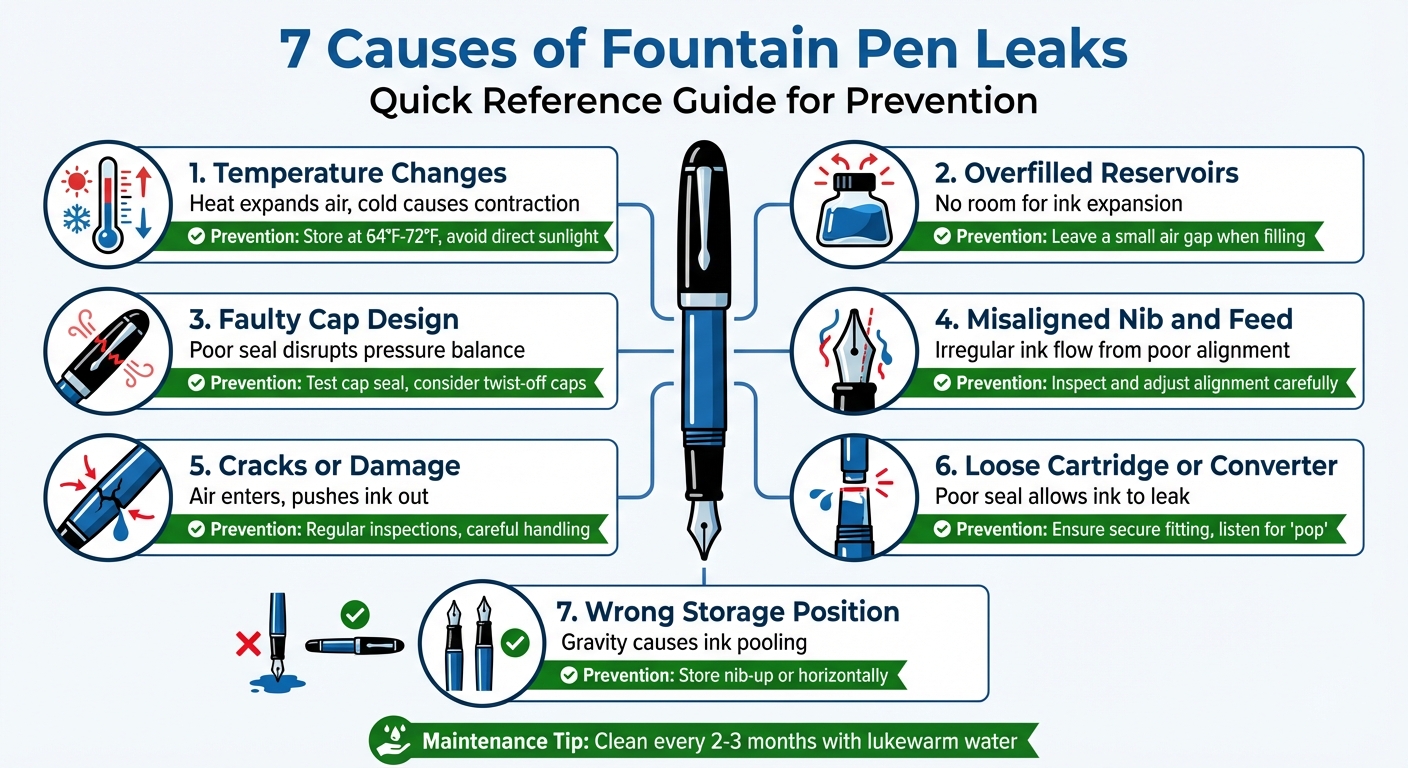
7 Common Causes of Fountain Pen Leaks and Prevention Tips
Why Fountain Pens Leak & How To Fix It
1. Temperature Changes
Temperature swings are a major culprit behind fountain pen leaks. When exposed to heat, the air inside the pen expands faster than the ink, pushing it out through the nib. Heat can also thin the ink, making it flow more freely, which might lead to unwanted oozing.
For example, carrying your pen in a pocket can warm it up enough to cause internal pressure changes, leading to leaks.
Cold temperatures aren’t any kinder to your pen. When the pen cools, both the ink and the trapped air shrink. Then, if you move the pen to a warmer environment, the sudden expansion of air can force ink out. This is why pens left in cold cars often leak as soon as they’re brought indoors.
To prevent these temperature-related mishaps, avoid exposing your pens to extreme conditions. Don’t leave them in hot cars, near heaters, or in direct sunlight. Instead, store them in cool, dry areas with a stable temperature, ideally between 64°F and 72°F. If you’re flying, either fill the pen’s reservoir completely or empty it to prevent leaks caused by cabin pressure changes. And if your pen has been exposed to a temperature shift, let it sit for a few minutes to adjust to room temperature before uncapping.
2. Overfilled Ink Reservoirs
Filling your fountain pen's reservoir to the brim might seem like the most efficient way to go, but it's actually a common culprit behind leaks. Why? Because when there's no room left for expansion, trouble starts brewing. As fountain pen expert Jerry Norton puts it:
"Overfilled with cold ink, and placed in a warm pocket or in the warm sun on a desk, the fin structures under the nib may not be able to accommodate the thermal expansion of the ink".
When the ink warms up, it expands. That expansion creates pressure, and the ink gets forced out through the nib. EndlessPens explains it this way:
"Overfilling your pen increases the pressure inside it, which can cause the ink to be pushed out through the nib, especially when the pen is not in use".
This is why leaving a little space in the reservoir is so important.
Pens with piston or vacuum filling systems are particularly prone to this problem. Unlike pre-filled cartridges that come with a pre-measured amount of ink, these systems let you decide how much to fill. If you go overboard, you're asking for leaks. The maximum ink capacity listed for your pen isn't just a guideline - it’s there to prevent overpressure and the mess that comes with it.
To avoid this issue, always leave a small air gap when filling your pen. Stick to the instructions in your pen's manual, and if leaks still occur, try filling only to the recommended level to see if overfilling was the problem.
3. Faulty Cap Design
A poorly designed cap can lead to frustrating ink leaks. When a cap fails to maintain the internal pressure balance needed to keep ink securely in its reservoir, air begins to flow in and out. This disrupts the delicate equilibrium that prevents ink from escaping. In contrast, a well-made cap ensures this balance is preserved, keeping your pen leak-free.
One common culprit is the pull-off cap. When you remove a snap cap, it can create a partial vacuum, which pulls ink onto the nib. As EndlessPens explains:
"If you notice that the nib of your pen is always wet right after you pull the cap off, then it might be causing leaking issues."
This suction problem is especially frequent in entry-level pens, where convenience in handling often takes priority over achieving a tight, secure seal.
Another issue arises when the cap's inner design allows the nib to touch its walls. This contact can trigger capillary action, which draws ink out of the reservoir. Additionally, caps with small cracks or a loose fit are more sensitive to environmental changes, such as temperature shifts or air pressure variations during flights. These conditions can force ink out of the nib, creating a mess.
If you suspect the cap is the source of leaks, here’s a simple test: clean the nib thoroughly and loosely replace the cap. Leave the pen overnight. If the nib is dry the next day, the cap design might be to blame. In such cases, switching to a pen with a twist-off cap could be a better choice. Twist-off caps typically offer a more airtight seal and avoid the suction problems associated with pull-off designs.
4. Misaligned Nib and Feed
After addressing issues with cap designs, let’s focus on another critical internal factor: the alignment of the nib and feed. These two components work together to regulate ink flow, and even slight misalignment can disrupt this balance, leading to leaks. For the system to function properly, the nib slit must align perfectly with the ink channel on the feed.
When the nib and feed are out of sync, gaps can form, allowing ink to escape in unintended ways. Loclen highlights this issue, stating, "One of the most common issues faced by fountain pen users is leaking. This can occur due to a poor seal between the nib and the feed... ensure that the nib and feed are properly aligned and tightly fitted". Signs of misalignment include an overly inked nib that releases too much ink, resulting in thick, uneven lines or even dripping when the pen isn’t in use. You might also notice the nib appearing slightly rotated or a visible gap between the nib and feed when held up to light.
To identify alignment problems, carefully inspect whether the nib slit is centered over the feed’s ink channel. If misalignment is evident, gently adjust the nib and feed until they sit properly aligned. Ensure both are securely pushed into the pen’s section, as a loose fit can also contribute to leaks.
Additionally, check that the nib’s tines are parallel and evenly spaced. If one tine is raised higher than the other, gently press it down until both make contact with the paper at the same time. Once adjustments are made, test the pen to confirm smooth and consistent ink flow, as even small tweaks can make a noticeable difference.
sbb-itb-1dd4fe9
5. Cracks or Damaged Parts
Physical damage can create openings that lead to ink leaks. Cracks might appear in areas like the barrel, nib, feed, section, or even in internal components such as cartridges and converters. As Loclen points out:
"Leaking is a common problem with fountain pens and can be caused by a poor seal or a crack in the pen".
The real problem with cracks isn’t just the visible gap - they disrupt the pen’s internal pressure. When air seeps in through a crack in the barrel or reservoir, it can push ink out uncontrollably through the nib. Fountain Pens Online explains:
"Leakage arising from the pen's body might indicate an air leak in the pen's body itself or the pen's reservoir".
If you notice ink smudges on your fingers during regular use or see ink pooling inside the cap, a crack is likely to blame.
To catch these issues early, inspect your pen regularly using a magnifying glass or loupe with at least 10× magnification. Focus on the nib section, screw threads, and cartridge or converter connections. Holding the barrel up to a light can also help reveal hidden cracks. These routine checks can help you identify hairline cracks before they turn into bigger problems.
While minor nib issues might be fixed at home, cracks in the barrel, section, or internal components usually require professional repair - or in some cases, replacement.
To avoid cracks, store your pens in a protective case or holder to prevent accidental drops or impacts. By combining regular inspections with careful handling, you can keep your fountain pen in great shape and avoid those frustrating leaks.
6. Loose Cartridge or Converter Installation
Improper installation of the ink reservoir is another common culprit behind leaks. If the cartridge or converter isn’t seated correctly, it can create a poor seal, allowing ink to leak into the barrel. Many people mistakenly press the reservoir against the outer tubular housing instead of securing it firmly over the internal nipple inside the section. Chthulhu, a member of The International Association of Penturners, explains:
"People often try to seat the converter or cartridge into the tubular bit at the back of the section and think that's how it seals, but it needs to fit snugly over the nipple down inside that tubular bit."
Thankfully, identifying and resolving this issue is straightforward.
How to spot a loose connection:
Give the pen a gentle shake. If you hear rattling or notice the converter wobbling, it’s a sign of an improper seal. Another clue is ink staining where the feed meets the cartridge or a feed that remains overly saturated with ink.
Proper installation technique:
For cartridges, place the pen section on a flat surface with the ball end facing up, then press firmly until you hear a distinct "pop". For converters, check whether yours is a push-in or screw-in type. Push-in converters require firm pressure until they sit flush, while screw-in converters need to be fully threaded to ensure a proper fit.
Compatibility matters:
Using third-party cartridges can sometimes cause issues, as slight size differences may prevent a tight seal. Official brand cartridges, which typically cost only $1 to $2 more, are usually more reliable. If you suspect the converter is the problem, try replacing it with a standard cartridge. If the leak stops, the original converter was likely defective or improperly installed.
7. Wrong Storage Position
Storing your fountain pen with the nib pointing downward can cause ink to pool at the tip, thanks to gravity. This overwhelms the feed's ability to regulate the flow. On top of that, changes in temperature and air pressure can make the ink expand, making leaks even worse. As Pilot Pen Australia puts it:
"Storing a fountain pen nib-down will guarantee that you end up with an ink-filled cap, so always store your pen with the nib facing upward."
Brian Goulet, the founder of The Goulet Pen Company, shares a similar perspective:
"When I take pens with me in my pocket or laptop case, I'll store them nib up, usually, so that ink doesn't leak down into the cap like it would if they were nib down."
For everyday use, consider how and where you store your pen. If it's on your desk, keeping it horizontal is a smart choice. This position keeps the nib moist enough for smooth writing while reducing the chance of leaks.
One thing to avoid? Stashing your pen in your back or hip pocket. The heat from your body and the constant motion can expand the air inside the pen's reservoir. This can disrupt the ink flow and lead to unwanted messes.
How to Prevent Leaks Through Proper Maintenance
Taking care of your fountain pen isn’t just about keeping it clean - it’s about ensuring it works smoothly and avoids frustrating leaks.
As Fountain Pens Online explains:
"A properly working fountain pen does not leak. Leaking fountain pens directly result from there being a damaged part on the fountain pen or its improper maintenance."
Regular cleaning is the cornerstone of good maintenance. Every 2–3 months - or whenever you switch ink colors - rinse your pen with lukewarm water. This simple habit clears out clogs and prevents "hard starts", where dried ink blocks the nib. While cleaning, check for cracks, loose fittings, or worn seals that might cause leaks. After rinsing, dry all parts thoroughly on a paper towel before putting the pen back together. And don’t forget: ensure the cartridge or converter is securely in place, creating a tight seal.
Environmental factors can also play a role in leaks. Keep your pen away from direct sunlight and extreme heat, as these conditions can cause internal pressure changes. If you’re flying or heading to higher altitudes, either fill the ink reservoir completely or empty it to reduce the risk of air pressure causing leaks.
Whether you’ve got a $35 starter fountain pen or a high-end model, consistent care makes all the difference. Brands like Fountain Pen Revolution offer reliable pens that perform well when maintained properly. By taking the time to clean and inspect your pen regularly, you can sidestep common issues like misaligned nibs or loose cartridges, ensuring your pen stays in top shape.
Conclusion
Fountain pens are remarkable writing instruments that deliver reliable performance when potential leak causes are properly managed. As Pilot Pen Australia explains:
"The fountain pen is a marvel of technology that relies on gravity and capillary action to function properly without leaking all over the page."
When issues arise, they’re often the result of external factors - like temperature changes - or simple maintenance oversights, such as a loose cartridge. These are not flaws in the pen itself but rather manageable challenges that can be addressed with a bit of care and attention.
Common culprits, like overfilled ink reservoirs or improper storage, are easily avoidable. For everyday use, store your pen horizontally, and for long-term storage, keep it nib-up. Cleaning the pen every few months also ensures the cartridge stays seated correctly and prevents buildup. These small habits go a long way in keeping your pen writing smoothly, free from skips, hard starts, or messy ink leaks.
Just like any precision tool, a fountain pen thrives with regular upkeep. Whether you’re using a budget-friendly option from Fountain Pen Revolution or cherishing a family heirloom, consistent maintenance is key. With proper care, a fountain pen can last for decades, offering a smooth, effortless writing experience that requires far less pressure than a ballpoint pen.
FAQs
How can I stop my fountain pen from leaking due to temperature changes?
To avoid leaks caused by temperature shifts, keep your fountain pen in a cool and consistent environment. High heat can make the ink expand or become thinner, which increases the risk of leakage. Steer clear of leaving your pen in hot spots like a car or under direct sunlight.
For extra precaution, store your pen upright with the nib pointing up. This position helps prevent ink from gathering in the cap or leaking unexpectedly. Also, always ensure the pen is tightly capped when not in use to limit exposure to temperature changes. These straightforward habits can significantly reduce the chances of temperature-related leaks.
How can I tell if my fountain pen's nib and feed are misaligned?
When a fountain pen's nib and feed are out of alignment, it can cause some frustrating writing problems. You might notice inconsistent ink flow - like skipping or uneven lines - or experience a scratchy feel as you write. Visually, the nib could appear bent or uneven, with misaligned tines that make smooth strokes nearly impossible. Another issue is if the nib and feed aren't firmly seated in the grip section, which can disrupt the ink's flow onto the paper. Correct alignment is key to ensuring smooth ink flow and a better overall writing experience.
Why does installing a cartridge correctly help prevent fountain pen leaks?
Installing a cartridge the right way is crucial to avoid leaks and ensure your pen works as it should. A proper seal between the cartridge and the pen allows ink to flow smoothly into the nib without any mess. If the cartridge isn’t seated correctly, gaps or misalignment can cause ink to leak or clog the pen. Spending a few extra seconds to double-check the placement can spare you from spills and keep your pen writing flawlessly.