

Blotting paper is a must-have for anyone using fountain pens. It’s a specialized absorbent paper designed to soak up excess ink, helping your writing dry faster and stay smudge-free. Instead of waiting for ink to dry naturally - which can take over 25 seconds on certain papers - you can press blotting paper onto your writing and move on without worrying about smears or ink transfer.
Key Benefits:
- Prevents smudging: Ideal for left-handed writers or when using slow-drying inks.
- Keeps notebooks clean: Stops wet ink from transferring to opposite pages.
- Speeds up drying: Perfect for high-quality, non-absorbent papers like Tomoe River or Rhodia.
- Reusable: Can be reused multiple times until saturated.
How it works: Blotting paper absorbs wet ink through its porous fibers. To use, gently press it onto your writing - no rubbing needed - to dry your text quickly and neatly. You can also cut it to size for notebooks or use it with a rocker blotter for even pressure.
Whether you're journaling or writing letters, blotting paper ensures clean, polished results every time.
Bookman Presents: Blotter Paper for Fountain Pen Users - How It Works and Why You Need It
What Is Blotting Paper?
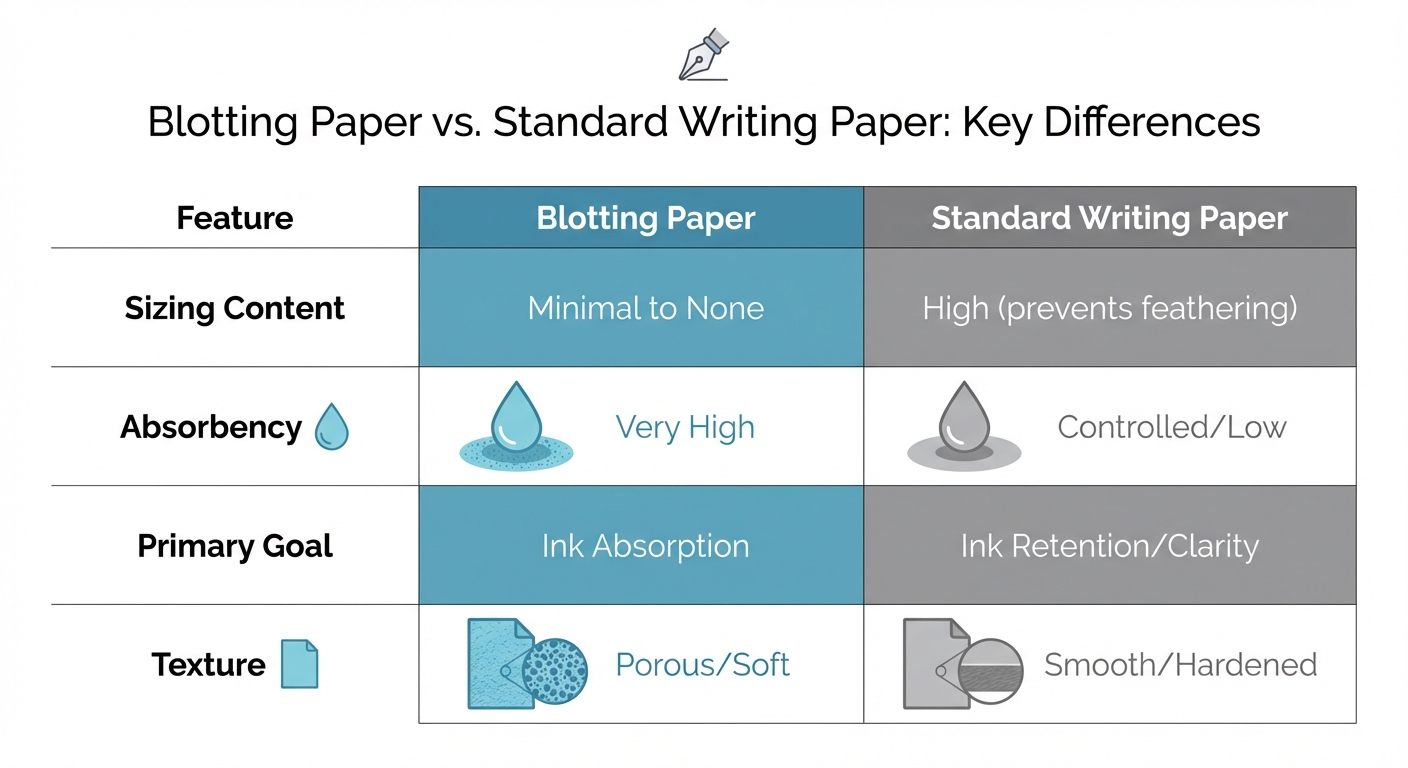
Blotting Paper vs Standard Writing Paper Comparison
Blotting paper is a special type of paper designed to soak up excess ink quickly and efficiently. The main difference between blotting paper and regular writing paper lies in "sizing" - a material added to paper to make it resistant to water. Blotting paper has little to no sizing, allowing liquid ink to seep into its fibers instantly, rather than pooling on the surface.
"The factor that determines whether a paper will blot ink... is what is called 'sizing.' Sizing makes paper more water-resistant... if you wanted a paper that blots well, you'd want a paper with as little sizing as possible." - Stephanie, Writing Expert
Thanks to its unique composition, blotting paper acts like a sponge for fountain pen ink. When pressed onto wet writing, it pulls the excess liquid into its porous fibers, leaving the text dry and smudge-free in seconds. It can even be reused multiple times until it becomes saturated and loses its absorbent properties.
Key Features of Blotting Paper
Blotting paper has distinctive physical traits that set it apart from regular paper, especially when used with fountain pens. Its texture, which feels more like porous cardstock, is designed to maximize ink absorption compared to the smooth, treated surface of standard writing paper. This intentional design ensures it absorbs liquid rather than resisting it.
The absorbency level of blotting paper is much higher than that of regular paper. While standard writing paper is treated to keep ink on the surface for crisp, clean lines, blotting paper pulls ink deep into its fibers. This feature is especially useful when working with wet fountain pens, broad nibs, or slow-drying inks on papers like Tomoe River, which can take over 25 seconds to dry.
| Feature | Blotting Paper | Standard Writing Paper |
|---|---|---|
| Sizing Content | Minimal to None | High (prevents feathering) |
| Absorbency | Very High | Controlled/Low |
| Primary Goal | Ink Absorption | Ink Retention/Clarity |
| Texture | Porous/Soft | Smooth/Hardened |
These characteristics make blotting paper an essential tool for fountain pen enthusiasts.
Why Fountain Pen Users Need It
For those who use fountain pens, blotting paper solves a range of everyday challenges. It prevents smudges, stops ink from transferring between pages, and is particularly helpful when working with slow-drying inks or high-quality, non-absorbent papers. You can even cut blotting paper to fit your notebook, doubling it as a bookmark and a protective barrier.
"Blotter paper is a super absorbent sheet of paper. It is commonly used to 'blot' up extra ink or hand oils that may get on your page as you write." - Laura Cameron, Writer, Well Appointed Desk
Before blotting paper became widely available in the 15th century, writers relied on sand to absorb excess ink - a messy solution that often led to accidental smears. Blotting paper has since become a much cleaner and more effective alternative for writing enthusiasts.
How Blotting Paper Works
Blotting paper is all about harnessing its absorbent properties to quickly and effectively soak up excess ink.
How It Absorbs Ink
The magic lies in capillary action. When you press blotting paper onto fresh ink, its unsized fibers draw the moisture in, leaving your writing dry in just seconds.
For the best results, apply vertical pressure. Gently place the blotting paper over the wet ink and press straight down. This technique lets the fibers absorb the excess moisture without disturbing the ink already set on the page. If you’re using a rocker blotter, its curved surface ensures even pressure distribution. But don’t worry - flat sheets work just as well if pressed directly down.
"The result is that you don't have to sit and wait for the ink to dry. I have found that gently laying the blotting paper on top of my wet writing and then pressing straight down gets the best results." - Fountain Pen Love
This precise method keeps your writing sharp and clean, which is especially important for fountain pen enthusiasts.
Common Mistakes to Avoid
Rubbing or dragging blotting paper across wet ink is one of the easiest ways to ruin your work. This horizontal motion smears the ink, so always avoid it.
Timing matters, too. Blotting immediately after writing can lift ink that’s already settling, leading to faded text. Wait a few seconds before blotting to let the ink start bonding to the paper. Lastly, keep an eye on your blotting paper. Reusing a sheet that's already soaked with dark ink can transfer unwanted color onto your page, particularly when working with lighter inks.
When to Use Blotting Paper
Blotting paper is your go-to tool when you need ink to dry quickly. Here are some common situations where it proves invaluable in your writing routine.
With Slow-Drying Inks
Certain high-quality coated papers, like Tomoe River, Rhodia, and Clairefontaine, are designed to prevent feathering and enhance ink sheen. However, these same properties often result in slower drying times. For example, papers such as Stalogy Editor's Series and Tomoe River S can take anywhere from 25 to 35 seconds for ink to dry fully.
Blotting paper comes to the rescue by significantly speeding up this process. Instead of waiting for the ink to dry naturally, you can gently press a sheet of blotting paper onto the wet ink. As Brian Goulet, founder of The Goulet Pen Company, puts it:
"If you're writing something thoughtful and you don't want to break the flow of your writing, a blotter can help you to stay 'in the zone' and keep you going without having to wait for your ink to dry".
To Prevent Smudges
Freshly written ink is especially prone to smudging, which can be a headache for writers and left-handers alike. By blotting each line immediately after writing, you can remove surface moisture and keep your work clean.
To Stop Ink Transfer
Closing a notebook or journal while the ink is still wet often results in ink transferring onto the opposite page, leaving behind an unwanted ghosting effect. This is particularly common with heavy ink applications or when using a wet nib that lays down a thick line. To avoid this, place a custom-cut piece of blotting paper over the wet pages before closing your notebook. This simple step absorbs excess moisture and keeps your pages pristine.
sbb-itb-1dd4fe9
How to Use Blotting Paper
Now that you know why blotting paper is such a handy tool, using it the right way can make a big difference. Done properly, it ensures neat, smudge-free writing every time.
Press Gently - Don’t Rub
The key to using blotting paper is simple: press it down gently without sliding it around. Lay the blotting paper flat over the wet ink and apply even pressure. Fountain Pen Love advises:
"I have found that gently laying the blotting paper on top of my wet writing and then pressing straight down gets the best results. You don't want to rub or move the blotting paper, as you will likely smear your writing before the ink dries."
For best results, use a rocker blotter instead of your fingers to ensure even pressure. Also, give the ink a few seconds to settle before blotting to avoid disrupting its flow.
Double It as a Bookmark
Blotting paper isn’t just for blotting - it can also be a practical bookmark. Keeping a piece in your notebook means it’s always within reach and can protect your pages from ink transfer. Brian Goulet, founder of The Goulet Pen Company, shares:
"I can just shut it and know that the ink won't go over to the other page. This works great in planners, too."
When you’re done writing, place the blotting paper over the fresh ink before closing your notebook. The pressure from the closed book absorbs any extra moisture while keeping the opposite page clean.
Trim It to Fit Your Needs
Blotting paper can also be customized to suit your specific needs. Standard sheets (7.5″ x 4.75″) can be cut down to fit planners, notebooks, or rocker blotters. Just add an extra 1/2 inch if you plan to fold it. Brian Goulet highlights the cost benefits:
"These sheets can be cut down into 4 strips to fit the Jacques Herbin Rocking Blotter, giving you 40 sheets for your blotter."
Custom-sized pieces fit neatly inside notebooks without sticking out or getting crumpled, making them ideal for on-the-go use.
Blotting Paper vs. Rocker Blotter
Both loose sheets and rocker blotters are designed to absorb excess ink, but they work in different ways. Loose sheets are simple, flat pieces of absorbent paper that you press onto wet ink using your fingers. In contrast, rocker blotters are desk tools with a curved base and a handle, holding a strip of blotting paper. They use a rocking motion to absorb ink.
The main distinction between the two lies in how pressure is applied. When using loose sheets, the pressure is focused where your fingers press, which can lead to uneven blotting or "dead spots" where ink remains untouched. Rocker blotters, on the other hand, distribute pressure evenly across their curved base, making them faster and more consistent. This aligns with advice about the importance of applying even pressure when blotting. As Fountain Pen Love points out:
"In my experience, a rocker blotter works better and is easier to use than just a sheet of blotting paper. It tends to blot more evenly since the pressure is distributed across the paper and not just where you press with your fingers or hand."
Portability is another consideration. Loose sheets are lightweight and can easily be tucked into notebooks or planners, making them ideal for travel or on-the-go use. Rocker blotters, however, are stationary desk tools. If you primarily write at a desk, a rocker blotter offers convenience and speed. For those who journal while commuting or traveling, loose sheets are the more practical option. The table below highlights the differences to help you decide which is better for your needs.
Comparison Table
| Feature | Loose Blotting Paper | Rocker Blotter |
|---|---|---|
| Cost | Low (~$13.75 for 10 sheets) | Moderate to High ($10–$80) |
| Portability | High (easily fits in notebooks) | Low (designed for desk use) |
| Ease of Use | Requires careful pressing | Very easy; ergonomic handle |
| Pressure | Uneven (finger-based) | Even (curved base) |
| Main Use | Bookmarks, travel, hand rests | Dedicated desk writing |
| Additional Uses | Multipurpose (e.g., bookmark, hand rest) | Limited to blotting |
For those on a budget, loose sheets are a cost-effective choice. A pack of 10 full-sized sheets (7.5" x 4.75") costs around $13.75 and can be cut into approximately 40 strips for use with rocker blotters. Rocker blotters, however, require an initial investment. Basic models are available for $10 to $20, while higher-quality options like the Jacques Herbin Desk Ink Blotter cost about $35.10. Ultimately, your choice should reflect your writing habits and where you tend to write - whether that’s at a desk or on the move.
Tips for Getting the Most from Blotting Paper
Reuse Until It's Fully Saturated
Blotting paper can last a surprisingly long time - sometimes months or even years - depending on how often you use it. Ink spots on the paper are perfectly normal, and there's no need to replace it until it stops absorbing ink effectively. Brian Goulet, Founder of The Goulet Pen Company, puts it best:
"You can use the same piece of blotting paper over and over and over again, well beyond when the sheet becomes covered in ink spots. My rule is, I change it when it no longer absorbs ink."
The key sign that your blotting paper is ready for retirement is when it's so saturated with dried ink that it can't soak up fresh ink anymore. If you notice it transferring old ink onto new writing - especially with lighter-colored inks - it’s time to swap it out. Many pen enthusiasts have reported using the same sheet for several years before needing a replacement.
Avoid Over-Blotting
Timing matters when it comes to blotting. If you use the paper too soon, it can pull away too much ink, leaving your writing looking dull or undersaturated. Instead, let the ink sit for a few seconds before gently pressing the blotting paper down. Avoid rubbing, as this can smear the ink.
This is especially important if you’re using specialty inks with sheen. Those shimmering effects depend on a thin layer of excess ink drying slowly on the surface. As Fountain Pen Love explains:
"Using a blotter removes any excess ink from the surface of the paper, which reduces sheen, so if you're a fan of high-sheen inks, you may be better off skipping the blotting paper."
By using blotting paper properly, you can keep your writing vibrant and your specialty inks looking their best.
Store It the Right Way
Proper storage can extend the life and performance of your blotting paper. Always keep it in a clean, dry place to maintain its absorbency. A great option is to tuck a sheet inside your notebook or journal. Not only does this keep it handy, but it also doubles as a bookmark and prevents ink from transferring onto facing pages.
For added convenience, consider cutting larger sheets into smaller strips that fit neatly into your notebooks, planners, or pen cases. Just make sure to store the paper flat to keep it ready for use and to protect your writing surfaces from accidental ink smudges.
Conclusion
Blotting paper is a must-have for fountain pen enthusiasts, offering a simple yet effective way to enhance your writing experience. By quickly absorbing excess ink, it eliminates wait times and prevents smudges, ensuring your work stays neat and polished.
Beyond just drying ink, blotting paper also tackles other challenges. It helps prevent feathering caused by skin oils and minimizes bleed-through during heavy ink use. These benefits make it an indispensable tool for maintaining clean, professional-looking writing.
As Brian Goulet aptly puts it:
"If you're writing something thoughtful and you don't want to break the flow of your writing, a blotter can help you to stay 'in the zone' and keep you going without having to wait for your ink to dry".
This ability to keep your creative momentum intact makes blotting paper an essential part of any fountain pen setup.
Whether you prefer flat sheets or a rocker blotter, using blotting paper is straightforward - just press gently, avoid overdoing it, and store it flat to maintain its effectiveness. With proper care, this budget-friendly accessory can serve you well for years to come.
FAQs
When should I replace my blotting paper for fountain pens?
Blotting paper needs replacing once it’s too saturated with ink or no longer absorbs properly. You’ll notice it’s time for a change if it starts smudging ink instead of soaking it up or shows discoloration and an uneven texture. If you use blotting paper often, make it a habit to check its condition regularly to ensure it’s still doing its job.
Does blotting paper affect the sheen of specialty fountain pen inks?
Blotting paper is generally crafted to soak up excess ink without affecting the sheen of specialty fountain pen inks. Its purpose is to manage ink overflow while leaving the ink's properties, like sheen, intact. That said, the kind of paper you use and the way you apply it can subtly affect the final look. If maintaining the ink's distinct qualities is a priority, testing on a small section first is a smart move.
How should I store blotting paper to keep it in good condition?
To get the most out of your blotting paper, store it in a cool, dry place, away from direct sunlight and moisture. Using a protective folder or envelope can shield it from physical damage like tears or creases. Be sure to keep it away from humidity, as this can cause warping or reduce its absorbency. With the right care, your blotting paper will stay in great condition and ready to use whenever you need it.