

Fountain pens require consistent care to perform well and last for years. Neglecting simple maintenance can lead to issues like skipping, scratchy writing, or ink clogs. Here's the essential breakdown to keep your pen in top condition:
- Daily Tasks: Wipe the nib after use, cap the pen immediately, and store it upright to avoid leaks.
- Weekly Cleaning: Flush the nib with lukewarm water to remove ink residue and check for damage or debris.
- Monthly Maintenance: Deep clean the nib and feed, soak stubborn ink buildup, and dry all components thoroughly.
- Storage Prep: Empty ink, clean the pen, and disassemble for long-term storage. Inspect seals and gaskets to prevent future damage.
With the right tools - like a bulb syringe, microfiber cloth, and pen flush - routine care becomes simple. Whether you’re using an entry-level pen or a cherished heirloom, following these steps ensures smooth, reliable performance every time you write.
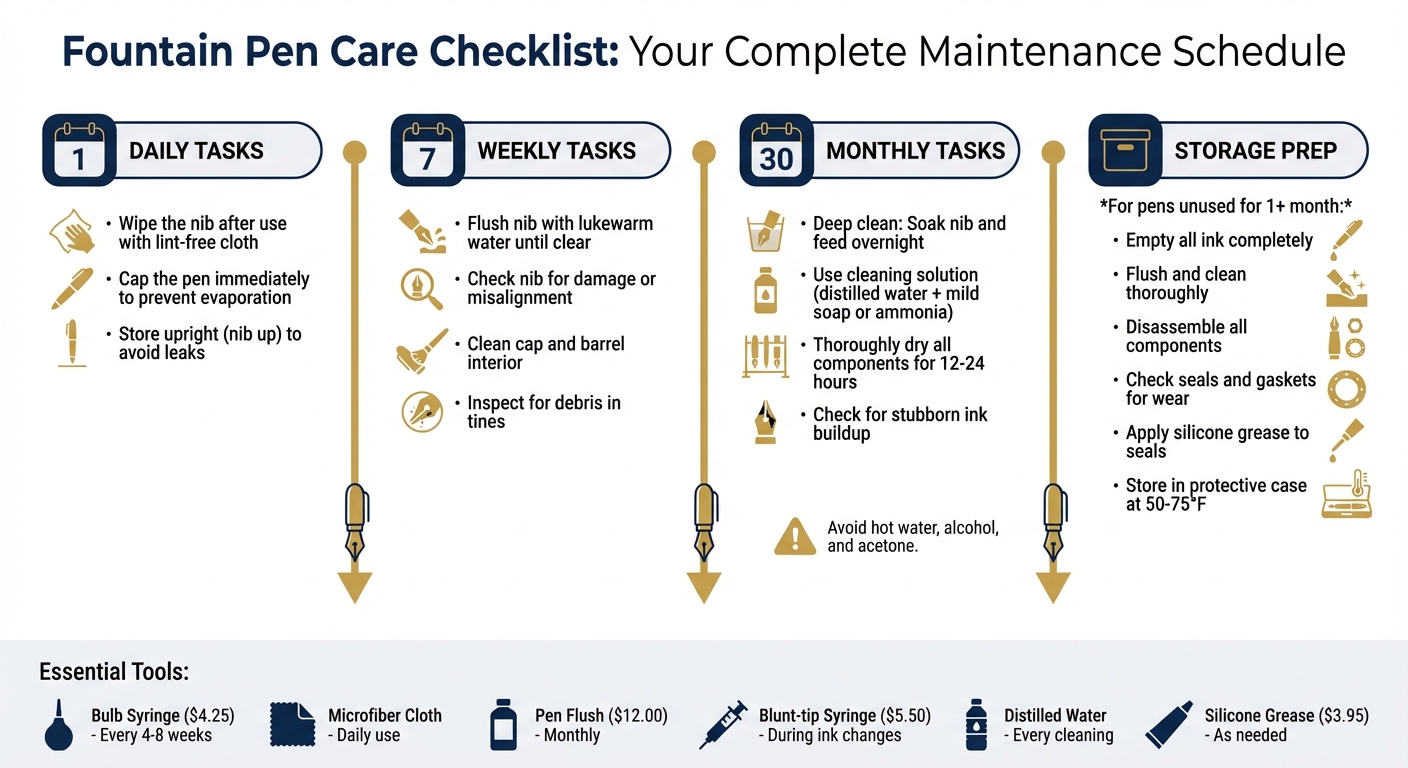
Fountain Pen Care Maintenance Schedule: Daily, Weekly, Monthly & Storage Tasks
How to Clean Your Fountain Pen Step by Step Tutorial: Keep Your Favorite Pens in Top Shape
Daily Care Checklist
Taking care of your fountain pen daily helps keep it in excellent working condition and prevents common issues. Here’s how to ensure your pen stays in top shape.
Wipe the Nib After Writing
Once you’re done writing, gently wipe the nib and feed using a lint-free cloth or an absorbent paper towel. This simple step removes leftover ink, paper fibers, and dust that can build up during use. Stay away from regular facial tissues - they shed tiny fibers that can get stuck in the nib slit or feed channels, interfering with the ink flow mechanism. A quick clean prevents ink from drying out and clogging the feed, which can lead to skipping during your next writing session.
Cap the Pen When Not Writing
Always cap your pen as soon as you finish writing. The cap creates an airtight seal that keeps the ink from evaporating. Without this seal, you might run into "hard starts", where the pen refuses to write until you scribble or press down to get the ink flowing again.
"Always cap your fountain pen when not in use. This prevents the nib from drying out and helps maintain ink flow." - Loclen
Make sure the cap is securely in place - listen for a click if your pen is designed that way. This is especially important for pens filled with black ink, as dried ink in the feed can cause lasting damage to the nib.
Store Upright in a Pen Stand or Case
When you’re done writing, store your capped pen vertically with the nib facing up, either in a pen stand or a case. This position lets gravity pull the ink back into the reservoir, which helps prevent leaks and stops ink from pooling in the cap.
For portable storage, keep your pen in a shirt pocket rather than in side or back pockets. This avoids heat exposure, which can cause the ink to expand and potentially leak.
Weekly Cleaning Checklist
Taking a few minutes each week to give your fountain pen a thorough cleaning can work wonders for its performance. This simple routine helps clear out ink buildup and keeps your pen writing as smoothly as the day you got it.
Flush with Lukewarm Water
Start by unscrewing the barrel and removing the cartridge or converter. Grab a bulb syringe and fill it with cool or room-temperature water - never use hot water, as it can damage your pen. If you're dealing with hard water in your area, distilled water is a safer choice to avoid mineral deposits.
Insert the syringe into the nib section and gently flush it until the water runs clear. This step clears out dried ink and any lingering debris. Once done, shake out any excess water, then place the nib section nib-down on a paper towel to air dry completely. While it dries, take a moment to check the nib for any signs of misalignment or trapped debris.
Check the Nib for Damage
With the pen still disassembled, carefully inspect the nib. The two tines should be evenly aligned - if they're not, your pen might feel scratchy when you write. Check the slit between the tines for tiny paper fibers or dried ink flakes that could block ink flow.
If you spot any debris, use a thin brass sheet to clean between the tines. Afterward, test the nib by writing at a 40–55° angle, applying only light pressure. The nib should glide effortlessly across the paper.
Clean the Cap and Barrel
Don’t overlook the cap - it can trap ink splashes that might stain the grip over time. Rinse the inside of the cap under cool running water to clear out hidden ink.
For the barrel, wipe its exterior with a soft, lint-free cloth. Use a damp cotton swab to clean any buildup inside. Before putting everything back together, make sure all parts are completely dry to avoid any moisture-related issues.
Monthly Maintenance Checklist
A monthly deep cleaning is essential to tackle stubborn ink residue, particularly from pigmented or iron gall inks.
Soak the Nib and Feed
Begin by carefully disassembling your pen. Unscrew the grip section from the barrel and remove the cartridge or converter. Flush the nib section with cool water until the water runs clear. For tougher ink buildup, prepare a soaking solution with distilled water. Add 3–5 drops of mild dish soap per cup for general cleaning, or use a teaspoon of household ammonia or white vinegar per cup for more persistent residue (avoid using ammonia on metal parts).
Submerge the nib and feed in the solution and let them soak overnight. This process helps loosen dried ink. The next morning, rinse all components thoroughly with cool water to ensure no traces of the cleaning solution or ink remain.
Thoroughly Dry All Components
After soaking and rinsing, the next step is to dry every part of the pen completely.
Shake the components gently to remove any trapped water, then wipe them down with a microfiber cloth. For the nib section, place two layers of paper towels in a clean glass and set the nib tip-down to allow for effective drying. Replace the paper towels if they become too damp.
Leave all parts disassembled in a well-ventilated area for 12 to 24 hours. This ensures every component is fully dry before reassembly. Any lingering moisture could dilute your next ink fill or, worse, promote mold growth inside the pen.
sbb-itb-1dd4fe9
Storage Preparation Checklist
If you're planning to set aside your fountain pen for more than a month, taking the time to prepare it properly is crucial. Neglecting this can lead to clogged feed channels or even nib oxidation.
Empty All Ink
Start by removing the ink cartridge or converter from your pen. If you're using a converter, blot any leftover ink before disposing of it. For cartridges you intend to reuse, store them upright to prevent leaks. Once the ink is removed, flush the nib with cool water until the water runs clear. Use the converter or piston mechanism to repeatedly draw in and expel water. For a more thorough cleaning, a bulb syringe can help push water through tight feed channels.
"If you leave the ink in the pen, the ink's acids will mix with oxygen and start oxidizing the nib." – Parker Pen
With the pen now ink-free and cleaned, you can move on to disassembling it for storage.
Disassemble for Storage
After cleaning, carefully unscrew the grip section and separate all components of the pen. This step allows each part to dry completely. Let the pieces air dry for several hours or, ideally, overnight to ensure no moisture remains trapped inside. Once dry, store the pen in a protective case. Avoid cases with nylon-lined interiors, as these can scratch the pen's finish. Choose a cool, dry storage spot - somewhere between 50°F and 75°F, with humidity levels of 40%–60%. Keep the pen away from direct sunlight, which can cause fading or cracking.
After disassembling and drying, it's important to check the seals and gaskets before finalizing storage.
Check Seals and Gaskets
Before putting your pen away for an extended period, inspect all seals and gaskets for any cracks or signs of wear, especially if the pen has been exposed to extreme temperatures. Cold conditions can cause ink to freeze and expand, potentially damaging internal seals. To protect these components, apply a thin layer of silicone grease to piston seals or cap threads, which can prevent them from seizing. If you notice any leaks or damage, it's best to have the pen repaired before storing it.
"Inadequate storage might result in leaking or damage to the tube, feeder, and/or nib." – Wood Fountain Pens
Tools You Need for Fountain Pen Care
To keep your fountain pen in top shape, having the right tools on hand is essential. The good news? These tools are affordable (under $15.00) and can last for years with proper use.
Cleaning Tools to Have
A bulb syringe (around $4.25) is a must-have for flushing cartridge and converter pens. It pushes water through the nib and feed with enough force to clear stubborn ink residue, doing a better job than a converter alone. Pair it with a microfiber cloth to gently wipe the nib and polish the pen without leaving scratches or lint behind.
For tougher cleaning jobs, a pen flush (about $12.00 for 8oz) is your go-to. It’s designed to dissolve dried ink pigments that plain water can’t handle. If you live in an area with hard water, distilled water is highly recommended to prevent mineral buildup in your pen’s feed.
A blunt-tip syringe (around $5.50 for a set of two) is incredibly handy for cleaning out empty cartridges and converters. It can also help you refill cartridges with bottled ink. Lastly, silicone grease (about $3.95) is perfect for lubricating piston mechanisms and ensuring watertight seals in eyedropper pens.
| Tool | Frequency of Use | Benefits |
|---|---|---|
| Bulb Syringe | Every 4–8 weeks | Flushes ink residue quickly by forcing water through the pen. |
| Microfiber Cloth | Daily or after cleaning | Cleans and polishes without scratching or leaving fibers behind. |
| Pen Flush | Monthly or as needed | Removes dried ink and oils that water alone can’t dissolve. |
| Blunt-tip Syringe | During ink changes | Cleans cartridges and converters, and assists with ink refills. |
| Distilled Water | Every cleaning session | Prevents mineral buildup in pens, especially in areas with hard water. |
| Silicone Grease | As needed (rarely) | Lubricates moving parts and ensures watertight seals in eyedropper pens. |
What to Avoid: Stay away from harsh substances like alcohol, acetone, or hot water. These can damage your pen’s finish or warp its internal components. After cleaning, allow the nib to rest nib-down for several hours to wick away any remaining moisture.
Fountain Pen Revolution Starter Recommendations

Choosing the right tools and accessories can make a big difference in your fountain pen journey, especially when paired with regular upkeep.
Starter Sets for Beginners
Fountain Pen Revolution offers budget-friendly options that are perfect for beginners. Their "I'm New To Fountain Pens" tool helps you find pens that align with your budget and writing preferences. A great all-in-one option is the FPR Quickdraw Flex, priced at $35.00. It comes with ink and basic accessories, making it an excellent choice for those just starting out. If you're looking to spend less, the FPR Darjeeling ($18.00) and FPR Indus ($20.00) are both solid choices. These pens are ideal for practicing maintenance skills before upgrading to more advanced models. Plus, they pair seamlessly with the care routines mentioned earlier, ensuring a smooth writing experience.
Accessories for Maintenance
To keep your fountain pen in top shape, consider adding some essential accessories from Fountain Pen Revolution. Their Nibs and Feeds collection is a lifesaver, offering spare parts to replace nibs if they get damaged - a common issue when you're still perfecting your writing technique. For storage, the FPR Leather 6 Pen Roll-Up Pouch ($39.00) is a stylish way to protect your pens from scratches and nib damage while on the go. Additionally, their Supplies section features inks specifically designed for fountain pens, ensuring smooth performance without clogging.
For added value, orders over $65.00 come with free US shipping. You can bundle your pen purchase with cleaning supplies and a storage case to maximize your investment. Keep an eye out for their "Pen-Of-The-Day" deals, which offer discounted backup pens to expand your collection.
Conclusion
Taking care of a fountain pen is straightforward: wipe the nib after each use, flush it with lukewarm water weekly, and give it a deep clean once a month. These simple steps can keep your pen writing smoothly for years to come. Regular maintenance prevents common issues like skipping, hard starts, and scratchy writing. It also preserves the pen's capillary action, ensuring a steady ink flow and reducing the risk of damage from dried ink or corrosion.
"Like any well-tuned machine, fountain pens need periodic cleaning to keep them performing their best."
Establishing a routine for cleaning and care is well worth the effort. Fountain Pen Revolution offers everything you need to get started, from maintenance supplies to affordable replacement parts. If you're new to fountain pens, their starter models, like the FPR Darjeeling ($18.00) or FPR Indus ($20.00), are great options to practice and perfect your care techniques without breaking the bank.
To keep your pen in top shape, consider cleaning it monthly or whenever you switch ink colors. Store it upright when filled with ink, clean it only with cool or lukewarm water, and let all parts dry completely before reassembly. By adopting these habits, pen care becomes less of a chore and more of a rewarding ritual.
With the right tools and a consistent approach, your fountain pen will deliver smooth, reliable performance for years. Check out Fountain Pen Revolution's curated collections to find everything you need for stress-free, long-term pen care.
FAQs
What should I do if my fountain pen skips or feels scratchy when writing?
If your fountain pen starts skipping or feels a bit scratchy, it’s probably time for a thorough cleaning. Start by taking the pen apart and flushing the nib and feed with cold, room-temperature water. For stubborn dried ink, let the nib soak in water for a few hours to help loosen it up. Once everything is clean, make sure all parts are completely dry before putting the pen back together and using it again.
Cleaning your pen regularly doesn’t just fix issues like skipping or scratchiness - it also keeps it performing well over time. Incorporating this simple step into your routine ensures a smoother, more enjoyable writing experience!
How can I stop my fountain pen ink from drying out?
To keep your fountain pen ink from drying out, make sure the cap is tightly secured whenever the pen isn’t in use. Store the pen either flat or with the nib pointing upward to prevent ink from pooling or drying in the feed. It’s also a good idea to refill the pen before the ink runs too low, as this ensures smooth ink flow. Lastly, clean your pen every few months - or sooner if you notice clogs or dried ink buildup - to keep it in top condition.
What do I need to properly care for my fountain pen?
To keep your fountain pen working smoothly, you'll need a handful of simple tools. Start with clean water - tap or distilled both work fine - and a wide-mouth jar or cup for rinsing. Have some paper towels or a soft cloth ready for drying. A syringe or bulb converter is also handy for flushing out old ink. If you’re dealing with stubborn residue, a pen-flush solution can come in handy, though it’s not a must-have. With these basics, regular pen care becomes quick and hassle-free.