

When choosing a fountain pen, balance and weight are two factors that can completely change how the pen feels in your hand.
- Weight is the pen’s total mass, usually measured in grams. Lighter pens (under 25g) are better for long writing sessions, while heavier pens (30g or more) feel solid but may cause hand fatigue.
- Balance refers to how the weight is distributed along the pen. A well-balanced pen aligns its center of gravity near where your fingers hold it, making writing smoother and more comfortable.
If a pen is too front-heavy or back-heavy, it can cause discomfort or require extra effort to control. Testing both balance and weight by writing with the cap posted and unposted can help you find the perfect fit. For long-term comfort, aim for a pen that feels natural in your grip and glides effortlessly on the page.
Here’s a quick takeaway: Weight affects how heavy the pen feels, while balance determines how easy it is to control. Both are crucial for an enjoyable writing experience.
Delta Write Balance fountain pen demonstration and writing sample
What is Balance in Fountain Pens?
Balance refers to how the weight is distributed along a fountain pen, from the nib to the end cap. In simpler terms, it’s about where the pen’s center of gravity lies. Ideally, this balance point is located near the area where the barrel meets the grip section - right where your fingers naturally hold the pen. When the balance aligns with your hand's natural pivot point (around the knuckle of your index finger), the pen feels effortless to use, gliding smoothly across the page without requiring a tight grip.
How Balance Affects Writing Comfort
The position of the balance point plays a major role in how comfortable a pen feels during writing. A pen with a well-centered balance feels like an extension of your hand, moving fluidly with minimal effort. On the other hand, if the balance is off, it can lead to discomfort: pens that are front-heavy may tire your hand, while back-heavy pens can make the nib lift off the paper, disrupting your writing flow.
A real-world example of addressing balance issues comes from Scriveiner’s Pocket Pen collection in October 2025. Their engineering team noticed that posting the cap (placing it on the back of the pen) caused the balance to shift too far back, making the pen feel awkward. To fix this, they replaced the brass clip (weighing 3.4 grams) with a lighter aluminum clip (1 gram). This simple adjustment shifted the center of gravity forward, creating what they described as "perfect balance" for their users. It’s a great reminder of how small design tweaks can significantly improve a pen’s usability.
Posted vs. Unposted Writing
"Posting" means attaching the pen’s cap to its back while writing. This can change the balance point, affecting how the pen feels in your hand. For smaller pens, posting often adds much-needed length and stability, making them easier to control. However, with larger pens, posting can make them feel back-heavy, which might cause the nib to lift off the page and force you to grip harder to maintain control.
Whether you post the cap or not ultimately depends on your hand size and the pen’s design. People with smaller hands or those using larger pens may find that writing unposted feels more balanced and natural. On the other hand, posting might be beneficial for those using compact pens that otherwise feel too short. The best way to decide? Try both configurations and see which one complements your grip and writing style.
What is Weight in Fountain Pens?
Weight refers to the total mass of a fountain pen, which includes everything from its barrel to the internal mechanisms. It's typically measured in grams. Most standard pens weigh 25 grams or less, while metal models often fall between 30 and 48 grams.
The weight of a fountain pen is largely determined by the materials used in its construction. Kirsty Cameron from Scriveiner explains:
Metal provides durability, a satisfying weight, and a tactile reassurance that a plastic or resin pen cannot match.
How Materials Affect Pen Weight
The material of a pen significantly shapes the writing experience. Lightweight options like plastic and resin are perfect for long writing sessions, while aluminum offers a balance of durability and moderate weight. On the heavier side, brass and copper are about twice as dense as aluminum and develop a distinctive patina over time. Stainless steel adds an industrial vibe with excellent rust resistance, and luxury materials like sterling silver provide a substantial heft but require regular polishing to maintain their shine.
Interestingly, some manufacturers add brass weights inside lighter pens to cater to Western preferences, where heavier pens are often associated with higher quality. In contrast, Japanese consumers value lightweight pens as a sign of precision engineering and premium materials.
Now let’s explore how a pen’s weight affects the writing experience itself.
Weight and Writing Pressure
The weight of a fountain pen doesn't just affect how it feels in your hand - it also influences how you write. One of the key benefits of a fountain pen is its ability to use its own weight to glide smoothly across the page. As The Writing Desk explains:
A fountain pen delivers liquid ink to the tip of its nib so that when in contact with the page the ink just flows naturally. Therefore, almost no effort is required when writing as the nib just glides across the page.
This is a stark contrast to ballpoint pens, which require consistent downward pressure to work.
However, there’s a balance to strike. While heavier pens can feel luxurious and provide excellent control for short tasks like signing documents, they can lead to hand fatigue during longer writing sessions if they weigh over 30 grams. For extended activities such as journaling, a lighter pen - under 25 grams - may be a better choice to keep your hand comfortable.
Balance vs. Weight: Key Differences
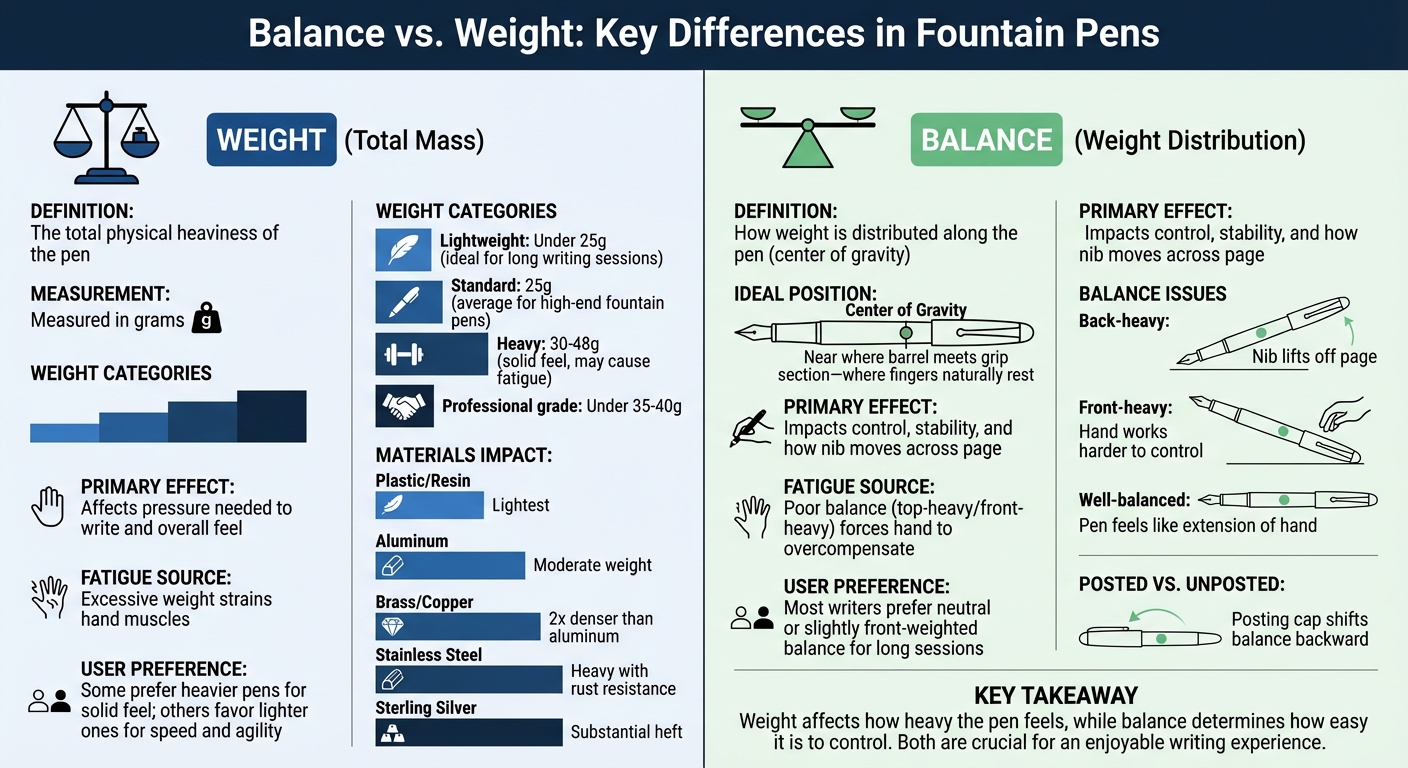
Balance vs Weight in Fountain Pens: Key Differences Comparison Chart
When it comes to pens, weight and balance are two distinct factors that shape how comfortable and effective your writing experience can be. Weight refers to the pen's total mass - how heavy it feels in your hand. Balance, on the other hand, is about how that weight is distributed along the pen’s length, determining its center of gravity. This is the point where the pen would balance perfectly if laid across your finger.
For example, a lightweight pen weighing just 20 grams can still feel awkward if its weight is concentrated toward the rear. Meanwhile, a heavier pen with excellent balance can feel effortless to use. The key difference lies in how the weight is distributed: a well-balanced pen aligns the weight with where your fingers naturally hold it, while poor distribution forces your hand to compensate, regardless of the pen’s overall weight.
Side-by-Side Comparison
Here’s a quick breakdown of how weight and balance differ in their impact:
| Feature | Weight (Total Mass) | Balance (Weight Distribution) |
|---|---|---|
| Definition | The total physical heaviness of the pen | How the weight is distributed along the pen (center of gravity) |
| Primary Effect | Affects the pressure needed to write and overall feel | Impacts control, stability, and how the nib moves across the page |
| Fatigue Source | Excessive weight can strain hand muscles | Poor balance (e.g., top-heavy designs) forces the hand to overcompensate |
| User Preference | Some prefer heavier pens for a solid feel; others favor lighter ones for speed and agility | Most writers prefer neutral or slightly front-weighted balance for comfort during long sessions |
For reference, the average weight of high-end fountain pens is about 25 grams, with the majority of professional-grade pens weighing under 35 to 40 grams. Even within this weight range, balance can vary significantly based on how materials are distributed throughout the pen.
These distinctions show why balance is just as important as overall weight when it comes to creating a great writing experience.
Problems from Poor Balance or Excessive Weight
Issues with balance can cause problems that sheer weight alone doesn’t explain. A pen with a center of gravity too far toward the back can feel top-heavy, making the nib lift off the page. On the flip side, if the weight is concentrated too far forward, your hand may have to work harder to control the pen, leading to faster fatigue. As Kirsty Cameron puts it:
A properly designed pen places the center of gravity where your fingers naturally rest, so that every stroke feels guided, effortless, and precise.
Even a well-balanced pen can cause strain if it’s excessively heavy, especially during extended writing sessions. This is why finding the right combination of weight and balance is key to comfortable, enjoyable writing.
sbb-itb-1dd4fe9
How to Test Balance and Weight
Delving deeper into balance and weight, these simple tests let you explore how a pen's design affects writing comfort.
Testing Balance by Hand
One of the easiest ways to evaluate a pen's balance is to hold it naturally and locate its center of gravity. Try writing with the cap both posted (attached to the back of the pen) and unposted. Posting shifts the balance toward the back, which can make shorter pens feel more stable but may cause full-sized pens to feel top-heavy. As Montegrappa explains:
Placing the cap on the end can help balance the weight of the pen in some cases, but the feeling of balance is not the same for everyone: it's better to do some tests to find your own point of stability.
Another quick method is the "fulcrum check." Rest the pen on the bottom knuckle of your index finger and observe how it pivots as you write. If the pen resists your natural grip or feels awkward lifting off the page, its center of gravity might be too far back. Conversely, if you find yourself working harder to keep the nib on the page, the weight may be too far forward.
Once you’ve assessed balance, it’s time to focus on weight and how it aligns with your writing habits.
Finding Your Ideal Pen Weight
The right pen weight depends on your writing style. If you write quickly, a lightweight pen allows for easier movement, while a heavier pen can provide better control for slower, more deliberate writing. Avoid extremes - pens that are too heavy can lead to hand strain during extended use, while overly light pens may feel insubstantial or force you to grip harder.
To gauge comfort, write for several minutes using relaxed arm and shoulder movements. If you notice hand cramping or feel the need to press down harder, the pen might be too heavy or poorly balanced for your grip. You can also try a spiral test - drawing lines, circles, and spirals - to evaluate the nib's flow and the pen’s overall balance. For fountain pens, aim to hold the pen at a 40° to 55° angle to the paper. This range is typically where the nib performs best.
Balance and Weight in Fountain Pen Revolution Pens

Fountain Pen Revolution designs its pens with meticulous attention to balance and weight, aiming to cater to a wide range of writing styles and preferences. Whether you're a beginner or an experienced writer, their collections are crafted to address specific needs - reducing hand fatigue, enhancing control, and creating an enjoyable writing experience.
Starter Sets: Lightweight for Comfortable Writing
The Starter Sets - featuring models like the Indus ($18.00–$21.00), Darjeeling, and Jaipur V1 - are crafted with lightweight materials to make writing sessions more comfortable, especially for beginners. These pens are designed with the center of gravity positioned near the barrel-section junction, where your fingers naturally rest. This thoughtful design minimizes strain, making them ideal for extended note-taking or journaling. For those ready to take their writing to the next level, Fountain Pen Revolution also offers an elevated range of options.
Premium Pens: Perfectly Balanced for Experienced Writers
The Premium collection ($44.00–$79.00) - including models like the Himalaya V2, Jaipur V2, Ambassador, and Statesman - takes balance and durability to the next level. These pens feature metal cores made of brass or aluminum, giving them a satisfying weight and a sense of sturdiness that plastic pens can't match. The carefully distributed weight ensures the pen feels stable in your hand, allowing the nib to glide effortlessly across the page with minimal pressure. As Kirsty Cameron from Scriveiner puts it:
A well-balanced pen allows the hand to move freely, naturally, and comfortably, so that every stroke feels guided, not forced.
Gold Nib Collection: Precision Meets Elegance
The Gold Nib Collection represents the height of Fountain Pen Revolution's craftsmanship. These pens are engineered to combine refined balance with just the right amount of weight, ensuring smooth, effortless writing. Whether you prefer to write with the cap posted or unposted, the design keeps the center of gravity aligned with your grip. This precision allows the pen to glide seamlessly across the page, making it a favorite for those who demand both performance and elegance in their writing tools.
Conclusion
When it comes to writing, balance and weight play a crucial role in shaping your experience. Weight refers to how heavy the pen feels in your hand, while balance determines how that weight is distributed along the pen's length. When these two factors work in harmony, the pen feels like an extension of your hand, allowing it to glide effortlessly across the page without causing strain.
An ideal pen typically has its center of gravity near your grip - usually where the barrel meets the section. This positioning minimizes tension, making writing more comfortable. A pen that's too top-heavy might cause the nib to lift, while a front-heavy pen could force you to grip harder than necessary. Most fountain pens fall under 25 grams; anything above 30 grams is considered heavy and is better suited for short notes rather than extended writing sessions.
Fountain Pen Revolution offers options to suit different preferences. Their lightweight Starter Sets are great for long writing sessions, ensuring comfort and ease. For those seeking more control, the Premium Pens feature carefully distributed weight, while the Gold Nib Collection provides a refined balance, whether you prefer writing with the cap posted or unposted.
To find the perfect pen for you, hold it at an angle between 40° and 55°. Pay attention to whether it feels natural or if you need to exert extra pressure. The right pen should move with your hand effortlessly, making writing a truly enjoyable experience.
FAQs
How can I tell if a fountain pen's balance is right for me?
To figure out if a fountain pen's balance works for you, hold it as you naturally would when writing. Grip it lightly between your thumb and index finger, letting the barrel rest on your middle finger. A pen with good balance should feel steady and comfortable, without tipping too much forward or backward. Generally, the ideal center of gravity is about two-thirds of the way from the nib.
Test the pen in both posted (with the cap on the back) and unposted (without the cap) setups. Posting can make lighter pens feel more balanced by adding weight to the rear, while unposting helps you see if the pen feels overly top-heavy. Write a quick sentence in each configuration to see if your grip remains relaxed or if you find yourself adjusting to maintain control.
Also, think about your hand size and how you write. People with smaller hands might lean toward lighter pens with a bit of forward weight, while those with larger hands often find heavier, evenly balanced pens more comfortable. If you're new to fountain pens and want to experiment, Fountain Pen Revolution offers options starting at $15–$20, making it easy to explore and find one that feels just right.
What materials have the biggest impact on a fountain pen's weight?
The weight of a fountain pen largely depends on the materials used to make it. Pens with metal components like brass, steel, aluminum, or titanium tend to feel heavier in hand. Some designs even include additional brass weights to give them more substance. In contrast, pens made from lighter materials such as plastic, resin, or carbon fiber are much easier to handle, especially during long writing sessions.
When selecting a fountain pen, think about how the weight feels in your hand. This small detail can make a big difference in your comfort and overall writing experience.
How does posting the cap affect a fountain pen's balance?
When you post the cap on a pen, it changes the center of gravity by adding extra weight to the back of the barrel. This shift can influence how the pen feels in your hand. For some, it adds a sense of balance and stability, making writing smoother and more controlled. For others, it might throw off the pen's natural weight distribution, making it feel less comfortable. The best way to figure out what works for you is to try writing both with and without the cap posted and see which feels better in your hand.