

Wooden fountain pens are elegant tools that require proper care to maintain their beauty and functionality. Unlike plastic or metal pens, wood reacts to its environment, making it sensitive to factors like sunlight, heat, and humidity. Here's a quick guide to keeping your wooden pen in great condition:
- Clean Regularly: Rinse the nib and feed with lukewarm water every 4–8 weeks to prevent clogs from dried ink.
- Protect the Wood: Wipe the wooden barrel with a soft cloth after each use. Apply mineral oil or wood polish occasionally to prevent drying or cracking.
- Store Properly: Keep the pen horizontal or with the nib pointing up. Avoid direct sunlight, extreme temperatures, and high humidity.
- Handle with Care: Avoid using harsh chemicals or exposing the wood to water during cleaning.
With these simple steps, your wooden fountain pen can last for years while retaining its charm and smooth writing performance.
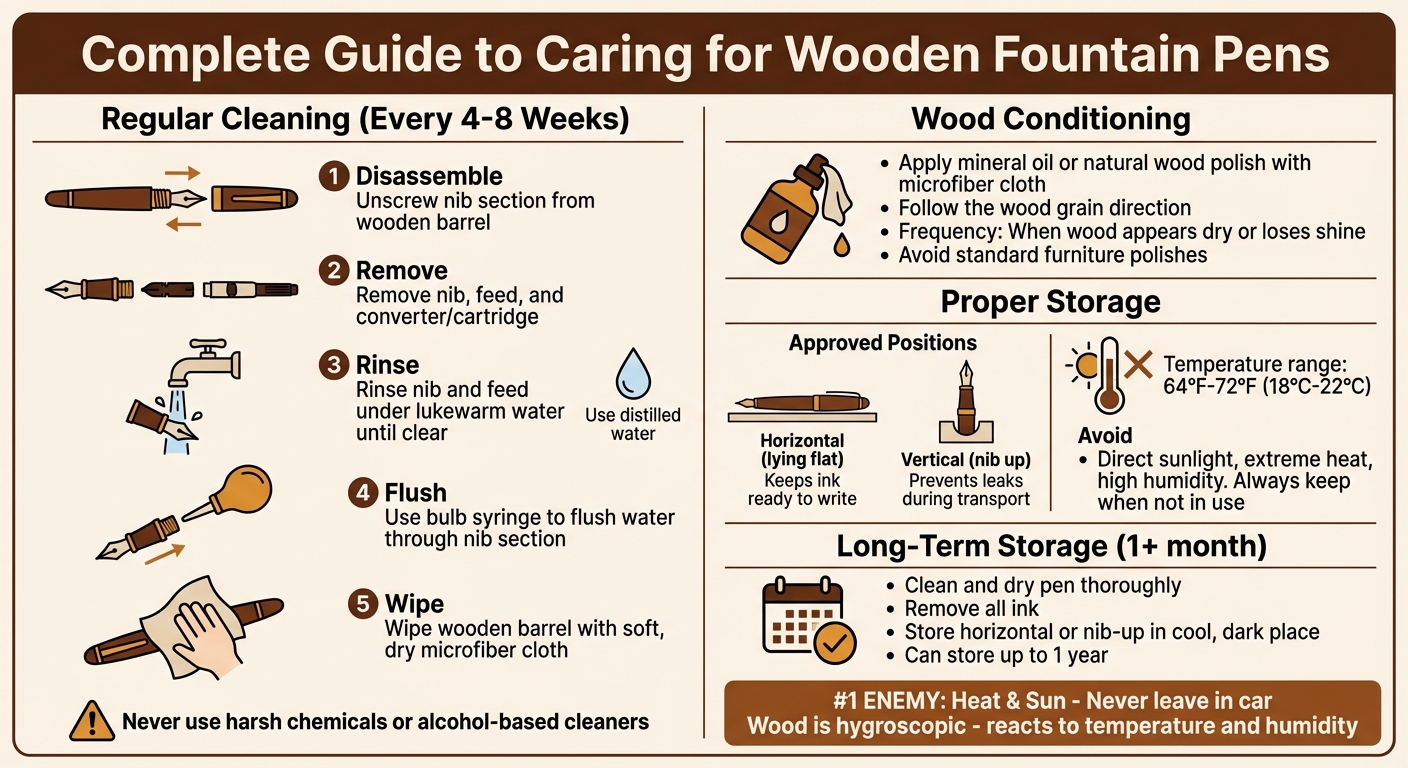
Complete Guide to Wooden Fountain Pen Care and Maintenance
What Makes Wooden Fountain Pens Different
Why Wood Needs Different Care
Caring for wooden fountain pens is a bit different than caring for pens made from synthetic materials. The primary reason? Wood is an organic material, meaning it reacts to its environment in ways that plastic and metal don’t. For instance, wood absorbs moisture and expands, and in drier conditions, it contracts - this is called hygroscopic behavior. While plastic stays inert and metal might oxidize, wood is constantly responding to temperature and humidity. Leaving a wooden pen in extreme conditions, like a hot car or near a radiator, can lead to issues like warping, splitting, or cracking.
Temperature changes are especially risky. As Rifleman1776, a member of The International Association of Penturners, puts it:
"The absolute, #1, admonition I give is to not leave in a car. Heat and sun are killers."
Another thing to keep in mind is that wood is more sensitive to certain chemicals. Cleaners like alcohol-based solutions, acetone, or harsh detergents might be fine for plastic or metal pens, but they can strip the finish or even damage the wood itself.
One of the most charming aspects of wooden pens is how they age. Over time, the wood absorbs oils from your hands, creating a unique patina, and the nib adapts to your writing style. However, this natural evolution requires some upkeep. Regular conditioning with natural oils or waxes helps maintain the pen's integrity and ensures it stays in good shape for years.
Common Woods Used in Fountain Pens
The type of wood used in a fountain pen significantly affects its care and durability. For example, Ebony, known for its dense and dark properties, is particularly vulnerable to changes in humidity. This makes regular application of wax or oil essential to prevent cracking. On the other hand, Maple is durable and features beautiful grain patterns, but its lighter color makes it prone to staining or dulling from hand oils.
Exotic woods often require even more attention. Pink Ivory and Snakewood, prized for their striking appearances, are especially prone to cracking in dry environments or when exposed to sudden temperature changes. As The Forest at Your Fingertips explains:
"Some of the prettiest, most exotic, and expensive woods tend to expand and contract more than others, causing them to crack".
Exotic burls, with their intricate grain patterns, are another favorite for fountain pen enthusiasts. However, their delicate nature makes them more susceptible to damage from temperature swings. To minimize these risks, high-quality wooden pens are often crafted from wood that has been seasoned for at least six months. While this process reduces the chances of cracking, it doesn’t completely eliminate the possibility of environmental damage.
The type of finish applied to the pen also plays a role in its care. Pens with natural finishes benefit from treatments like furniture paste wax, while those with clear topcoats respond better to fine plastic polish or Renaissance Wax. The right approach to finish care ensures your pen remains both functional and beautiful over time.
sbb-itb-1dd4fe9
How to Clean Wooden Fountain Pens
Regular Cleaning for Daily Use
Taking care of a wooden fountain pen calls for a gentler touch compared to plastic or metal pens. Start by carefully disassembling the pen - unscrew the nib section from the wooden barrel to keep water away from the wood, as moisture can cause warping or cracking. Remove the nib, feed, and converter (or cartridge), and rinse the nib and feed under lukewarm or room-temperature water until the water runs clear. Avoid using hot water, which can warp the parts or weaken adhesives.
For a deeper clean, use a bulb syringe to flush water through the nib section, which helps clear out any ink residue hiding in the feed. If possible, stick to distilled water instead of tap water to avoid mineral deposits that could clog the feed over time. As Andrew DelQuadro from 215 Ink advises:
"Never use harsh chemicals or alcohol-based cleaners, especially on wood. Water is all you need."
Aim to clean your pen every 4 to 8 weeks, or whenever you switch ink colors. After cleaning the internal parts, gently wipe the wooden barrel with a soft, dry microfiber cloth to remove any oils or smudges. If stubborn ink remains, it’s time for a deeper cleaning.
Deep Cleaning for Dried Ink
When ink dries inside the nib or feed, a simple rinse won’t be enough. Soak the nib and feed in room-temperature distilled water for at least 2 hours - or overnight - to loosen hardened ink. For particularly tough clogs, use a fountain pen cleaning solution or a mixture of one part household ammonia to two parts water to flush the nib section.
For external dried ink, gently scrub with a soft brush or a Q-tip dipped in water. If ink encrustations persist, soak the nib overnight in a mild vinegar solution (1 teaspoon of vinegar per cup of water). While doing this, store the wooden barrel and cap in a cool, dry place away from direct sunlight to protect the wood. As Mazurka Pens emphasizes:
"Take care to keep water off of the pen's body. Pens are made from REAL wood, which can be damaged by water."
Drying and Putting the Pen Back Together
Once cleaned, drying the pen thoroughly is crucial. Wrap the nib in a paper towel and give it a light flick to shake off excess water. Then, wipe all parts with a soft, lint-free cloth.
Let the components air dry on a clean towel for 1–2 hours. If you won’t be using the pen for a while, allow it to dry overnight. To wick out any remaining moisture from the feed, rest the nib unit nib-down on a paper towel overnight. Avoid using hair dryers, heaters, or direct sunlight to speed up drying, as excessive heat can warp the pen or damage the wood’s finish. Throughout the process, ensure the wooden barrel stays completely dry.
Once all parts are dry, reassemble the pen by first securing the converter or cartridge into the nib section, then screwing the nib section back onto the wooden barrel.
BE fountain pen - how to use and care for your fountain pen
Maintaining the Wood Finish
After giving your pen a good cleaning, the next step is preserving the wood's finish to ensure it lasts for years to come.
Applying Wood Conditioner
Wood naturally ages, and over time, it can lose its shine or feel dry. Sometimes, you might even notice fine cracks appearing. These are clear signs that your pen needs a little extra care.
To bring back its luster, apply a small amount of mineral oil or natural wood polish using a microfiber cloth. Be sure to follow the grain of the wood for the best results. As Andrew DelQuadro from 215 Ink puts it:
"Occasionally apply a small amount of natural wood polish or mineral oil using a microfiber cloth. This helps maintain its luster and prevents drying or cracking."
This isn’t the same as regular cleaning - it’s about nourishing the wood and restoring its natural beauty. Avoid standard furniture polishes, as they can strip away the original oils and waxes that protect the wood.
Protecting Wood from Damage
Conditioning is just one part of the equation. To truly protect your pen, you need to handle it with care and shield it from potential damage.
Daily use transfers oils and moisture from your hands onto the wood. To counteract this, make it a habit to wipe your pen with a soft, dry cloth after each use.
Environmental factors also play a big role in the wood's longevity. Keep your pen away from direct sunlight and extreme temperatures, which can cause fading, drying, or cracking. When not in use, store it in a cool, dark place - like a desk drawer - and consider using a leather case or pen sleeve to protect it from scratches and bumps. Caran d'Ache offers this advice:
"You should also avoid exposing your pen to humidity, heat or direct sunlight. This could dry out the ink in your pen, damage it or spoil its appearance."
Humidity control is equally important. Too much moisture can cause the wood to swell, while overly dry conditions can lead to cracks. Finding a balanced storage environment will help your pen maintain its structure and appearance for years. By following these steps, you’ll not only keep your pen looking great but also ensure it remains a reliable and cherished writing tool for the long haul.
How to Store Wooden Fountain Pens
Daily Storage Methods
Taking care of your wooden fountain pen starts with proper daily storage, as it directly affects its performance. The two best storage positions are horizontal (lying flat) or vertical with the nib pointing up, each offering its own advantages.
Storing your pen horizontally ensures the ink remains in contact with the feed, so it’s ready to write whenever you are. As Brian Goulet, Founder of The Goulet Pen Company, explains:
"I find storing pens horizontally keeps the nibs wet enough to start writing right away, without leaking into the cap".
This method is particularly useful if you find yourself reaching for your pen multiple times a day.
On the other hand, vertical storage with the nib pointing up is a great choice if you frequently carry your pen in a pocket or bag. This position uses gravity to pull ink away from the nib, reducing the risk of leaks during transit. However, you might need to wait a moment for the ink to flow back to the nib before writing. Avoid storing your pen with the nib facing down, as this can cause ink to pool in the cap, leading to clogs and leaks.
Always keep the pen capped when not in use to prevent the nib from drying out. A protective leather case can also shield the wooden body from scratches and impacts. Be mindful of environmental conditions - keep your pen away from direct sunlight and extreme temperatures. Aim for a stable environment between 64°F and 72°F (18°C to 22°C) to avoid warping or cracking the wood. If you’re not using the pen for an extended time, refer to the long-term storage guidelines below.
Long-Term Storage Preparation
If you’re planning to store your pen for more than a month, a few extra steps are necessary. Start by thoroughly cleaning and drying the pen, as leftover ink can dry out and clog the internal mechanism.
Once the pen is completely dry, store it either horizontally or with the nib pointing up in a cool, dark space like a desk drawer. Without ink, the pen can safely remain in storage for up to a year in either position. If you’re using a display case, make sure it’s not exposed to direct sunlight. The glass can magnify heat, potentially damaging the wooden material.
Fixing Common Problems with Wooden Pens
Taking care of common issues quickly helps maintain both the performance and the distinctive look of your wooden pen.
Removing Dried Ink Buildup
Dried ink can block the nib and feed of your pen, so it’s important to act fast while keeping water away from the wooden parts. Start by disassembling the pen - remove the nib, feed, and converter to protect the wooden barrel from moisture.
Use a bulb syringe to flush room-temperature water through the nib section until the water runs clear. For tougher ink clogs, soak the nib and feed in clean water for a few hours or overnight. If the clog persists, you can use a 1:2 ammonia-to-water solution, but only if the pen doesn’t have aluminum or steel components. After cleaning, gently wipe down the wooden body with a soft, damp, lint-free cloth, avoiding any prolonged exposure to water.
To keep ink buildup from becoming a recurring issue, clean your pen regularly - every 4 to 8 weeks is a good rule of thumb. Once the ink is handled, the next step is addressing any damage to the wooden body.
Dealing with Cracked or Swollen Wood
Environmental factors can take a toll on your pen’s wooden body. Extreme temperatures and moisture are common culprits, leading to cracks, swelling, or warping. Sunlight and heat, in particular, are major risks. As Mainely Woodworks points out:
"Sunlight is the #1 enemy to wood!" - Mainely Woodworks
UV rays can wear down the finish and prematurely age the wood. Similarly, temperature swings - like leaving your pen in a hot car - can lead to splitting. A member of Penturners.org highlights this risk:
"The temperature extremes experienced in a car can damage or destroy your writing instrument. Treat it as you would any fine, delicate instrument." - Penturners.org
If moisture causes swelling, dry the pen immediately with a microfiber cloth and let it air-dry in a cool, stable place. Avoid using hot water during cleaning, as it can make the wood and internal components expand. For minor dryness or small cracks, apply a light coat of mineral oil, natural wood polish, or high-quality furniture paste wax. These products help restore moisture balance and add a protective layer.
For larger cracks or mechanical issues, professional repair is often the best option. Many custom pen makers offer repair services, typically providing an estimate based on the damage description. Keep in mind that you're usually responsible for shipping costs both ways.
Conclusion
Taking care of a wooden fountain pen involves regular cleaning, occasional conditioning, and mindful storage. Cleaning prevents clogs that could harm the nib or feed, while wiping down the wooden barrel after each use removes oils and moisture that might damage the finish. Conditioning the wood with a pen maintenance accessories like natural polish or mineral oil every so often keeps it looking its best and helps prevent cracking.
When it comes to storage, keep your pen horizontal or with the nib facing up. Avoid exposing it to direct sunlight, extreme heat, or high humidity, as these conditions can warp or crack the wood. If you’re not planning to use the pen for a while, empty it and give it a thorough cleaning before storing it away.
FAQs
How often should I oil the wooden barrel?
Wooden barrels should be oiled only when needed, like when the wood appears dry or starts to crack. Routine care is more about cleaning and preserving the wood than constantly applying oil. Using too much oil can damage the wood or interfere with the pen's functionality. So, when you do oil the barrel, use it sparingly and only if the wood shows clear signs of needing it.
What should I do if the wood gets wet?
If your fountain pen's wooden parts get wet, carefully take the pen apart and use a soft cloth to gently dry the wood. You can also let the pieces air dry naturally. Make sure every part is completely dry before putting the pen back together or storing it. To keep the wood in good condition, avoid exposing it to too much moisture or high humidity, as this can lead to warping or other damage. Taking these steps will help maintain the pen's quality and appearance.
Can I use pen flush or alcohol to clean it?
It's best to avoid using pen flush or alcohol when cleaning wooden fountain pens. Instead, stick to water - it’s gentler and won't harm the wood. Harsh chemicals, like alcohol, can strip the finish and weaken the wood over time.