

Getting ink stains out of clothes can feel like a hassle, but acting quickly makes all the difference. Here’s a quick guide to removing ink stains using common household items:
- Blot with Paper Towels and Salt: Absorb excess ink and sprinkle salt to draw out moisture.
- Rubbing Alcohol or Hairspray: Break down ink pigments with alcohol-based solutions.
- Dish Soap and White Vinegar: A mix of these helps lift stubborn stains.
- Laundry Detergent and Scrubbing: Apply detergent and gently scrub to remove any remaining ink.
- Rinse, Air Dry, and Wash: Rinse thoroughly, air dry, and only machine dry once the stain is gone.
Each method works best when the stain is fresh. Always test solutions on hidden fabric areas to avoid damage. Take action fast, and you’ll save your clothes from permanent stains!
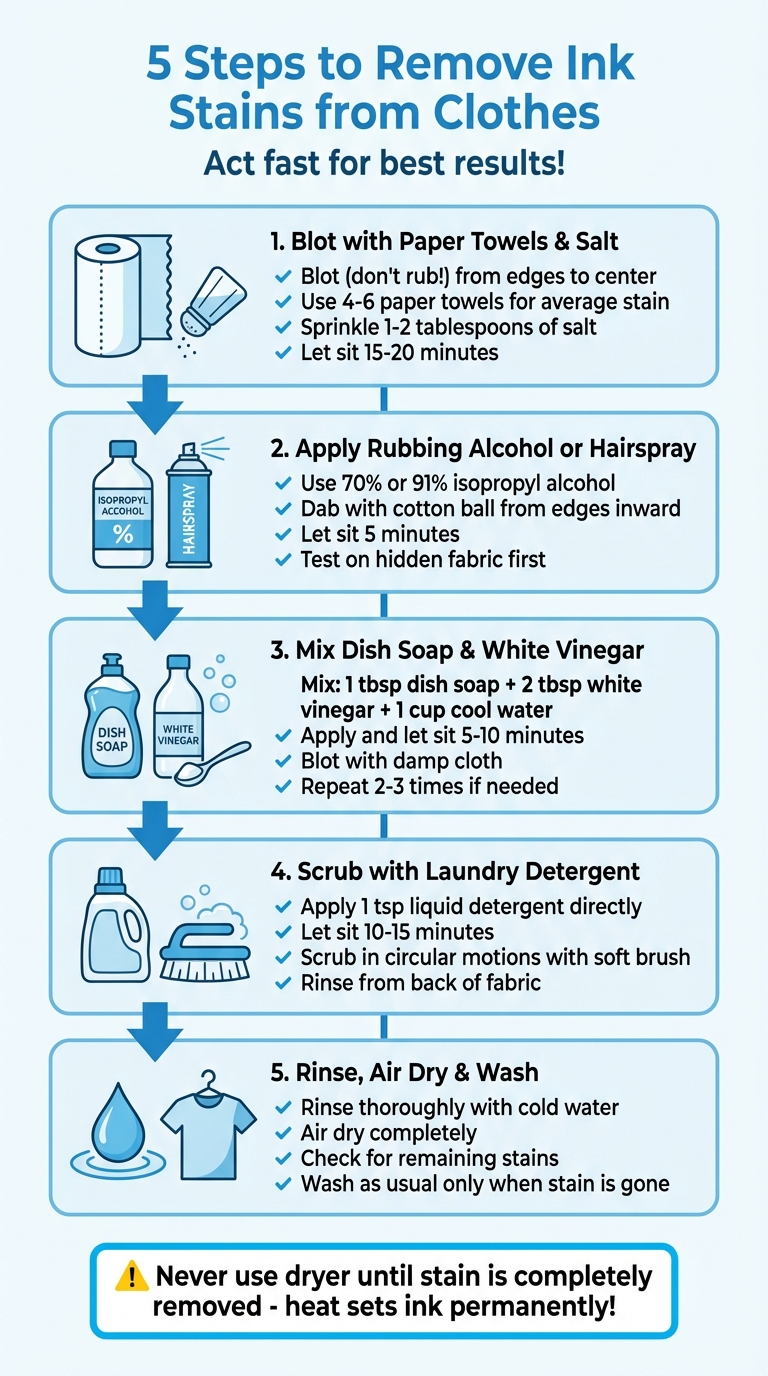
5-Step Process to Remove Ink Stains from Clothes
The RIGHT Ways to Remove Ink Stains from Clothes & Fabric
1. Blot the Stain Right Away with Paper Towels and Salt
Start by blotting the ink stain immediately with paper towels. Do not rub! Rubbing pushes the ink deeper into the fabric, making it harder to remove. Instead, press down firmly with a clean paper towel to soak up as much ink as you can before it spreads.
Work from the outer edges of the stain toward the center. If possible, place another paper towel underneath the fabric to stop the ink from seeping further. Swap out the paper towels as soon as they become saturated to keep absorbing the ink effectively.
Once you've blotted up the excess ink, grab some table salt and sprinkle it generously over the damp stain. Salt is great at pulling moisture - and ink - out of fabric. Let it sit for about 15–20 minutes. For an average-sized stain, you’ll likely need 4–6 paper towels and about 1–2 tablespoons of salt. After the salt has done its work, gently brush it off to get the fabric ready for the next step.
If you're working with delicate fabrics like silk or rayon, be extra gentle to avoid damaging the material. For sturdier fabrics like cotton, you can apply a bit more pressure without worry.
2. Use Rubbing Alcohol or Hairspray to Break Down the Ink
After tackling the initial ink stain with blotting and salt, the next step focuses on breaking down the ink still clinging to the fabric fibers. This is where rubbing alcohol or hairspray can come to the rescue.
Start with rubbing alcohol - specifically, isopropyl alcohol with a concentration of 70% or 91%. This works by dissolving the ink pigments and oils, making them easier to lift out of the material. Apply a small amount of alcohol directly onto the stain using a clean cotton ball or a white cloth.
Gently dab the area, working from the edges toward the center to avoid spreading the stain further. As the alcohol breaks down the ink, you’ll notice it transferring onto the cloth. Be sure to use a fresh section of the cloth frequently and let the alcohol sit on the fabric for about 5 minutes to maximize its effectiveness.
If rubbing alcohol isn’t available, hairspray can be a backup option - just make sure it contains alcohol, as many newer formulas don’t. Spray the hairspray directly onto the stain from about 6 inches away, then blot the area with a clean cloth.
Before diving in, test the alcohol or hairspray on an inconspicuous part of the fabric, like an inside seam. This is especially critical for colored fabrics, as alcohol can sometimes cause dyes to bleed or fade. For delicate materials such as silk or wool, dilute the alcohol with an equal part of water to reduce its strength.
Once you’ve treated the stain, rinse the area thoroughly with cold water. This step is essential to wash away any remaining alcohol and prevent it from setting into the fabric or causing damage.
3. Mix Dish Soap with White Vinegar
If alcohol leaves behind any ink traces, try a solution made with dish soap and white vinegar. This combination creates a gentle yet effective remedy for tackling both fresh and set-in ink stains.
Dish soap works to lift ink particles from the fabric, while the acetic acid in white vinegar helps break down the dye, making it easier to remove. Be sure to use white distilled vinegar - other types, like apple cider or balsamic, can introduce new stains due to their pigments.
To prepare the solution, mix 1 tablespoon of liquid dish soap with 2 tablespoons of white vinegar, then dilute it with about 1 cup of cool water. This ratio is safe for most common fabrics like cotton, polyester, and blends. For delicate materials such as silk or wool, double the amount of water to create a gentler solution and reduce any risk of damage. Always use the mixture right after preparing it for the best results.
Before applying, place a clean towel beneath the stained fabric to prevent the ink from transferring to other areas. Using a clean cloth, dab the solution onto the stain, working from the outer edges toward the center to avoid spreading it further. Let it sit for 5–10 minutes to loosen the ink. Then, blot gently with a damp cloth to lift the dissolved stain and rinse thoroughly with cool water from the back of the fabric to push out the ink. If any ink remains, move on to the next cleaning method.
For dark or brightly colored fabrics, test the solution on an inside seam first, as vinegar's acidity might cause fading or bleeding. If the stain is still visible after rinsing, repeat the process 2–3 times before trying another approach.
sbb-itb-1dd4fe9
4. Apply Laundry Detergent and Scrub with a Soft Brush
If earlier attempts haven’t fully removed the ink stain, liquid laundry detergent combined with gentle scrubbing can tackle even the most stubborn marks. Detergent works because it contains surfactants - compounds that break down stains and help lift them from the fabric. For the best results, apply the detergent directly to the stain without diluting it.
Liquid detergent is your best bet here. Unlike powder, it spreads evenly and penetrates fabric fibers more effectively. Start by pouring about a teaspoon of detergent onto the stained area. Use your fingers to gently work it into the fabric, ensuring the entire stain is covered. Let it sit for 10–15 minutes, giving the detergent time to break down the ink.
Next, dampen the fabric with cool water to activate the detergent. Grab a soft-bristled brush (or use your fingertips if the fabric is delicate) and scrub in small, circular motions. Begin at the edges of the stain and work your way inward to avoid spreading the ink. For tougher fabrics like denim or sturdy cotton, you can scrub with a bit more pressure, but for delicate materials, be extra gentle to avoid damage.
Once you’ve scrubbed, rinse the fabric thoroughly under cool water. Make sure to rinse from the back side of the fabric to flush out the loosened ink particles. If traces of the stain remain, you can repeat this process once or twice before moving on to the final wash.
For those who often work with fountain pens or other ink-heavy tools, it’s a good idea to keep a small bottle of liquid detergent and a soft brush nearby. Treating stains as soon as they happen can prevent them from setting into your favorite shirts or pockets. After scrubbing and rinsing, follow up with a regular wash to finish the job.
5. Rinse, Let Air Dry, and Wash as Usual
Once you've treated the ink stain with detergent and given it a good scrub, the next step is rinsing thoroughly. Use cold water and rinse the fabric from the back, letting the water run until it’s completely clear. Avoid using hot water, as it can cause the ink to set into the fabric.
After rinsing, drying the garment properly is key to checking your progress. Lay it flat on a clean white towel or hang it somewhere away from direct heat sources to air dry. Make sure it’s fully dry before inspecting the fabric under natural light for any leftover stains.
If you notice any ink still lingering, repeat the stain treatment process. Avoid putting the garment in the dryer until the stain is completely gone - heat will make the ink permanent.
When the stain is no longer visible, you can wash the garment as you normally would. Check the care label and use the warmest water safe for the fabric. After washing, air dry the item again to confirm the stain is truly gone. Only use the dryer once you’re certain there’s no ink left.
Conclusion
Dealing with ink stains on clothing doesn't have to be overwhelming - acting quickly is key. The methods we've discussed - blotting with paper towels and salt, applying rubbing alcohol or hairspray, combining dish soap with white vinegar, scrubbing gently with laundry detergent, and rinsing before air drying - are most effective when the stain is fresh. Once ink dries, it becomes much harder to remove.
Before trying any solution, test it on a hidden part of the fabric to ensure it won’t cause damage, especially with delicate materials. And remember, avoid putting the garment in the dryer until the stain is completely gone, as heat can set the ink permanently.
Taking prompt action not only saves your clothing but also keeps your love for fountain pens stress-free. To help minimize ink accidents, consider investing in quality pens and inks. For example, Fountain Pen Revolution offers affordable options designed for both beginners and seasoned users, with reliable ink flow to reduce spills. While prevention is ideal, knowing how to handle stains ensures you're always prepared for the occasional mishap.
FAQs
Are these cleaning methods safe for all fabrics?
When it comes to cleaning fabrics, these methods are usually safe for the majority of materials. However, it's wise to test any cleaning solution on a small, hidden spot first. Delicate fabrics like silk or wool can sometimes respond unpredictably to certain cleaners, so take extra care. If you're uncertain about the best approach, reaching out to a professional cleaner might be the safest option.
How can I remove an old, dried ink stain from clothing?
To deal with an old, dried ink stain, begin by soaking the stained area with rubbing alcohol or applying a stain remover designed for ink. Allow it to sit for a few minutes to help break down the ink. Next, gently blot the spot using a clean cloth - be careful not to scrub too hard, as this could harm the fabric. Once you notice the stain starting to lift, wash the item as directed on its care label. For particularly tough stains, you may need to repeat the process.
Why shouldn’t you use heat on clothes with ink stains?
When dealing with ink-stained clothes, applying heat is a big no-no. Heat can lock the stain into the fabric, making it nearly impossible to remove. To tackle ink stains, stick to cool or lukewarm water for treatment. And whatever you do, keep that dryer or iron far away until the stain is fully gone.