

Shimmer ink looks great, but the sparkle can clog a pen fast if I use the wrong setup. The short version is simple: I get the best results when I use a wet pen, keep the shimmer mixed, and clean the pen often. Since shimmer ink has solid mica particles, it needs more care than standard fountain pen ink.
If I want fewer skips and hard starts, I focus on these 3 steps:
- Pick the right pen: medium, broad, or stub nibs tend to handle shimmer better than fine or extra-fine nibs
- Mix the ink gently: shake the bottle before filling, then roll the pen now and then during use
- Clean on a set schedule: flush after each fill and about every 2 weeks if I use shimmer often
Here’s the main takeaway: shimmer ink works best in a pen that writes wet and comes apart with little trouble. Fine nibs are more likely to clog because the slit and feed channels are tighter. A clear demonstrator can also help me spot settled particles before flow gets worse.
Shimmer Ink for Everyday Writing? Why Not! A Few Tips and Best Practices
sbb-itb-1dd4fe9
Quick Comparison
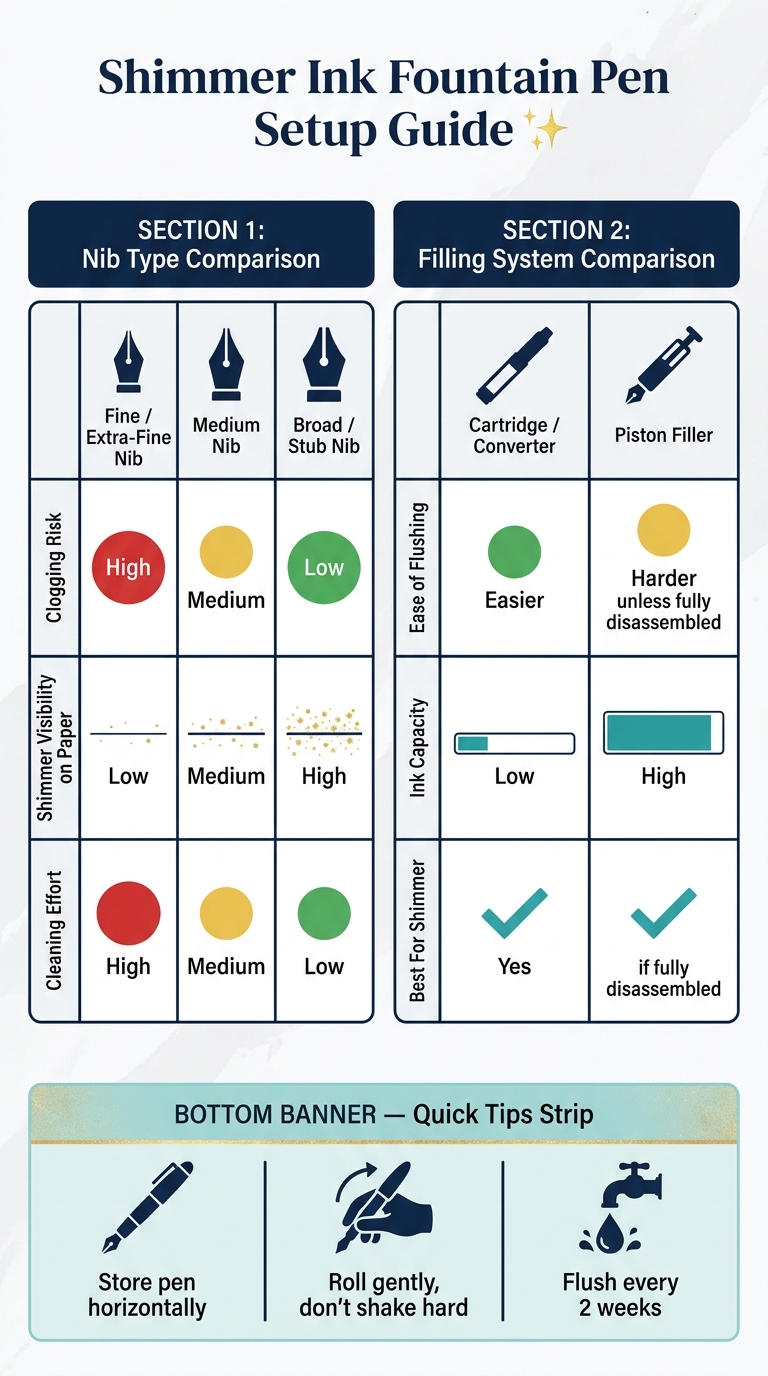
Shimmer Ink in Fountain Pens: Nib & Filling System Comparison
| Setup | Clog Risk | Sparkle on Paper | Cleanup |
|---|---|---|---|
| Fine/EF nib | High | Low | More work |
| Medium/Broad/Stub nib | Lower | High | Less work |
| Cartridge/converter pen | Lower for flushing | - | Easier to rinse |
| Piston filler | Varies by pen | - | Can take more work |
One more thing: storing the pen flat helps. Storing it nib-down can let shimmer collect in the feed, which can lead to skips. If your fountain pen is not writing correctly, a thorough cleaning usually resolves the issue. In short, if I consider the right pen features and the cleaning routine steady, shimmer ink is much easier to use.
Why Shimmer Ink Needs Special Handling
Standard dye inks dissolve fully into the liquid. Shimmer ink works differently. It contains suspended mica particles, and those particles do not dissolve. Because of that, they can settle at the bottom of the bottle and in the feed. Inside the pen, they can also collect in the feed and reservoir.
That’s where the trouble starts. If enough particles pile up, they can clog the feed and interrupt ink flow. Fine nibs are at the most risk because their narrow slits leave less space for particles to move through.
Regular cleaning with a pen flush helps keep those particles from drying out and hardening inside the feed. So if you're just getting started with shimmer ink, a wet pen that's easy to clean is the safest place to begin.
1. Choose a Wet, Easy-to-Clean Pen
Not every fountain pen works well with shimmer ink. The safest pick is a pen that writes wet and comes apart without a fight when it’s time to clean.
Choose a Wider Nib
Go with a medium, broad, or stub nib that has a wet flow. A broader nib and a wider feed give shimmer more space to pass through, which helps the ink stay moving instead of bunching up.
Clogging Risk
Wide feed channels help cut down on clogging and keep shimmer moving through the pen. Pens with wide feed channels and nib and feed units you can remove are also much easier to flush out.
Maintenance Effort
If the nib and feed unit can be removed, it’s much simpler to rinse stubborn shimmer out of the feed channels.
It also helps to dedicate one pen to shimmer ink. And if you want to spot settled particles fast, a clear demonstrator pen makes that easy.
Once you’ve picked the right pen, the next move is to mix the ink gently and clean it soon after use.
2. Shake and Agitate Shimmer Ink Gently
Shake the bottle of shimmer ink well before you fill the pen, then fill it right away so the shimmer doesn’t have time to settle at the bottom.
After the pen is filled, keep the shimmer moving with a gentle roll every so often. That small habit helps the particles stay mixed instead of sinking and leaving the ink flat.
A clear demonstrator pen makes this a lot easier, since you can see when the shimmer has settled.
Hard-Start Prevention
If the pen starts skipping or the sparkle fades, don’t press harder. That usually makes things worse. Instead, gently roll the pen between your fingers to move the shimmer back through the ink.
3. Clean the Pen Right After Filling and on a Regular Schedule
Even if you pick the right pen and shake it gently, shimmer ink still needs fast cleanup.
Clogging Risk
Shimmer particles can settle in the feed and clog narrow channels, especially in fine nibs. That’s the big issue with shimmer ink: those tiny particles don’t always stay suspended, and once they collect in tight spots, flow problems can start. That risk is why cleaning matters more with shimmer than with standard ink.
Maintenance Effort
Flush the pen with lukewarm water after each fill, and at least every two weeks if you use shimmer regularly. If residue remains, soak the nib unit overnight in a pen flush. If the nib and feed remove easily, rinse them separately to clear trapped particles.
This can feel like extra work, sure. But with shimmer ink, a little routine maintenance goes a long way.
Hard-Start Prevention
Once shimmer dries in the feed, starts become unreliable. In plain terms, the pen may skip, hesitate, or refuse to write when you put nib to paper.
Do not leave shimmer ink in the pen long enough to dry in the feed. Cleaning on a regular schedule is the easiest way to keep flow consistent and avoid hard starts.
Pen Setup and Filling Tips
Once you’ve got the right pen, the setup matters just as much. Go with a medium nib or wider, such as a [1mm stub nib]. Broad and stub nibs tend to show shimmer better, and they usually clog less often too.
The filling system plays a part in cleanup as well. Cartridge/converter pens are easier to flush than piston fillers because you can rinse the section right away and clear trapped mica with less hassle.
It can also help to set aside one affordable pen just for shimmer ink. Mica particles can stick around in threads and feed channels long after the pen looks clean. Fountain Pen Revolution offers affordable pens, so it’s pretty easy to keep one dedicated to shimmer ink.
After filling, clean the pen promptly to keep the shimmer moving.
Quick Comparison Table
Here’s a fast side-by-side look at nibs and filling systems for shimmer ink. If you’re standing there trying to pick a pen, this table makes the choice a lot easier.
| Feature | Fine/EF Nib | Broad/Stub Nib | Cartridge/Converter | Piston Filler |
|---|---|---|---|---|
| Clogging Risk | High - narrow slits can trap shimmer particles | Low - wider channels let particles flow more freely | Moderate - feed-dependent | Moderate - feed-dependent |
| Shimmer Visibility | Low - thin ink lines show less sparkle | High - heavier ink flow shows off shimmer better | ||
| Cleaning Effort | High - narrow channels are harder to flush | Low - easier to flush and clear | High - particles can hide in the converter | Low - if the pen can be fully disassembled |
| Ink Capacity | Low | High |
For shimmer ink, cartridge/converter pens are easier to flush. Piston fillers make more sense only if the pen can be fully disassembled. Proper maintenance, such as knowing how to lubricate fountain pen pistons, is essential for these systems. In day-to-day use, the safest shimmer setup is usually a broad nib in a pen you can clean fast.
Common Mistakes to Avoid
Even if you pick the right pen and stick to a good cleaning routine, a few bad habits can still throw everything off.
The biggest one? Using an extra-fine nib.
Extra-fine nibs clog fast because shimmer particles are often too large for such a narrow slit. On paper, an extra-fine nib may sound like a good fit. In practice, it’s often where the trouble starts.
Another common mistake is shaking the pen or bottle too hard. That doesn’t help the shimmer flow better. It usually just traps air and leads to skipping. A gentle roll works much better.
A couple of other habits can also cause skips and hard starts:
- Letting shimmer ink sit unused for too long
- Storing the pen nib-down
When shimmer ink sits, the particles settle and can harden in the feed. And if you store the pen nib-down, those particles collect in the nib unit and feed channels, which makes flow problems more likely. Horizontal storage is the safer move.
After filling, wipe the nib and section so any stray shimmer doesn’t dry on the outside.
Avoid these mistakes, and the three habits above will work a lot better.
Conclusion
Shimmer ink is pretty easy to handle if you keep the setup simple. Use a wet pen that's easy to clean, gently roll the bottle before and during use, and clean the pen soon after filling. That routine helps prevent most shimmer-ink issues.
With the right pen and a solid habit, shimmer ink stays easy to use.
FAQs
Can shimmer ink damage a fountain pen?
Shimmer ink usually won't permanently damage a fountain pen.
The bigger issue is clogging. Metallic or mica particles can settle inside the feed and nib, then build up over time. That tends to happen most when the pen sits unused for too long.
A little routine care goes a long way. Flush the pen with water or a pen cleaning solution every 1 to 2 weeks. That helps cut down on residue and keeps the ink flowing the way it should.
How do I know if my pen is wet enough for shimmer ink?
Pay close attention to how the pen writes. If it’s wet enough for shimmer ink, it should put down a steady, generous line. That kind of flow helps shimmer particles stay suspended and move through the feed instead of getting stuck.
If the pen feels scratchy or has trouble keeping the ink flowing, it’s probably too dry. A transparent demonstrator pen can help here too, since you can actually see whether the particles are moving through the feed or starting to settle.
What should I do if shimmer ink stops flowing?
If shimmer ink stops flowing, the glitter particles may have settled in the pen or clogged the feed. A gentle shake or slow roll can mix those particles back into the ink and get things moving again.
If the pen still skips or writes unevenly, flush it with cool water or a pen flush solution to clear dried residue and blockages. If this keeps happening, it helps to use a pen that comes apart easily so you can clean it more thoroughly.