

When it comes to fountain pens, heat can be a silent destroyer. High temperatures lead to ink leakage, material warping, and even permanent damage. Here’s how you can keep your pens safe:
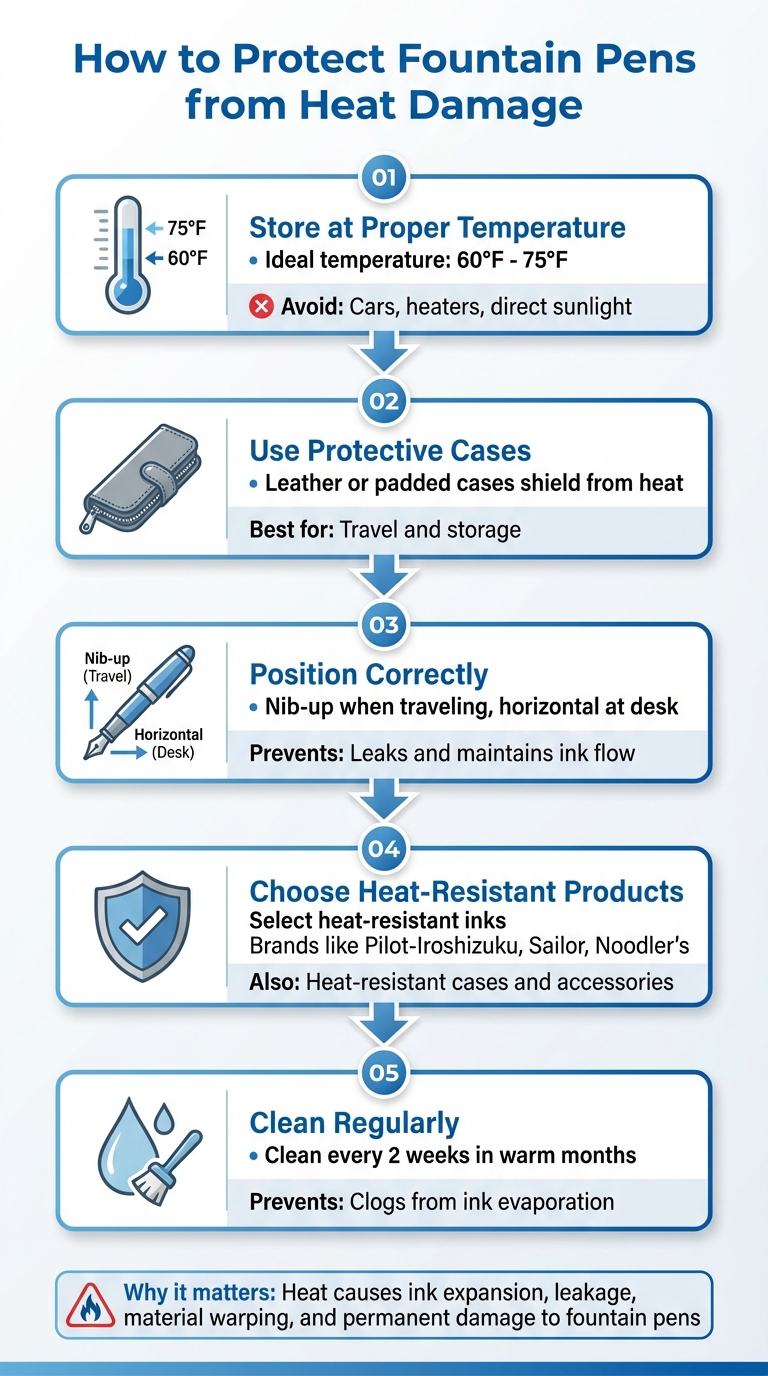
- Store pens in cool, dry places: Ideal temperatures are between 60°F and 75°F. Avoid leaving pens in cars, near heaters, or in direct sunlight.
- Use protective cases: Insulated leather or padded cases shield pens from heat and physical damage, especially during travel.
- Position pens correctly: Store them nib-up while traveling to prevent leaks, and horizontally at your desk for steady ink flow.
- Choose heat-resistant inks and accessories: Some ink brands and pen cases are better suited for handling temperature fluctuations.
- Maintain pens regularly: Clean them every two weeks in warmer months to prevent clogs from ink evaporation.
Taking these steps ensures your pens remain functional and beautiful, even in challenging conditions. Simple habits and the right tools can save you from messy spills and damaged pens.
5 Essential Steps to Protect Fountain Pens from Heat Damage
How to care for your fountain pens in the summer heat 🔥
How Heat Damages Fountain Pens
Heat can wreak havoc on fountain pens in two main ways: it alters how the ink behaves and weakens the materials that make up the pen. Knowing these risks highlights why proper storage is so important.
Ink Expansion and Leakage
When temperatures rise, ink expands, creating internal pressure that can lead to leaks - or worse, messy explosions that damage the pen's cap. As EndlessPens explains:
Heat can affect ink, making it more prone to leaks from the converter or cartridge. In extreme cases, a sealed pen left in the heat can build pressure and even explode, causing a mess and potentially damaging the pen.
Heat also thins the ink by reducing its viscosity and speeds up water evaporation. This can cause excessive ink flow, clogs, and hard starts, especially when the ink supply is running low.
But it's not just the ink that suffers - heat can also take a toll on the pen's physical structure.
Material Vulnerabilities
The materials used to craft fountain pens are just as sensitive to heat as the ink inside. Celluloid, ebonite, acrylic, and resin can warp, crack, or even melt when exposed to high temperatures. Prolonged UV exposure can also fade intricate designs and loosen metal trims. According to EndlessPens:
High temperatures can cause materials like acrylic or celluloid to crack or warp, compromising the pen's aesthetics and functionality.
Vintage pens, particularly those 40–100 years old, are even more at risk. Older materials degrade faster than the modern resins used in contemporary pens, making them especially vulnerable.
How to Protect Pens from Heat
Keeping your pens safe from heat damage is easier than you might think. With a few simple habits, you can ensure your favorite writing tools stay in top condition. From smart storage choices to travel tips, here’s how to shield your pens from heat.
Storage Temperatures and Locations
The first step is knowing where to store your pens. Cool, dark, and dry places - like desk drawers or dedicated pen boxes - are ideal. Avoid leaving pens in parked cars, as temperatures can skyrocket quickly inside. Similarly, steer clear of windowsills, radiators, or any spot exposed to direct sunlight. Why? Prolonged exposure to UV rays can fade ink and even warp the materials of your pen. These precautions are especially important when preparing for travel.
Using Insulated Cases for Travel
Traveling with pens? An insulated leather or padded case is a must. These cases help shield your pens from heat and physical damage. Brands like Fountain Pen Revolution offer options designed for both commuters and frequent flyers.
Flying with a fountain pen? Here’s a pro tip: either fill the reservoir completely to eliminate air pockets or empty it entirely to avoid leaks caused by cabin pressure changes. You can also place inked pens in a zip-lock bag for extra protection against any surprise spills during your journey.
Proper Pen Positioning to Prevent Leaks
How you position your pens matters too. During travel, store pens vertically with the nib pointing up - this keeps expanding ink away from the nib and reduces the risk of leaks. At your desk, horizontal storage is better for maintaining a steady ink flow.
If you’re carrying a pen in your pocket, a shirt pocket is a great choice. It offers better ventilation, which can help keep your pen from overheating.
sbb-itb-1dd4fe9
Heat-Resistant Accessories and Maintenance
Heat-Resistant Inks and Accessories
When dealing with high temperatures, it's essential to choose inks that can withstand the heat without causing issues like clogs or degradation. Brands like Pilot-Iroshizuku, Sailor, and Noodler's are known for their heat-resistant properties, while Diamine, Rohrer & Klingner, and several Japanese brands are less prone to breaking down or contaminating when exposed to heat.
To protect your pens from temperature fluctuations, consider using a pen humidor to maintain proper humidity levels. For added insulation, leather or padded cases work well, especially in extreme conditions. Companies like Fountain Pen Revolution offer a range of cases designed to safeguard your pens, whether you're storing them at home or traveling.
But selecting the right accessories is only half the battle - proper maintenance is just as important when heat exposure occurs.
Cleaning Pens After Heat Exposure
If your pen has been subjected to high temperatures, such as being left in a hot car, let it cool slowly at room temperature before inspecting it for damage. Look for signs like warped components, cracks, or leaks, as heat can sometimes compromise the materials.
Heat also speeds up ink evaporation, which can lead to clogs. To address this, flush the nib with lukewarm water until the water runs clear. If dried ink persists, soak the nib in distilled water for up to 48 hours - but steer clear of hot water, as it could damage the pen's materials. Once cleaned, let the nib air-dry by placing it nib-down on a lint-free cloth for 24 hours to ensure all moisture is fully absorbed.
During warmer months, it's a good idea to clean your pens more often - every two weeks instead of the usual four to eight weeks. This extra care helps prevent clogs caused by heat-induced ink evaporation. If you notice that the piston or converter isn’t moving smoothly after heat exposure, a small amount of silicone grease on the seal can help restore its function.
Taking these precautions can keep your pens in excellent condition, even during the hottest days.
Products for Protecting Your Pens
Product Comparison
After discussing storage and travel tips, let’s look at some products designed to keep your pens safe. Fountain Pen Revolution offers a range of items specifically made to protect pens from heat damage.
Pen cases are a solid choice, especially those made with leather or padded fabric. These materials provide insulation, helping to shield your pens from sudden temperature changes. Many cases include individual slots to keep pens separated - this is critical since heat can make materials more fragile. Linings made of velvet or microfiber add another layer of protection by preventing scratches, while opaque exteriors block harmful UV rays. Starting at around $29, these cases are a practical way to guard against sunlight and high temperatures, whether you’re at home or traveling.
If you’re looking for a more comprehensive option, pen bundles (starting at $35) might be worth considering. These bundles typically include a fountain pen along with protective storage, making it easier to avoid tossing your pen into a pocket or bag where heat could cause damage. This is especially handy when temperatures climb above the recommended 60°F to 75°F range.
For those willing to invest a bit more, premium pens (starting at $44) often come equipped with advanced capping seals. These seals help prevent ink evaporation, even in warmer air, reducing the risk of hard starts or clogs. When paired with a high-quality case, these pens are better equipped to handle heat, ensuring they last longer.
The key is to match your storage solution with your specific needs. Padded cases work well for travel, while airtight hard cases are ideal for home use. Together, these options can help you keep your pens in top condition, complementing the storage tips mentioned earlier.
Conclusion
Protecting your fountain pens from heat damage boils down to three key practices: smart storage, regular upkeep, and using the right tools. Always store your pens in cool, dry places, away from direct sunlight, with an ideal temperature range between 60°F and 75°F. Steer clear of leaving them in hot cars or near windows, where temperatures can spike unexpectedly. These simple steps help safeguard your pens from heat-related issues.
How you store them matters, too. Keep pens upright with the nib facing up to avoid leaks caused by heat-expanding air, or store them horizontally if you use them daily. For travel, an insulated case is essential to shield your pens from sudden temperature changes. Always carry your pens with you instead of leaving them in a vehicle.
When it’s hot, cleaning becomes even more important. Flush your pens every two weeks with lukewarm water, and let them air-dry nib-down on a lint-free cloth for 24 hours to prevent clogs from increased ink evaporation. Also, keeping ink reservoirs full minimizes air inside the pen, reducing the risk of leaks from heat expansion.
By sticking to these routines, you’ll help your pens stay in top shape, even in warmer conditions.
"A little extra care goes a long way in protecting these treasured writing companions." - EndlessPens
With consistent habits and protective gear - like the insulated cases from Fountain Pen Revolution - you can ensure your pens remain reliable and ready to perform, no matter the heat.
FAQs
How can I protect my fountain pens from heat damage?
To keep your fountain pens safe from heat damage, make sure to store them in a cool, dry place, away from direct sunlight and extreme temperatures. The ideal environment is between 50-75°F, with humidity levels maintained at 40-60%. Steer clear of leaving your pens in hot spots like cars or near windows, where heat can cause damage.
Using a protective case is another smart move. It not only shields your pens from temperature changes but also prevents them from rolling around or leaking. If you’re planning to store your pens for a long time, clean and dry them thoroughly first. Then, place them in a dark, temperature-controlled area. These straightforward precautions can go a long way in preserving your fountain pens' functionality and longevity.
What are the best ways to choose inks and accessories that can handle heat?
When dealing with warmer environments, it's essential to prioritize durability and heat resistance in your fountain pen supplies. Start with inks specifically designed to handle these conditions. Heat-resistant or waterproof fountain pen inks are your best bet, as they are less likely to break down or lose quality when exposed to higher temperatures. Look for options that maintain their stability even with temperature fluctuations.
For accessories, go for pen cases and storage solutions crafted from heat-resistant materials. This helps prevent warping or other damage caused by heat. To further protect your pens and inks, store them in a cool, stable environment. Aim for a temperature range of 64°F to 72°F to ensure they remain in top condition. With proper storage and thoughtful product choices, you can safeguard your fountain pens and supplies from heat-related wear and tear.
What should I do if my fountain pen has been exposed to heat?
If your fountain pen has been exposed to heat, the first step is to gently take it apart to protect its more fragile components. Clean each piece thoroughly using distilled water or a cleaning solution specifically designed for pens; this will help remove any dried ink or residue. After cleaning, let all the parts air dry completely for 12 to 24 hours before putting the pen back together. To avoid future issues, keep your pen in a cool, stable place, away from direct sunlight or extreme temperature changes.