

When writing short stories, the nib size of your fountain pen can significantly impact your experience. Here's what you need to know:
- Fine Nibs: Perfect for small handwriting and detailed work. They use less ink, dry quickly, and work well on standard paper.
- Medium Nibs: A balanced option for average handwriting. They offer smooth ink flow and showcase ink properties like shading but require better-quality paper.
- Broad Nibs: Best for bold, expressive writing. They highlight ink qualities beautifully but need fountain pen-friendly paper due to higher ink flow and longer drying times.
Each nib size brings a distinct feel and result, so choosing the right one depends on your writing style, paper preferences, and the level of detail you need. If you're unsure, starter sets priced around $35 can help you explore your options without overspending.
1. Fine Nib
Line Width
Fine nibs create lines that typically range between 0.3mm and 0.7mm. This makes them a great choice for writers with smaller handwriting, as they keep text crisp and easy to read, even during detailed drafting or revisions. When it comes to cursive writing, fine nibs strike a nice balance, ensuring the letters stay distinct and don’t blur together.
Ink Flow
One of the standout features of fine nibs is their lower ink flow compared to broader nibs. This means ink dries faster, which helps reduce smudging - especially handy when jotting down ideas quickly or flipping through pages during a revision. Left-handed writers often appreciate this feature since it minimizes the chance of smearing ink as their hand moves across the page. The smaller tipping surface also offers more tactile feedback, making the writing experience feel more engaging and precise.
Paper Compatibility
Fine nibs shine when it comes to working with different types of paper. Their lower ink usage reduces the chances of bleedthrough or feathering, even on standard, everyday paper. This flexibility means you don’t need to rely on premium paper to achieve clean, legible writing, giving you the freedom to experiment with a variety of paper types.
Short Story Use Cases
For short story writers, fine nibs are a reliable, all-purpose tool. They provide the precision needed for crafting detailed character notes and outlining intricate plots, all while being comfortable enough for longer writing sessions. Whether you’re sketching out a quick idea or diving into a full draft, fine nibs deliver clarity and control. Up next, we’ll dive into medium nibs and how they fit into the world of short story writing.
2. Medium Nib
Line Width
Medium nibs strike a balance between precision and expressiveness, offering a line width typically ranging from 0.6mm to 0.8mm. This makes them a great choice for average handwriting styles. Their moderate line width is why medium nibs are often the go-to option for many fountain pen brands. Keep in mind that nib sizes can vary by manufacturer - Asian brands, for instance, tend to produce finer nibs, and steel nibs generally create thinner lines compared to their gold counterparts.
Ink Flow
The ink flow of a medium nib is steady and smooth, delivering a seamless writing experience that’s perfect for creative tasks like drafting short stories. This consistent glide not only makes writing more enjoyable but also supports the creative process. Medium nibs are particularly good at highlighting ink properties such as shading and color variation, which can add an extra layer of visual interest to your writing. However, this balanced ink flow also means that the quality of your paper plays a significant role, as we’ll explore below.
Paper Compatibility
Since medium nibs lay down more ink than finer nibs, the type of paper you use becomes especially important. Lower-quality papers may cause issues like feathering, bleedthrough, or show-through, which can detract from the overall look and readability of your writing. To avoid these problems, opt for high-quality, fountain pen–friendly papers like Tomoe River. These papers are designed to handle the moderate ink flow of medium nibs without compromising performance.
Short Story Use Cases
Medium nibs are a fantastic choice for creative writing, offering a blend of precision and expressiveness that works well for drafting dialogue, developing characters, and crafting narrative passages. They’re also ideal for expressive journaling, where the ability to showcase ink shading and color can make your entries more visually appealing. Thanks to their smooth and consistent ink flow, medium nibs provide comfort during long writing sessions, adding an artistic touch to your handwritten work.
3. Broad Nib
Line Width
Broad nibs take writing to a more expressive level, producing bold and wide lines that stand out on the page. These nibs are perfect for larger handwriting styles and create a striking visual impact. The broader strokes can add a sense of elegance and personality to your writing, making them a great choice for crafting short stories with flair.
Ink Flow
One of the standout features of broad nibs is their smooth ink flow, which brings out the shimmer, sheen, and shading in your ink. While this can elevate the writing experience, the heavier ink flow does come with a trade-off: longer drying times. If you tend to write quickly or use sweeping, gestural movements, you might need to watch out for potential smudging.
Paper Compatibility
Since broad nibs lay down more ink, the type of paper you use becomes crucial. High-quality, fountain pen–friendly paper is a must to prevent issues like blotting, smudging, feathering, or bleed-through. Coated papers, such as Clairefontaine, are excellent for handling wet inks with minimal bleed-through. Similarly, Midori MD Cotton paper is often praised for its ability to handle broad nibs effectively. Choosing the right paper can make all the difference in how your writing looks and feels.
Short Story Use Cases
Broad nibs shine when used by writers with large, expressive handwriting who want to showcase the beauty of their ink during relaxed writing sessions. They can add a dramatic touch to dialogue or highlight key moments in a narrative. However, if speed or versatility with different paper types is a priority, a finer nib might serve you better. Broad nibs require a steady hand and careful control to avoid blotting.
sbb-itb-1dd4fe9
In-Depth Comparison of Different Fountain Pen Nibs
Pros and Cons
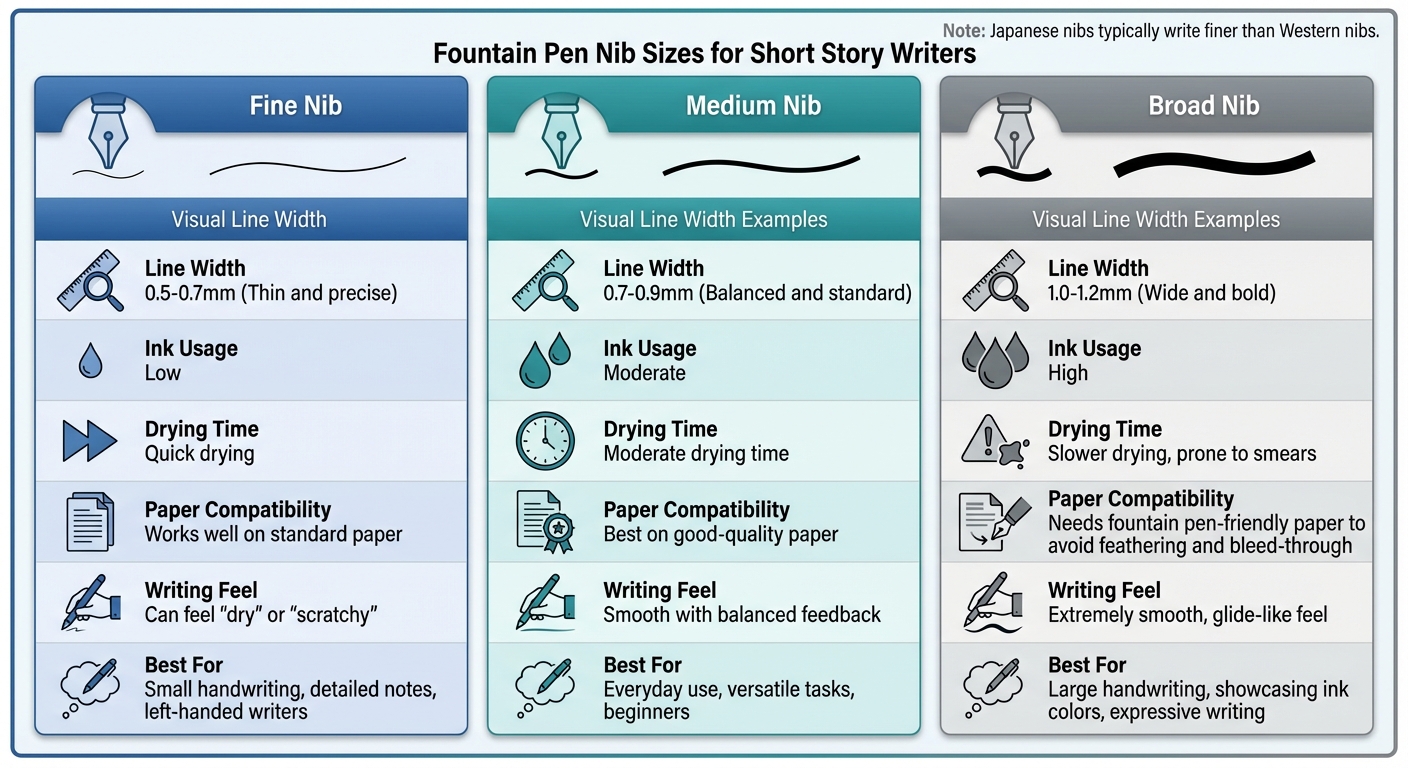
Fountain Pen Nib Size Comparison Chart for Writers
When it comes to picking the perfect nib size for your short story writing, it's all about understanding how each option performs in key areas. Here's a quick breakdown of how fine, medium, and broad nibs stack up across important features:
| Feature | Fine Nib | Medium Nib | Broad Nib |
|---|---|---|---|
| Line Width | Thin and precise (0.5–0.7 mm) | Balanced and standard (0.7–0.9 mm) | Wide and bold (1.0–1.2 mm) |
| Ink Usage | Low – uses less ink | Moderate – balanced consumption | High – uses more ink |
| Drying Time | Quick drying, reducing smudges | Moderate drying time | Slower drying, prone to smears |
| Paper Compatibility | Works well on standard paper | Best on good-quality paper | Needs fountain pen–friendly paper to avoid feathering and bleed-through |
| Writing Feel | Can feel "dry" or "scratchy" with minimal ink flow | Smooth with balanced feedback | Extremely smooth, offering a glide-like feel |
| Best For | Small handwriting, detailed notes, and left-handed writers | Everyday use, versatile tasks, and beginners | Large handwriting, showcasing ink colors, and expressive writing styles |
Fountain Pen Revolution offers a variety of pens, ranging from budget-friendly stainless steel nibs to luxurious 14k gold nibs, catering to writers looking to add a personal touch to their storytelling.
Each nib size brings its own personality to the page. Fine nibs are precise and conservative with ink, making them great for detail-oriented writing. Medium nibs strike a balance, offering smoothness and versatility for everyday use. Broad nibs, on the other hand, create bold, expressive lines and are perfect for showing off ink qualities.
One thing to keep in mind: nib widths aren't standardized across brands. Japanese nibs, for example, typically write finer than their Western counterparts. A Japanese medium nib often feels like a Western fine. To avoid surprises, always check the millimeter measurements when comparing nibs, especially if you're switching between brands. For short story writers, understanding these nuances ensures you pick a nib that complements your creative flow.
Conclusion
Choose the right nib for the job at hand. Medium nibs are a go-to option for general writing, offering a smooth ink flow and versatility that make them perfect for everyday use. If you're working on edits or revisions, fine nibs shine with their precision, ideal for jotting margin notes, making small corrections, or detailed annotations. For moments when you want to add bold, expressive strokes or highlight the beauty of your ink, broad nibs create striking lines that can elevate title pages or chapter headings.
If you're still figuring out your preferences, consider trying Fountain Pen Revolution's Starter Sets. Priced at $35, these sets include a pen, ink, and accessories to help you get started.
FAQs
What nib size works best for left-handed writers?
For left-handed writers, fine or medium nibs tend to work best. These nib sizes allow for smoother ink flow and help minimize smudging - a common concern for those who push the pen across the page or write at an angle.
On the other hand, broad nibs, though great for creating bold, expressive lines, often lay down more ink, which can increase the likelihood of smearing. If you're left-handed, experimenting with various nib sizes can help you discover the one that complements your writing style the most.
How does the quality of paper affect how a fountain pen nib writes?
The type of paper you use can significantly impact how your fountain pen nib performs. On smooth, fountain-pen-friendly paper, the nib glides effortlessly, creating crisp and consistent lines whether you're using a fine, medium, or broad nib. This kind of paper prevents common issues like ink feathering or bleeding through, giving you a clean and polished writing experience. On the other hand, standard copy paper tends to be rougher and more absorbent. This can lead to feathering, overly quick drying, or even ink bleeding through the page - problems that are especially noticeable with broader nibs.
If you're writing short stories, pairing your favorite nib size with high-quality, slightly coated paper can make a world of difference. This type of paper promotes smooth ink flow and consistent line work, reducing interruptions and helping you stay focused. It’s a simple way to enhance your creative process and make writing more enjoyable.
Is a broad nib suitable for writing short stories with detailed elements?
Broad nibs aren’t typically ideal for detailed writing in short stories. Their wider tips release more ink, creating thicker lines that can make precise or intricate lettering a challenge. If your writing leans toward small annotations or fine details, a fine or medium nib is likely a better fit.
That said, broad nibs can bring a bold and expressive flair to headings or larger text. Depending on your style, they might still find a spot in your creative toolkit.