

When using a fountain pen, the type of paper you choose significantly impacts two key visual effects: shading and sheening. Shading occurs when ink saturation varies within a single stroke, creating depth, while sheening is the shiny, metallic effect caused by ink crystallizing on the surface. Here's what you need to know:
- Absorbent papers (like copy paper) soak up ink quickly, reducing shading and eliminating sheen. They often cause feathering, leading to blurry edges.
- Coated papers (e.g., Clairefontaine, Tomoe River) slow ink absorption, allowing vibrant shading and pronounced sheening but with longer drying times.
- Textured or cotton papers strike a balance: they allow shading but rarely showcase sheen due to moderate absorption.
To maximize your fountain pen's performance, match your paper choice to your ink and nib size preferences. Coated papers are ideal for showcasing ink properties, while absorbent papers are practical for everyday use. Experimenting with different paper types can help you achieve the desired effects.
7 Key Factors for Fountain Pen Friendly Paper!
sbb-itb-1dd4fe9
How Paper Absorption Affects Shading and Sheening
The way paper absorbs ink plays a huge role in how shading and sheening appear. When ink stays on the surface instead of being absorbed quickly, it can pool unevenly, creating the varied tones that result in shading. For sheening to occur, the ink needs even more time to dry on the surface. This slow drying allows surface crystallization, which creates that shiny, reflective effect.
On the other hand, fast-absorbing papers pull ink deep into their fibers almost instantly. This quick absorption prevents the ink from pooling on the surface, which eliminates both shading and the crystallization needed for sheen. As Ferris Wheel Press puts it, "The right paper doesn't merely hold ink - it hosts it". Without the proper surface retention, these visual effects simply don’t appear.
Slower-drying papers enhance these ink effects but come with the risk of smudging. Fast-drying papers, while more practical for everyday use, often flatten the dynamic qualities of fountain pen inks. These differences in absorption set the stage for understanding how coatings influence ink behavior. Choosing the right combination of paper, ink, and pen is a key part of any fountain pen buying checklist.
Paper Coatings and Their Effects
Coated papers, treated with clay or polymer, reduce the paper's porosity. This coating acts as a barrier, slowing down ink absorption and keeping the ink on the surface longer. The result? Sharper, more vibrant colors and more pronounced sheening. As Ironmark explains, "Coated paper presents sharper and brighter images or designs because it absorbs less ink".
By holding ink on the surface, coated papers allow it to pool where the nib places it. This pooling creates concentrated areas of color, giving rise to dramatic shading. For sheening and shimmering inks, coated papers - whether gloss, matte, or dull-coated - are ideal. Their smooth surface not only enhances color saturation but also provides the perfect backdrop for showcasing reflective effects.
Uncoated and Absorbent Papers
Uncoated papers, on the other hand, have exposed wood fibers that make them highly porous. As Ironmark notes, "Uncoated paper absorbs ink because the surface is made to be more porous and no clay coating was added during manufacturing". This porosity causes ink to spread into the fibers, resulting in feathering - a fuzzy, uncontrolled spread of ink.
This ink diffusion disrupts shading by preventing concentrated color areas. The edges of the ink line become blurry, and any chance of sheen disappears as the ink sinks too deeply into the paper. While uncoated papers dry faster and offer a natural, textured feel, they lack the ability to highlight the intricate qualities of fountain pen inks. If your ink isn’t sheening as expected, try it on a coated paper to see if the issue lies with the paper’s absorption rate.
Paper Type Comparisons: Effects on Shading and Sheening
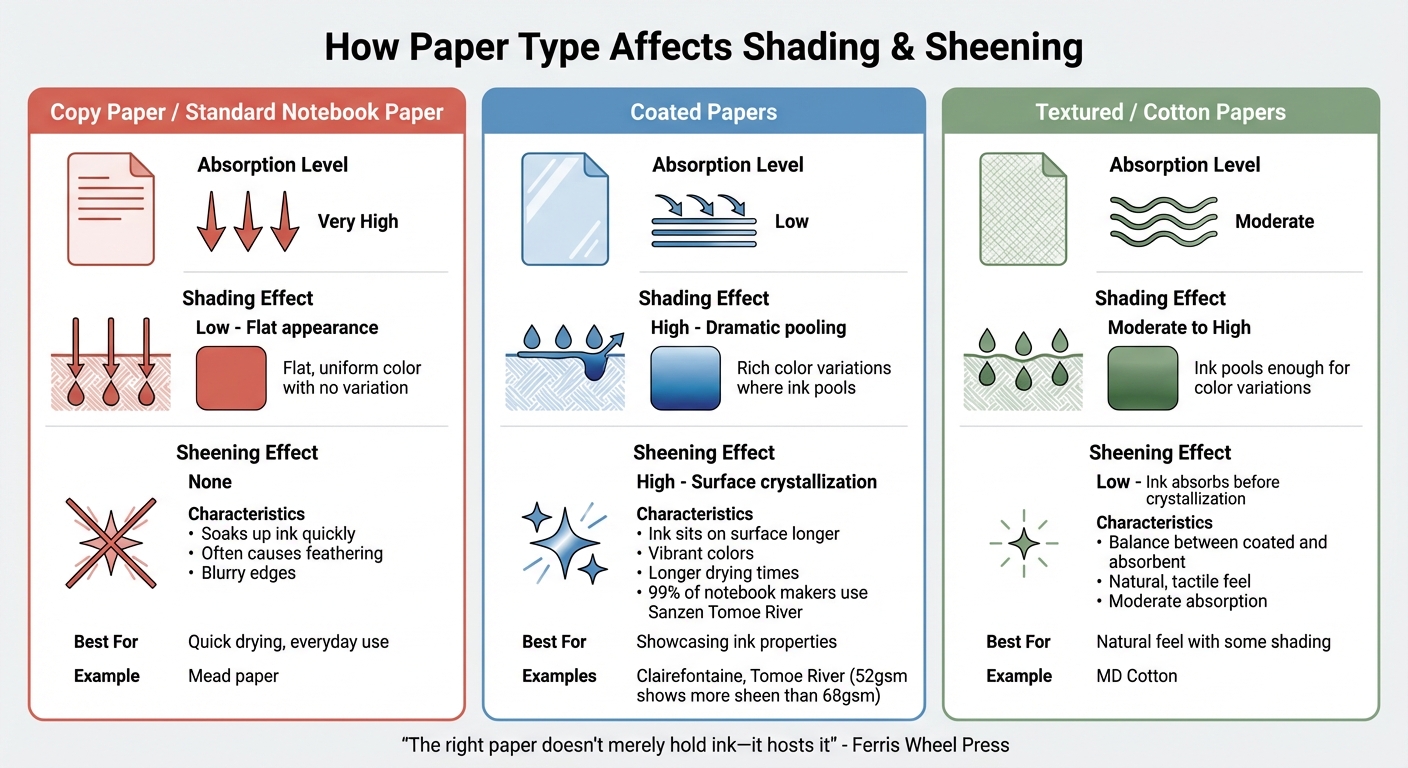
How Different Paper Types Affect Fountain Pen Ink Shading and Sheening
When it comes to how fountain pen inks behave, the type of paper you use plays a big role in creating shading and sheening effects. This all ties back to how much ink the paper absorbs.
Copy Paper and Standard Notebook Paper
Everyday papers like copy paper or standard notebook paper (e.g., Mead) are very absorbent. They soak up ink quickly, leaving no time for it to pool on the surface. This eliminates the chance for shading to develop. Rachel Goulet from The Goulet Pen Company explains it well:
"On the Mead paper, the color is much more flat and consistent because the ink doesn't have time to pull and create a shading effect".
The result? A flat, uniform color. For example, when testing Noodler's Southwest Sunset ink on Mead paper, it produced a consistent orange with no variation. In contrast, the same ink on Clairefontaine paper showed a range of hues, transitioning from light to deep tones where the ink pooled. Additionally, these highly absorbent papers often cause feathering, which blurs the edges of your writing.
Coated papers, however, take a completely different approach.
Coated Papers (e.g., Clairefontaine)
Papers like Clairefontaine and Tomoe River are coated to reduce absorption. This coating lets the ink sit on the surface longer, which is ideal for both shading and sheening. The ink pools where the nib deposits it, creating rich color variations and reflective effects that fountain pen enthusiasts adore.
Tomoe River paper, particularly the 52gsm version, is especially popular for its ability to highlight sheen. However, it comes with a trade-off: longer drying times. Interestingly, Sanzen Tomoe River paper is currently used by nearly 99% of notebook and planner makers worldwide. The lighter 52gsm version tends to showcase sheen more effectively than the heavier 68gsm option.
Textured and Cotton Papers
Textured and cotton-based papers, like MD Cotton, fall somewhere in between. They are more absorbent than coated papers, but less so than copy paper. This balance allows for high shading, as the ink pools just enough to create color variations. However, sheen is usually minimal or absent, as the ink absorbs before it has a chance to crystallize on the surface.
| Paper Type | Shading Effect | Sheening Effect | Best For |
|---|---|---|---|
| Copy Paper/Mead | Low (flat appearance) | None | Quick drying, everyday use |
| Coated (Clairefontaine, Tomoe River) | High (dramatic pooling) | High (surface crystallization) | Showcasing ink properties |
| Textured/Cotton (MD Cotton) | Moderate to High | Low (ink absorbs) | Natural feel with some shading |
User Experiences and Expert Opinions
Paper Sizing and Treatment Effects
When it comes to how ink behaves on paper, it’s not just about weight - sizing and surface treatment are key players. As Hanna Struk, a writer for Scriveiner, explains:
"A fountain pen is a finely tuned tool. Its performance depends on the paper, ink, and nib."
This interplay, often called the "writing system interaction", highlights why papers with the same weight - like 80 gsm - can perform entirely differently based on their surface treatment. For instance, stone-coated papers might absorb ink quickly despite their specialized coatings, leading to reduced line definition. This can make your writing resemble the results of a technical liner rather than a fountain pen. On the other hand, coated papers keep ink on the surface longer, enhancing both color saturation and shading.
Texture also matters. Papers with a rougher surface, such as I-Boom Greenread, may offer a tactile writing experience but can result in uneven ink distribution. In contrast, smoother papers, which are less absorbent, often deliver consistent line widths and better shading control.
These nuances underscore the importance of testing inks on various paper types to find the best match.
Testing with Fountain Pen Revolution Inks
Our ink tests reveal even more about how paper treatment impacts performance. Dry-flowing inks tend to excel on less absorbent papers, providing precision and enhancing shading. Meanwhile, more lubricated, modern inks penetrate fibers more easily and feel smoother on textured surfaces.
For those experimenting with inks - like the affordable options from Fountain Pen Revolution - selecting the right paper is crucial. Highly absorbent papers can diminish shading and color vibrancy, while coated papers allow inks to sit on the surface, showcasing their full range of properties. As Struk notes, absorbent papers often flatten shading and line variation, whereas coated papers enhance these qualities by keeping the ink on the surface longer.
The bottom line? If you’re investing in quality inks, pairing them with the right paper can make all the difference in bringing out their best features.
Conclusion
Throughout this article, we’ve seen how paper choice can dramatically influence the way ink behaves and looks on the page. Absorbent papers pull ink into their fibers quickly, which can soften lines and reduce shading, while coated papers keep ink on the surface longer. This not only enhances color vibrancy but also highlights shading and sheening effects. However, the trade-off is longer drying times, which may lead to smudging.
Smooth, coated papers often deliver consistent ink application and bold color results, whereas textured papers can create uneven ink distribution and emphasize surface texture. The overall writing experience is shaped by the interaction between the nib, ink, and paper - each playing a role in how fluid or controlled the writing feels.
The best way to find your ideal setup is through experimentation. For instance, pairing drier inks with less absorbent paper can improve precision, while lubricated inks on textured paper can offer a smoother glide. If you're trying out affordable inks from Fountain Pen Revolution, testing them on different types of paper can help you uncover the combinations that work best for you. Even small tweaks, like opting for heavier or coated paper, can change how your writing looks and feels. Ultimately, the goal is to choose materials that match your preferences, whether you’re sticking to a familiar setup or exploring new creative possibilities.
FAQs
Why does my ink shade on some paper but not others?
Ink behaves differently depending on the type of paper you use, influenced by factors like absorbency, texture, and weight. For instance, smoother, less absorbent papers allow the ink to stay on the surface longer, which can enhance both shading and sheen. On the other hand, more absorbent or textured papers tend to make the ink spread or dry faster, which often reduces shading. Paper weight plays a role too - heavier papers designed for fountain pens help prevent feathering, allowing the ink to pool slightly and show off its depth more effectively.
How can I get more sheen without constant smudging?
To get that glossy sheen without dealing with smudges, opt for smooth, high-quality paper made for fountain pens. Combine this with inks that strike a balance between viscosity and drying time. Using broader nibs can also enhance the sheen and minimize smudging issues.
Does paper weight (gsm) matter more than paper coating?
When it comes to how ink interacts with paper, two key factors come into play: paper weight (gsm) and coating. Each plays a distinct role in the writing experience.
Paper weight determines how much ink the paper can handle without issues like feathering or bleed-through. This is especially important for uncoated papers, where higher weight means better absorption control. On the other hand, coating changes the game by reducing the paper's absorbency. This leads to sharper lines and a more pronounced sheen, making your writing look crisper and more vibrant.
For fountain pen enthusiasts, these details make all the difference. A heavier paper offers durability and prevents ink from seeping through, while a coated surface ensures smoother writing and enhances the ink's visual appeal. Together, they shape the overall quality of your writing experience.