

Before I fly with a fountain pen, I check for damage and pack it either full or empty and cleaned - never partly filled. Falling cabin pressure lets trapped air expand, which can push ink into the cap.
Here’s my 5-step preflight checklist:
- Check seals and connections. I look for cracks, loose parts, and worn seals.
- Choose full or empty. I follow the maker’s filling instructions or flush and dry the pen. For cartridges, I pack sealed spares to install after landing.
- Wipe away excess ink. I clean the nib, grip, threads, and cap with care.
- Pack nib-up. I secure the capped pen upright in a rigid case in my carry-on.
- Add a sealed outer layer. I use a resealable bag to keep any leaked ink off my belongings.
These steps reduce leak risk; they don’t guarantee a leak-free flight. I keep inked pens capped during ascent, then <u>uncap slowly with the nib pointing up</u> once cabin pressure has stabilized.
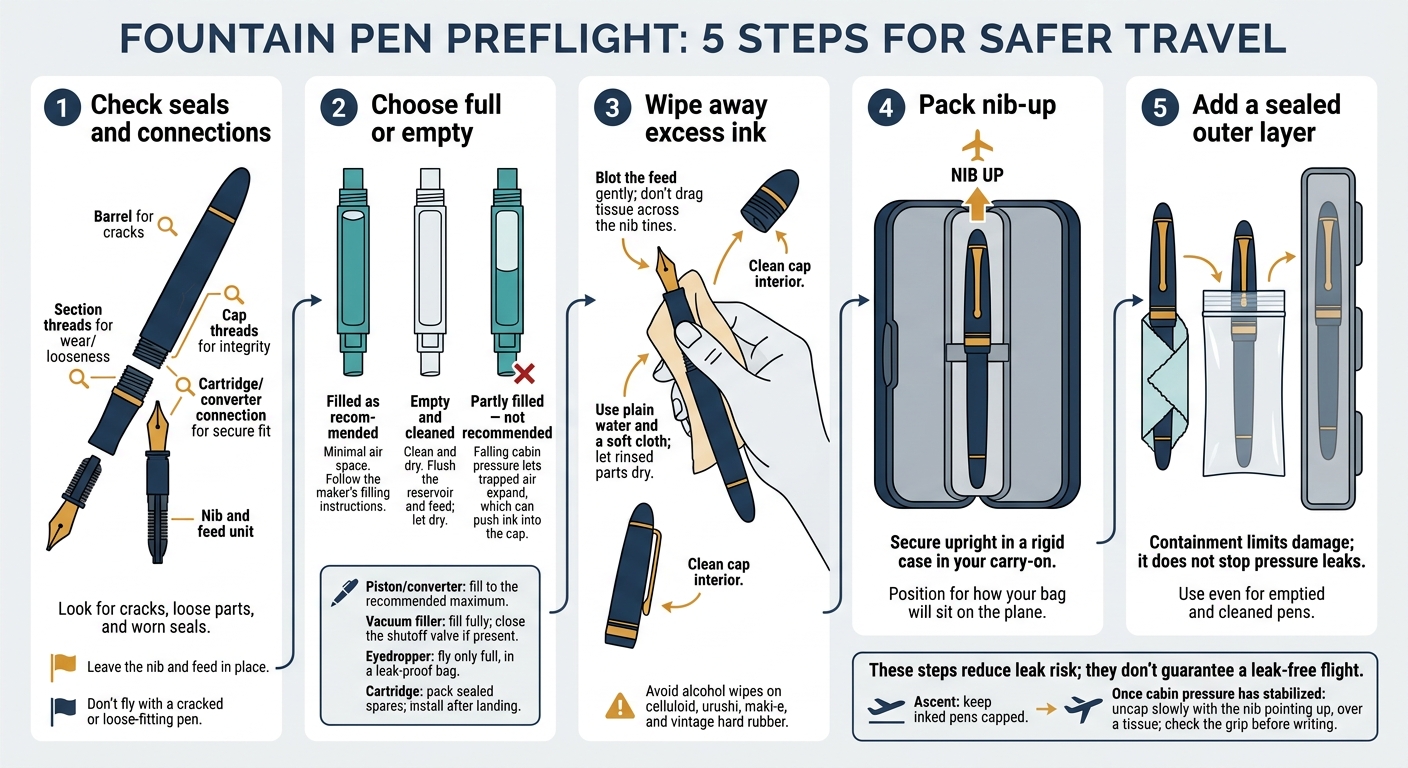
Flying With Fountain Pens: 5 Preflight Checks
✈️ Flying With Fountain Pens? Here's How to Avoid Inky Disasters! 🖋️
sbb-itb-1dd4fe9
1. Check Seals and Connections
Before filling or packing your pen, inspect its seals and fittings.
Look for hairline cracks in the barrel and section - the grip behind the nib. Check visible seals for wear, and clear dried ink or debris from the cap threads so the cap closes properly.
Make sure the cartridge or converter is fully seated. Follow the maker’s instructions when checking push-fit and screw-in parts. If your vacuum filler has a shutoff valve, check that it opens and closes properly.
Leave the nib and feed in place during inspection. Look for an uneven fit, gaps, or parts that have shifted.
Wipe the outside dry so new ink leaks are easier to spot. If you find cracks or loose fittings, don’t fly with that pen. If you’re unsure about the condition of a vintage lever- or sac-filler, clean it and carry it empty.
Once the pen passes inspection, choose its fill level.
2. Fill the Pen or Empty and Clean It
Choose full or empty - not partly filled. A full reservoir leaves less air to expand. Emptying and cleaning the pen removes the ink that expanding air could push out.
- Piston and converter pens: Fill to the recommended maximum.
- Vacuum fillers: Fill fully and close the shutoff valve, if your pen has one, before boarding.
- Eyedroppers: Fly only with a full pen, packed in a leak-proof bag.
- Cartridge users: Carry sealed cartridges and install them after landing.
Use the chart below to choose the fill state with the lowest leak risk for your plans.
Compare Pen Fill Levels
| Preparation state | Pressure-leak considerations | Suitable use | Required precautions |
|---|---|---|---|
| Filled as recommended | Less trapped air to expand | Writing after cabin pressure stabilizes | Follow filling instructions; keep the nib up |
| Empty and cleaned | No liquid ink to expel | No writing in transit | Flush the reservoir and feed; let dry |
| Partly filled | Expanding air can push ink out | Not recommended | Fill fully or empty and clean |
If you fly with an empty pen, clean it completely with pen flush before packing. Empty the reservoir and feed, flush both with plain water, and let the pen dry.
3. Clean Away Excess Ink
After choosing the fill level, clear any ink left on the nib, feed, and cap area. Follow the maker’s instructions for removing excess ink after filling - usually by holding the nib over the bottle. Blot the feed gently; don’t drag tissue across the nib tines.
Wipe the grip, barrel threads, and cap threads with a soft cloth. Check the cap rim and interior for pooled ink. If you find any, rinse the cap interior with plain water or use a fountain pen cleaning kit and let it dry fully before recapping. Even when the pen is sealed, surface ink can stain your hands and luggage.
Avoid alcohol wipes on celluloid, urushi, maki-e, and vintage hard rubber. Use plain water and a soft cloth instead, and don’t soak sensitive parts. Once the exterior is clean, pack the pen nib-up.
4. Pack Pens Nib-Up
After cleaning your pen, secure it for takeoff. Keep capped, inked fountain pens nib-up. This reduces the risk of leaks, but it doesn’t guarantee a leak-free flight.
Place each pen upright in a rigid case with a snug fit and molded slots or elastic loops, then pack it inside your carry-on. Position the case based on how your bag will sit on the plane - not how you hold it.
Keep pens capped during ascent. Once cabin pressure has stabilized at cruising altitude, hold the pen nib-up and uncap it slowly over a tissue. Check the grip for ink before writing. If you notice a leak, keep the pen capped until you have supplies ready to contain it.
Next, add a sealed outer layer before boarding.
5. Add a Leak-Containment Layer
For a final layer of protection, wrap each capped pen in a folded tissue or lint-free microfiber cloth. Then place it in a resealable, leak-resistant bag or container to keep leaked ink off your belongings.
Containment limits damage; it does not stop pressure leaks. Use it even for emptied and cleaned pens, as ink residue can remain in the feed or cap. Keep the wrapped pens in a rigid case so they don’t shift, and keep them nib-up throughout the flight.
Conclusion: Review Your 5 Preflight Checks
Before boarding, check that seals are secure, your pen is either full or empty and cleaned, and any excess ink is wiped away. Learn how to pack fountain pens for travel by keeping them nib-up in a leak-resistant bag.
Keep the case upright and within reach in your carry-on. Leave inked pens capped during ascent. At cruising altitude, slowly uncap a pen with its nib pointing up.
FAQs
Should I refill my pen before a connecting flight?
Yes - fill your pen completely or empty it entirely before your connecting flight. A partially filled pen has air pockets that can expand when cabin pressure changes, causing leaks or “burping.”
A full reservoir keeps air pockets to a minimum. An empty one prevents pressure-related ink leaks during takeoff and landing. Keep your pen nib-up in a secure case throughout your trip.
How should I handle a midflight ink leak?
Changes in cabin pressure can cause ink leaks during a flight. Keep the cap on until you have access to a sink and tissues. Open the pen carefully over a sink or towel, then wipe the section, cap threads, and grip with a soft cloth or tissue.
Rinse any pooled ink from the cap or nib with lukewarm water. Let these parts dry completely before using the pen, then rest it upright with the nib pointing up.
Can I use my fountain pen during descent?
Stop using your fountain pen before descent begins, and keep it sealed until after landing, once the cabin doors are open. Fast changes in cabin pressure during descent make ink leaks much more likely [2]. If your pen contains ink, keep it nib-up throughout descent and landing to hold liquid ink away from the feed [3][2].