

Metal alloy pens are a great choice for personalization due to their durability, premium feel, and customization options. Whether you want a lightweight aluminum pen for long writing sessions or a heavier brass pen with a vintage patina, metal pens offer a range of materials and finishes to suit your style.
Here’s what you need to know:
- Materials: Aluminum is lightweight and affordable, brass and copper provide a sturdy feel and patina over time, stainless steel is scratch-resistant, and titanium combines strength with a modern look.
- Finishes: Options include polished, brushed, anodized, tumbled, powder-coated, and raw finishes, each with unique maintenance needs and visual appeal.
- Engraving: Techniques like laser engraving, rotary engraving, and chemical etching allow for custom designs on the pen body or cap.
- Nib Choices: From steel to gold nibs, and grinds like stub, italic, or flex, you can tailor the writing experience to your preferences.
Customizing a pen involves selecting the right alloy, finish, engraving style, and nib to create a tool that reflects your personality and writing habits. For affordable options, brands like Fountain Pen Revolution offer metal pens with engraving services starting at $18 and nib upgrades from $4.
Visit Fountain Pen Revolution to design your own customized pen.
Building Titanium and Stainless Pens
Metal Alloys Used in Pen Customization
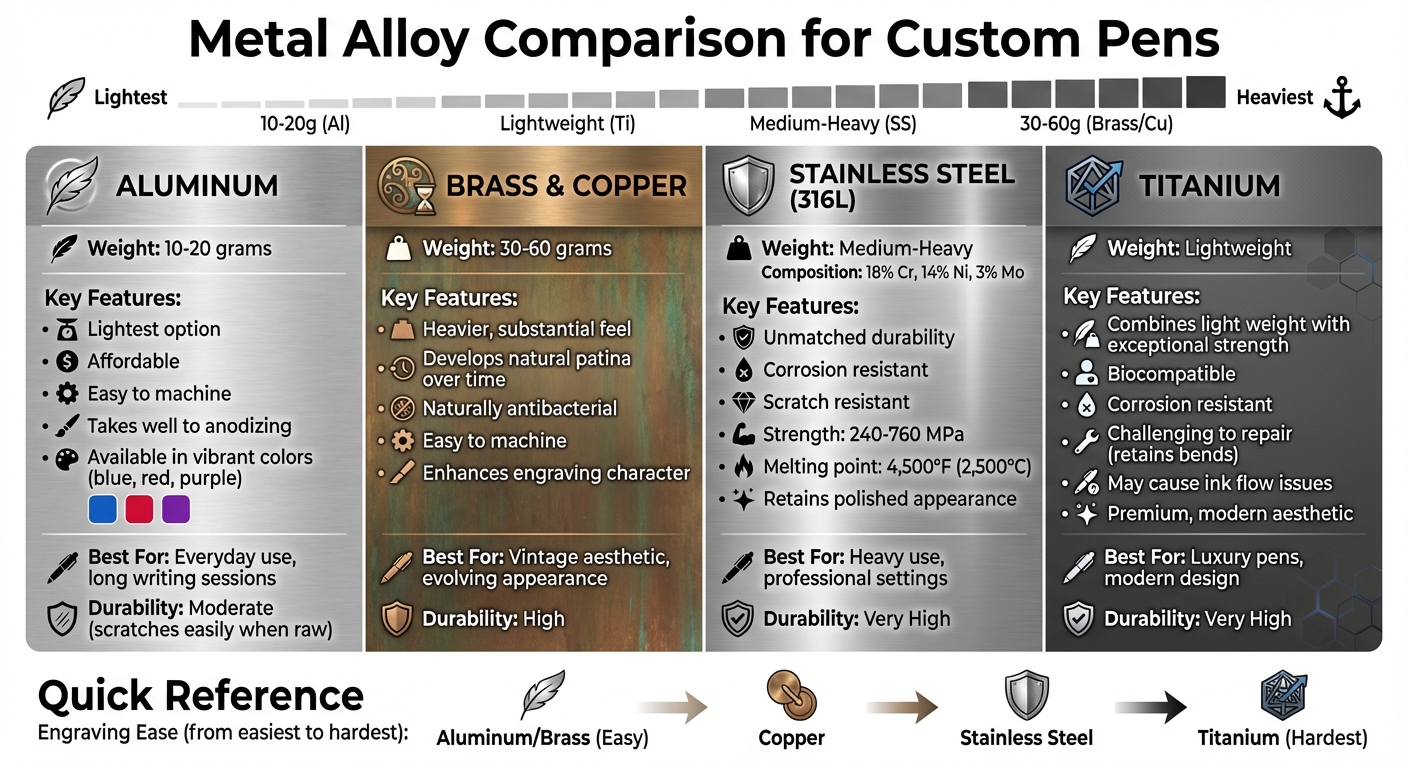
Metal Alloy Pen Materials Comparison: Weight, Durability, and Characteristics
Common Metal Alloys and Their Features
Aluminum stands out as the lightest option, typically weighing between 10–20 grams. Its affordability and ease of machining make it a popular choice for everyday pens. Aluminum also takes well to anodizing, allowing for vibrant finishes in colors like blue, red, and purple. This combination of low weight and durability makes it a practical and visually appealing option.
Brass and copper provide a heavier, more substantial feel, with most pens ranging from 30–60 grams. This added weight gives a grounded, stable sensation while writing. Over time, these metals develop a natural patina, lending a vintage charm that many writers cherish. This evolving patina also enhances the look of customized engravings, giving them a unique, aged character. Additionally, brass and copper are naturally antibacterial, which can be a helpful feature for pens that are shared or frequently handled. Both alloys are easy to machine, making them suitable for intricate engraving work.
Stainless steel, particularly the 316L grade, offers unmatched durability and resistance to corrosion. Its composition - approximately 18% chromium, 14% nickel, and 3% molybdenum - ensures it resists scratches and retains its polished appearance. During manufacturing, stainless steel can be work-hardened, increasing its strength significantly, from 240 MPa to 760 MPa. With a melting point of about 4,500°F (2,500°C), it is built to withstand heavy use, making it an excellent choice for pens designed for frequent writing.
Titanium combines lightweight properties with exceptional strength, making it a favorite for luxury pens. Its biocompatibility and resistance to corrosion add to its appeal. However, titanium can be challenging to repair because it tends to retain bends, and it doesn’t wick ink as effectively as other metals, which may cause flow issues with certain inks. Despite these quirks, titanium remains a premium choice for those seeking a sleek, modern aesthetic.
The unique characteristics of each alloy influence not only their appearance and durability but also factors like engraving precision, finish longevity, and overall writing experience.
How Alloy Choice Affects Customization
The choice of alloy plays a critical role in how well a pen can be customized. For instance, the softness of metals like aluminum and brass makes them ideal for clean, deep engravings. In contrast, harder materials such as stainless steel require more advanced tools, like powerful lasers or rotary equipment, to achieve sharp and permanent markings. Titanium, while excellent for engraving, often demands specialized machinery due to its toughness.
Surface finish is another key factor. Brass and copper develop a rich patina over time, adding depth and contrast to engraved designs. On the other hand, stainless steel maintains its polished or brushed finish longer, resisting the micro-scratches that can dull softer metals. This means the alloy not only determines the initial look of the pen but also how it will evolve with regular use.
Weight and balance are equally important for writing comfort. A lightweight aluminum pen, weighing around 15 grams, feels agile and easy to handle during long writing sessions. Meanwhile, a heavier brass pen, closer to 50 grams, offers stability and control, making it ideal for precise work. The density of the alloy directly affects the pen’s balance, with heavier materials shifting the center of gravity toward the barrel, which can enhance control during writing.
Custom Finishes for Metal Alloy Pens
Available Finish Types
Polished finishes offer a high-gloss, mirror-like surface achieved through buffing or tumbling. These finishes are visually striking and perfect for desk pens designed to impress. However, they are prone to showing fingerprints and scratches, requiring regular maintenance to keep their shine. Polishing harder metals like stainless steel can be time-intensive, which may increase costs.
Brushed finishes create a satin-like texture with fine linear scratches using abrasive pads. This finish is less reflective, hides minor scratches, and requires minimal upkeep. The subtle pattern adds a touch of sophistication without demanding high maintenance.
Anodizing is a process primarily used on aluminum, adding a protective oxide layer through electrochemical treatment. Type II anodizing forms a thin layer (approximately 0.001") that resists corrosion and comes in a variety of colors - blue, red, purple, and more - while preserving the pen's dimensions. Type III, or "hard" anodizing, offers a thicker layer (up to 0.006") for increased wear resistance, though it’s typically limited to clear or black finishes.
According to cnclathing.com, "Anodized finishes are known for their durability and resistance to corrosion, wear, and fading".
Tumbled finishes are achieved using ceramic media in a mechanical process, producing a soft, matte surface with a variegated appearance. These finishes excel at concealing scratches and wear, making them ideal for heavy use. At Karas Pen Co., 90% of black Delrin pens are sold with tumbled finishes because of their practicality. Over time, the finish develops a character that enhances its appeal.
Powder coating involves applying dry polymeric powder electrostatically and curing it with heat to create a durable, opaque protective layer. This finish provides smooth colors with excellent resistance to chips and corrosion.
Electroplating applies thin layers of metals like chrome, nickel, or gold to the pen's surface. These finishes are visually striking and photograph beautifully, offering a premium aesthetic.
Raw or patina finishes leave brass and copper untreated, allowing them to oxidize naturally. Copper begins to patina within weeks, transitioning from a bright, shiny surface to a rich pinkish-brown, eventually developing a leather-like appearance. Brass takes longer, slowly evolving from yellow tones to a darker, brownish-black hue.
Paul Bennett of Karas Pen Co. explains: "Rather than seal the pens in an attempt to keep them bright and shiny, we leave them raw and let the customer decide whether to continue to keep them polished or let them patina over time".
| Finish Type | Appearance | Durability | Maintenance Level |
|---|---|---|---|
| Polished | High-gloss, reflective | Moderate; shows fingerprints/scratches | High (frequent buffing needed) |
| Brushed | Satin, fine linear texture | High; hides small scratches | Low |
| Anodized | Matte, colorful | Very High; scratch & corrosion resistant | Low |
| Tumbled | Variegated, soft matte | Very High; hides heavy wear | Very Low |
| Powder Coated | Smooth, opaque color | High; thick protective layer | Low |
| Raw Brass/Copper | Bright (new) to Dark (aged) | High (material-wise); finish changes | Moderate (if preventing patina) |
How to Select the Right Finish
Choosing the right finish depends on how and where you plan to use your pen.
For pocket carry, opt for tumbled or anodized finishes. These are durable enough to withstand contact with keys, coins, and fabric without showing significant wear. Raw aluminum, on the other hand, scratches easily and can leave black residue on your hands and clothing. Clear anodized aluminum offers a polished look with added durability.
For desk display, polished brass or copper stands out with its high luster and premium feel. These finishes are ideal for stationary use where you can maintain them regularly. Brushed stainless steel also makes a great choice, offering a professional look that resists fingerprints during occasional handling.
For low-maintenance needs, a tumbled finish is the best bet. It requires virtually no upkeep and even improves in appearance with time. Anodized aluminum is another low-maintenance option, needing only an occasional wipe with a damp cloth.
For evolving aesthetics, choose copper for a quick color transformation (within weeks) or brass for a slower, long-term change (spanning years or decades).
Paul Bennett notes: "Copper, on the other hand, will start to patina in a few weeks, faster if it's handled a lot. The bright copper color will deepen to a rich pinkish-brown before taking on an almost brown leather-like color...".
In humid or wet environments, copper may develop whitish-green spots if exposed to moisture for extended periods.
Maintaining Custom Finishes
Proper care ensures your chosen finish retains its appeal over time.
Polished brass and copper require regular upkeep to maintain their shine. A jeweler's cloth is a simple yet effective tool for removing tarnish and restoring brightness.
As Bennett advises: "If a patinated finish is not for you, use of a jewelers cloth can keep the finish of your brass or copper pen bright and shiny".
Anodized and tumbled finishes need very little care. A damp cloth is generally sufficient for cleaning, but avoid harsh chemicals that could affect the surface. These finishes are designed to be worry-free.
Electroplated and PVD-coated pens require delicate handling. Abrasive cleaners or automated cleaning methods like dishwashers can damage the finish. Stick to hand-washing with mild soap and water.
Berry, a product specialist at Auland Bottle, warns: "One bad review about peeling finish can damage a product launch".
Powder-coated finishes are tough but not indestructible. They handle regular use well but can chip if subjected to sharp impacts. Clean them gently to maintain their integrity.
Raw aluminum develops a "muddied" wear pattern over time and may leave residue on hands and clothing. If this isn’t your preference, consider clear anodized aluminum for a polished look with better durability.
Engraving and Personalization
Engraving Methods for Different Alloys
When it comes to engraving metal pens, laser engraving stands out as the most adaptable option. Fiber lasers, operating at around 1064 nm, are ideal for metals like stainless steel, brass, and aluminum. They produce either permanent recesses or high-contrast marks without requiring additional marking agents. On coated metal pens, the laser exposes the base metal beneath the coating. For example, Fountain Pen Revolution offers custom laser engraving services on their metal pens, allowing placement on the cap (up to 15 characters) or the barrel (up to 20 characters). However, they note that engraving on coated pens reveals the underlying metal and cannot be color-filled.
Rotary engraving, on the other hand, uses a spinning cutting tool to carve deep grooves into the metal. This method is extremely durable and creates a classic "cut-in" look. While it works well on most alloys, harder metals like stainless steel require specialized tools and equipment to avoid tool breakage.
For a more delicate touch, diamond drag engraving employs a stationary diamond tip to create fine, reflective cuts. This technique is best suited for soft metals like gold and silver or anodized surfaces, making it a popular choice for intricate monograms and elegant script designs.
Another option is chemical etching, which relies on stencils and chemicals to create shallow, burr-free designs with high detail. This method is particularly effective for intricate logos on metals like stainless steel, copper, and brass, offering consistent depth and precision.
Each technique has its strengths, depending on the metal type and design requirements.
Where and What to Engrave
The placement of your engraving plays a big role in personalizing your pen. The barrel (or body) is the most common engraving spot, offering enough space for about 20 characters. This makes it perfect for names, dates, or short quotes. The cap can hold up to 15 characters, which is better suited for initials, monograms, or brief messages. For even smaller engravings, the clip can accommodate tiny initials or icons with precise detailing.
For maximum readability, choose simple fonts like Arial or Times New Roman. Handwritten-style fonts also work well, especially with mechanical engraving, as they capture intricate details beautifully. If you’re engraving a logo or custom artwork, vector files (such as SVG, EPS, or PDF) ensure sharp results during the engraving process.
"Engraving on coated metal pens cannot be color filled and the engrave color will be that of the metal that has been coated, generally brass or silver." - Fountain Pen Revolution
When designing your engraving, leave enough space near edges or beveled areas to avoid a cramped or distorted look. For coated metal pens, keep in mind that the engraved color will be the exposed base metal, typically brass or silver, rather than the pen's outer finish.
Engraving Method Comparison
| Method | Depth | Contrast | Durability | Best Alloy Compatibility |
|---|---|---|---|---|
| Fiber Laser | Medium | Extremely High | Very High | Stainless Steel, Titanium, Brass, Aluminum |
| Rotary (CNC) | Deep | Subtle | Highest | Most alloys (special tools for hard steel) |
| Diamond Drag | Shallow | Subtle/Reflective | High | Gold, Silver, Pewter, Anodized Aluminum |
| Chemical Etching | Flush/Flat | Uniform | High | Stainless Steel, Copper, Brass |
Fountain Pen Revolution offers laser engraving services priced at approximately $18 per pen.
sbb-itb-1dd4fe9
Nib Selection and Customization
The type of metal alloy used in a pen doesn't just influence its look and durability - it also plays a key role in determining the best nib for a well-balanced writing experience.
Nib Materials and Their Characteristics
Stainless steel nibs are known for their durability and resistance to corrosion. They deliver a consistent line with minimal variation, making them a great choice for everyday use or for those new to fountain pens. Plus, they’re budget-friendly and pair seamlessly with a variety of pen bodies, from lightweight aluminum to heavier brass, without adding unnecessary weight.
Gold nibs, typically 14K or 18K, offer a softer and more responsive writing experience. These nibs are crafted by blending gold with copper and silver, striking a balance between flexibility and strength. Gold nibs can provide subtle line variation depending on pressure, and they glide more smoothly across the page compared to steel nibs. Premium pens, especially those made of solid gold or flagship designs, are often paired with gold nibs to complement their luxurious aesthetic. To ensure durability and smoothness, most nibs - whether steel or gold - are tipped with a hard osmium-ruthenium alloy.
Nib Sizes and Specialty Grinds
Once you've chosen a material, the next step is selecting the nib size and grind that best suits your writing style.
Standard nib sizes include:
- Extra-fine: Ideal for small handwriting or detailed work.
- Fine: A versatile option for everyday writing.
- Medium: The go-to choice for most users due to its balance of line width and smoothness.
- Broad: Perfect for bold signatures or expressive writing.
For those looking to add flair to their penmanship, specialty grinds offer exciting possibilities. A stub nib features a flat tip that creates line variation between horizontal and vertical strokes, adding a touch of personality to your writing. Italic grinds take this concept further, with sharper edges that deliver even more dramatic line variation, though they require precise hand positioning. Flex nibs are another option, allowing you to achieve varying line widths by adjusting pressure, which is perfect for recreating vintage calligraphy styles. Each grind has its strengths - stubs are great for adding style to everyday writing, italics are suited for formal occasions, and flex nibs are ideal for artistic expression.
Once you’ve settled on the size and grind, it’s important to ensure the nib complements your pen’s material and design.
Pairing Nibs with Pen Materials
The weight and balance of your pen play a big role in selecting the right nib. Heavier pens, such as those made from solid brass or stainless steel, pair well with larger gold nibs (14K or 18K), as these nibs match the pen’s substantial feel and maintain balance during extended writing sessions. On the other hand, lighter pens crafted from materials like aluminum or titanium are better suited to narrower nibs and flatter retaining rings, which help preserve the pen’s sleek and lightweight profile.
How you use the pen - whether posted (with the cap on the back) or unposted - also matters. A heavier brass pen with a large gold nib may feel perfectly balanced when unposted, while a slim aluminum design might require a lightweight steel nib to avoid feeling top-heavy. Additionally, the nib unit must fit the pen’s dimensions. Compact metal pens, for instance, need shorter and narrower nib assemblies to maintain their design integrity.
Fountain Pen Revolution: Custom Metal Alloy Pen Options
Fountain Pen Revolution (FPR) offers a range of customizable metal alloy pens that balance affordability and flexibility, catering to both beginners and seasoned writers.
Metal Alloy Pens Available at FPR
FPR's metal pens are crafted with a brass or silver base and finished with a paint-coated surface available in multiple colors. This combination ensures both style and durability. These pens are designed for laser engraving, which reveals the underlying brass or silver, creating a subtle yet elegant contrast against the painted finish. However, unlike acrylic or ebonite pens, these metal pens don't support color-filled engraving, so the natural metal tone becomes the focal point.
Nib Options and Upgrades at FPR
FPR enhances the writing experience with a variety of nib options. Their Ultra Flex nibs, paired with ebonite feeds, allow for improved ink flow and line variation, making them ideal for calligraphy and expressive writing. Nibs come in two sizes - #5.5 and #6 - with pricing starting at $4.00 for standard nibs and going up to about $17.00 for the EF Ultra Flex.
The nib selection includes popular grinds such as Extra Fine, Fine, Medium, Broad, 1mm Stub, Architect, Fine Flex, and EF Ultra Flex. To match your pen's aesthetic, nibs are available in Chrome or Two-tone finishes. For those opting for flex nibs, ebonite feeds (available in 4.7 mm, 5.1 mm, and 6.3 mm sizes) are recommended for optimal performance.
If you're unsure which nib suits your needs, FPR offers Nib Sampler Packs in both #5.5 and #6 sizes. These packs provide an affordable way to test different nib grinds, with 5-nib packs priced around $21.00 and 8-nib packs costing approximately $46.00.
Once you've chosen a nib, customizing your pen is simple with FPR's guided options.
How to Plan Your Custom Pen with FPR
Start by selecting a pen model from FPR's catalog, then customize it with your preferred options. As mentioned earlier, the metal pens' durability and finishes make them excellent candidates for personalization. FPR offers custom laser engraving for an additional $18.00, allowing up to 20 characters on the pen body and 15 on the cap. Font choices include Times New Roman, Georgia, Lucida Calligraphy, Playball Script, and Arial. Note that engraving reveals the natural brass or silver tone, so selecting a pen color that contrasts well with these tones enhances readability.
Custom engraving adds 1–5 days to the delivery time, and engraved pens are non-returnable. Nib upgrades and complete nib units range from $18.00 to $32.00. It's essential to check whether your chosen pen requires a friction-fit nib or a complete nib unit. For convenience, FPR offers full #6 nib units, which include the housing, feed, and nib, making it easy to switch between writing styles.
FPR provides free shipping for U.S. orders over $65.00 and international orders exceeding $149.00, making it even more appealing to customize your perfect pen.
Conclusion
Every detail - from the alloy you pick to the engraving and nib style - plays a role in shaping your custom pen. Crafting a metal alloy pen isn’t just about function; it’s about creating something that reflects your personality. The choices you make - whether it’s selecting an alloy for its weight and durability, picking a finish that matches your aesthetic, or finding the perfect nib for your writing style - all come together to create a pen that’s distinctly yours.
Aluminum offers a lightweight feel, brass adds a sturdy heft that develops a unique patina over time, and stainless steel or titanium strikes a balance between strength and everyday practicality. Each material brings its own character to your pen.
For a personal touch, laser engraving is a great option. On coated metal pens, the engraving reveals the underlying brass or silver, creating a bold, contrasting effect. Stick to concise engravings - up to 15 characters on the cap and 20 on the body - and choose a font that enhances the pen’s overall design.
Finally, the nib is where function meets customization. Steel nibs are a practical, affordable choice for experimenting with different sizes and grinds. Options like the Ultra Flex or Architect grinds from Fountain Pen Revolution let you tailor your pen to your exact writing preferences.
If you’re ready to design your own pen, check out Fountain Pen Revolution. You’ll find a variety of metal alloy pens, laser engraving available for $18, and an impressive selection of nib configurations. Plus, with free U.S. shipping on orders over $65, you can create a personalized writing tool that combines quality and individuality.
FAQs
Which metal alloy is best for my writing comfort?
When it comes to choosing the right metal alloy for a comfortable writing experience, it all boils down to your personal preferences for weight and balance. Lightweight metals like aluminum are great if you want to avoid hand fatigue during long writing sessions. On the other hand, heavier metals like brass can give you a sense of stability and control. If you're looking for something in between, titanium strikes a nice balance - it’s light, durable, and comfortable.
The key is to find a pen that feels evenly balanced in your hand. This helps reduce strain and gives you better control, making writing smoother and more enjoyable. Ultimately, the best choice depends on your writing style and what feels right for you.
What finish holds up best for everyday pocket carry?
Stainless steel is a highly durable choice for everyday pocket carry. Its strong resistance to corrosion, low maintenance needs, and ability to endure regular use make it perfect for handling the wear and tear of daily life.
Will engraving show on a coated metal pen?
Engraving on coated metal pens can sometimes be harder to see, particularly when the coating is dark or opaque. Laser engraving, however, offers a solution by removing or ablating the coating to expose the metal underneath. The visibility of the engraving largely depends on the material and thickness of the coating, but this method usually ensures the design stands out.