

The right pen stand protects your fountain pens, ensures smooth ink flow, keeps your desk organized, and adds style to your workspace. Here's how to pick the best one for your needs:
- Storage Orientation: Horizontal stands keep nibs moist for quick writing; vertical (nib-up) stands prevent leaks.
- Capacity: Single-pen rests suit daily use; multi-slot stands or cup-style holders work for larger collections.
- Material: Soft PVC, wood, leather, or felt prevent scratches. Avoid hard plastic or velvet with nylon fibers.
- Desk Space: Compact options fit tight spaces, while larger stands cater to extensive collections.
- Design: Match the stand's style with your workspace - wood for a classic look, metal for modern setups, or acrylic for visibility.
Whether you need a single-pen rest or a multi-slot organizer, choosing the right material, size, and design ensures your pens stay safe and accessible while enhancing your workspace.
Fountain Pen Rests (Where To Put Your Pen?!)
Determine Your Needs and Usage Patterns
Before selecting a fountain pen stand, take a moment to evaluate how you use your pens. A stand not only protects your pens but also showcases them, so it’s important to find one that fits both your habits and your workspace.
Review Your Pen Usage
Start by counting how many pens you use regularly. Many fountain pen enthusiasts have one or two "daily drivers" - the pens they rely on every day - which deserve a dedicated spot on their desk. Others rotate through a collection of 3 to 12 pens weekly, keeping the rest stored safely in cases or drawers.
If you typically use a dozen pens at a time, a multi-slot stand is probably your best bet. But if you stick to just one or two pens, a simple single-pen rest will suffice. For users dealing with leaking pens, horizontal or nib-up storage is a smart choice, while nib-down designs can help prevent pens from drying out. Understanding your usage frequency will guide you in choosing the right stand size and style.
Measure Your Desk Space
Next, take stock of the space available on your desk. Single-pen rests require only about 2 inches, while multi-slot organizers might take up anywhere from 6 to 12 inches.
Think about where the stand will go. Place it within easy reach of your dominant hand so you’re not constantly stretching or shuffling papers to grab a pen. Avoid positioning it near windows, as direct sunlight can fade materials and might even cause ink to leak. If your workspace is tight, a small ceramic stand, priced around $7.50–$7.95, could be a practical option. For larger collections, you may need to allocate more space or consider a drawer organizer if desktop space is at a premium.
Understand Pen Stand Types and Features
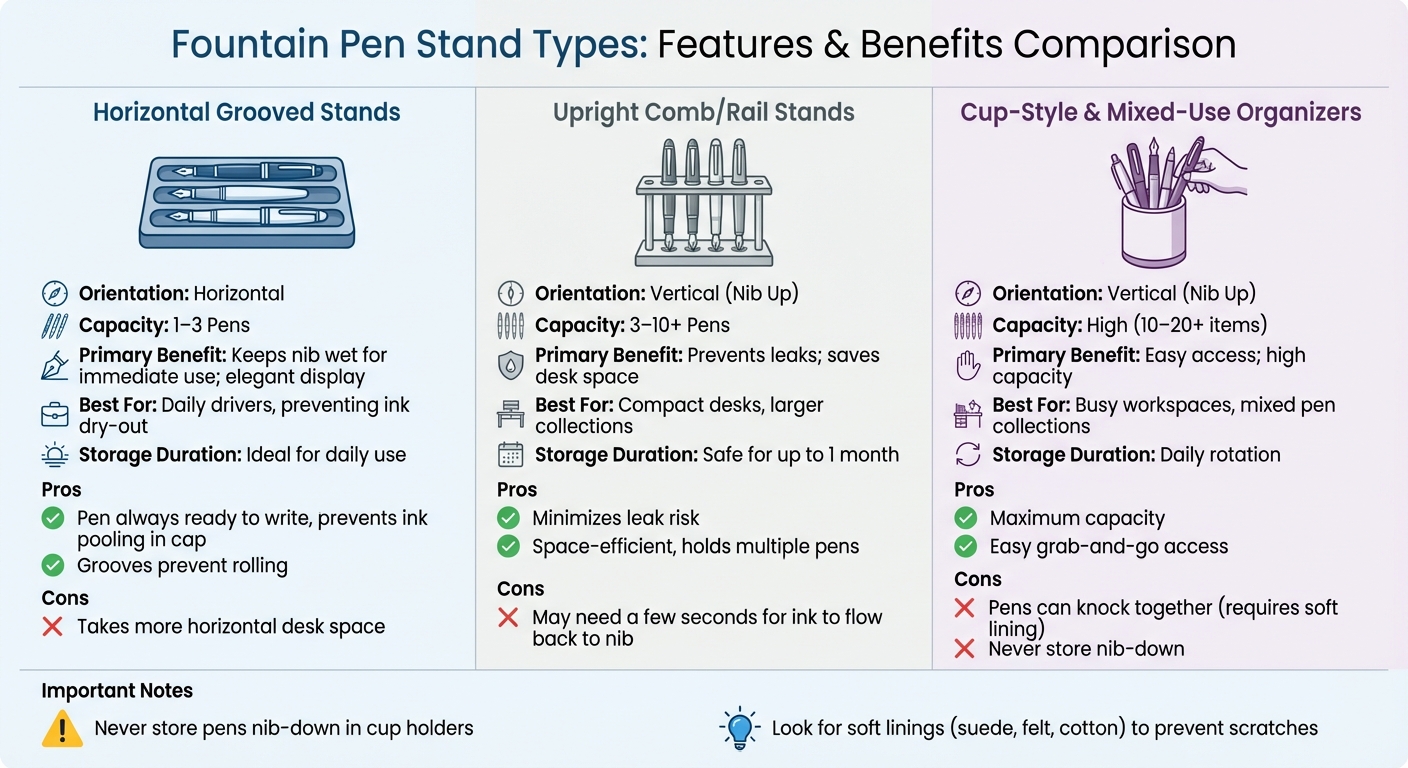
Fountain Pen Stand Types Comparison Guide
Once you've figured out how many pens you need to store and how much room you have on your desk, it’s time to dive into the different types of pen stands available. Each design has its own perks when it comes to keeping your fountain pens safe and organized.
Horizontal and Angled Grooved Stands
These stands are designed to hold pens flat or slightly angled, typically accommodating one to three pens at a time. By keeping the nib in contact with the ink feed, horizontal stands ensure your pen is always ready to write. This position also prevents ink from pooling in the cap, making it a practical choice for daily use. Grooved designs add an extra layer of protection by keeping pens separated and secure, which is especially helpful for delicate nibs. Plus, the grooves prevent pens from rolling or bumping into each other.
Upright Comb or Rail Stands
Upright stands store pens vertically with the nib pointing upward, allowing gravity to pull ink away from the nib and back into the reservoir. This design minimizes the risk of leaks. These stands are great for compact desks since they can hold anywhere from 3 to 10 or more pens in a relatively small space. You can safely store inked pens in an upright position for up to a month without worrying about drying out. While you might need to wait a few seconds for the ink to flow back to the nib when you start writing, this is a small trade-off for the convenience and space-saving benefits.
Cup-Style and Mixed-Use Organizers
Cup-style holders are perfect for busy workspaces, offering high capacity and easy access to your pens. They take up less space than grooved stands but come with a potential downside: pens can knock against each other, potentially scratching delicate finishes. To avoid this, look for cup holders with individual slots or a soft lining made from materials like suede, felt, or cotton.
When using a cup-style holder, always store pens nib-up to prevent ink from pooling in the feed, which can lead to clogs or leaks. Never store pens nib-down. For collectors with a mix of pen types, cup-style stands work best when paired with protective sleeves or reserved for pens with more durable finishes.
| Stand Type | Best Orientation | Capacity | Primary Benefit |
|---|---|---|---|
| Horizontal Grooved | Horizontal | 1–3 Pens | Keeps nib wet for immediate use; elegant display |
| Upright Comb/Rail | Vertical (Nib Up) | 3–10+ Pens | Prevents leaks; saves desk space |
| Cup/Mixed-Use | Vertical (Nib Up) | High | Easy access; requires soft lining to avoid damage |
Up next, let’s look at the materials that can further protect your pen collection.
Select Materials That Protect Your Pens
The material of your pen stand plays a key role in keeping your fountain pens safe from scratches and damage. Beyond design, the material you choose directly impacts the stand's durability and protective qualities.
Wood, Metal, and Acrylic Options
Once you've settled on a design, it's time to pick a material that balances aesthetics with protection.
Wooden stands, crafted from materials like walnut, maple, or oak, bring a timeless, cozy vibe to your workspace. They're sturdy, but it's important to check for a smooth, polished finish to avoid scratching your pen's barrel. These stands are perfect for traditional or home office settings.
Metal stands, particularly those made from solid brass, stainless steel, or aluminum, are a great fit for sleek, modern workspaces. Brass stands, for instance, offer excellent stability, making them a good choice for heavier or oversized fountain pens. However, metal can potentially scratch delicate finishes, so look for stands with soft linings or smooth edges. A matte varnish on brass adds an extra layer of protection against corrosion.
Acrylic and plastic options are popular for showcasing pens, as they provide clear visibility and are budget-friendly. Prices range from $4.95 for single-pen stands to $23.95 for 12-pen displays. Soft PVC plastic is especially gentle, cradling pens without risk of abrasion.
For high-end collections, leather and wool felt offer unmatched protection. Premium holders often use calfskin leather or 100% pure wool felt, which provide a soft, cushioned surface ideal for safeguarding even the most delicate finishes. As Lucy Williams, Lead Editor at The Pen Company, aptly notes:
"You wouldn't store a Rolex in a shoebox, so why keep your Visconti pen in a coffee cup?".
Check Lining and Finishing Details
The details in the finishing and lining of your stand are just as important as the material itself.
Look closely at all contact points to ensure there are no rough edges or burrs. Soft linings, such as suede, felt, or cotton flannel, are excellent for cushioning your pens and preventing micro-scratches. However, steer clear of velvet linings that include nylon fibers, as these can damage your pen's surface. Similarly, avoid stands with hard plastic dividers.
Stability features are another key consideration. A stand with a weighted or wide base is less likely to topple, especially if you’re storing heavier pens. Some high-quality stands even come with self-adhesive foam dots or non-slip bases to keep them steady while also protecting your desk from scratches.
| Material | Protection Level | Price Range | Best For |
|---|---|---|---|
| Soft PVC | High (non-abrasive) | $7.95–$13.00 | Budget-conscious users; scratch prevention |
| Wood | Moderate (needs smooth finish) | $170.00–$250.00 | Classic workspaces; natural aesthetic |
| Brass/Metal | Moderate (requires lining) | $45.00–$75.00 | Modern desks; heavy pens |
| Leather/Wool Felt | Very High (softest) | $110.00–$250.00+ | Luxury collections; maximum protection |
| Acrylic | Moderate (hard surface) | $4.95–$23.95 | Display purposes; visibility |
To keep your pens in pristine condition, maintain consistent ambient conditions and avoid placing your stand in direct sunlight. Prolonged UV exposure can fade pen materials and cause ink to dry out more quickly.
sbb-itb-1dd4fe9
Pick the Right Size and Capacity
Once you've chosen the right protective materials, the next step is to make sure your pen stand fits both your collection and your desk space. The size and capacity of the stand should complement your fountain pen routine. A stand that's too small won't fit your collection, while one that's too large could take up too much valuable workspace.
Match Pen Dimensions to Stand Slots
Before purchasing a stand, measure the widest part of your fountain pen - this is usually the cap or the center of the barrel. Most standard acrylic stands are designed to hold pens up to 0.7 inches (1.8 cm) in diameter, which works well for most everyday fountain pens. However, if you own oversized or high-end models with thicker barrels, you'll need a stand specifically designed for them. For instance, Pelikan ceramic stands are built to hold pens with barrels up to 15 mm (0.6 inches). The FPR Pen Stand is another compact option, measuring 5 inches long by 1.2 inches wide, and it accommodates pens up to 0.7 inches in diameter.
Don't forget about length, especially if you have glass dip pens or longer models. Make sure the stand provides enough clearance - whether vertical or horizontal - to prevent tipping or overhang.
Next, think about how the stand's capacity matches your pen usage.
Plan for Capacity and Desk Space
Consider how many pens you use regularly. If you primarily rely on one pen - your "daily driver" - a single-pen rest is the ideal choice. It keeps your go-to pen easily accessible without taking up much space.
For those who frequently rotate between two to five pens, small grooved rests or multi-compartment organizers are a great fit. If you're a collector with a larger assortment, tiered acrylic stands, large zippered cases, or desk organizers with multiple slots can help you store your collection efficiently. When planning for future growth, choose a stand with 20–50% more slots than your current needs.
If desk space is tight, compact stands like acrylic rails - some as narrow as 1.2 inches - offer a good balance between accessibility and a small footprint. Vertical "comb" or "cup" style stands are another option, as they maximize storage within a small area. Just make sure the pens are properly oriented to prevent leaks. If you're really short on space, you can keep your most-used pen on a single stand at your desk and store the rest of your collection in drawer organizers or cases.
| Stand Type | Typical Capacity | Typical Footprint | Best For |
|---|---|---|---|
| Pen Rest/Single Stand | 1 Pen | Compact/Small | Displaying your daily pen |
| Grooved/Slotted Stand | 2–10 Pens | 5" x 1.2" (approx.) | Rotating a small collection |
| Pen Pot/Cup | 10–20+ Items | Medium/Vertical | Bulk storage of various tools |
| Large Desk Organizer | 30–40+ Pens | Large | High-volume office use |
Match Design With Your Workspace
Pick a pen stand that not only fits your workspace style but also keeps your pens safe and organized.
Align Design With Your Desk Style
Your desk setup plays a big role in choosing the right material and look for your pen stand. For home offices or traditional setups, wooden stands made from walnut or maple add a cozy, natural touch. On the other hand, sleek metals like aluminum, brass, or titanium fit perfectly in modern or industrial-themed spaces. If you prefer a minimalist vibe, acrylic stands provide a clean, almost "floating" effect that blends seamlessly with other desk accessories.
For more creative environments, you can go for something fun - think animal-shaped ceramic rests or colorful PVC holders that bring personality to your desk. In professional or executive settings, elegant options like white ceramic with gold detailing or handcrafted brass offer a polished, upscale feel. As Ken Tomita, Co-Founder of Grovemade, says:
"A great tool can make work worth doing."
Prices vary widely, starting with affordable PVC or ceramic options at $7.50–$15.00, mid-range designs at $20.00–$75.00, and going up to premium wood-and-metal combinations priced between $170.00 and $285.00.
Style matters, but don’t overlook practical features that make the stand functional for daily use.
Review Practical Display Features
While aesthetics are key, functionality seals the deal. Horizontal pen rests are perfect for displaying a single standout pen, while upright, multi-slot stands are ideal for keeping your daily options within easy reach. Look for stands with non-abrasive materials like soft PVC or smooth ceramic to protect your pens, and opt for designs with weighted or wide bases to prevent accidental tipping. Some advanced models even include "Slip & Seal" technology to keep ink from drying out while your pens are on display.
If desk space is tight, compact designs can offer a smart balance of accessibility and efficiency. For larger pen collections, tiered stands or integrated pen-and-stand combos help keep everything organized and visible without creating clutter.
Conclusion
Choosing the right pen stand comes down to understanding your needs, selecting protective materials, and ensuring the design complements your workspace. Start by assessing whether you need a stand for a single daily-use pen or a larger collection. For fountain pens, horizontal storage ensures immediate ink flow, while vertical (nib-up) storage prevents ink pooling.
Opt for non-abrasive materials like soft PVC, ceramic, or wood to avoid scratches on your pens. For stability, heavier bases made from solid brass or ceramic are ideal, especially for larger pens. It's also important to check if the stand's slots fit your pen dimensions - some executive stands are designed to accommodate oversized barrels up to 15mm. As Goldspot Pens puts it:
"Organizing your writing tools is more than a matter of convenience. It's a statement of style, care, and functionality".
Once you've considered functionality and materials, focus on a design that matches your workspace. Wooden stands add warmth to more traditional setups, while metal or acrylic options suit sleek, modern desks. For those looking to enhance their writing space, Fountain Pen Revolution offers pens starting at $18 and a range of accessories to complete your setup. When your pen stand aligns with both your workflow and personal aesthetic, it not only protects and organizes your pens but also becomes a stylish and practical part of your writing routine.
FAQs
What should I consider when choosing the right material for a pen stand?
When choosing a pen stand, it's important to think about durability, stability, and how well it fits the style of your workspace. Materials like wood - such as walnut or maple - are popular choices because they offer a sturdy, timeless look while also having a soft surface that’s gentle on delicate fountain pen nibs. If you’re looking for something heavier, metal or acrylic stands provide extra stability, though they might not be as kind to your nibs.
Pay attention to the weight of the stand to ensure it stays steady when you’re picking up or putting down your pen. Also, consider the size and capacity - it should hold your pens securely without letting them wobble or look awkward. Brands like Fountain Pen Revolution offer pen stands that combine quality, functionality, and attractive design, making it easy to find one that complements your desk and suits your needs.
What should I consider when choosing a pen stand's capacity?
When picking out a pen stand, the first thing to think about is how many pens you need to store. If you’ve got a big collection, a multi-slot stand can keep several pens and even small accessories organized. On the other hand, if you prefer a simpler setup, a stand designed for just one pen might be all you need.
Another important factor is the size and shape of your pens, especially if you’re into fountain pens. These often have longer barrels or larger nibs, so make sure the stand has slots that are deep and wide enough to hold them securely and keep them upright.
Lastly, consider your desk space. Measure the area you’ve got available and choose a stand that fits comfortably without making your workspace feel cramped. Stands made from heavier materials like wood offer more stability for larger collections, while lighter materials like acrylic are great for saving space. By balancing storage capacity, pen dimensions, and desk space, you’ll find the perfect stand for your needs.
How does the position of a pen stand affect fountain pen ink flow?
The way you position a pen stand can directly affect how ink flows in a fountain pen. When a pen is stored horizontally, the ink stays evenly distributed between the feed and nib. This helps maintain smooth, consistent writing. However, if the pen is stored nib-up, the ink may flow back into the cartridge or converter, potentially drying out the nib or requiring priming before use. On the flip side, storing it nib-down can cause ink to pool in the feed, increasing the chances of leaks or blotchy writing.
For most fountain pens, keeping them in a horizontal position or slightly tilted (around 45°) works best. This setup supports steady ink flow and reduces common issues. Fountain Pen Revolution offers a variety of pen stands designed to hold your pens at the perfect angle, so they’re always ready when you are.