

Restoring the shine of vintage celluloid pens requires careful product selection and technique. Using the wrong polish or method can cause irreversible damage, but the right compounds can help bring back their original luster. This guide covers the top 7 polishing products for celluloid pens, highlighting their features, safety, and application methods.
Key Products:
- Meguiar's Mirror Glaze #9 Swirl Remover 2 - Gentle on celluloid, removes light scratches, best applied by hand. Approx. $15.99.
- Anderson Pens Micro Gloss #1 - Water-based, safe for plastics, ideal for fine polishing. Approx. $12–$15.
- HUT Plastic Polish - Designed for plastics, delivers a clear finish, avoid wax variants. Approx. $12.50.
- Renaissance Wax - Protective wax for moisture resistance, but not recommended for celluloid due to potential damage. Approx. $21.95.
- Autosol Metal Polish - Metal-focused, use cautiously on celluloid. Approx. $11.99–$12.99.
- Flitz Polish - Mild polish for finishing touches, safe for delicate surfaces. Approx. $7–$10.
- Novus #2 Fine Scratch Remover - Affordable, handles light scratches, safe with proper care. Approx. $7.65.
Quick Tips:
- Always polish by hand to avoid heat damage.
- Start with abrasive paper for deeper scratches, then finish with a fine polish.
- Avoid wax products on celluloid to prevent trapping harmful byproducts.
Quick Comparison
| Product | Best For | Safety for Celluloid | Approx. Cost |
|---|---|---|---|
| Meguiar's Mirror Glaze #9 | Light scratches, glossy finish | Safe with hand use | $15.99 |
| Anderson Pens Micro Gloss #1 | Fine polishing, residue-free | Very safe | $12–$15 |
| HUT Plastic Polish | Final-stage polishing | Safe without wax | $12.50 |
| Renaissance Wax | Moisture resistance | Not recommended | $21.95 |
| Autosol Metal Polish | Oxidation removal | Use cautiously | $11.99–$12.99 |
| Flitz Polish | Finishing touch | Generally safe | $7–$10 |
| Novus #2 Fine Scratch Remover | Light scratches, haze removal | Safe with care | $7.65 |
Careful product choice and gentle techniques can restore your pens without risking damage. Read on for detailed insights into each product.
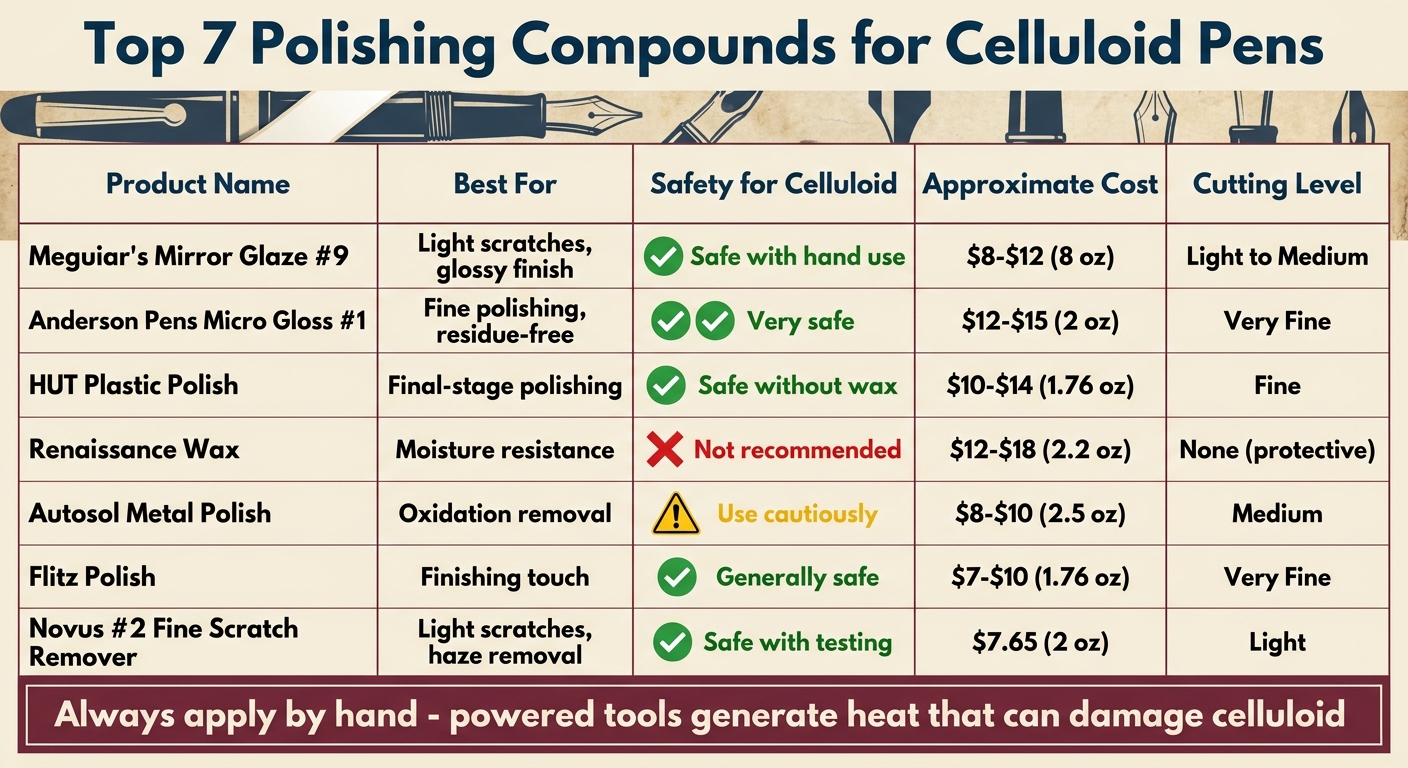
Polishing Compounds for Celluloid Pens: Safety and Cost Comparison Chart
1. Meguiar's Mirror Glaze #9 Swirl Remover 2
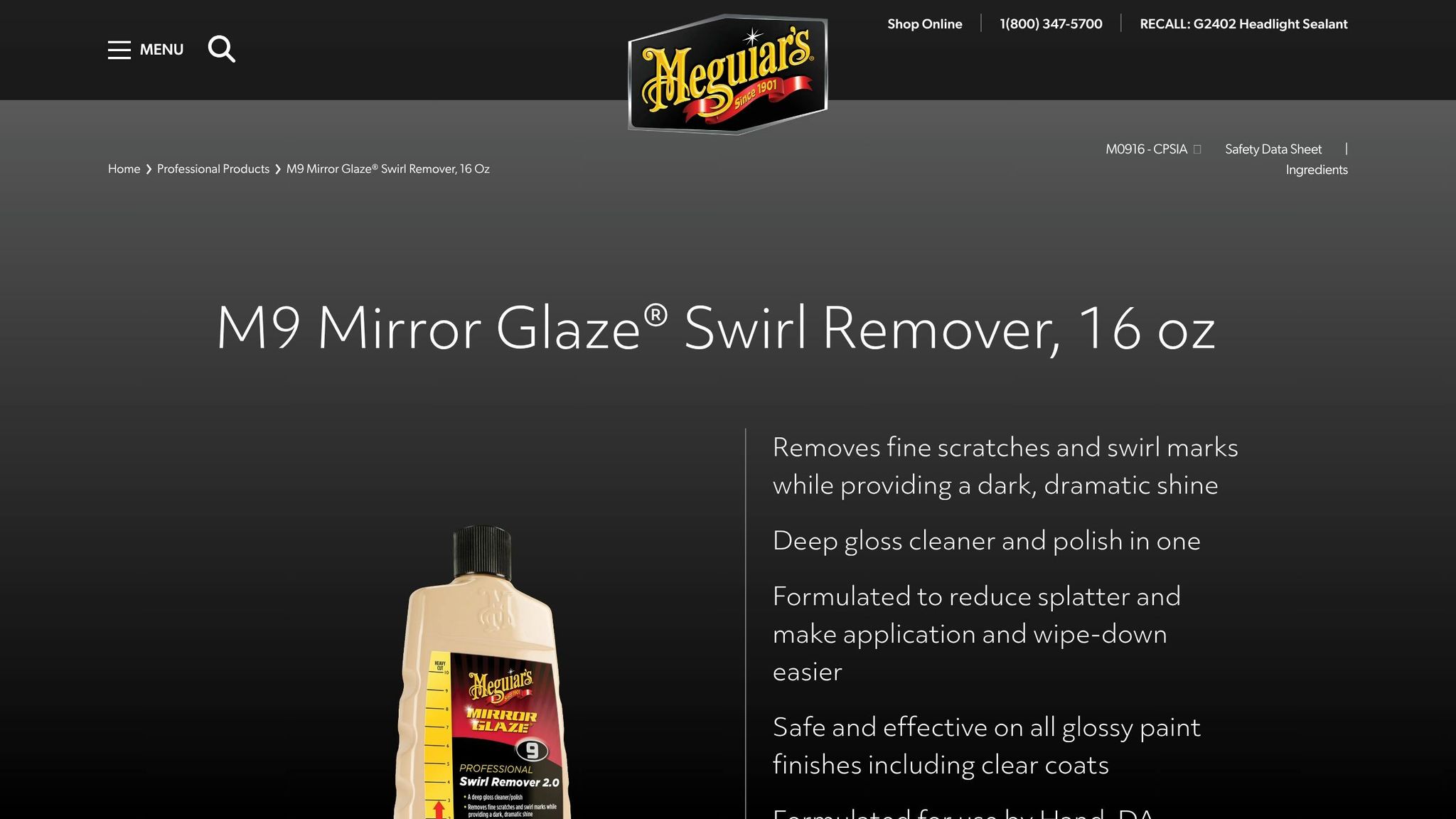
Meguiar's Mirror Glaze #9 Swirl Remover 2 is designed to clean and polish celluloid pens, effectively removing fine scratches and swirl marks to bring back a deep, glossy finish. Unlike heavier waxes that can trap harmful acidic byproducts in aging celluloid, this formula takes a gentler and cleaner approach to restoration.
Cutting Level
This swirl remover uses fine abrasives to tackle light scratches. For more noticeable defects, it’s best to start with medium-fine abrasive paper, gradually moving to finer grades before finishing with Meguiar's #9.
Application Method
You can apply this product by hand or machine, but when it comes to vintage celluloid pens, hand polishing is a must. Vintage expert David Nishimura highlights the risks of using powered tools:
"Recourse to the buffing wheel has left too many pens looking like melted popsicles."
Powered tools generate heat, which can lead to rippling, uneven surfaces, or even melting. Meguiar's #9 is designed to reduce splatter, making manual application cleaner and easier. Hand polishing not only ensures a more precise finish but also protects the delicate structure of vintage celluloid.
Safety for Celluloid Material
This formula is safe for celluloid materials, as well as body shop and clear coat applications, as long as you stick to hand polishing. The product itself is chemically safe, but mechanical heat from powered tools poses the main risk to these sensitive materials.
Approximate Cost
A 16 oz. bottle of Meguiar's Mirror Glaze #9 Swirl Remover 2 is available for about $15.99, making it an economical choice for restoring the beauty of your treasured celluloid fountain pens.
sbb-itb-1dd4fe9
2. Anderson Pens Micro Gloss #1

Anderson Pens Micro Gloss #1 is a water-based polish designed for celluloid and other plastics. Unlike petroleum-based options that risk harming plastics and rubber, this polish relies on aluminum oxide crystals as its abrasive component. Pen restorer Daniel Kirchheimer highlights its benefits:
"I use Micro-gloss, which is not formulated to leave anything behind... I'd suggest Micro-gloss instead, which is water-based."
This thoughtful formulation ensures a gentle polishing process that maintains intricate details.
Cutting Level
Featuring a fine abrasive - aluminum oxide crystals - Micro Gloss #1 is ideal for restoring shine without over-removing material. For pens with more pronounced scratches, start with fine-grade abrasive paper (around 6,000 grit) and gradually move to finer grits before finishing with this polish.
Application Method
For best results, polish by hand using a soft cotton cloth or a specialized jewelry polishing cloth. This method offers greater control and helps protect manufacturer imprints. After polishing, carefully remove any powdery residue from crevices, threads, and seams to ensure a clean finish.
Safety for Celluloid Material
Micro Gloss #1 is particularly suited for celluloid because it contains no petroleum distillates, silicone, or carnauba wax. Its residue-free nature prevents acidic byproducts from being trapped, which is essential for preserving celluloid's integrity. Thanks to its water-based formula, it’s a cautious and reliable choice for restoring vintage pens.
3. HUT Plastic Polish
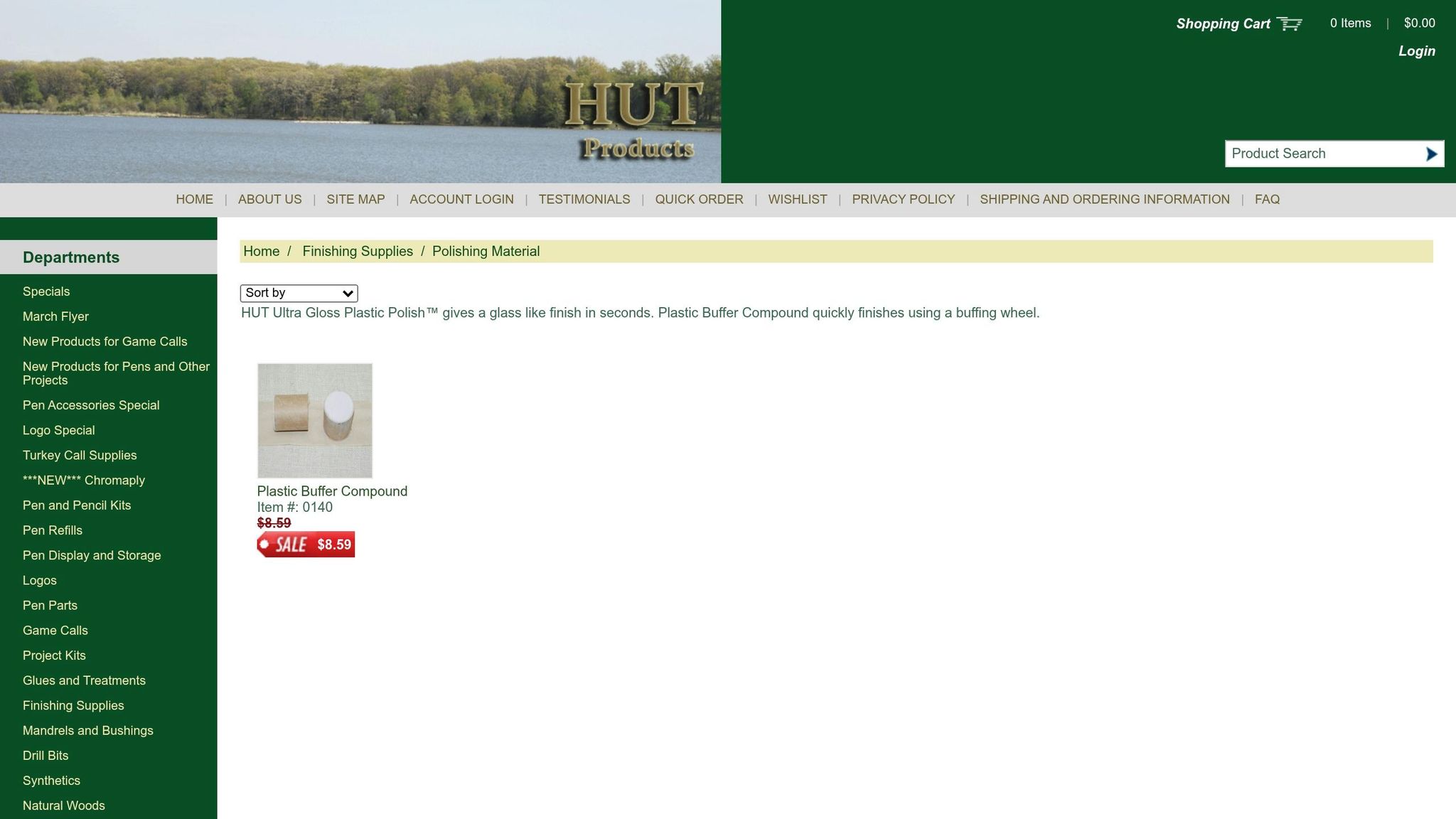
HUT Ultra Gloss Plastic Polish is designed to give plastics a finish that looks as clear and smooth as glass. Unlike metal polishes, which can be too harsh, plastic-specific options like HUT are often better suited for restoring vintage pens. It works well on a range of materials, from softer plastics to tougher synthetics like Corian and Acrylester.
Cutting Level
This polish shines when used during the final stages of restoration. To get the best results, sand the celluloid surface to at least 800 grit before applying HUT. This ensures the product can deliver its signature flawless finish. If the pen has deeper scratches, start with a medium-fine abrasive paper and gradually move to finer grades. Once the surface is properly prepped, apply the polish with care for optimal results.
Application Method
Buffing at high speeds might seem like a time-saver, but it’s risky for vintage celluloid. Nishimura cautions that high-speed buffing can generate too much heat, leaving vintage pens looking like "melted popsicles". To protect these delicate materials, it’s better to apply the polish by hand using a soft, 100% cotton cloth. This approach gives you more control and minimizes the chance of heat damage.
Safety for Celluloid Material
HUT’s formula is crafted specifically for plastics, striking a balance between effective polishing and preserving the material. This makes it a safer choice for celluloid pens compared to metal polishes. However, there’s a caveat with the HUT Pen Polish bar, which contains wax for water resistance. According to Nishimura, wax can trap acidic byproducts from aging celluloid, potentially causing harm over time. For best results, stick to hand application and avoid powered buffing, especially on multicolored or laminated celluloid, as these surfaces are prone to uneven or rippled finishes.
Approximate Cost
An 8 oz. bottle of HUT Ultra Gloss Plastic Polish costs about $12.50, while the 2 oz. HUT Pen Polish bar is priced at approximately $7.50.
4. Renaissance Wax
Renaissance Wax is a finishing wax designed to protect and enhance surfaces rather than remove scratches. Originally created for fine-art conservation, this microcrystalline wax is known for forming a clear, moisture-resistant barrier. Museums and galleries have relied on it for over 50 years to safeguard delicate artifacts. Unlike cutting compounds that work to remove imperfections, Renaissance Wax is used after polishing to provide a protective finish, making it a crucial step in celluloid restoration.
Application Method
To apply, spread a thin layer by hand and let it sit for 15–30 seconds before gently buffing it with a soft cloth. The wax hardens almost instantly and leaves a high-gloss finish. A single 2.25 oz container, priced at about $21.95, can treat over 500 pens.
Safety for Celluloid Material
Its use on celluloid, however, is a topic of discussion. While the wax does not discolor surfaces, some experts advise caution due to the unique aging process of celluloid. David Nishimura from Vintage Pens explains:
A relatively impermeable layer of wax would help exclude moisture, but would also restrict free venting of the acidic byproducts that aging celluloid naturally produces.
This means that while the wax can protect against moisture, it might trap acidic byproducts that celluloid emits as it ages. Additionally, if clouding occurs, removing the wax - made from a mix of natural and synthetic components - can be challenging. For rare or historically important celluloid pens, skipping this step might be a safer choice.
Approximate Cost
At $21.95 for a 2.25 oz container, Renaissance Wax may seem pricey compared to other products. However, its longevity - treating over 500 pens per container - makes it a cost-effective option in the long run.
5. Autosol Metal Polish

Autosol Metal Polish, although crafted for metals, can be cautiously used on celluloid pens when applied by hand. This polish is tailored for materials like chrome, brass, and stainless steel, featuring ultra-fine abrasives that remove oxidation and stains while leaving a high-gloss finish. Its ammonia-free, non-toxic formulation makes it safer to use, but it demands extra care when working with celluloid surfaces.
Cutting Level
Unlike polishes specifically designed for plastics, Autosol was created for metal surfaces, meaning it requires careful handling on celluloid. Its ultra-fine abrasives can restore shine with minimal material removal, but some experts recommend sticking with plastic-specific compounds for celluloid restoration. Vintage pen specialist David Nishimura remarks, "polishing compounds intended for plastics may be a better choice in most instances".
Application Method
For celluloid pens, hand application is the safest approach due to the polish's fine abrasive quality. Start by applying a small amount of Autosol to a clean, soft cloth - either dry or slightly damp - and gently rub it over the pen's surface. For intricate areas like cap bands or clip grooves, use a small brush or your finger (wearing a glove for precision). If you notice black residue, lightly rub a bit of cornstarch into the area to clean it. Avoid using powered tools, as they can generate heat that may damage celluloid.
Approximate Cost
A 75 ml (roughly 2.5 fl oz) tube of Autosol typically costs between $11.99 and $12.99. It’s often promoted as offering a lower cost per ounce compared to other metal polishes.
6. Flitz Polish
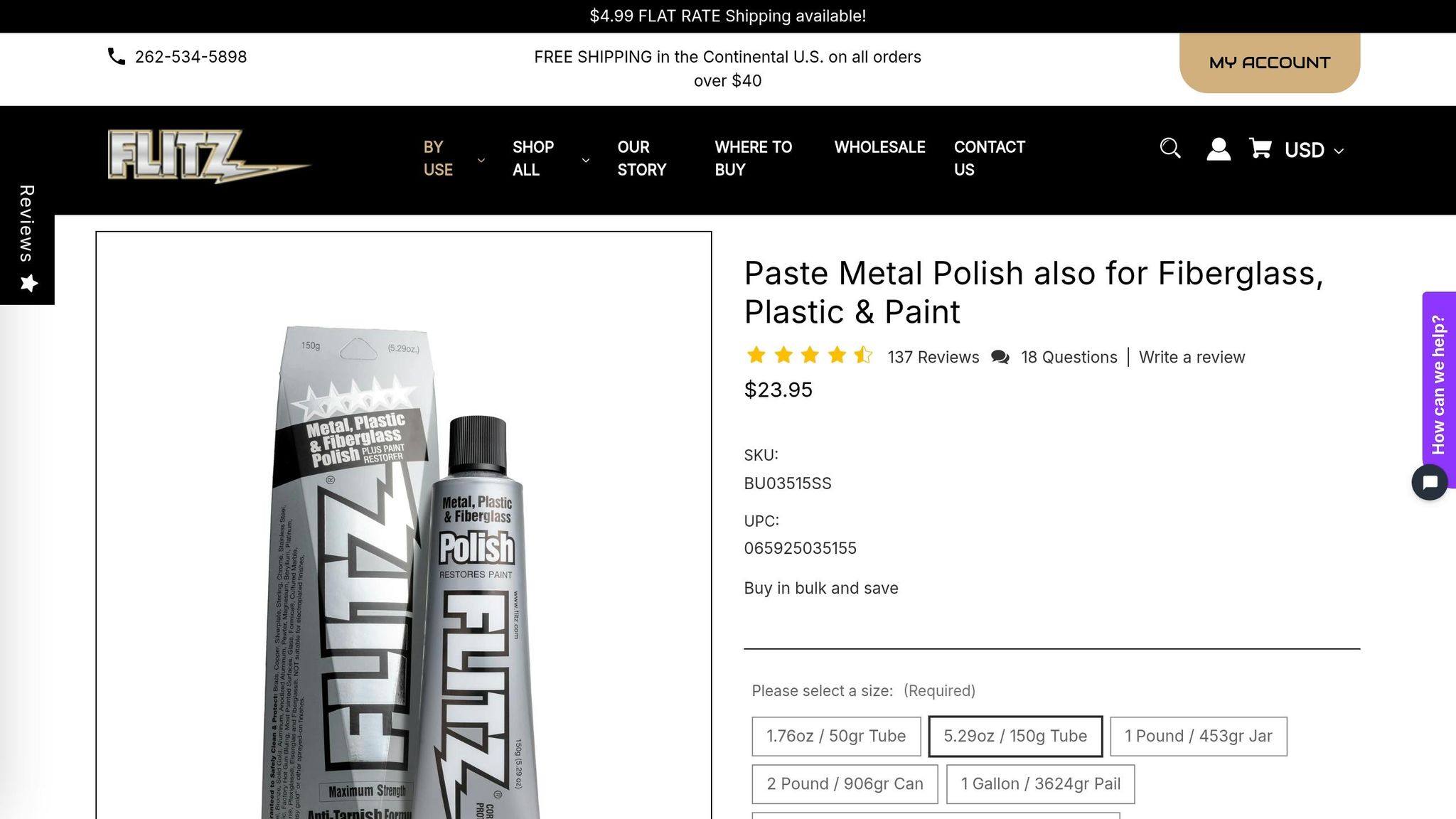
For a gentle yet effective way to restore the look of celluloid pens, Flitz Polish is a great option to consider. Originally created for metal surfaces, it has found a place among fountain pen enthusiasts for its ability to enhance the appearance of celluloid without being overly abrasive. Unlike harsher compounds, Flitz focuses on polishing rather than aggressively removing material, making it ideal for final touch-ups on delicate surfaces.
Cutting Level
Flitz functions as a fine-grade polish, capable of addressing very light scratches while restoring shine and clarity. Its mild abrasive action is gentle enough to avoid significant material removal. However, if your pen has deeper scratches, you’ll need to start with abrasive paper to smooth out the surface before using Flitz as a finishing polish. Some experts in vintage pen restoration recommend exploring polishes specifically designed for plastics, as they may offer better long-term care for celluloid materials. Because of its delicate nature, Flitz works best as a final step in your restoration process.
Application Method
To apply Flitz, always use a soft cloth - like a Sunshine cloth or high-quality cotton. Avoid using paper towels or rough fabrics, as they can create new scratches. Stick to hand application and steer clear of powered tools, which could generate heat and damage the celluloid. Make sure the pen’s surface is clean and dry before polishing, as debris can become embedded and cause further harm.
7. Novus #2 Fine Scratch Remover
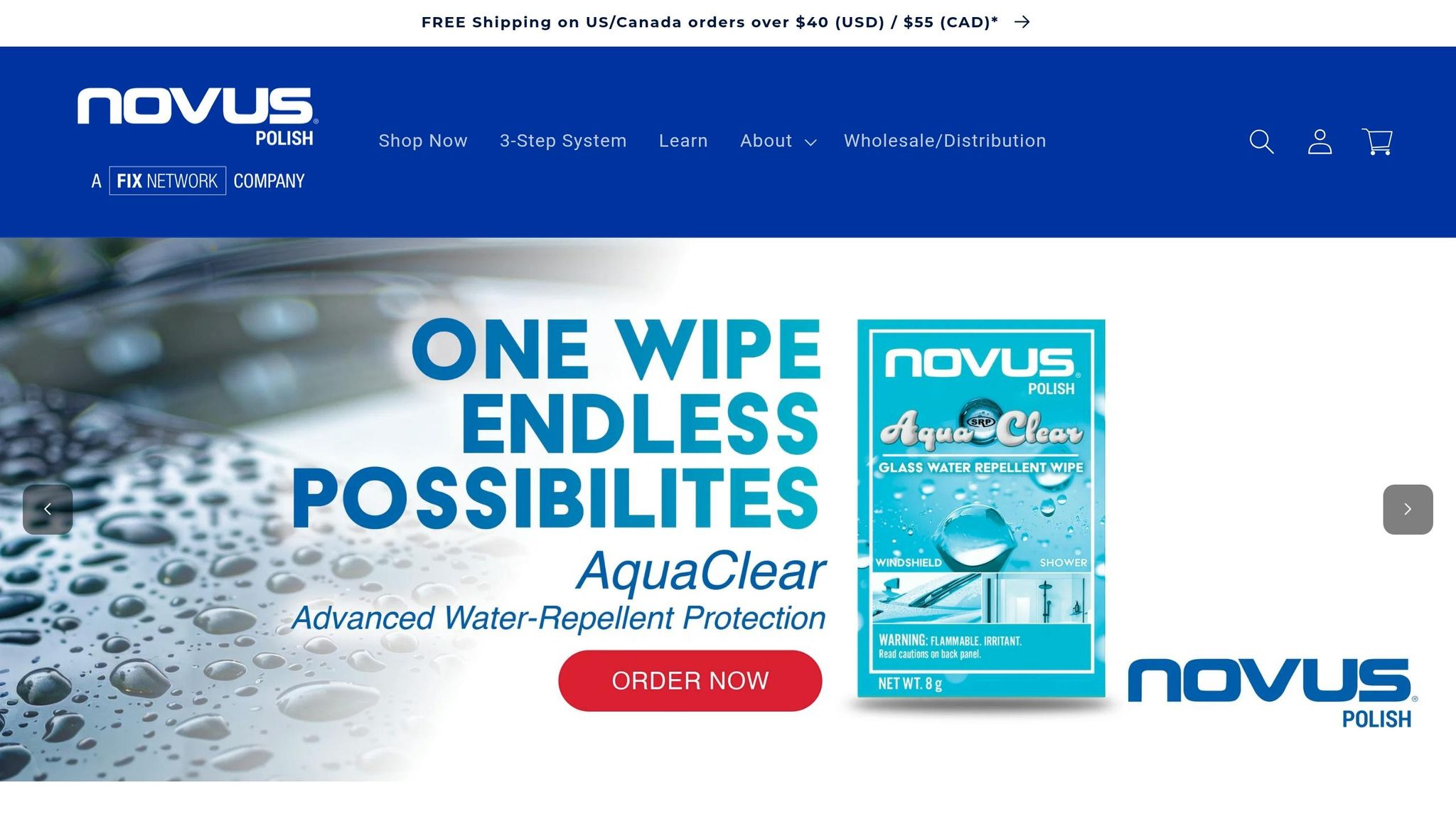
Novus #2 Fine Scratch Remover is an affordable and reliable option for removing light scratches from celluloid pens. Unlike wax-based products that only mask scratches temporarily, this compound removes a thin layer of material to restore clarity and shine permanently. With an impressive 4.8/5 star rating from 93 reviews, it’s a favorite among restoration enthusiasts.
Cutting Level
This product is designed to tackle light abrasions and surface haze effectively. If deeper scratches remain after repeated applications, you might need to start with a stronger compound like Novus No. 3 before finishing with Novus #2 for a polished look.
Application Method
To apply, use a clean, soft cloth - avoid powered tools as they can generate heat that might damage delicate celluloid. If the pen is dirty, start by cleaning it with Novus No. 1. Then, liberally apply Novus #2 and use firm, back-and-forth strokes perpendicular to the scratches, keeping the cloth well-saturated. Once the major scratches are reduced, switch to light, circular strokes. Let the polish dry to a light haze, then buff it off using firm, short strokes with a clean cloth. This hands-on approach ensures gentle care, especially for vintage celluloid.
Safety for Celluloid
As with similar products, always apply Novus #2 by hand to avoid heat damage. While it’s safe for most plastics, vintage celluloid requires extra care. Test the polish on an inconspicuous area before treating more noticeable spots. Keep in mind that the formula contains crystalline silica, which is flagged under California Proposition 65, so use it with proper precautions.
Approximate Cost
A 2‑oz. bottle of Novus #2 costs $7.65, making it a budget-friendly choice. Larger sizes, such as 16‑oz. and 64‑oz., are also available for those with bigger projects.
Product Comparison Table
When selecting a polishing compound, consider your pen's condition, budget, and your comfort level with hand restoration. The table below offers a quick reference to help you decide which product suits your needs best.
| Product | Cutting Level | Application Method | Celluloid Safety | Approximate Cost |
|---|---|---|---|---|
| Meguiar's Mirror Glaze #9 Swirl Remover 2 | Light to Medium | Hand application with soft cloth | Safe with hand application | $8.00–$12.00 (8 oz.) |
| Anderson Pens Micro Gloss #1 | Very Fine | Hand application with microfiber cloth | Safe; plastic-specific formula | $12.00–$15.00 (2 oz.) |
| HUT Plastic Polish | Fine | Hand application with soft cloth | Safe; designed for plastics | $10.00–$14.00 (1.76 oz.) |
| Renaissance Wax | None (protective coating) | Hand application with soft cloth | Not Recommended (blocks off-gassing) | $12.00–$18.00 (65 ml / ~2.2 fl oz.) |
| Autosol Metal Polish | Medium | Hand application with soft cloth | Use with caution; metal polish | $8.00–$10.00 (2.5 oz.) |
| Flitz Polish | Very Fine | Hand application with soft cloth | Generally safe; metal polish | $7.00–$10.00 (1.76 oz.) |
| Novus #2 Fine Scratch Remover | Light | Hand application with soft cloth | Safe with proper testing | $7.65 (2 oz.) |
When working with celluloid pens, hand polishing is crucial. Powered tools generate heat, which can warp delicate celluloid, particularly on multi-colored or laminated surfaces.
A note on Renaissance Wax: While it’s often mentioned among pen collectors, it is no longer advised for use on celluloid. Its impermeable barrier traps acidic byproducts that naturally off-gas from celluloid, a process that helps slow degradation. Additionally, museum conservators have noticed that its synthetic wax can become cloudy over time and is challenging to remove.
For beginners, Anderson Pens Micro Gloss #1, HUT Plastic Polish, and Novus #2 are excellent choices, offering safe and effective restoration for celluloid pens.
Conclusion
Restoring celluloid pens requires careful product selection and a gentle touch. The polishing compounds discussed in this guide range from ultra-fine options like Anderson Pens Micro Gloss #1 and Flitz Polish to medium-abrasive choices such as Meguiar's Mirror Glaze #9. The key is to choose a compound that aligns with your pen's condition and restoration goals, ensuring you achieve the desired finish without compromising the material.
One critical reminder comes from vintage pen expert David Nishimura, who cautions, "Recourse to the buffing wheel has left too many pens looking like melted popsicles." To preserve the delicate celluloid, always opt for hand polishing over mechanical methods.
When working with celluloid, use plastic-specific formulas, as these are less likely to cause damage compared to metal polishes. Additionally, avoid applying wax coatings to these pens. Wax can trap acidic byproducts released by aging celluloid, potentially accelerating its deterioration.
For pens with deeper imperfections, start with medium-fine abrasives (800 to 2,000 grit), gradually moving to finer grades before applying the final polish. This step-by-step method ensures a smooth, uniform surface and avoids issues like rippling, which can occur if softer areas are over-polished.
FAQs
How do I know if my pen is celluloid?
You can spot a celluloid pen by its warm-to-the-touch surface, eye-catching patterns, and a unique camphor-like scent, which is a hallmark of cellulose nitrate used in the 1920s–1930s. Check for vintage manufacturing marks or distinctive designs. Also, keep in mind that celluloid is flammable, a key trait of this material.
What grit sandpaper should I start with for scratches?
To get rid of scratches on celluloid pens, begin with medium-fine grit sandpaper. Gradually move to finer grades to achieve a smooth, polished finish. Avoid sticking to just one grit, especially if you're using a buffing wheel. Doing so can lead to uneven surfaces or rippling, which is especially problematic for multicolored or laminated pens. Take your time and work methodically for the best results.
How can I polish without damaging imprints and trim?
To safely polish a celluloid pen, steer clear of abrasive techniques that might damage imprints or trim. Instead, opt for a soft microfiber or cotton cloth for gentle polishing. If the pen requires more detailed care, protect the imprints with tape and use fine-grit micro pads (6000 grit or finer) along with polishes specifically designed for pens. Avoid using harsh chemicals or aggressive buffing methods, and always make sure the pen is completely dry after cleaning to prevent any moisture-related issues.