

When crafting or collecting wooden pens, the finish you choose matters. It protects the wood from damage, enhances its natural beauty, and affects how the pen feels and ages. Here’s a quick rundown of five common finishes and their key features:
- CA Finish: Durable and glossy, ideal for high-use pens and exotic woods. However, it requires practice to apply.
- Friction Polish: Easy to apply with a warm, natural look but less durable and better for decorative items.
- Pre-Mixed Waxes: Simple to use, offering a soft, satin finish. Best for low-use or decorative pieces.
- Danish Oil: Penetrates wood for a natural look with moderate protection. Great for showcasing wood grain but not for heavy use.
- Melamine Finish: Combines durability with a high-gloss look. Suitable for frequently handled pens.
Each finish has strengths and limitations, so the right choice depends on your goals - whether you want durability, aesthetics, or ease of application.
Quick Comparison
| Finish Type | Durability | Shine Level | Application Difficulty | Best Use |
|---|---|---|---|---|
| CA Finish | Very High | High Gloss | Moderate | High-use pens; exotic woods |
| Friction Polish | Low to Moderate | Moderate Gloss | Easy | Decorative pens |
| Pre-Mixed Waxes | Low | Satin | Very Easy | Low-use items |
| Danish Oil | Moderate | Satin/Natural | Easy | Display pens |
| Melamine Finish | Moderate to High | High Gloss | Moderate | Daily-use pens |
Choose based on how the pen will be used, the desired look, and the wood type.
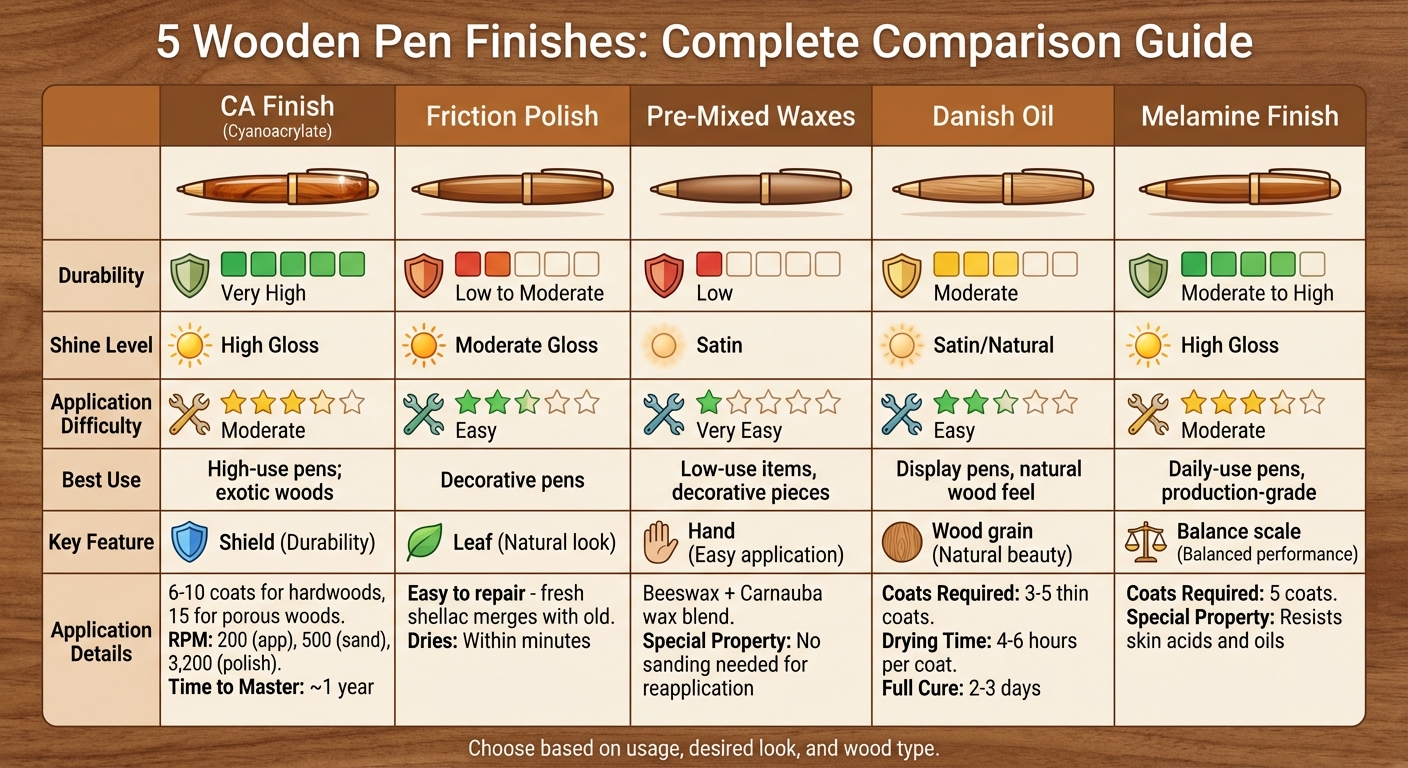
Wooden Pen Barrel Finishes Comparison Chart: Durability, Shine, and Best Uses
Perfect Finish For Your Wood Pens
sbb-itb-1dd4fe9
1. CA Finish
CA (Cyanoacrylate) finish, essentially a type of super glue, has become the go-to choice for professional pen makers. It creates a hard, plastic-like shell over wood, combining durability with a sleek, polished look. When applied in multiple thin layers - typically 6 to 10 coats for dense hardwoods and up to 15 for more porous woods - it forms a clear, waterproof barrier that's highly resistant to scratches. As Mike from Craft Supplies USA explains:
"It is the most durable finish I've found and can be used on virtually all woods, stabilized woods, and even acrylics."
– Mike, Craft Supplies USA
Durability
What makes CA finish so tough is its ability to deeply penetrate the wood fibers with its low-viscosity adhesive (around 100 CPS). This process stabilizes the wood surface from within, creating a bond that stands up to oils, acids, and the wear-and-tear of daily handling. Unlike wax or friction polishes, which can wear off over time, CA finish retains its protective qualities for years. This durability also enhances the wood’s natural beauty, making it a favorite among professional turners.
Aesthetic Appearance
CA finish delivers a stunning, glass-like surface that amplifies the wood grain, giving it a polished, almost plastic-coated appearance. Thanks to its self-leveling properties, it creates a smooth, mirror-like finish without brush marks or uneven layers. To achieve this high-end look, turners typically sand through progressively finer grits, finishing with Micro-Mesh pads up to 12,000 grit. As the Gluemasters Team notes:
"Creates a glass-like surface that enhances wood grain."
– Gluemasters Team
Ease of Application
While CA finish offers exceptional results, it does take time and practice to perfect the technique - many turners report it takes about a year to master. The process involves applying thin coats at around 200 RPM, followed by wet sanding at 500 RPM, and polishing at 3,200 RPM. For best results, use blue shop towels instead of regular paper towels to avoid leaving fibers in the finish. Apply CA accelerator sparingly from 8–12 inches away to prevent cloudiness. Always wear nitrile gloves and ensure proper ventilation to avoid irritation from the fumes.
Ideal Use Cases
Once mastered, CA finish is particularly effective for oily exotic woods like Cocobolo or Rosewood, which often resist other types of finishes. It also works well with softer, spalted, or "punky" wood blanks. Its versatility extends to stabilized woods and even acrylics, making it a top choice for crafting high-end wooden pens.
2. Friction Polish
Friction polish offers a distinct approach compared to CA finishes. This shellac-based finish is applied directly to a spinning lathe, creating a warm, amber tone that highlights the wood's natural texture and beauty. Unlike CA finishes, which rely on adhesive layers, friction polish builds up through heat generated by friction. As Grumpy Guy Pens puts it:
"The lower gloss option is perfect for anyone who wants a truly authentic looking and feeling the wood."
– Grumpy Guy Pens
Durability
In terms of durability, friction polish falls into the low to moderate range. It can be damaged by water, alcohol, or heat. However, it has a major advantage: it’s easy to repair. Fresh shellac merges seamlessly with existing layers, allowing damage to be fixed without any visible traces. Emily Woodman from Rothko and Frost explains:
"Shellac is... one of the most repairable finishes: because fresh shellac dissolves into old shellac... damage can be repaired invisibly by re-applying and re-padding."
– Emily Woodman, Rothko and Frost
Aesthetic Appearance
Friction polish creates a warm, natural finish that enhances the wood grain with a moderate gloss. It dries quickly - usually within minutes - but doesn’t produce the high-gloss, mirror-like shine seen with other finishes.
Ease of Application
Applying friction polish is relatively simple. The process involves sanding the pen barrel thoroughly, filling any gaps, and applying multiple coats while the lathe spins. The polish builds up gradually, but it’s worth noting that imperfections in the wood will remain visible. Over time, the gloss will naturally diminish with regular use.
Ideal Use Cases
Friction polish is best suited for projects where the goal is to preserve the wood's natural feel and texture. It’s perfect for items like pens that benefit from a comfortable, non-slip grip. However, if the item will be frequently handled or exposed to moisture, a more durable finish like CA might be a better option.
3. Pre-Mixed Waxes
Pre-mixed waxes stand apart from film-building finishes. These blends, often combining beeswax for warmth and carnauba wax for added hardness and shine, don’t build up layers like CA or friction polishes. Instead, the wax seeps into the wood’s pores, forming a thin, buffable coating that brings out the natural grain. Unlike film-forming finishes, wax prioritizes simplicity and easy upkeep over long-term durability.
Durability
When it comes to durability, pre-mixed waxes offer only minimal protection. They don’t hold up well against moisture, heat, or scuffing. On frequently handled items like pen barrels, the finish can wear off quickly or even become sticky due to oils and humidity. However, reapplying is a breeze - no need for sanding or stripping. Just add another layer and buff it in.
Aesthetic Appearance
Wax finishes create a soft, satin-like sheen rather than a glossy surface. The texture is a standout feature. As Emily Woodman describes:
"The tactile quality of a waxed surface is distinctive: smooth, warm and slightly silky." – Emily Woodman
For a shinier finish, look for blends with more carnauba wax. On the other hand, beeswax-heavy formulas deliver a warmer, matte appearance. Either way, the finish subtly enhances the wood grain without leaving behind a thick or artificial-looking layer.
Ease of Application
One of the biggest perks of pre-mixed waxes is how simple they are to use. Just wipe the wax on with a soft cloth, work it into the grain, and buff the surface as the solvents evaporate. There’s no need for special tools or techniques, and you can apply fresh layers directly over existing ones without any hassle.
Ideal Use Cases
Pre-mixed waxes shine as a top coat over more durable finishes like Danish oil or shellac. They add a smooth, warm feel that emphasizes the wood’s natural texture. While wax alone isn’t suited for heavy, everyday use, it’s perfect for decorative pieces or items with low wear. For example, Original Tudor Oak Wax Polish costs around $20 for a 400g tin and offers easy reversibility, making it ideal for projects where occasional refreshing is acceptable.
4. Danish Oil
Danish Oil stands out from film-forming finishes by seeping into the wood fibers and hardening from within. This creates a water-resistant bond that doesn't chip or peel. The result? A warm, natural look that enhances the wood grain while creating a subtle optical shimmer, called chatoyance, which shifts as light hits the surface from different angles. Let’s take a closer look at how it holds up under regular use.
Durability
When it comes to durability, Danish Oil offers moderate protection. It handles moisture better than wax but doesn’t match the toughness of CA glue or polyurethane. Derek Voigt from the Sawmill Creek Woodworking Community puts it this way:
"It would be a step up from Wax, yes. But in my opinion it will wear too fast. Pens see some pretty rough conditions... constantly being handled by sweaty and dirty hands."
Danish Oil typically requires 3 to 5 thin coats, with each coat drying in about 4 to 6 hours at room temperature. Full curing takes 2 to 3 days before the piece is ready for use or assembly. While it provides reasonable protection, daily exposure to skin oils, sweat, and handling will wear it down over time. The upside? Light scratches are easy to fix - just sand the area and apply a fresh coat.
Aesthetic Appearance
For those who love the natural feel of wood, Danish Oil is hard to beat. It enriches the wood’s color, highlights the grain, and avoids the glossy, plastic-like finish of CA glue. Its low sheen preserves the tactile quality of the wood. As Dario from Penturners.org notes:
"Oil soaked wood creates deeper chatoyance and patina."
However, be aware that Danish Oil can darken some hardwoods significantly. It’s a great choice when you want to emphasize the wood’s natural beauty rather than aiming for a high-gloss finish.
Ease of Application
One of the best things about Danish Oil is how easy it is to apply. Unlike finishes that form a surface layer, this one penetrates the wood. Simply use a clean cloth or brush to work the oil into the grain. Allow it to soak in for a few minutes, then wipe away any excess to avoid stickiness. For the best results, sand the wood to a fine grit (around 400) before applying the oil - any sanding marks left behind will become more visible once the oil is applied.
Ideal Use Cases
Danish Oil shines in projects where the wood’s natural beauty is the main focus. It’s ideal for display items, bamboo-style desk pens, or gifts that won’t face heavy daily use. Many woodturners prefer it over CA glue finishes because it’s less messy and doesn’t produce strong fumes. Plus, once cured, it’s safe for food contact and toys, making it a good option for items that might be handled by children or come into contact with food. That said, for pens that will endure frequent handling or pocket carry, a tougher finish like CA glue is the better choice.
5. Melamine Finish
Melamine lacquer creates a hard, high-gloss coating that resists chemicals and stands up to daily use. It’s a favorite among pen turners who want a durable finish without the plastic-like feel of CA finishes.
Durability
One of melamine’s key strengths is its ability to resist the acids and oils from skin that can make other finishes sticky over time. Kelvin from the Penturners Forum highlights this advantage:
"One problem with shellac is the acid in your own hands will make it go 'sticky'... Stick to CA glue or Melamine."
To achieve a long-lasting surface, apply five coats of melamine, lightly sanding with fine abrasives between each layer. This approach results in a finish far more durable than friction polishes or waxes.
Aesthetic Appearance
Melamine offers a clear, high-gloss look that beautifully highlights the grain of woods like cherry and cocobolo. Its clarity remains intact while allowing for customization - whether you prefer a matte, satin, or glossy sheen. Nicholas Andrews from the Penturners Forum shares:
"The finish is incredibly durable and can be matt, satin or gloss. I wont be using anything else on my wood pens from hereon."
This versatility makes it a great choice for enhancing the natural beauty of exotic woods.
Ease of Application
Getting the best results with melamine starts with proper preparation. Begin by sealing the wood with a cellulose sanding sealer and sanding it down with 800–1,000 grit abrasives. For a flawless deep gloss, many turners find the spray version easier to work with than wipe-on formulas. Paul-H from the Penturners Forum explains:
"I have used Melamine before... then just for the hell of it I gave the spray version a go, and all I can say is WOW, I now have my new favourite gloss finish."
Attention to detail during preparation ensures a smooth and polished final result.
Ideal Use Cases
Melamine strikes a balance between the resilience of CA finishes and the warmth of friction polishes. It’s especially well-suited for pens that will be frequently handled, as well as for veneered and open-grain woods like ash or charcoal veneers. For turners who find CA finishes tricky to apply, melamine offers a tough, professional alternative that’s easier to work with.
Finish Comparison Table
Choosing the right finish for your pen comes down to how you plan to use it and the look you're aiming for. Each finish strikes a different balance between protection, appearance, and ease of application.
The finishes discussed earlier are summarized in the table below, offering a quick guide to help you decide. Whether you need the toughness of CA for high-wear pens, the decorative appeal of friction polish, the natural feel of Danish oil, the simplicity of pre-mixed waxes, or the balanced performance of melamine, there's an option for every project.
| Finish Type | Durability | Shine Level | Application Difficulty | Best Use |
|---|---|---|---|---|
| CA Finish | Very High | High Gloss | Moderate | High-wear pens; oily woods |
| Friction Polish | Low to Moderate | High Gloss (initial) | Easy | Decorative pens; display pieces |
| Pre-Mixed Waxes | Low | Satin | Very Easy | Top-coating; antique looks |
| Danish Oil | Moderate | Satin/Natural | Easy | Natural wood feel; utility pens |
| Melamine Finish | Moderate to High | High Gloss | Moderate | Production-grade durability |
Repairability is another factor to consider. Friction polish and melamine are easier to touch up since new layers blend well with the old. On the other hand, CA finish, while incredibly durable, often requires complete sanding if damaged.
As Emily Woodman wisely puts it:
"There is no single best finish - only the best finish for each project"
Conclusion
Choosing the right finish for your wooden pen barrel isn't about finding a one-size-fits-all solution - it’s about aligning your choice with the look, durability, and upkeep you’re aiming for, as Eric Meier points out.
Think about how the pen will be used and the type of wood you're working with. A display pen might look stunning with friction polish or Danish oil, while a pen meant for daily writing will benefit from the durability of a CA finish. For oily tropical woods like cocobolo, CA glue not only adheres well but can also be polished to a striking mirror-like sheen. On the other hand, lighter woods like maple are best paired with finishes that resist yellowing, and vibrant woods like padauk maintain their bold colors beautifully with shellac. These factors play a big role in making the right choice.
Once you’ve considered these basics, don’t hesitate to experiment and find your own style. You can try layering finishes - like adding wax over Danish oil or combining oil and surface wax - to create depth and add extra protection. Every finish reacts differently with the wood grain, and hands-on practice will help you discover the combinations that achieve the look and feel you want.
Before committing to a finish, test out your ideas on scrap pieces of wood. Whether you prefer the deep penetration of oils, the glossy perfection of CA, or the warm glow of shellac, each option brings its own unique character. Over time, as you work with different woods and techniques, your preferences and skills will naturally evolve.
FAQs
Which finish is best for daily pocket carry?
For everyday use, finishes like CA glue or polyurethane are excellent choices for wooden pen barrels. These finishes offer strong, wear-resistant protection, ensuring the pen can handle regular friction and use without losing its appeal. They also help preserve both the look and performance of the pen over time.
Can I layer finishes like oil and wax on a pen?
Yes, you can combine finishes like oil and wax on a pen to achieve a polished and durable result. The oil soaks into the wood, bringing out its natural grain and beauty, while the wax forms a protective top layer. For the best outcome, apply the oil first, let it fully cure, and then add the wax. This layering process enhances both the look and longevity of the finish.
How do I safely apply CA finish without fumes?
To apply CA finish safely without dealing with harmful fumes, make sure you're working in a well-ventilated area or, even better, outdoors. This helps minimize exposure to the vapors. For extra protection, wear a mask or respirator specifically designed for chemical fumes. When applying, stick to thin layers of CA glue and let each coat cure in a ventilated space. This approach not only reduces vapor buildup but also makes the entire process safer and more manageable.