

When starting calligraphy, choosing the right nib is crucial. The best beginner nibs balance flexibility, durability, and ink capacity to help you learn pressure control and create smooth, consistent strokes. Here’s a quick look at seven beginner-friendly options:
- Nikko G Nib: Medium flexibility, durable, holds plenty of ink, and works with most pen holders. A top choice for beginners.
- Zebra G Nib: Similar to the Nikko G, with medium flexibility and high ink capacity. Great alternative if Nikko G is unavailable.
- Brause Steno Nib: Perfect for bold strokes, forgiving on rough paper, and highly durable.
- Pilot Parallel Pen: Cartridge-based system, ideal for broad-edged styles, and no need for re-dipping.
- Brause 66EF Nib: Small and flexible, suited for modern styles but requires precise technique.
- Leonardt 111 EF Nib: Rigid and precise, excellent for detailed, tiny lettering.
- Hunt Imperial 101 Nib: Extremely flexible but challenging for beginners due to its sharp tip and delicate construction.
Quick Comparison
| Nib | Flexibility | Durability | Ink Capacity | Best For |
|---|---|---|---|---|
| Nikko G | Medium | High | High | General practice |
| Zebra G | Medium | High | High | Beginners, alternative to Nikko G |
| Brause Steno | Medium | Very High | Moderate | Bold strokes, rough paper |
| Pilot Parallel | None (flat nib) | High | Cartridge | Broad-edged styles |
| Brause 66EF | High | Low | Low | Modern calligraphy, small projects |
| Leonardt 111 EF | Very Low | High | Moderate | Detailed, tiny writing |
| Hunt 101 | Very High | Low | Moderate | Advanced users, flourishing |
For beginners, start with the Nikko G or Zebra G to build confidence. Once you’re comfortable, explore more advanced options like the Brause 66EF or Hunt Imperial 101 for added flexibility and creative possibilities. Focus on consistent practice, and the right nib will help you refine your skills.
Best Calligraphy Nib Beginners Guide [+ FREE PRACTICE SHEET] #calligraphyforbeginners #calligraphy
1. Nikko G Nib
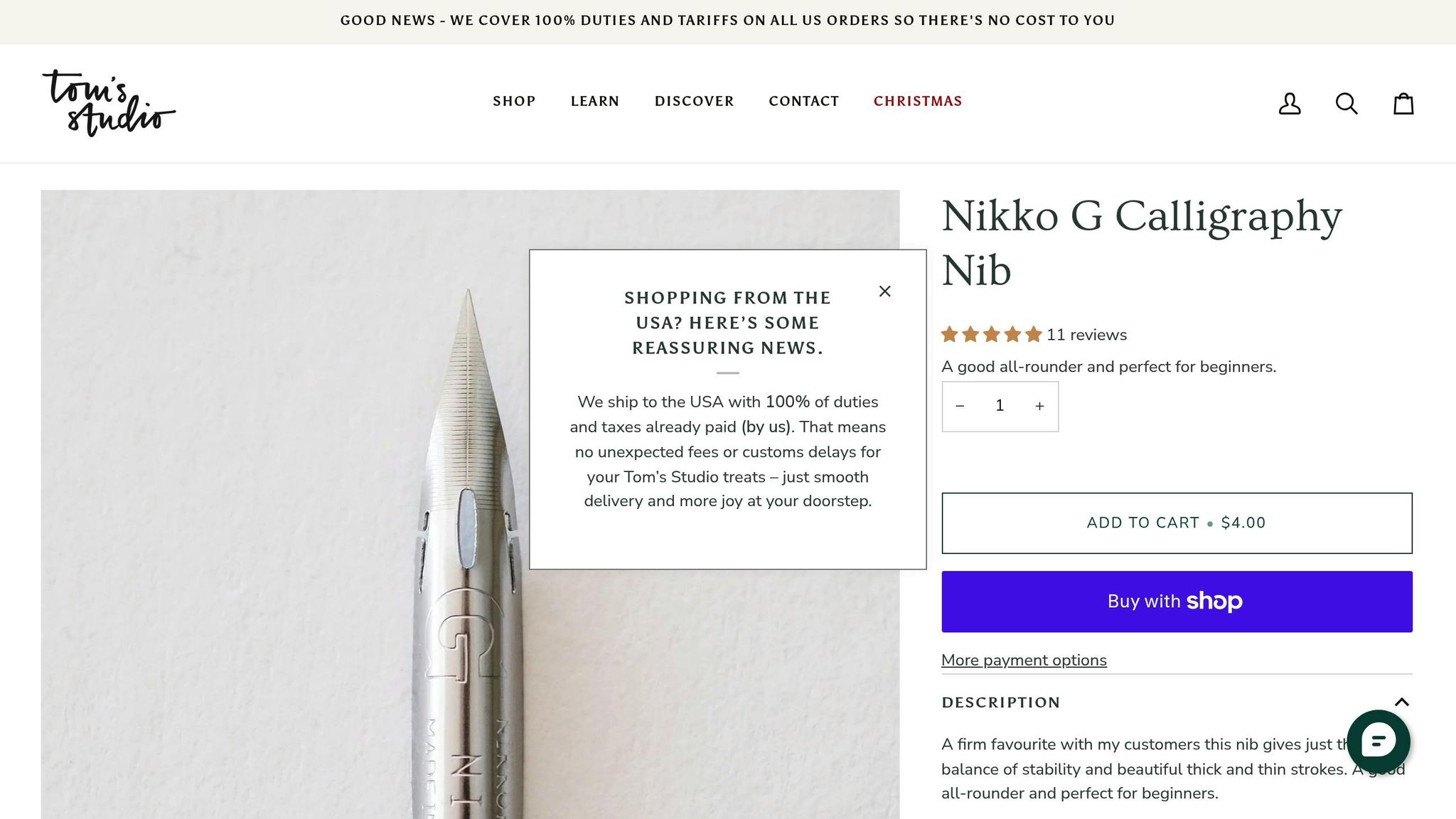
The Nikko G (pronounced "neek-oh") is often the go-to nib for beginners in calligraphy. It strikes a perfect balance - sharp enough to create crisp, elegant letterforms without snagging on paper, yet flexible enough to allow smooth line variation. Many beginners find that using the Nikko G boosts their confidence, showing them that their tools - not their skills - might have been holding them back. Let’s break down what makes this nib so beginner-friendly.
Flexibility Level
The Nikko G offers a medium level of flexibility, which makes it ideal for learning pressure control. This flexibility allows the nib’s tines to spread under pressure for bold downstrokes and then return to form for delicate, fine upstrokes. This balance creates clear contrasts between thick and thin lines without requiring the advanced precision needed for ultra-flexible nibs. Its moderate flex also helps avoid common beginner problems like ink splatters or snagging on paper fibers, essentially acting as "training wheels" for mastering technique.
Durability
One of the standout features of the Nikko G is its durability. This nib can withstand heavier pressure without bending or breaking, which is a lifesaver for beginners still working on consistent pressure control. It’s forgiving enough to handle occasional over-pressing, so you won’t find yourself needing to replace it often.
Ink Capacity
Another plus is its ability to hold a generous amount of ink compared to smaller nibs. This means fewer interruptions to re-dip during practice sessions, allowing you to stay focused and maintain your rhythm as you work on drills or new letterforms.
Compatibility with Pen Holders or Fountain Pens
The Nikko G fits most straight pen holders, making it highly versatile. If your holder has a universal insert, position the nib just below the split in the metal lip. For holders without a metal insert, simply place the nib wherever it feels secure. Before using it for the first time, clean off the protective coating with dish soap or Windex. Pair it with beginner-friendly inks like Sumi Ink, and while smooth paper is recommended, the Nikko G is forgiving enough to perform well even on rougher surfaces.
Many beginner calligraphy courses recommend the Nikko G because of its reliable and accommodating design. It produces excellent contrast between fine hairlines and medium downstrokes while offering a smooth writing experience, making it a perfect tool for effective practice.
2. Brause Steno Nib
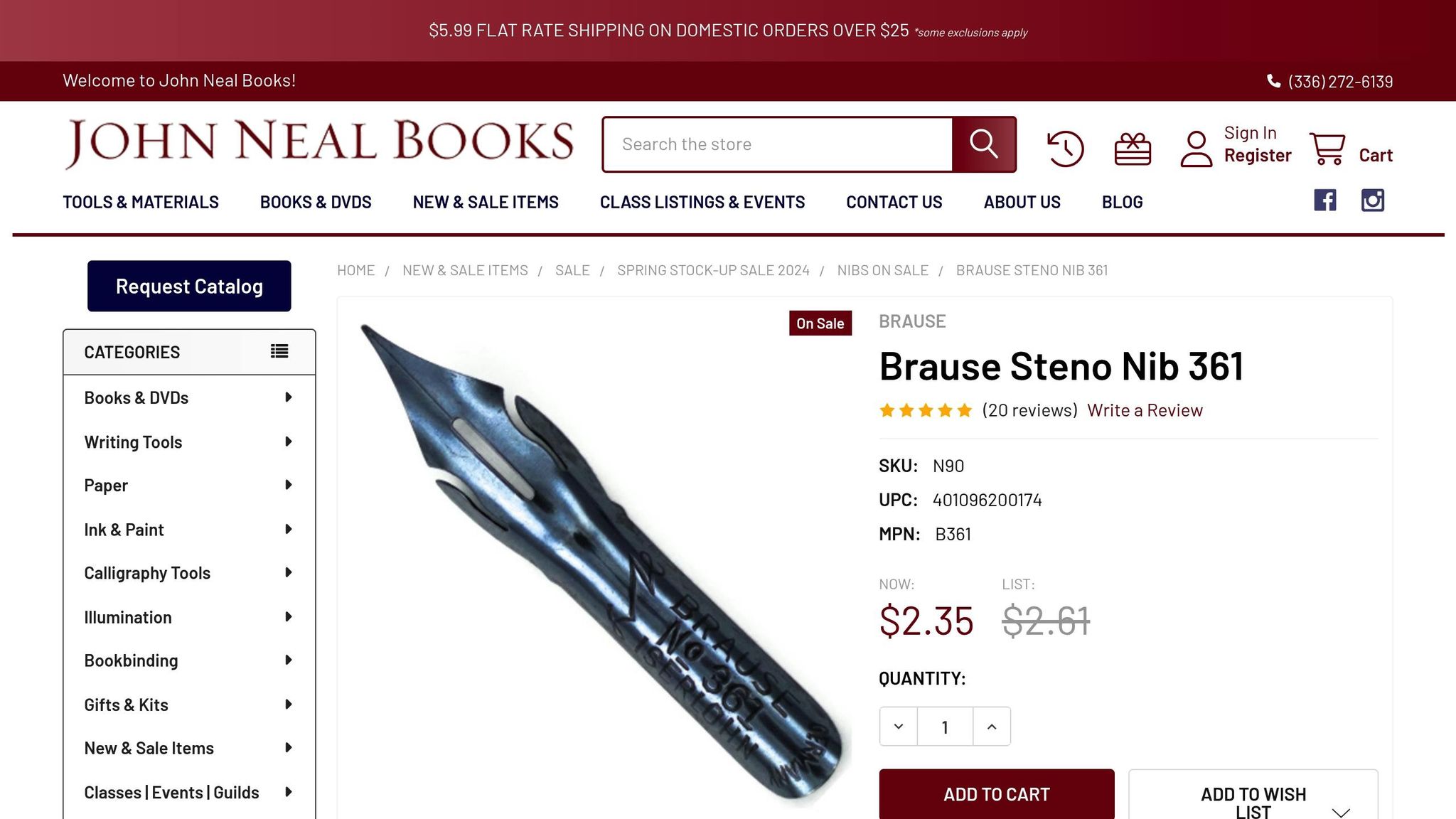
The Brause Steno Nib is a fantastic choice for beginners stepping into the world of bold and expressive lettering. Its rounded tip design reduces the chances of snagging on uneven paper, making early practice smoother and less frustrating.
Flexibility Level
This nib offers a moderate level of flexibility, striking a balance that’s perfect for beginners. It creates thicker hairlines compared to the Nikko G, which makes letterforms bolder and easier to control. For someone just starting out, this is a big advantage - those thicker hairlines are much simpler to execute consistently while you're still learning how to manage pressure. The nib also delivers bold downstrokes, making it an excellent fit for modern calligraphy styles that emphasize a dynamic, loose, and energetic feel over delicate precision. This balance of flexibility and boldness helps you practice with confidence as you refine your technique.
Durability
Durability is another standout feature of the Brause Steno. It can handle heavier pressure without bending or breaking, which is a relief for beginners who might still be figuring out the right touch. Unlike more fragile nibs that demand precision from the start, this one gives you the freedom to make mistakes and learn without the constant worry of damaging your tools.
Ink Capacity
One of the practical perks of this nib is its ability to hold a decent amount of ink between dips. This means longer, uninterrupted writing sessions, which is crucial when you’re working on building muscle memory and maintaining a steady flow during practice.
Compatibility with Pen Holders
The Brause Steno works well with both straight and oblique pen holders, as long as your holder grips the nib securely. Its rounded tip also makes it less prone to snagging on rougher paper, giving you more flexibility with the types of materials you can use during practice. This versatility ensures a smoother experience as you experiment with different setups and surfaces.
3. Pilot Parallel Pen
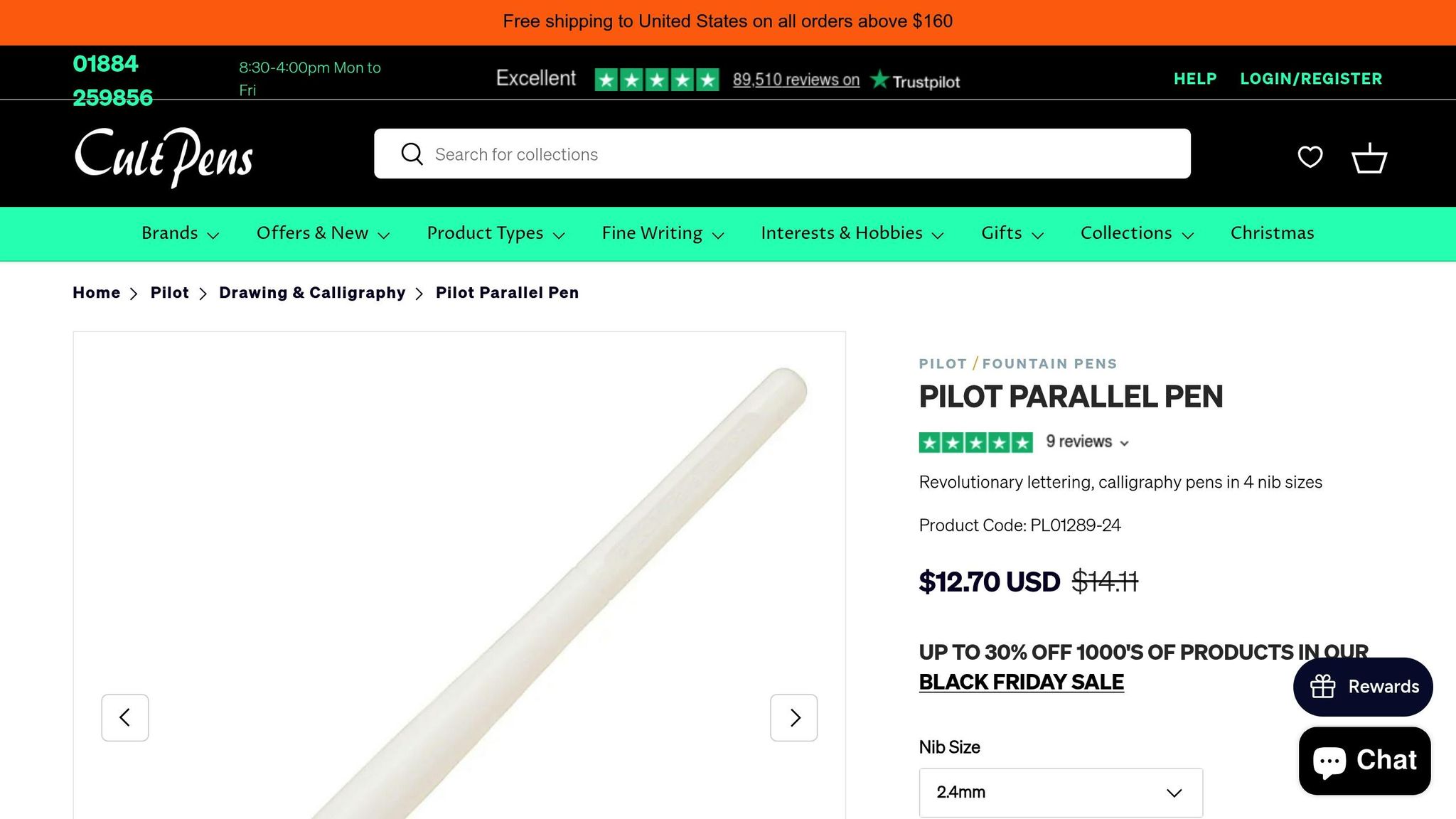
The Pilot Parallel Pen brings a modern twist to traditional calligraphy tools. Unlike dip nibs, this fountain pen system eliminates the hassle of constant re-dipping, making it a favorite among beginners thanks to its affordability and user-friendly design.
What sets the Pilot Parallel apart is its flat (italic) nib. Instead of relying on pressure for line variation, this pen achieves it through the angle of the nib. This makes it perfect for broad-edged calligraphy styles like Roman capitals, Uncial, and Foundational Hand. You can focus entirely on mastering letterforms and spacing without worrying about the nuances of flex control.
This simplicity, paired with consistent performance, makes the Pilot Parallel an excellent tool for honing your calligraphy skills.
Flexibility Level
The flat nib design ensures consistent lines that change only with the pen's angle and stroke direction. This feature makes it forgiving and easier to handle, especially for those new to calligraphy.
The pen comes in four nib sizes. Beginners are generally advised to start with sizes no smaller than 3.8 mm for better control, though the 1.1 mm nib can also be a good option for those looking to work on finer details.
Durability and Ink Capacity
Built with durability in mind, the Pilot Parallel uses a cartridge-based ink system, allowing for longer practice sessions without interruptions.
Portability and Ease of Use
With its all-in-one design, the Pilot Parallel doesn’t require a separate pen holder. Just pop in an ink cartridge, and you’re ready to write. Its portability means you can practice anywhere, without needing to carry bulky ink bottles or extra accessories.
4. Brause 66EF Nib
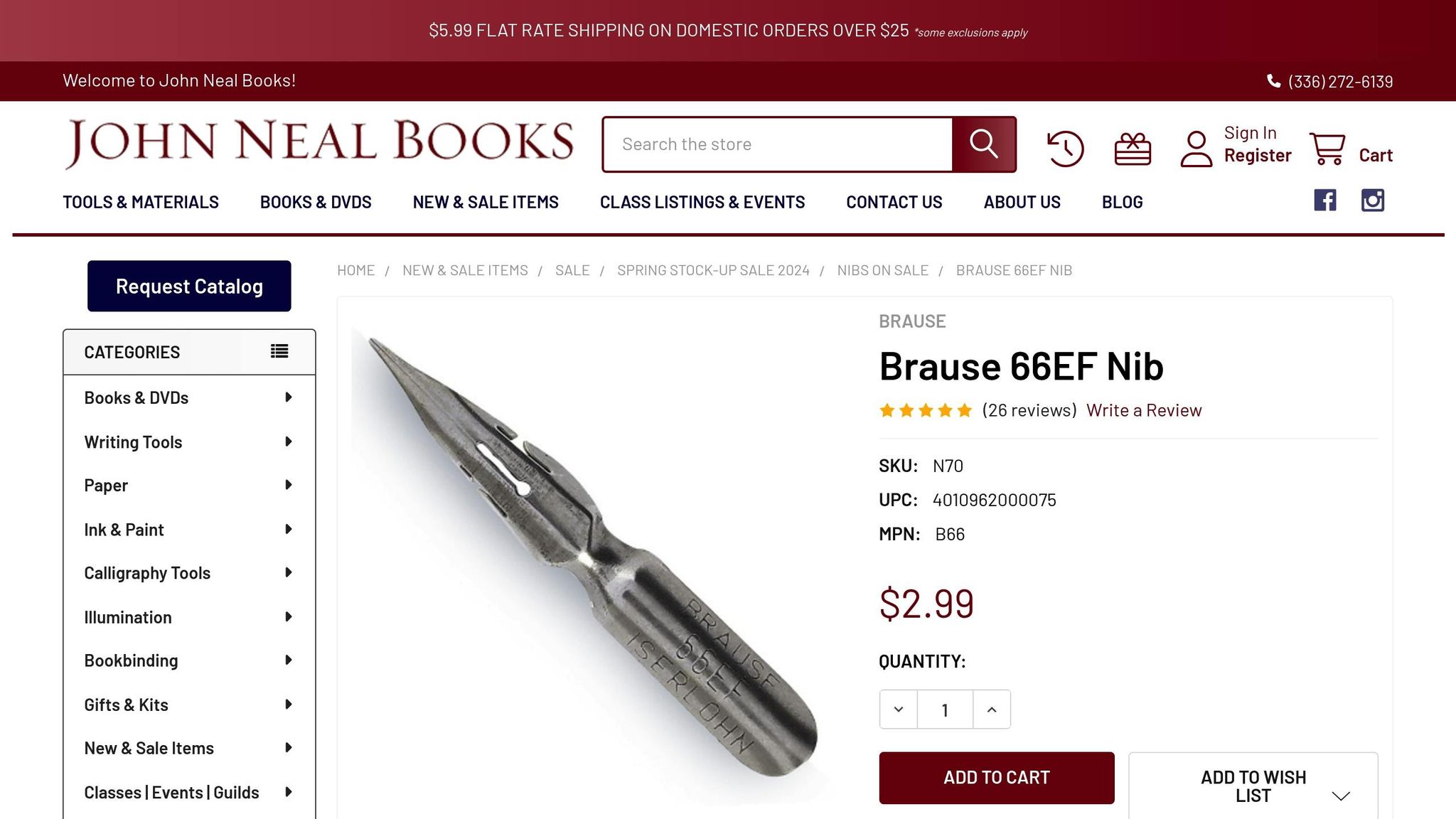
The Brause 66EF nib is a tiny tool that packs a big punch, capable of creating bold, sweeping letterforms despite its small size. It's a favorite for modern, loose calligraphy styles, but it does need a little help to get started - priming the nib by tapping it on paper is often necessary to kickstart the ink flow. Once it's ready, this nib opens up plenty of creative possibilities, especially for decorative projects like place cards or stylish modern calligraphy pieces. Let’s dive into how it performs.
Flexibility Level
When it comes to flexibility, the Brause 66EF stands out. It’s more flexible than nibs like the Nikko G, allowing for striking contrasts between thick and thin lines. But with that flexibility comes a challenge - it demands precise technique and careful pressure control. If you're still working on perfecting your grip or pressure application, this nib might feel unforgiving. It’s an ideal choice for calligraphers who have moved beyond the beginner stage and are eager to explore more advanced techniques.
Durability
Durability is not the Brause 66EF’s strong suit. Its delicate tines can easily become misaligned if you apply too much pressure. A light touch is essential to avoid permanent damage. This fragility makes it less suitable for heavy-handed beginners but rewarding for those who can handle it with care.
Compatibility with Pen Holders or Fountain Pens
The Brause 66EF is a dip nib, meaning you’ll need a separate pen holder to use it. It fits most standard straight pen holders, making it relatively easy to pair with your existing tools. However, its small ink capacity means you’ll find yourself re-dipping frequently, which can interrupt longer writing or drawing sessions. If you’re looking for compatible holders or inks, Fountain Pen Revolution offers options that work well with this nib.
sbb-itb-1dd4fe9
5. Leonardt 111 EF Nib
The Leonardt 111 EF nib is a specialized tool that stands out from the usual beginner-friendly options. The "EF" stands for "Extra Fine", and it's specifically crafted for creating ultra-small text in pointed pen calligraphy. While it occasionally appears on beginner recommendation lists, its unique characteristics make it better suited for those looking to refine their skills. With its rigid structure, this nib rewards patience and precision, making it a fantastic choice for intermediate calligraphers diving into miniature lettering projects.
What sets this nib apart is its rigidity. Unlike more flexible options like the Nikko G, the Leonardt 111 EF offers very little flex. This means you'll need to apply significant pressure to achieve thick downstrokes. For beginners, this can feel challenging, but for those with more experience, it becomes a valuable tool for mastering pressure control and adding intricate detail to their work. Let’s break down its key features.
Flexibility Level
The Leonardt 111 EF is one of the most rigid nibs available. It doesn't respond to subtle pressure changes like more flexible nibs do. Instead, you need to apply deliberate, firm pressure to vary line widths. While this rigidity might seem limiting at first, it provides excellent control for creating consistent, tiny letterforms. This makes it perfect for projects requiring extreme precision, such as fine details in calligraphy or decorative elements.
Durability
Thanks to its sturdy construction, this nib is less likely to suffer from tine misalignment, a common issue with more flexible nibs. However, because it demands heavier pressure to produce thick strokes, improper technique or excessive force could lead to quicker wear. Practicing proper handling can help extend its lifespan and maintain its performance.
Compatibility with Pen Holders
As a dip nib, the Leonardt 111 EF requires a compatible pen holder. Its extra-fine size means you'll need to ensure your holder can securely fit this nib. Additionally, it's essential to pair it with inks that work well with fine nibs. Keep in mind that, like other dip nibs, it requires frequent re-dipping. For those upgrading their tools, brands like Fountain Pen Revolution offer reliable options for both holders and inks.
This nib shines in projects that demand meticulous detail, such as envelope addressing, miniature calligraphy, or intricate decorative designs. Once you've honed your pressure control and are ready to tackle more detailed work, the Leonardt 111 EF becomes an invaluable part of your calligraphy toolkit.
6. Hunt Imperial 101 Nib
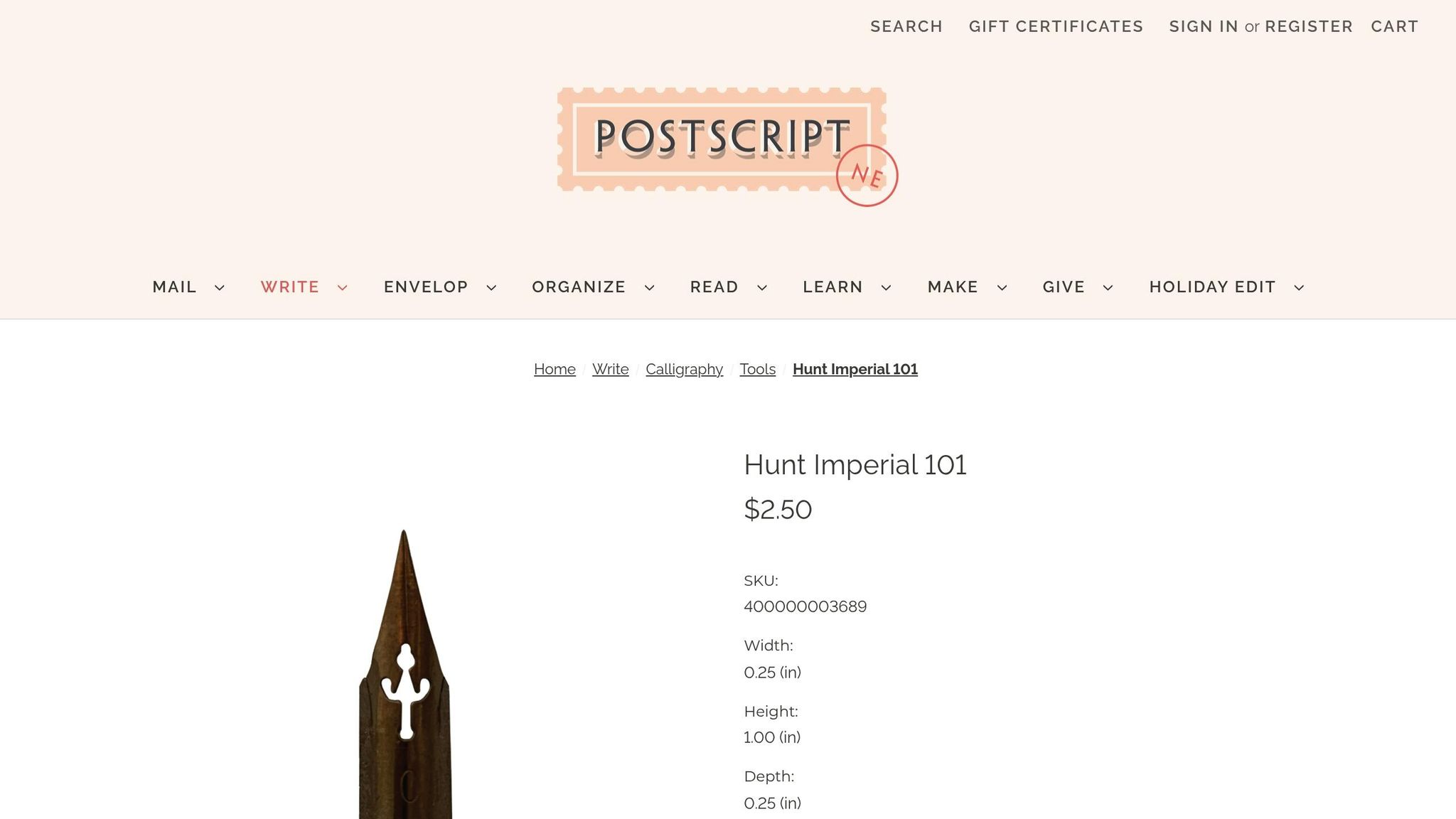
The Hunt Imperial 101 nib is often included in beginner calligraphy kits, but make no mistake - this nib is designed for experienced calligraphers who have already honed their pressure control skills. If you're just starting out, it’s best to set this one aside until you’ve gained more practice and confidence.
What sets the Hunt Imperial 101 apart is its extreme flexibility and sharp point, both of which pose challenges for beginners. The highly flexible tines respond dramatically to pressure, spreading apart easily, while the sharp tip has a tendency to catch on paper fibers. These characteristics can frustrate newcomers - not because they lack talent, but because this nib demands a level of precision that takes time to develop.
Flexibility Level
This nib’s extreme flexibility allows for dramatic line variations with even the slightest changes in pressure. While this can create striking results in skilled hands, it also means that any inconsistency in pressure can lead to ink splatters or uneven lines. For those still learning to control their strokes, this nib can feel unforgiving.
Another quirk of the Hunt Imperial 101 is its tendency to require a bit of coaxing to start the ink flow. You may need to tap the nib on the paper or make a small tick mark before it’s ready to go, which can interrupt your focus on technique and letterforms.
Durability
The delicate, flexible tines of this nib are prone to misalignment if too much pressure is applied, making it less durable than beginner-friendly options. For calligraphers still working on consistent pressure control, this fragility can lead to frustration and potentially damage the nib.
Compatibility with Pen Holders
The Hunt Imperial 101 is a dip nib, so it requires a compatible straight pen holder. Not all pen holders are designed to securely fit this nib, so double-check your tools before using it. Additionally, its sharp tip performs best on smooth, high-quality paper, as rougher surfaces can cause it to snag and skip.
This nib is a rewarding tool for advanced calligraphers ready to tackle its challenges. If you’ve mastered more forgiving nibs like the Nikko G, the Hunt Imperial 101 can help you achieve dramatic line variations and intricate flourishes. But for beginners, it’s wise to wait until you’ve built up the necessary control and technique to make the most of its potential.
7. Zebra G Nib
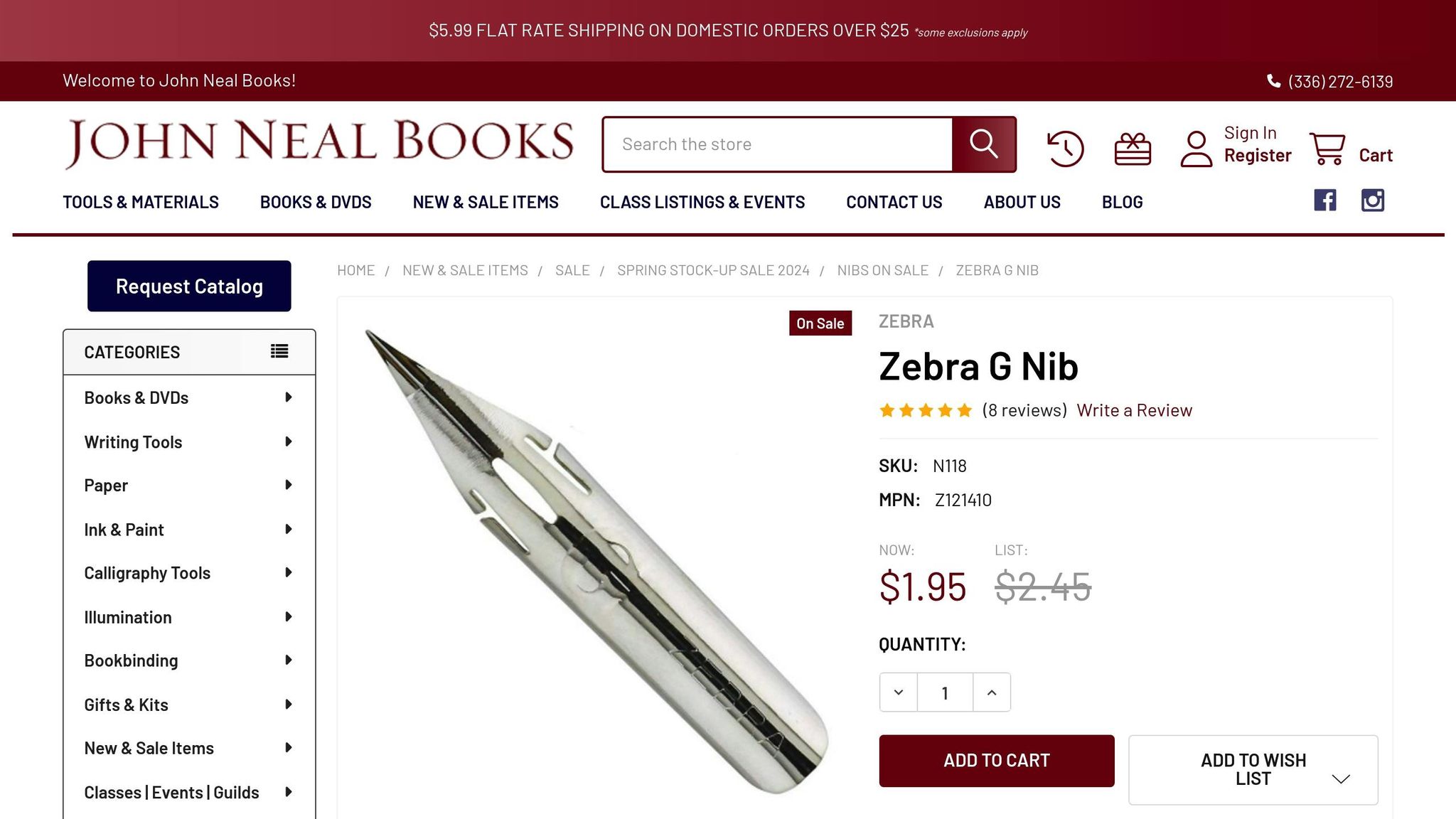
If you’re having a hard time finding the Nikko G Nib in your area - or simply want to try another dependable option for starting your calligraphy journey - the Zebra G Nib is a solid choice. Made in Japan, this nib offers beginner-friendly features, making it a great alternative, especially for those in regions where the Nikko G might not be readily available.
The Zebra G is known for its forgiving nature, letting you focus on building your skills without stressing over uneven pressure or minor mistakes. Let’s dive into how its flexibility, durability, ink capacity, and compatibility make it a great option for beginners.
Flexibility Level
With medium flexibility, the Zebra G strikes a nice balance between control and fluidity. It requires intentional pressure to spread the tines, helping you learn how pressure affects line thickness. This design makes it easier to create clear contrasts between delicate upstrokes and bold downstrokes, all while keeping the learning process manageable.
Durability
The Zebra G is built to handle the challenges of learning. Its sturdy construction holds up against the uneven pressure that beginners often apply, reducing the risk of bending or breaking. This durability lets you focus on improving your technique without worrying about damaging the nib.
Ink Capacity
One of the standout features of the Zebra G is its ability to hold enough ink to keep you writing longer. Fewer interruptions for re-dipping means you can maintain your rhythm and focus, even when working on extended pieces.
Compatibility with Pen Holders
The Zebra G fits seamlessly into standard straight pen holders, making it easy to add to your existing tools. There’s no need for special adapters or extra purchases - just pop it into your holder and start practicing.
Nib Comparison Table
Here's a handy comparison of seven popular nibs to help you choose the right one for your calligraphy needs.
| Nib | Flexibility | Durability | Ink Capacity | Compatibility | Price Range | Best For |
|---|---|---|---|---|---|---|
| Nikko G | Medium | Sturdy – tolerates heavy pressure | High – reduces frequent re-dipping | Standard straight holders | Affordable | General practice, learning pressure control |
| Brause Steno | Medium | Very sturdy – withstands heavy pressure | Good | Standard straight holders | Affordable | Thick downstrokes, works well on various paper types |
| Pilot Parallel Pen | Consistent (cartridge system) | Durable and low-cost | Cartridge-based | Integrated holder system | Affordable | Foundational styles, portable use |
| Brause 66EF | Medium-High | Fragile – prone to misalignment | Limited due to its small size | Standard straight holders | Moderate | Modern styles like place cards |
| Leonardt 111 EF | Very rigid | Durable | Moderate | Pointed pen holders | Moderate | Fine, detailed work, extra-small writing |
| Hunt Imperial 101 | Super flexible | Moderate – may catch on paper | Moderate | Standard straight holders | Moderate | Advanced flourishing, suited for experienced users |
| Zebra G | Medium | Sturdy – beginner-friendly | High – ideal for longer sessions | Standard straight holders | Affordable | Reliable alternative to Nikko G |
If you're just starting out, the Nikko G and Zebra G are excellent choices. They offer a good balance of flexibility and ink capacity, making them easier for beginners to control while reducing the need for constant re-dipping. The Brause Steno, known for its clear line variations, also performs well on different paper types. Meanwhile, the Pilot Parallel Pen is a practical option for consistent, portable practice thanks to its cartridge system.
For those seeking a challenge, the Brause 66EF and Hunt Imperial 101 are worth exploring. The Brause 66EF is delicate, requiring a light touch to avoid misaligned tines, while the Hunt Imperial 101 is highly flexible but can catch on paper or cause ink spatters - issues that may frustrate beginners.
The Leonardt 111 EF stands apart with its rigid design, ideal for detailed, extra-small writing. However, its need for extra pressure to create thick downstrokes makes it better suited for those with more experience.
As you refine your skills, start with forgiving nibs like the Nikko G or Zebra G before moving on to more specialized options. The Nikko G, in particular, is a favorite among beginners for its reliability and ease of use. For additional tips on using each nib, refer back to their detailed descriptions.
Conclusion
Now that we've gone over the features of each nib, you're ready to take the next step in your calligraphy journey. From the dependable Nikko G to the adaptable Pilot Parallel Pen, these seven nibs provide a great starting point. Each one strikes its own balance between flexibility, durability, and ink capacity, making it easy to find a match that suits your specific needs as a beginner.
Choosing the right nib is a highly personal process - it takes a bit of trial and error to figure out what works best for you. Factors like your grip strength, the type of paper you use, and your preferred lettering style all play a role. The key is to experiment and practice until you find the nib that feels just right.
If you're unsure where to start, consider beginner-friendly options like the Nikko G or Zebra G. These medium-flex nibs are forgiving, making it easier to develop good pressure control without the frustration of overly delicate tools. They serve as an excellent bridge to more advanced nibs as your skills improve. And if your first choice doesn't feel right, don't worry - it’s likely the tool, not you. Keep testing and refining your preferences as you grow more comfortable with the art.
With consistent practice and the right tools, you'll soon be ready to tackle more specialized nibs and styles. Whether you're addressing envelopes, designing wedding invitations, or simply enjoying a creative hobby, these seven nibs offer everything you need to begin. Pick one, pair it with smooth paper and beginner-friendly ink, and start practicing. Your skills will grow naturally from there.
FAQs
Why are the Nikko G and Zebra G nibs great choices for beginners in calligraphy?
The Nikko G and Zebra G nibs are favorites among beginners, and for good reason. They strike an excellent balance between flexibility and control, making it simpler to practice basic strokes and techniques. These nibs create smooth, consistent lines and are less likely to snag on the paper - a common frustration for those just starting out.
On top of that, both nibs are sturdy and adaptable, performing well with different types of ink and paper. Their ease of use allows beginners to focus on building confidence as they develop their calligraphy skills.
What is the best way to choose a calligraphy nib for both broad-edged lettering and fine details?
When choosing a calligraphy nib that handles both broad-edged lettering and detailed work, flexibility is what you should aim for. Opt for nibs that can produce a variety of line widths or those specifically designed to be adaptable. For broad-edged styles, italic or chisel-tipped nibs are excellent choices, while fine-point nibs work best for intricate details.
If you’re using a fountain pen, look into interchangeable nibs. These let you switch between different styles without needing multiple pens. Many beginner-friendly nibs are designed to fit fountain pens, making it easier to explore and discover the nib that complements your writing style.
How can I properly care for my calligraphy nibs to make them last longer?
To keep your calligraphy nibs in good shape and ensure they last, it's essential to clean them after every use. Rinse the nibs gently with lukewarm water to wash away any leftover ink, then dry them completely with a soft cloth to avoid rust. Never leave nibs sitting in ink or water for long periods, as this can harm the metal.
For storage, place your nibs in a dry spot - using a nib holder or a small container works well to protect their delicate tips. Check regularly for dried ink buildup and remove it carefully. By taking these simple steps, you can preserve the nibs' quality and enjoy smoother, more satisfying calligraphy sessions.