

Hand heat can push ink out of an eyedropper pen - especially when ink runs low. My first check is to leave the pen nib-up at room temperature for 15–30 minutes, then write a few short strokes. If flow gets wetter as I hold it, warmth is a likely trigger.
Here’s what I focus on:
- Limit warming: Let the pen adjust after coming in from the cold, grip the section, and keep it away from sunlight and heaters.
- Reduce the air pocket: Refill before ink runs low, and close the shutoff valve during transport if the pen has one.
- Find the leak: Ink at the nib after warming suggests a pressure surge. Ink at the threads or leakage while untouched calls for a check of the seals, barrel, and feed.
These clues aren’t a diagnosis. <u>If leaking continues at a steady room temperature</u>, I stop using the pen, follow the maker’s inspection steps, and confirm the exact model before buying parts.
Fountain pen tips and tricks | Burping in eyedropper pens
sbb-itb-1dd4fe9
Identify Temperature-Related Burping
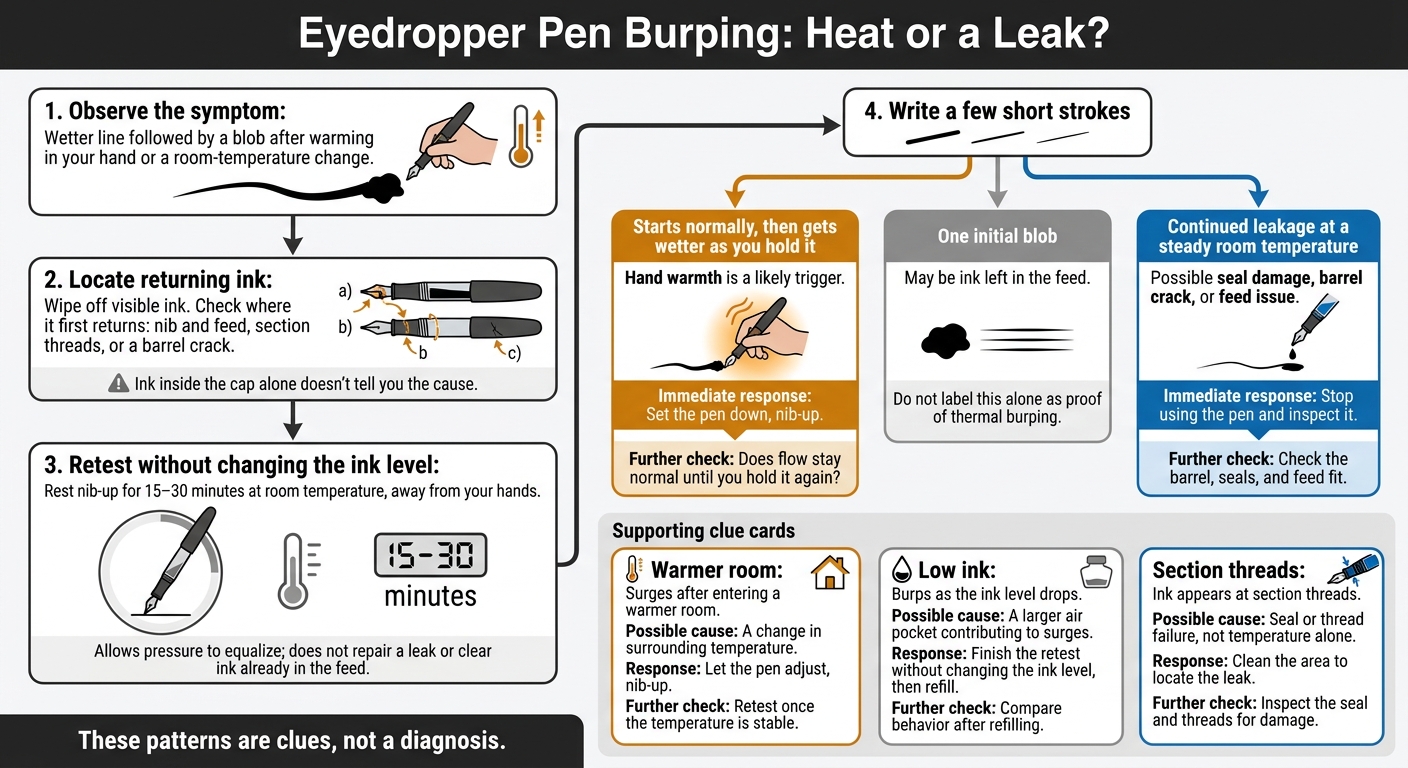
Eyedropper Pen Burping: Heat or a Leak?
Check When and Where Ink Escapes
Look for a wetter line followed by a blob after the pen warms in your hand or the room temperature changes. Wipe off visible ink, then check where it first returns: the nib and feed, the section threads, or a crack in the barrel. Ink inside the cap alone doesn’t tell you the cause.
Retest at a Stable Room Temperature
Leave the pen nib-up for 15–30 minutes at room temperature, away from your hands. Keep the ink level unchanged. This gives pressure time to equalize without forcing ink out. It won’t repair a leak or clear ink already in the feed.
Then try a few short strokes. If flow starts normally but gets wetter as you hold the pen, hand warmth is a likely cause. A single initial blob may come from ink left in the feed. Continued leakage at a steady room temperature points to a leak and calls for a physical inspection.
Match Symptoms to Possible Causes
Treat these patterns as clues, not a diagnosis.
| Symptom | Possible cause | Immediate response | Further check |
|---|---|---|---|
| Burps after warming in your hand | Air warming inside the barrel | Set the pen down, nib-up | Does flow stay normal until you hold it again? |
| Surges after entering a warmer room | A change in surrounding temperature | Let the pen adjust, nib-up | Retest once the temperature is stable |
| Burps as the ink level drops | A larger air pocket contributing to surges | Finish the retest without changing the ink level, then refill | Compare behavior after refilling |
| Ink appears at section threads | Seal or thread failure, not temperature alone | Clean the area to locate the leak | Inspect the seal and threads for damage |
| Leaks persist at a stable temperature | Seal damage, a barrel crack, or a feed issue | Stop using the pen and inspect it | Check the barrel, seals, and feed fit |
Reduce Hand Heat and Sudden Temperature Changes
If your pen burps as it warms up, limit heat exposure before writing.
Let the Pen Adjust Before Writing
When you bring the pen in from the cold, let it rest nib-up until the barrel feels close to room temperature. Keep it out of direct sunlight and away from heating vents.
Keep Your Palm Off the Barrel
Once the pen reaches room temperature, avoid warming it again with your hand. Grip it near the section rather than wrapping your palm around the barrel. Before writing, avoid carrying it against your body.
Refill Before Ink Runs Low
Refill before a large air pocket forms. More ink in the barrel means less trapped air that can expand and cause thermal burping.
Use the Shutoff Valve if Your Pen Has One
Close the valve when carrying your pen. This separates the ink reservoir from the feed and helps prevent ink surges during transport.
Inspect and Retest Persistent Leaks
Leaks that persist at a stable room temperature need inspection, not just heat control. If temperature control doesn’t stop the leak, check the pen itself. Follow your model’s instructions, and never force components apart.
Check the Barrel, Seals, and Feed
Check for physical damage that can cause leaks even when the temperature stays steady. Look for hairline cracks in the barrel and worn or damaged O-rings. Tighten the section only until snug.
Follow the maker’s instructions for sealant, cleaning, and feed seating. Replace damaged parts before using the pen again.
Test Flow During Normal Use
Once the pen has settled at room temperature, test it under normal conditions. Set it nib-up and check for new ink at the nib, feed, and section. If it leaks while untouched, that points to a seal, barrel, or feed fault.
Write normally for a few minutes. If the line gets wetter as you hold the pen, hand heat is still the trigger. Stop if ink pools or surges. Don’t squeeze or heat the barrel to force a leak. If leaking continues, stop using the pen and contact the manufacturer.
Check Compatibility Before Buying Parts
Before buying replacement parts, confirm that your model is eyedropper-compatible. Match replacement seals, nibs, and feeds to the exact model - a nib-size label alone doesn’t guarantee a fit.
Conclusion: Limit Warming and Inspect Lasting Leaks
Hand warmth is the most common heat-related trigger for burping. Let the pen reach room temperature, hold it by the section - not the barrel - and refill before the ink runs too low.
Rest the pen nib-up during breaks. If it still leaks at room temperature, check the barrel, seals, and feed.
FAQs
How does warming air push ink through the feed?
As air inside the barrel warms, it expands. That increases pressure, pushing ink through the feed and out of the nib. This can cause “burping,” or sudden blobs of ink, especially in eyedropper pens with more trapped air.
To limit burping, avoid sudden warming. Hold the pen nib-up for a minute or two so it can warm gradually, and keep it at least about one-third to one-half full. That leaves less air inside to expand.
How full should I fill my eyedropper pen?
Fill your eyedropper pen only to the bottom of the barrel threads, leaving space for the grip section. Keep it at least one-third to one-half full to help reduce burping. This happens when warmth from your hand expands the air inside the barrel, pushing ink through the feed.
Avoid sudden temperature changes. If the pen is cold, hold it nib-up until it reaches your hand’s temperature before writing.
Can barrel material affect heat-related burping?
Yes - barrel material can indirectly affect heat-related burping. When a pen warms up, trapped air expands and can push ink through the feed. Some materials may also soften, warp, or affect the seals.
Heat can cause seals, O-rings, sacs, or converters to harden or shrink, making leaks or burping more likely. Keep the pen away from heat and limit sudden temperature changes to help reduce the risk.